Secondary Revision After Failed Repair: How FILLER REVISION Handles the Most Complex Cases
FILLER REVISION specializes in secondary revision — repairing failed repairs where tissue is scarred, landmarks are altered, and other clinics have given up.

How fillers behave inside tissue — and how ultrasound-guided extraction removes what enzymes can’t reach.
Before you decide on a revision, it helps to understand the material itself. These articles cover how each filler type behaves once injected — HA, collagen stimulators, fat, permanent fillers — and how ultrasound-guided pinhole extraction is planned and performed. The clearer the science, the easier it is to judge what your own case really needs.

FILLER REVISION specializes in secondary revision — repairing failed repairs where tissue is scarred, landmarks are altered, and other clinics have given up.

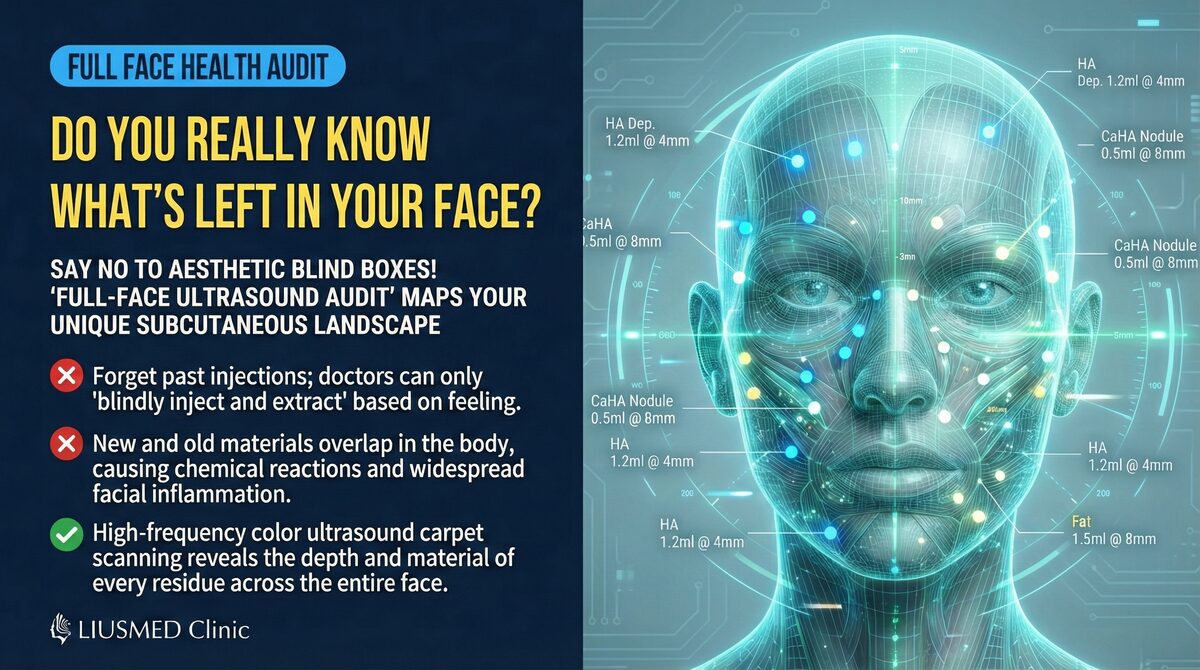
FILLER REVISION's full-face ultrasound audit maps every filler deposit beneath your skin — revealing material types, depths, and risks that clinical exams alone miss.

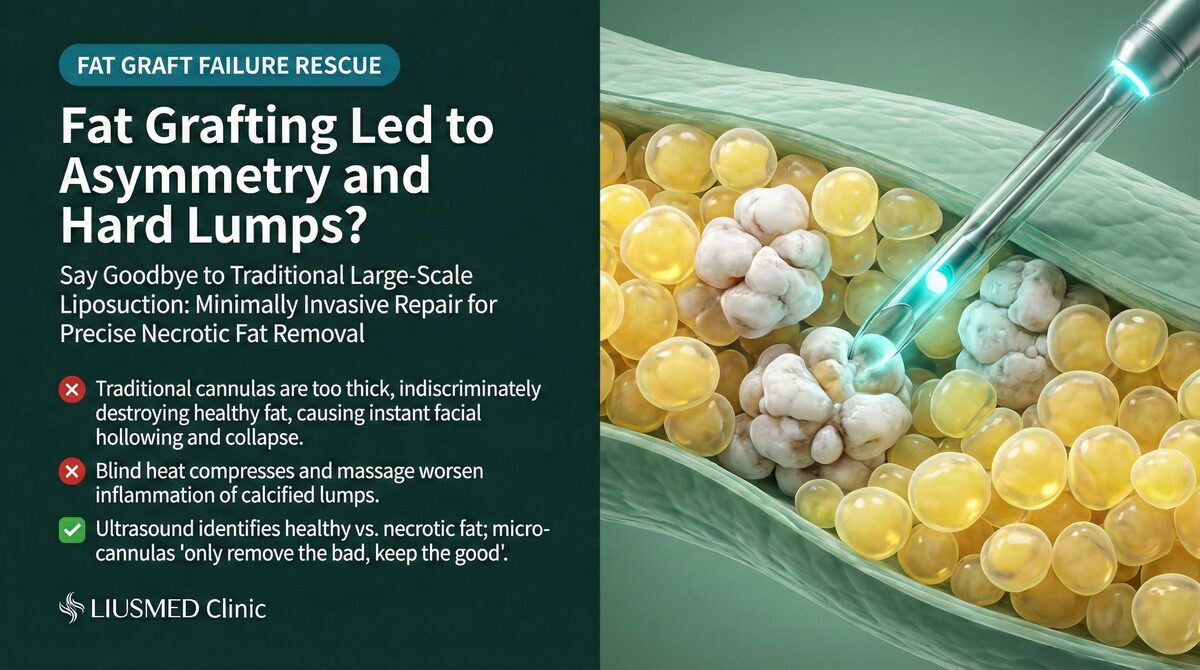
FILLER REVISION's ultrasound-guided technique solves the hardest fat grafting problem — distinguishing grafted fat from native tissue for precise extraction without collateral damage.

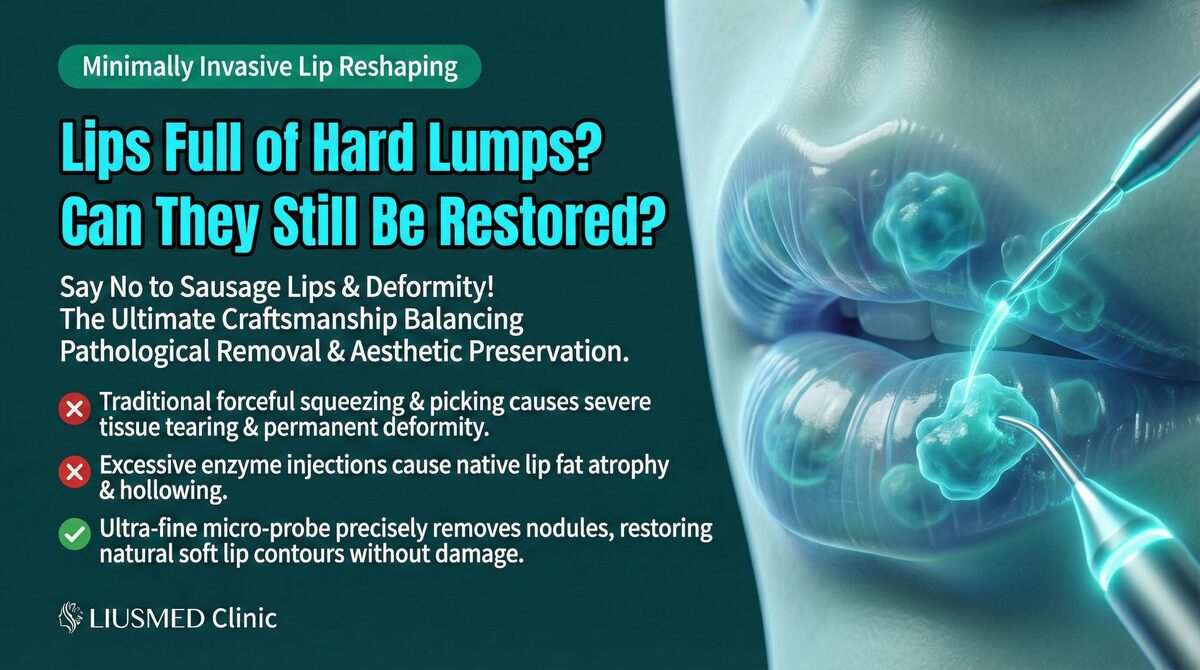
FILLER REVISION's lip extraction technique goes beyond removal — combining ultrasound precision with aesthetic reshaping to restore natural lip contour after failed filler.

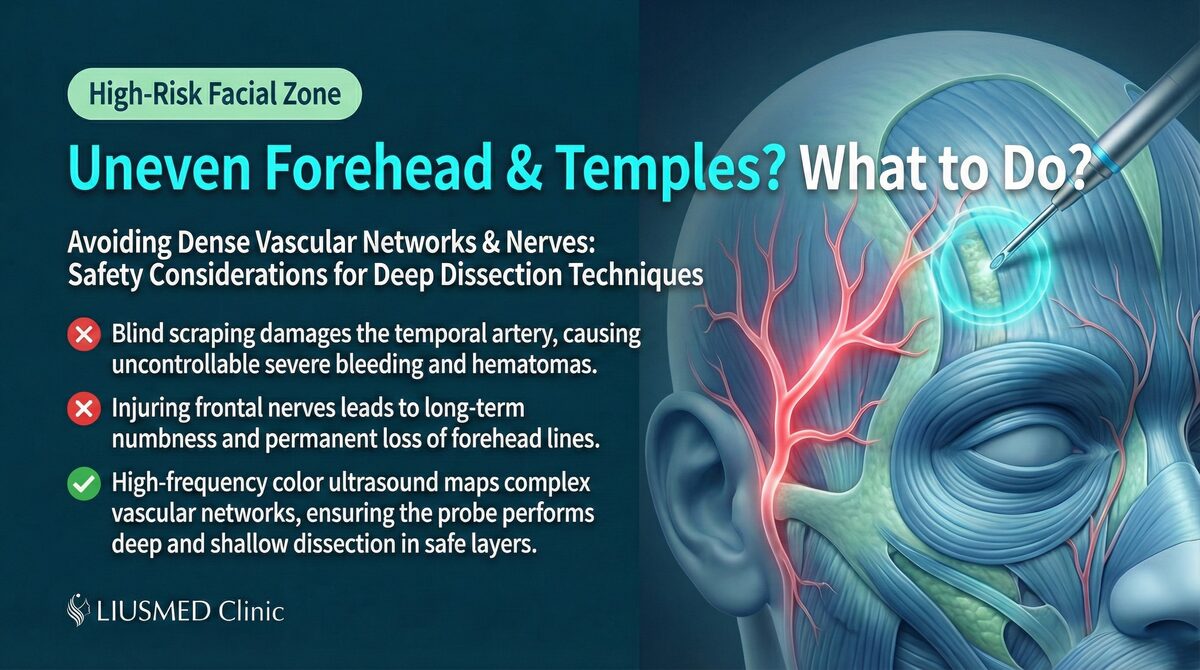
FILLER REVISION's ultrasound-guided protocol makes safe extraction possible in the forehead and temples — high-risk zones where other clinics hesitate to operate.

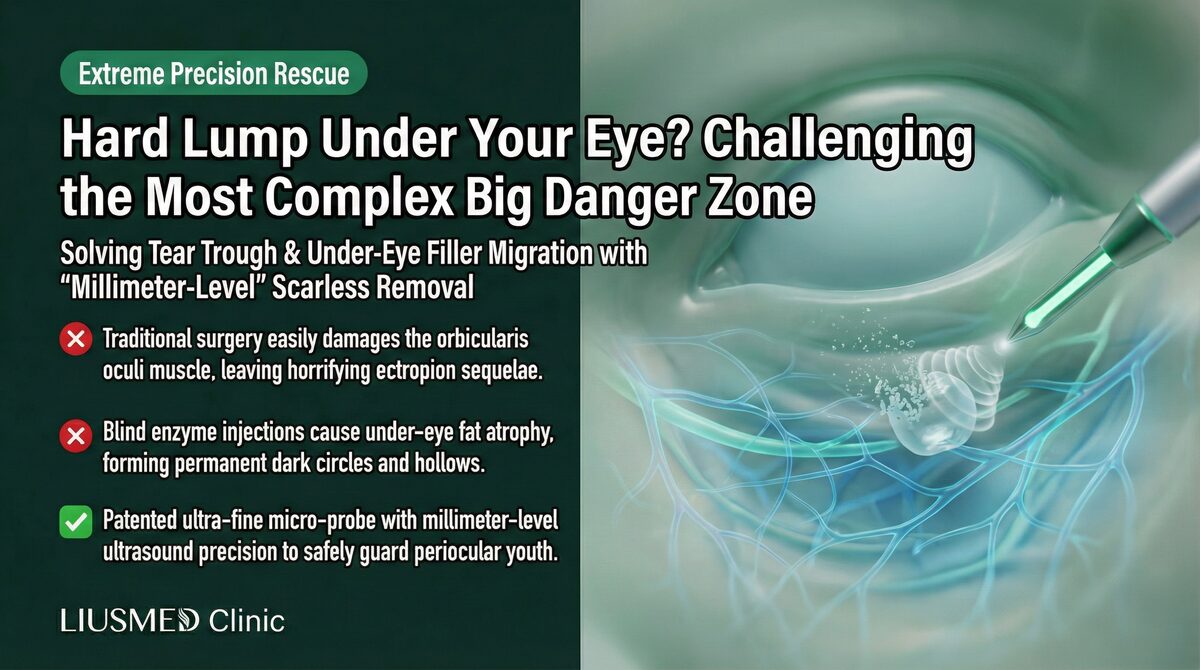
FILLER REVISION's millimeter-precision ultrasound technique safely extracts under-eye filler from the face's thinnest, most delicate zone — where blind methods risk permanent damage.

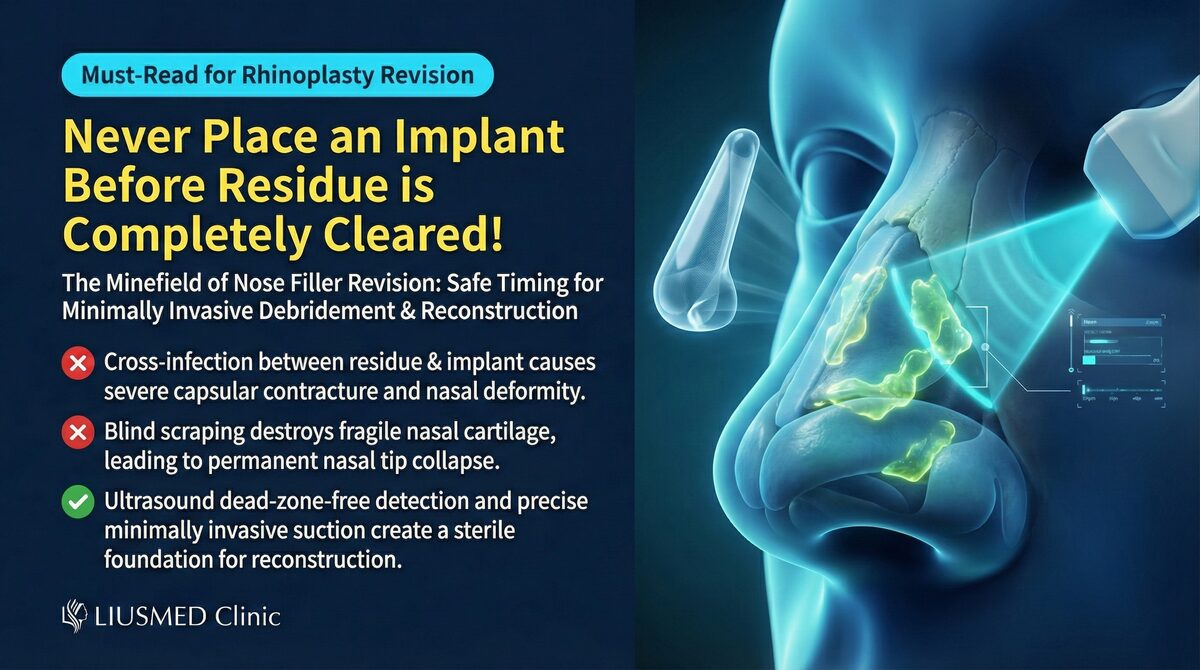
FILLER REVISION's clear-first protocol ensures complete nasal filler removal before rhinoplasty — the critical step that dramatically improves reconstruction success rates.

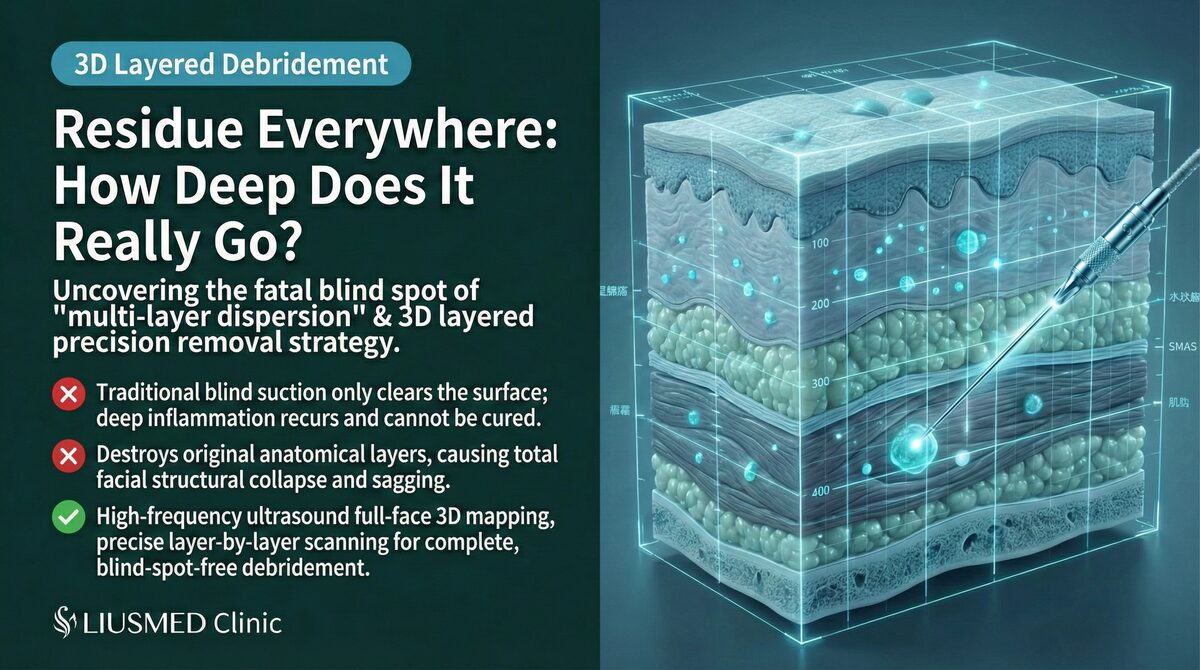
FILLER REVISION's layer-by-layer ultrasound strategy addresses multi-depth filler distribution — clearing deposits across tissue planes that single-method approaches inevitably leave behind.

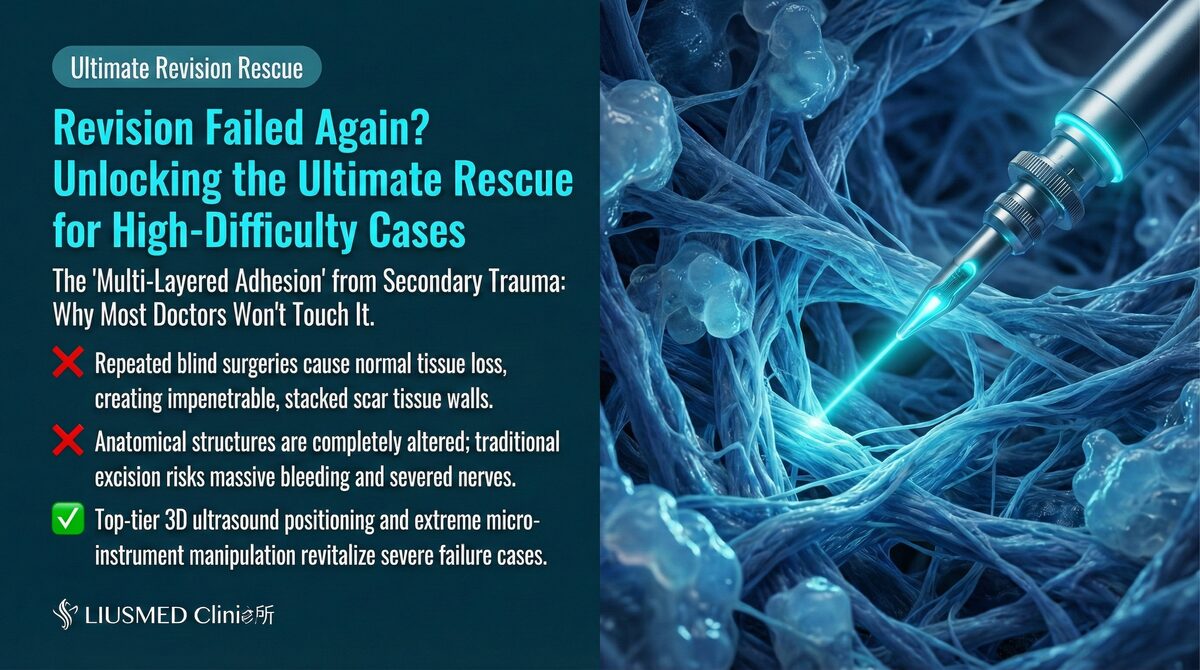
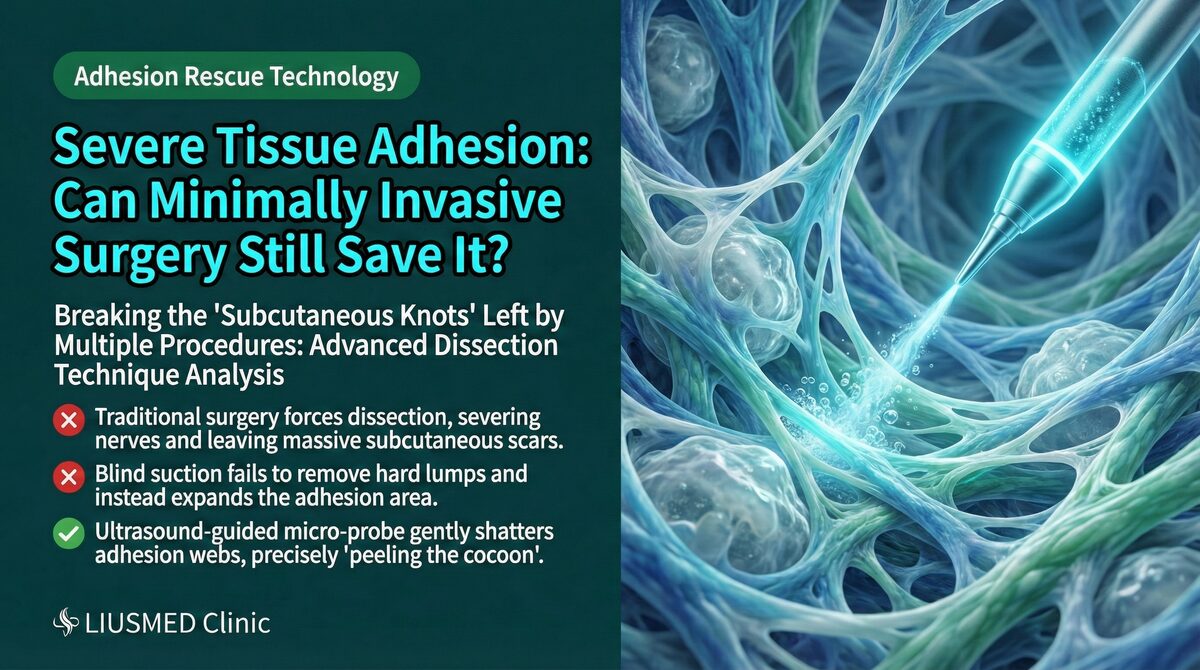
FILLER REVISION's layered progressive technique treats severe adhesion and fibrosis from repeated procedures — achieving gradual improvement where aggressive single-session approaches fail.

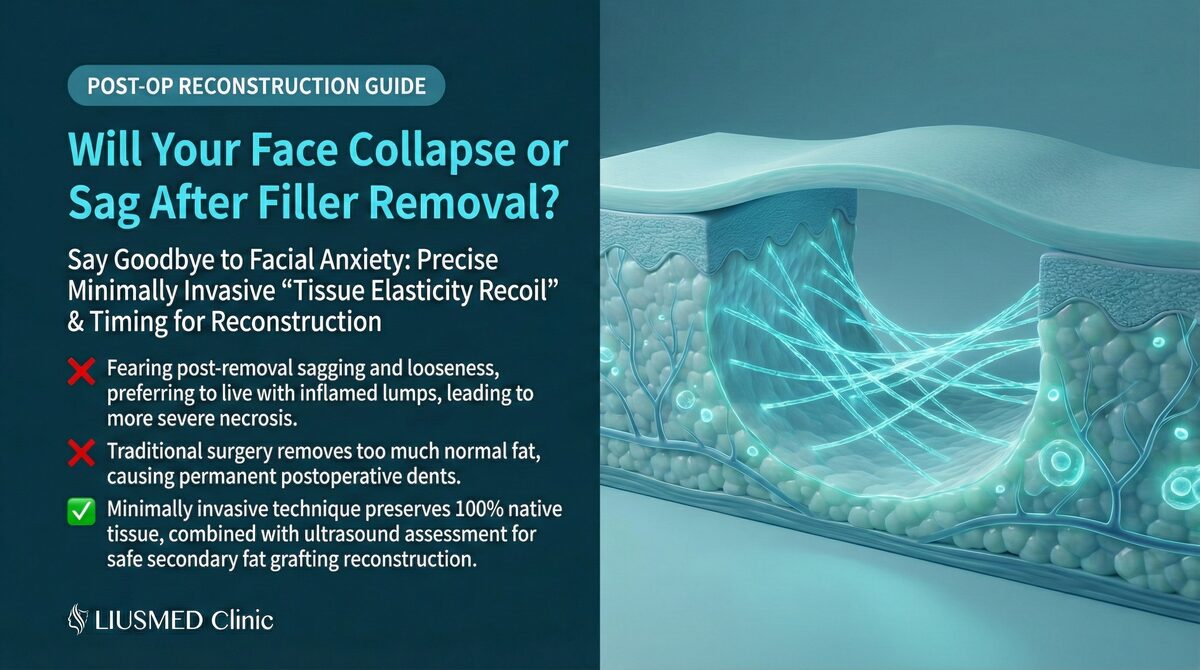
FILLER REVISION's selective extraction and tissue-preserving techniques minimize post-removal hollowing — with clear reconstruction timelines when volume restoration is needed.

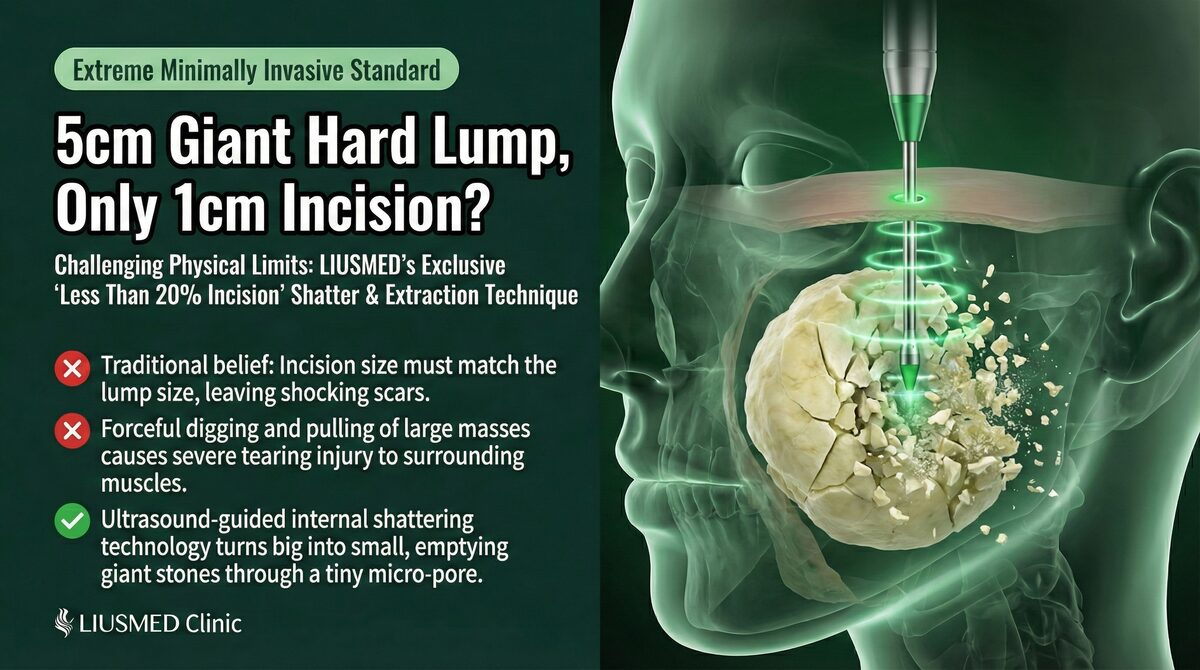
FILLER REVISION's strict under-20% incision standard removes large filler deposits through tiny openings — a measurable benchmark that sets our technique apart from vague 'minimally invasive' claims.

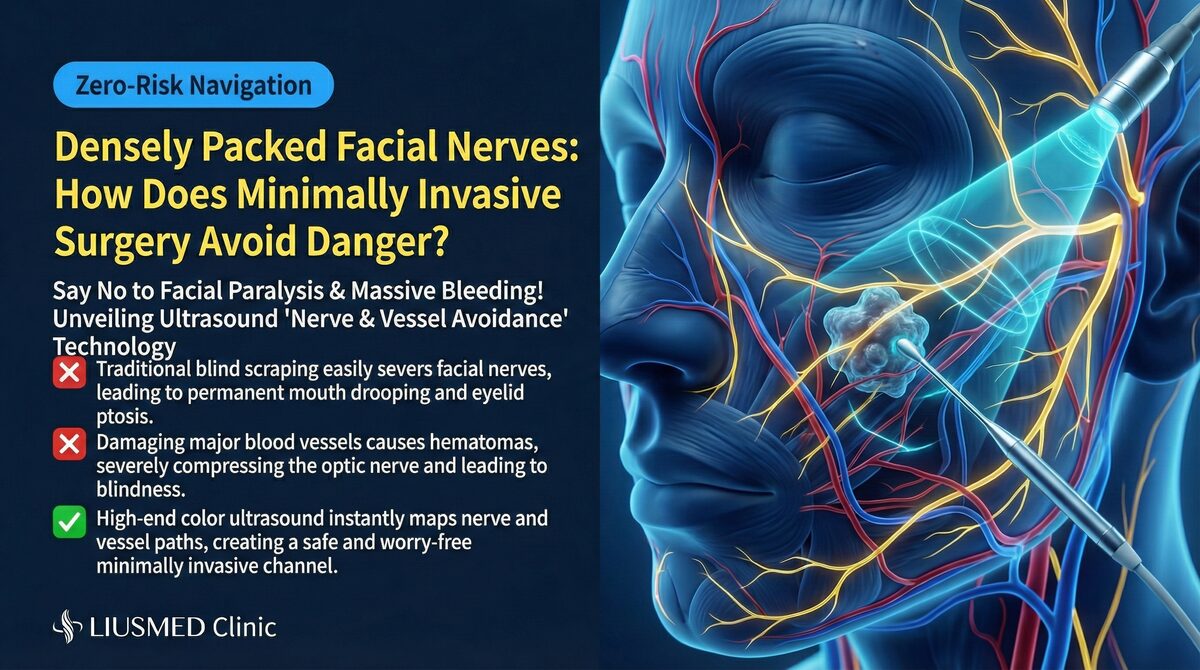
FILLER REVISION's three-line safety defense system uses real-time ultrasound to navigate around facial nerves and vessels — preventing the paralysis and bleeding risks that make blind extraction dangerous.

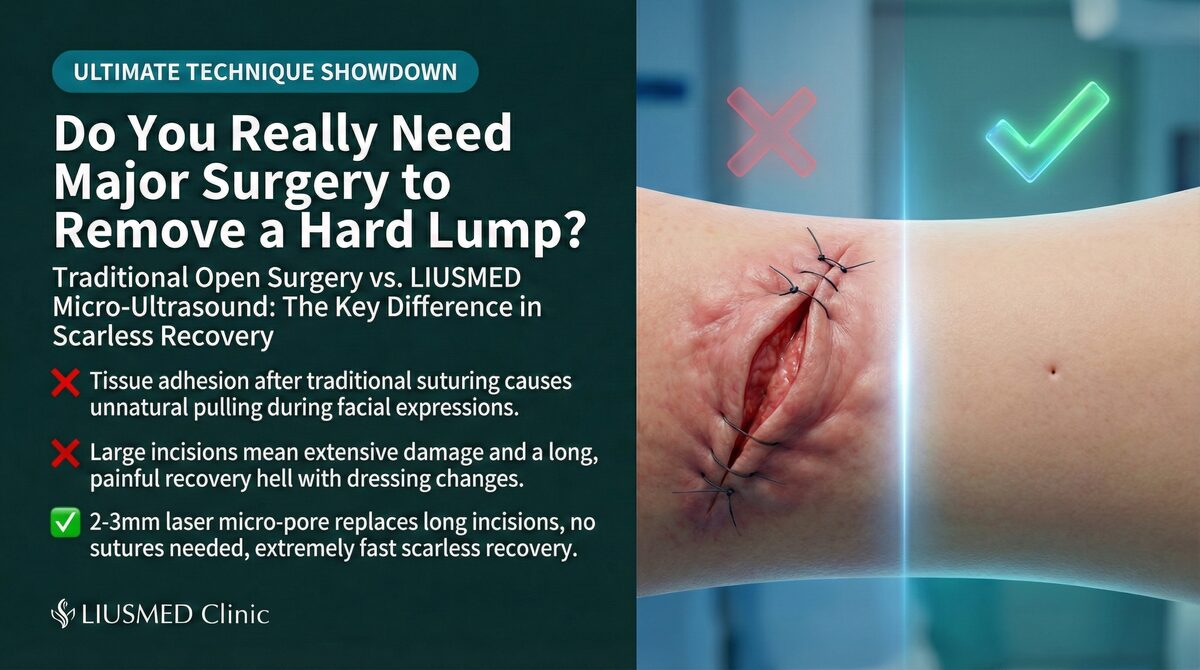
FILLER REVISION compares minimally invasive ultrasound extraction vs. open surgery — showing why our pinhole approach achieves better clearance with less scarring and faster recovery.

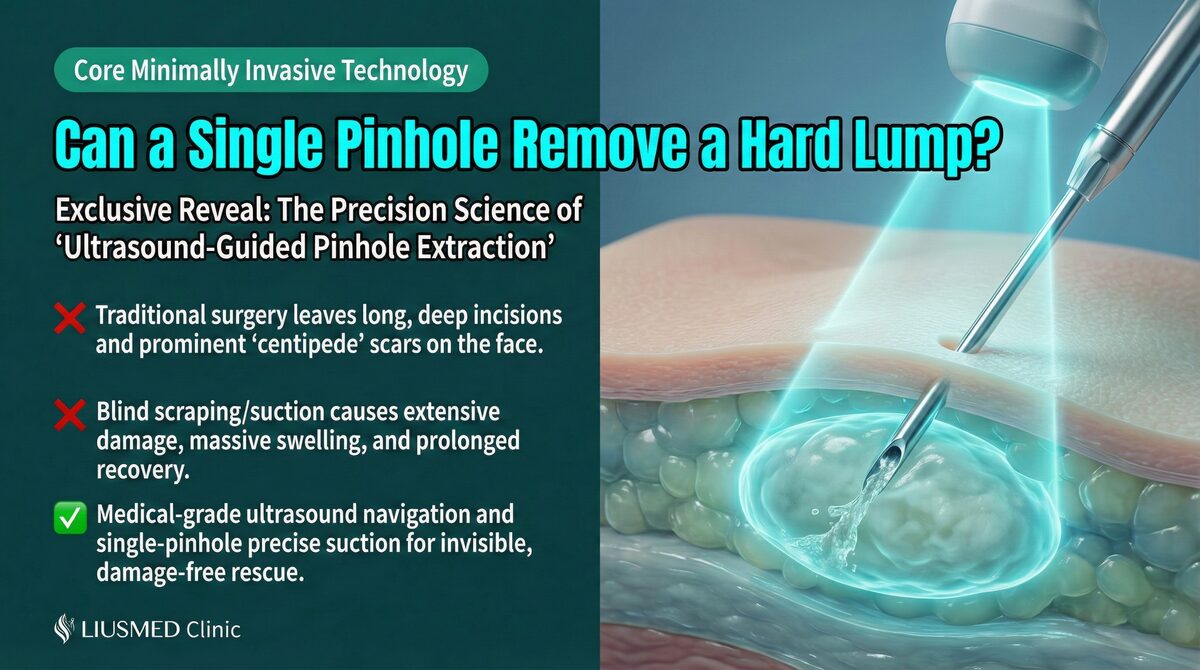
FILLER REVISION's core technique — Ultrasound-Guided Pinhole Extraction — achieves thorough filler clearance through sub-20% incisions, solving cases that blind dissolution and open surgery cannot.

FILLER REVISION explores the compound risks when multiple filler types coexist in your face — and why precise imaging is critical before attempting any correction.

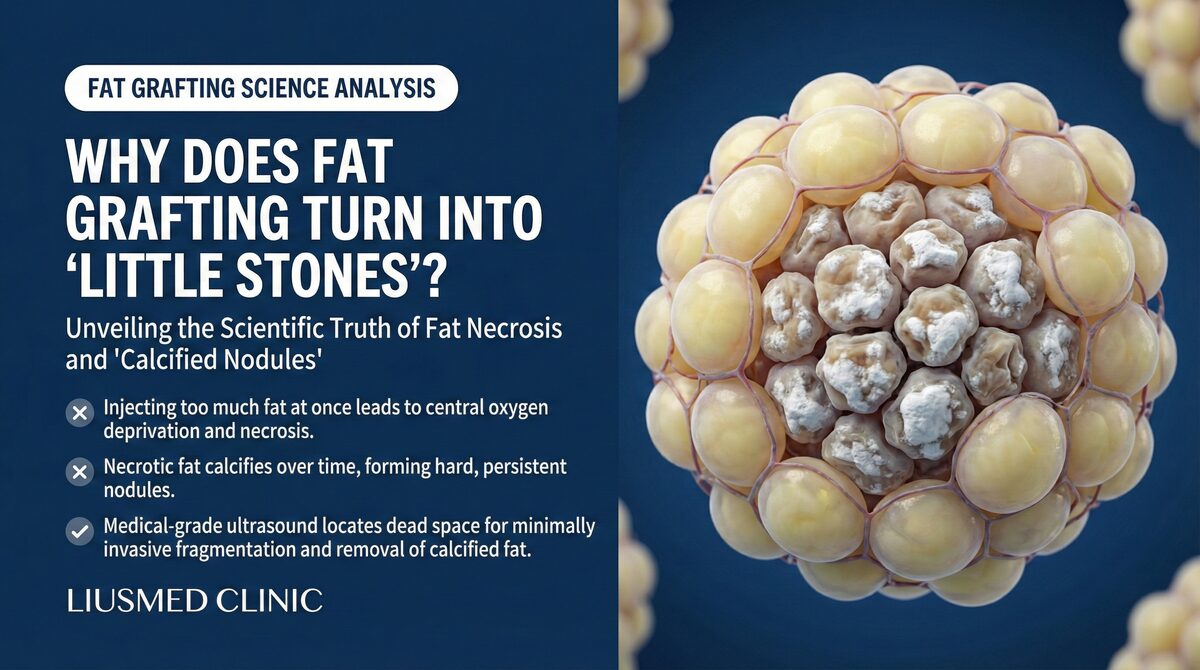
FILLER REVISION explains why fat grafting can lead to calcification and hard lumps when grafted fat fails to survive — and why these complications have no pharmaceutical solution.

Filler vascular occlusion is the most dangerous injection complication. FILLER REVISION explains the mechanism — from skin blanching to tissue necrosis — emergency rescue protocol with hyaluronidase, the golden window, and how ultrasound-guided injection prevents ophthalmic artery occlusion and skin necrosis.

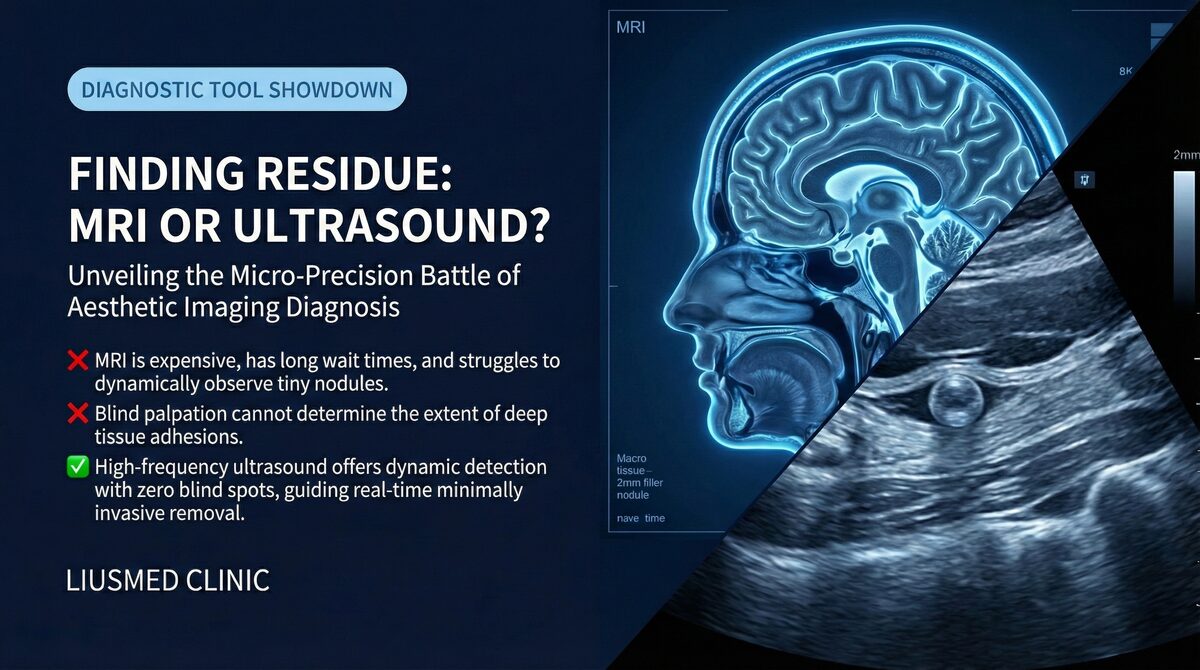
FILLER REVISION compares MRI and high-resolution ultrasound for filler diagnosis — explaining which modality best reveals your complication and guides effective treatment.

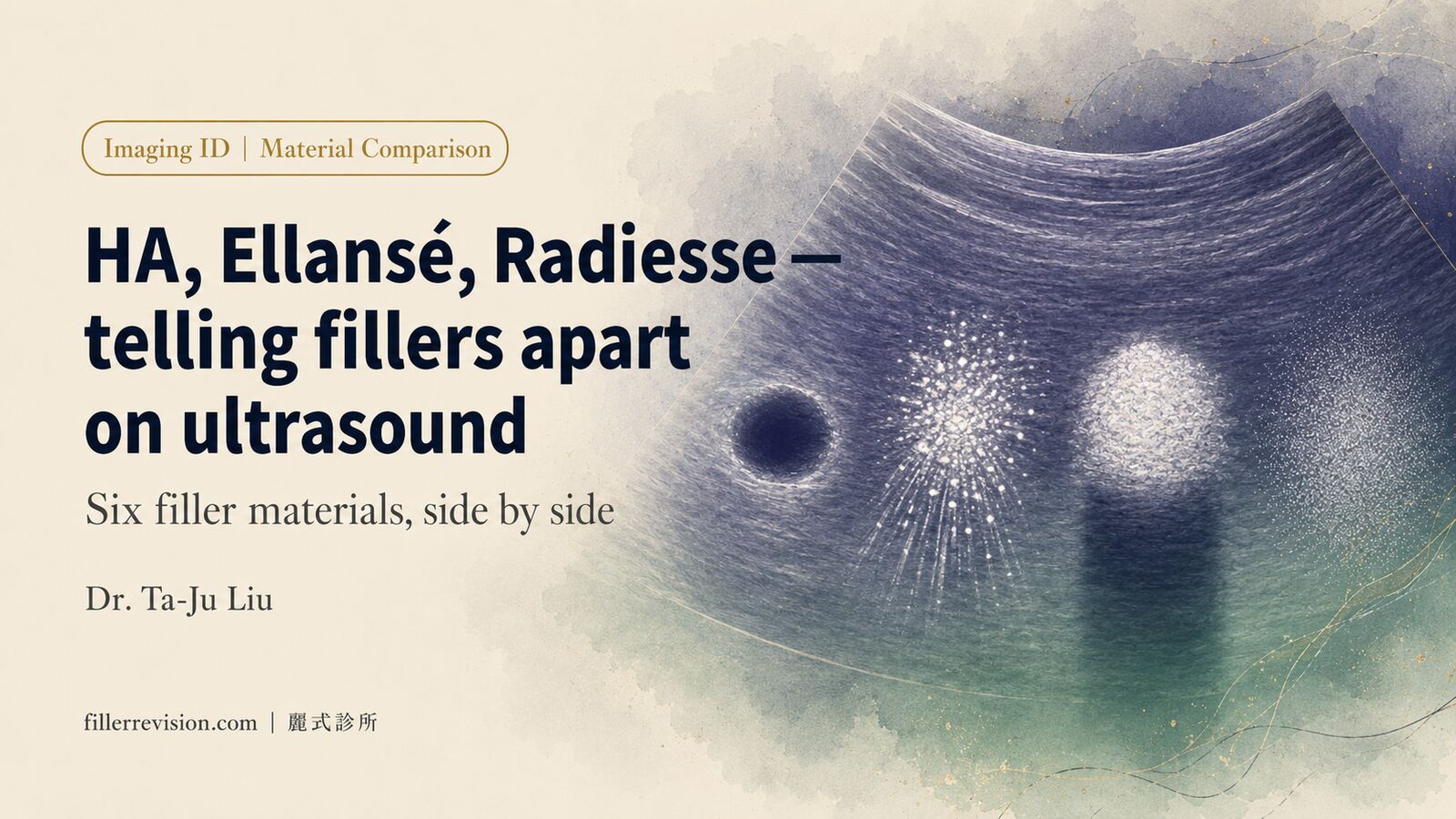
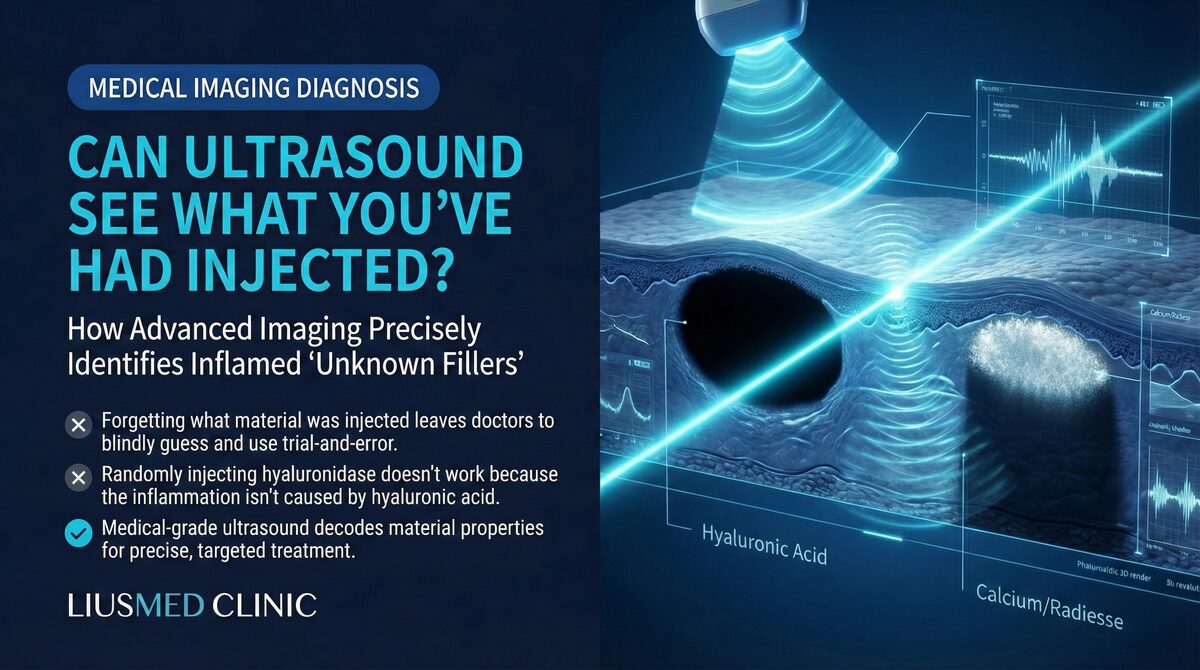
FILLER REVISION uses high-resolution ultrasound to identify what type of filler is inside your face — the critical first step for planning a revision strategy that actually works.

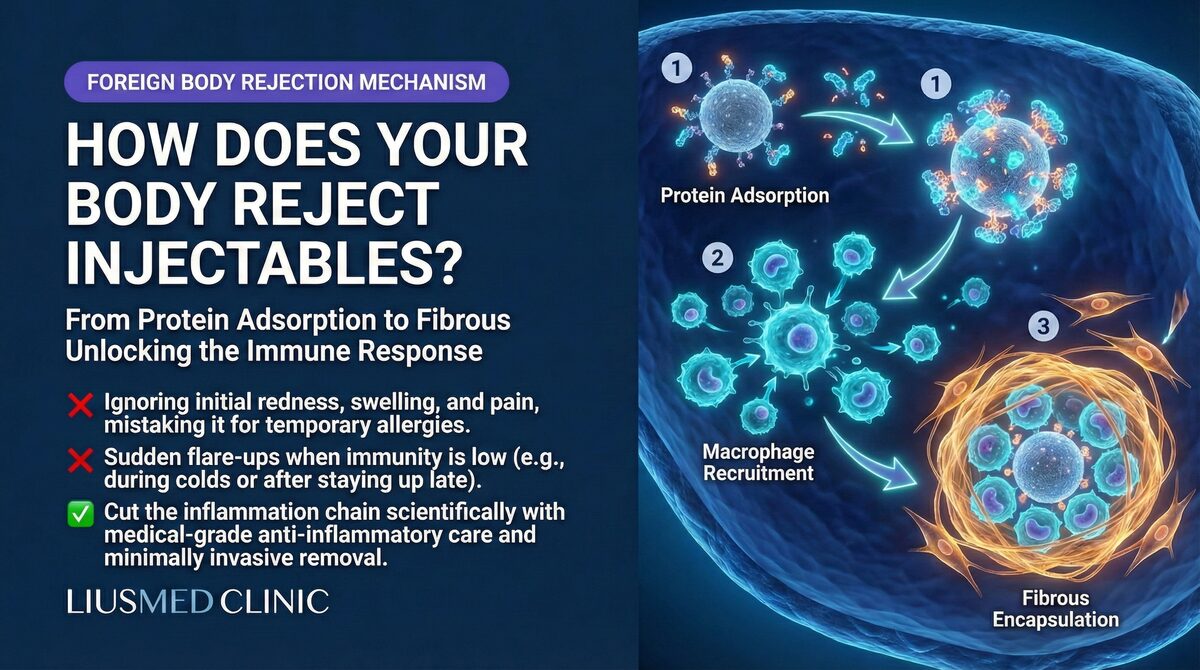
FILLER REVISION traces the full immune cascade from injection to chronic fibrosis — explaining why your body never truly accepts filler and what this means for revision.

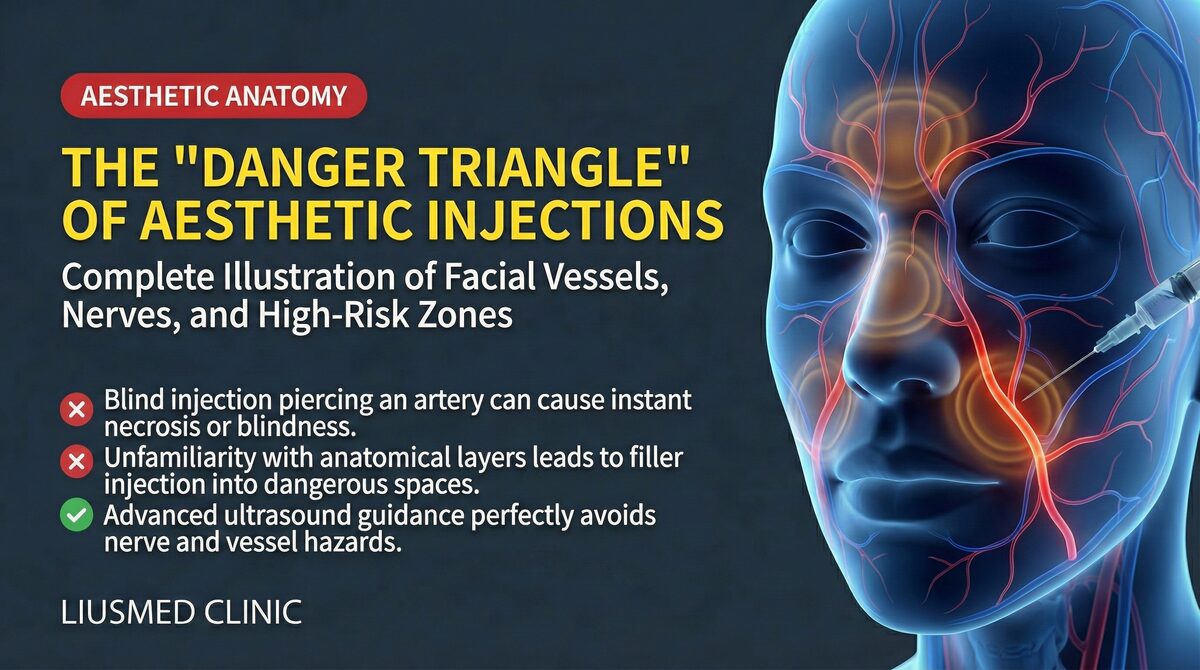
FILLER REVISION maps the vascular danger zones that explain why filler complications occur — and how ultrasound-guided revision navigates these risks safely.

FILLER REVISION examines the polymer chemistry that makes HA fillers persist years beyond their labeled duration — and why this science matters for anyone seeking revision.

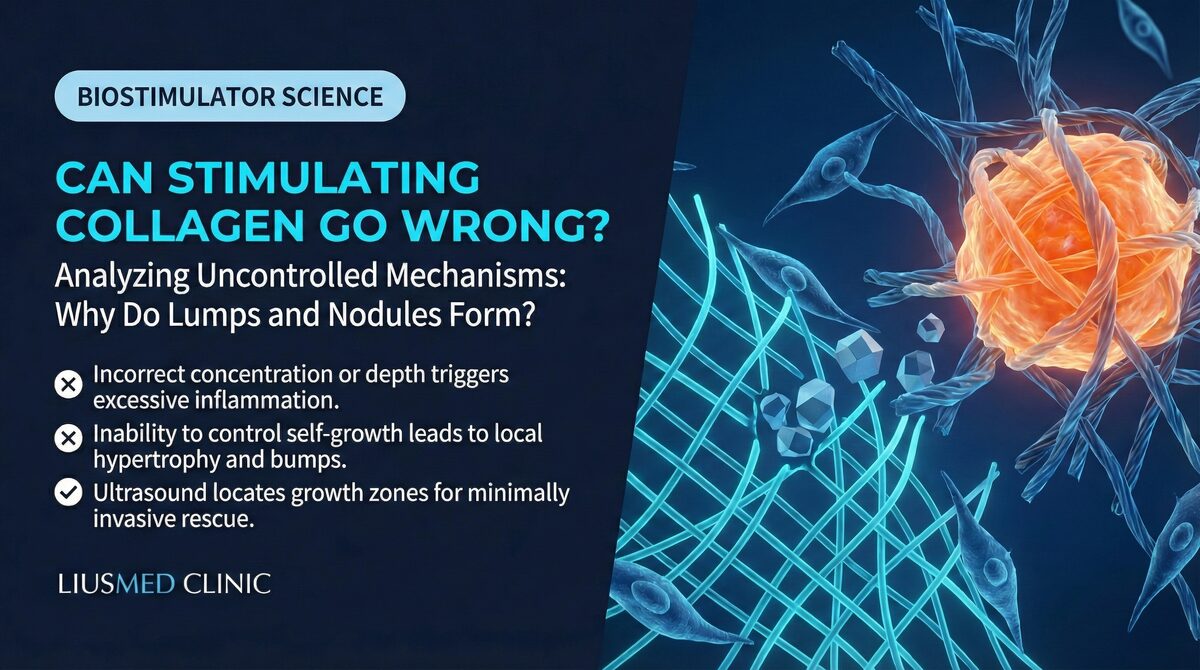
FILLER REVISION explains the molecular science behind collagen stimulators — and why the 'natural' collagen they produce can become the hardest complication to reverse.

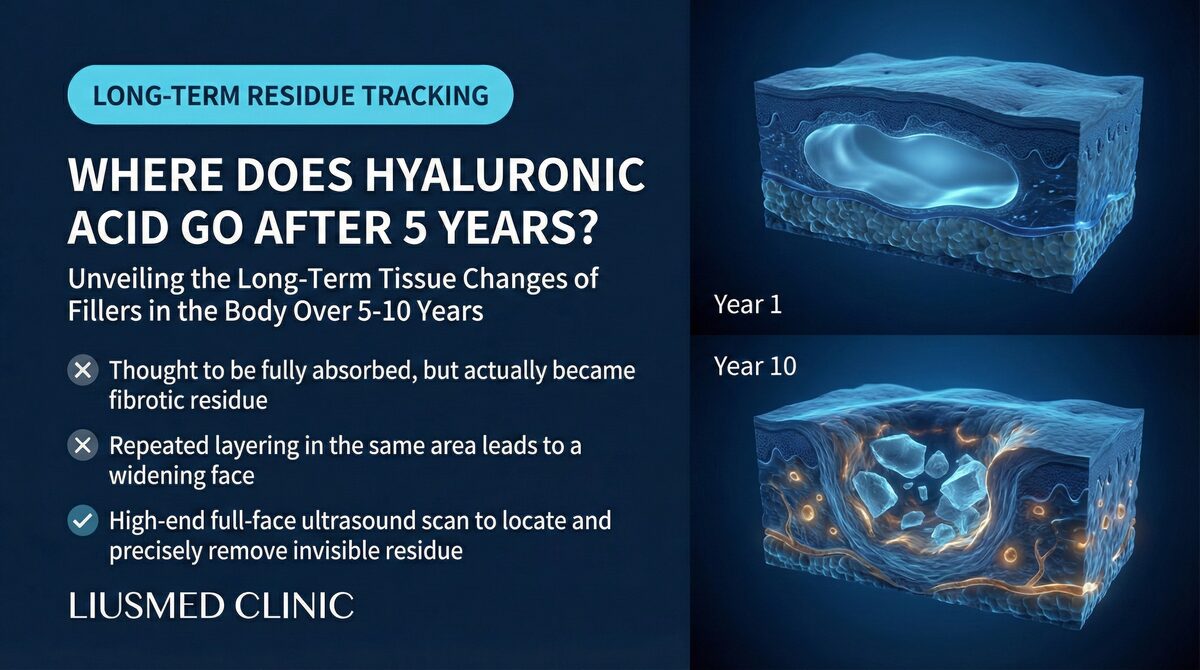
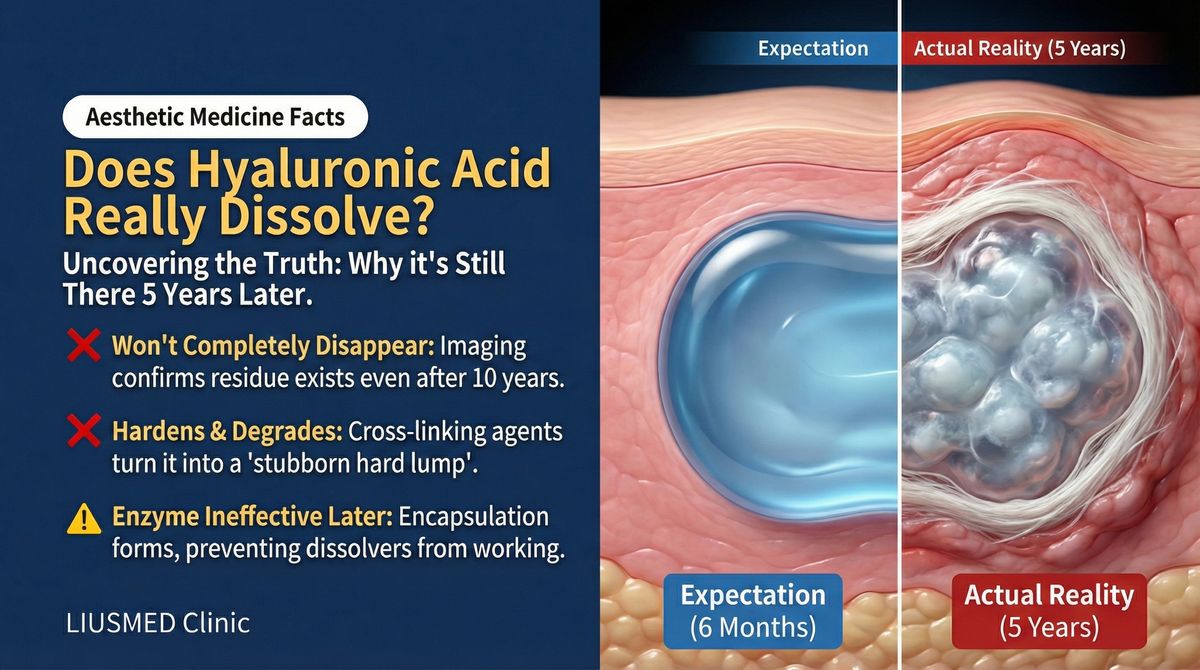
FILLER REVISION examines what happens to fillers over 5–10 years — degradation, migration, encapsulation, and calcification — and why understanding these changes is essential for revision.

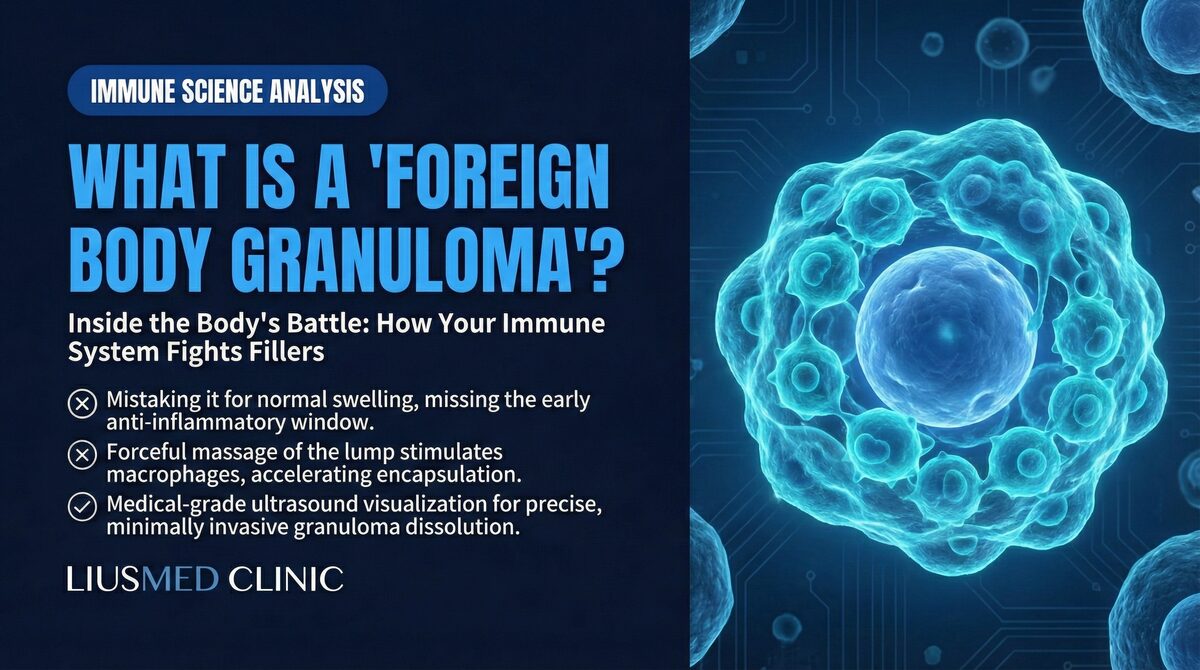
FILLER REVISION explains why granulomas form, why medications only provide temporary relief, and how removing the foreign body is the only way to end the immune war.

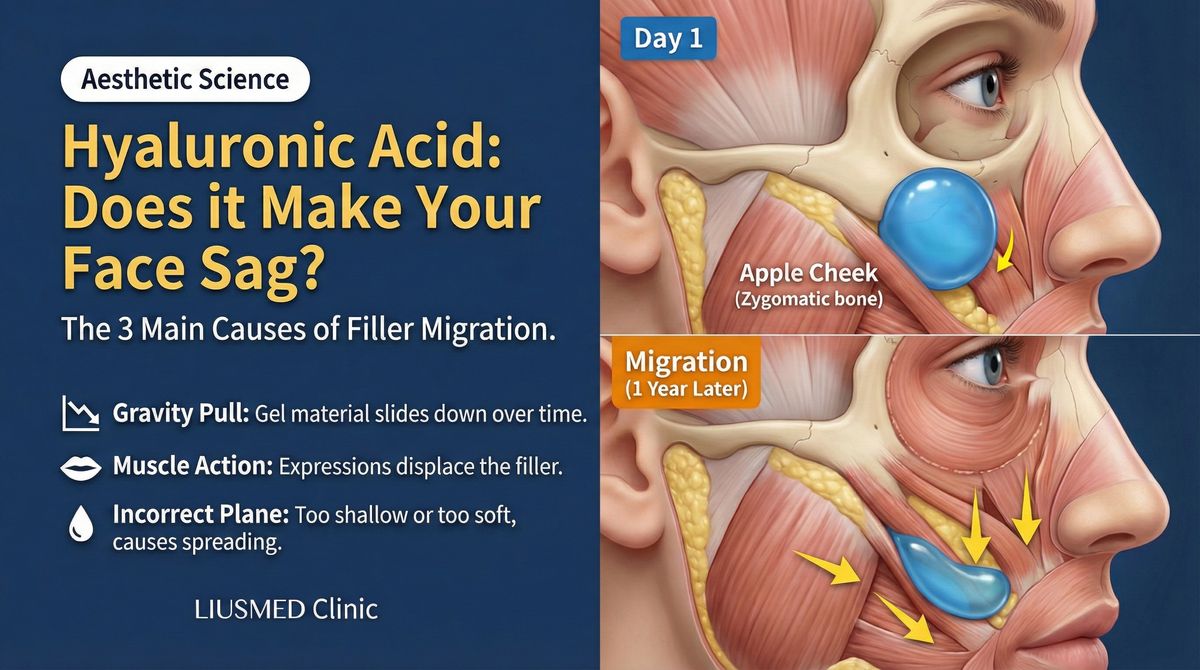
FILLER REVISION explains the physics, biology, and material science behind why fillers move from their injection site — and how science-based revision can correct displacement.

FILLER REVISION explains the science behind biofilm — the hidden bacterial colony on your filler surface that antibiotics cannot eliminate, and why physical removal is the only lasting solution.

FILLER REVISION reveals why HA fillers can persist for years despite being called 'temporary' — and how science-based revision addresses filler that refuses to dissolve.

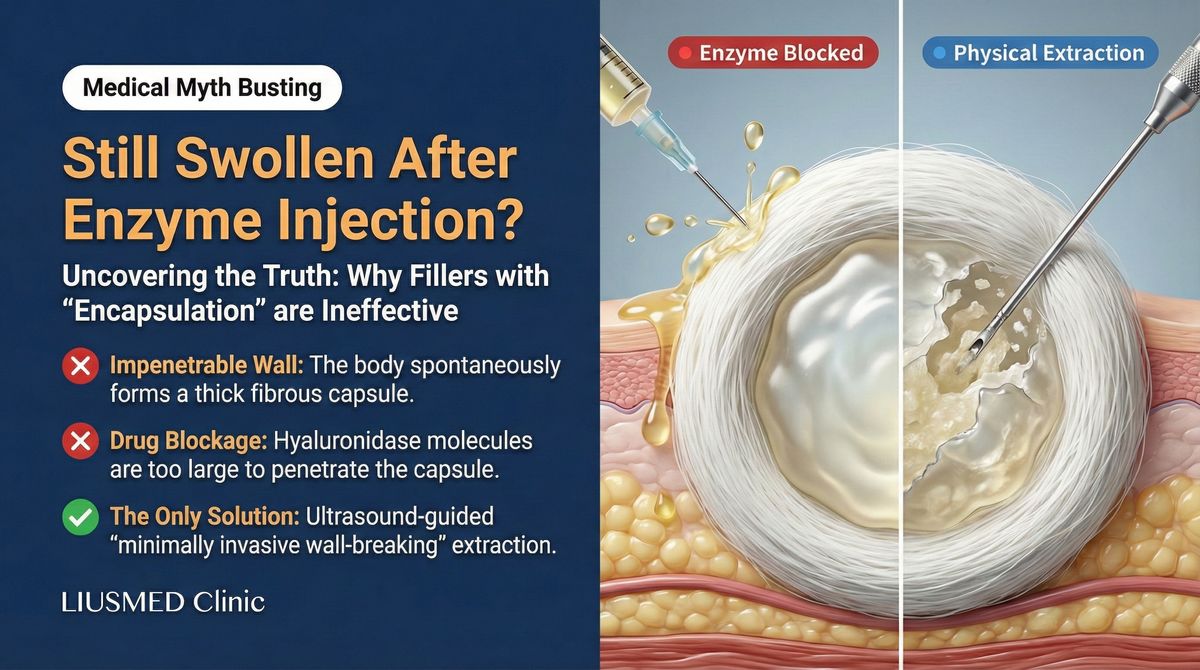
FILLER REVISION explains why your body builds a wall around filler that dissolvers cannot penetrate — and how ultrasound-guided extraction provides the definitive solution.

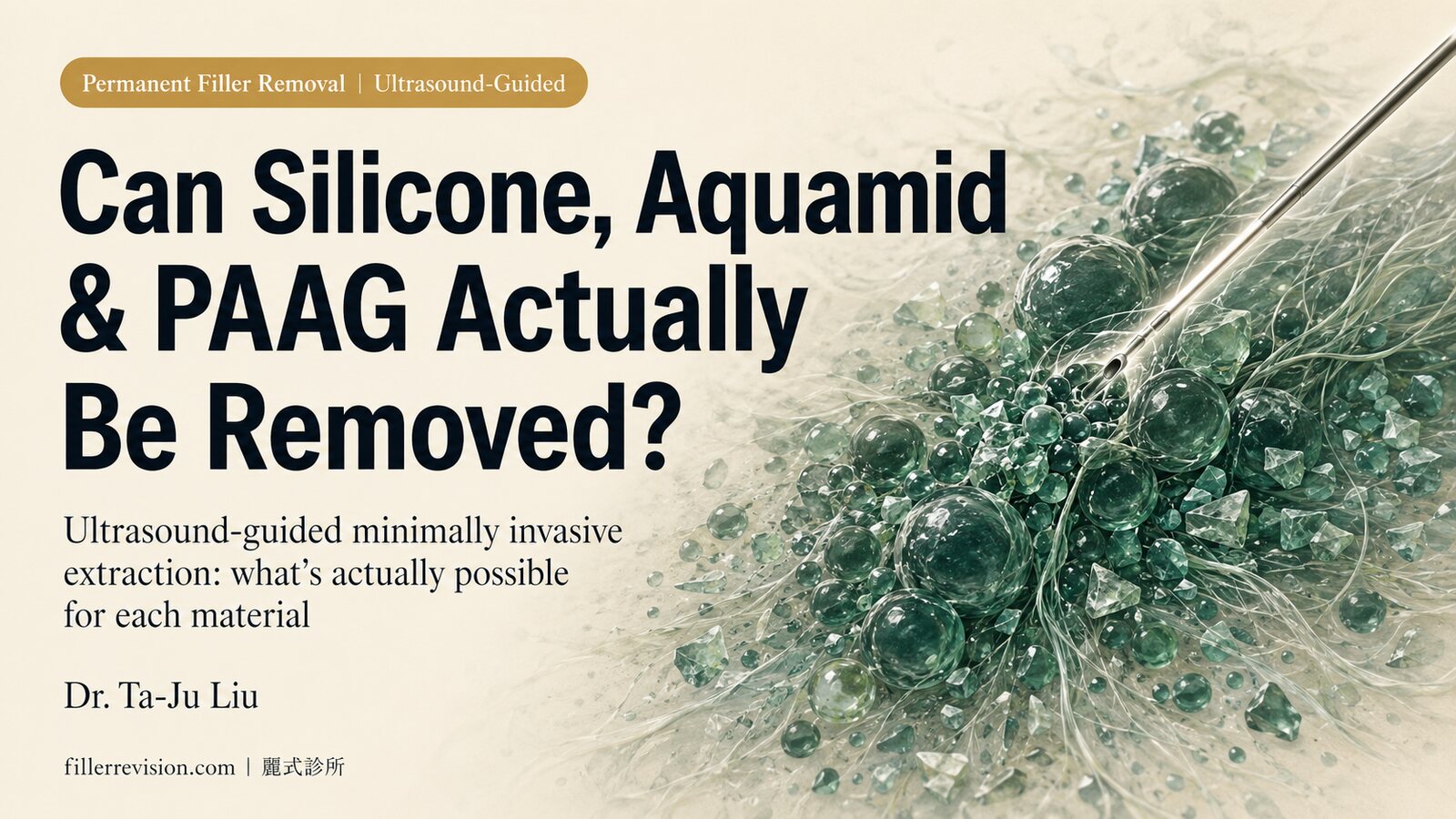
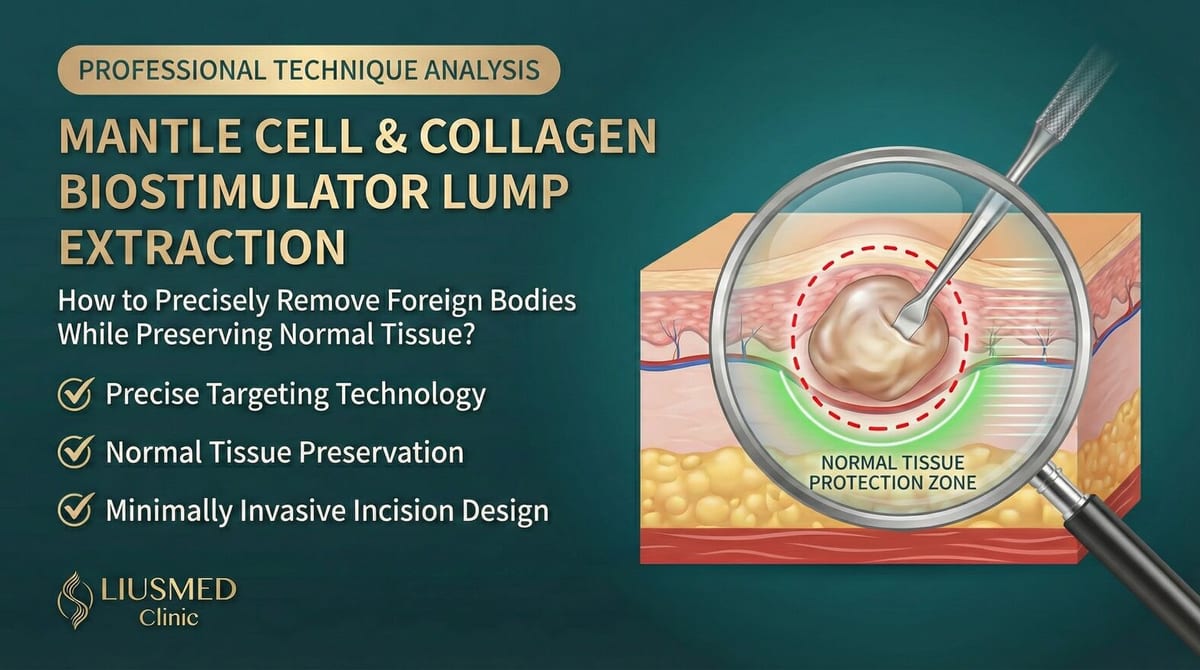
FILLER REVISION's ultrasound-guided extraction removes filler lumps other clinics can't — preserving tissue while achieving complete clearance through pinhole incisions.