Why Does Filler Move After Injection?
If you are reading this, you have probably noticed something unsettling: the filler that was placed precisely in one area has gradually shifted somewhere it does not belong. You may be wondering whether this is normal, whether your injector made a mistake, or whether anything can be done. You are not alone — filler displacement is a well-documented phenomenon that affects thousands of patients each year. Understanding why fillers migrate requires an appreciation of anatomy, physics, and material science working together in complex ways.
Migration (Filler Migration) does not always happen immediately. Some patients notice changes weeks, months, or even years after their procedure. The filler may shift subtly within the same anatomical zone, or it may travel to an entirely different region of the face. Both scenarios present unique challenges for correction.
What Forces Cause Filler to Migrate?
Gravity: The Constant Downward Pull
The simplest force acting on injected filler is gravity. Soft tissue fillers are gel-like substances with a measurable weight. Over time, gravitational force pulls the material downward, particularly in areas where the surrounding tissue provides insufficient structural support.
Think of it like placing a marble on a tilted surface covered in honey. The marble does not move instantly, but over hours and days, it gradually slides downward. In facial anatomy, areas such as the tear troughs, nasolabial folds, and jawline are especially susceptible to gravitational displacement because the tissue architecture in these zones offers relatively loose support.
Key insight: At FILLER REVISION, our clinical experience confirms that gravity alone rarely causes dramatic migration. It acts as a slow, persistent force that compounds over months, especially when combined with other factors — which is why thorough assessment of all contributing forces is essential before planning any correction.
Tissue Plane Spreading
The face is composed of multiple tissue layers—skin, subcutaneous fat, muscle, fascia, and periosteum. Between these layers exist potential spaces called tissue planes. When filler is injected into or near these planes, it can spread laterally along the path of least resistance.
Imagine pouring water between two sheets of glass. The water does not stay in a single spot—it spreads outward in a thin film. Similarly, filler injected at the wrong depth can track along fascial planes, distributing itself far from the intended target.
This is particularly relevant in the periorbital region (around the eyes), where tissue planes are thin and loosely adherent. Filler placed superficially in the tear trough can migrate to the malar region or even the lateral cheek within months.
Muscle Movement and Dynamic Forces
The face is one of the most muscularly active regions of the body. We produce thousands of facial expressions each day—smiling, chewing, speaking, squinting. Each of these movements generates mechanical forces that push, compress, and shear the surrounding soft tissue.
Filler placed in close proximity to active muscles is subject to these repetitive forces. Over time, the cumulative effect of daily muscle contraction can gradually displace the material. The orbicularis oculi (around the eyes) and orbicularis oris (around the mouth) are among the most active facial muscles and are common sites of migration-related complications.
Key insight: Dynamic muscle forces are among the most underestimated causes of filler displacement. A product that appears perfectly placed immediately after injection may shift significantly within weeks due to normal facial movement.
Repeated Injections and Volume Overload
Each injection session introduces additional material into an area that already contains filler from previous treatments. As volume accumulates over multiple sessions, the tissue becomes progressively distended. The increased pressure within the tissue creates a hydraulic force that pushes filler outward along available pathways.
This is analogous to overfilling a water balloon. At a certain point, the material does not simply add volume—it creates outward pressure that forces the contents to redistribute. Patients who receive frequent top-up injections without allowing previous material to metabolize are at significantly higher risk of migration.
Injection Technique and Depth Errors
Not all migration is caused by biological forces. Technical factors during the injection itself play a significant role. Injecting at the wrong tissue depth, using excessive pressure on the syringe, or placing material in a plane with poor structural containment all increase the likelihood of displacement.
High-pressure injection can create a hydraulic jet effect that disperses filler beyond the intended area. Similarly, injecting into a vascular or lymphatic-rich zone can accelerate material spread through fluid dynamics rather than gravity.
Why Do Some Fillers Migrate More Than Others?
Material Properties Matter
Not all fillers behave the same way once injected. The three most important material properties that influence migration are:
← Swipe to see more →
| Property | Low Migration Risk | High Migration Risk |
|---|---|---|
| Viscosity | High viscosity (thick gels) | Low viscosity (thin gels) |
| Cohesivity | High cohesivity (holds shape) | Low cohesivity (spreads easily) |
| Elasticity | High G-prime (firm) | Low G-prime (soft) |
Viscosity determines how easily a filler flows. Thinner fillers spread more readily through tissue planes. Cohesivity describes how well a filler holds together as a single mass rather than fragmenting. G-prime (elasticity) reflects a filler's resistance to deformation under pressure.
A highly cohesive, high-viscosity filler with a strong G-prime will resist gravitational and muscular forces more effectively than a thin, low-cohesivity product. This is why volumizing fillers designed for deep injection (such as those used for cheek augmentation) tend to migrate less than fine-particle fillers designed for superficial wrinkle correction.
Cross-Linking Density
Hyaluronic acid fillers are stabilized through chemical cross-linking. The degree of cross-linking directly affects how the product behaves in tissue. Highly cross-linked HA (Hyaluronic Acid) fillers are more resistant to degradation and displacement. Lightly cross-linked products, while softer and more natural-feeling, are more prone to spreading and migration.
Key insight: The choice of filler product is itself a risk factor for migration. Selecting a filler with appropriate rheological properties for the specific anatomical site is essential for long-term stability.
Where Does Migration Occur Most Frequently?
High-Risk Anatomical Sites
Certain facial regions are inherently more susceptible to filler migration due to their anatomical characteristics:
- Tear troughs and under-eyes: Thin tissue, loose adherence between layers, constant orbicularis oculi movement
- Lips: Highly mobile, thin tissue, constant mechanical stress from speaking and eating
- Nasolabial folds: Gravitational dependency, repetitive smile movement
- Temples: Large potential spaces, proximity to temporal fascia planes
- Jawline and chin: Gravitational dependency combined with platysma and masseter activity
What This Means for FILLER REVISION Patients
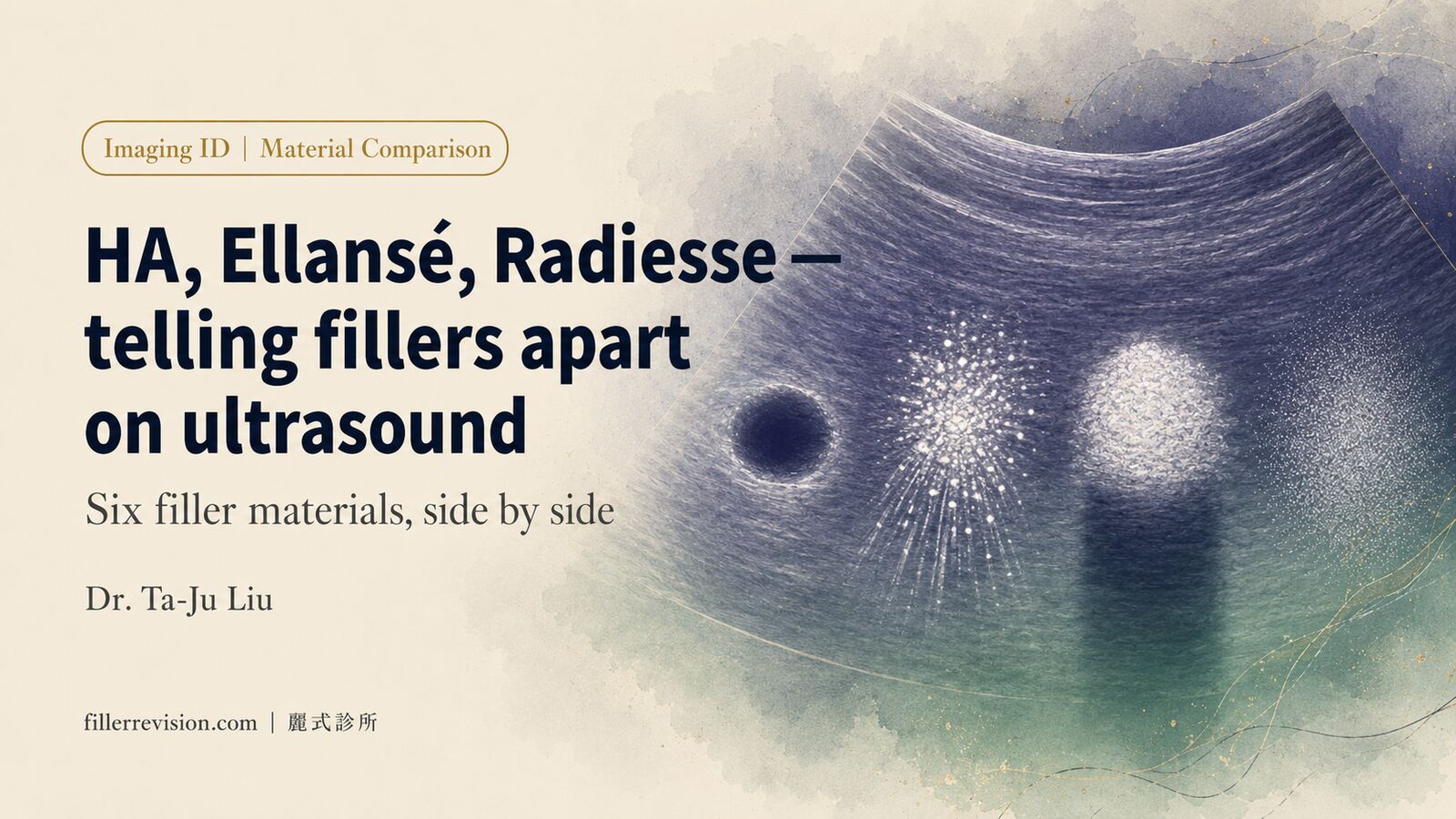
Understanding migration science is not merely academic — it directly shapes how we approach revision at FILLER REVISION. Every patient presenting with displaced filler has a unique combination of contributing forces: gravity, tissue plane anatomy, muscle dynamics, and accumulated volume from previous sessions. Before any corrective procedure, we use high-frequency ultrasound to map exactly where material has traveled and identify which forces drove the displacement. This evidence-based assessment ensures that our revision strategy addresses not only the migrated filler itself but also the underlying mechanical and anatomical factors that caused it to move. Without this analysis, any correction risks repeating the same outcome.
How Can Migration Be Prevented?
Prevention begins with three fundamental principles:
-
Appropriate product selection: Choose fillers with rheological properties suited to the target site. Deep structural areas require firm, cohesive products. Superficial areas require careful volume limitation.
-
Correct injection depth and technique: Precise anatomical knowledge ensures filler is placed in tissue layers with adequate structural containment. Avoiding tissue planes that facilitate spreading is critical.
-
Conservative volume management: Avoid overfilling. Staged treatment across multiple sessions with modest volumes per session significantly reduces hydraulic displacement risk.
-
Adequate interval between sessions: Allowing previous filler to integrate with tissue before adding more volume prevents cumulative pressure buildup.
What Can Be Done When Migration Has Already Occurred?
Once filler has migrated, the treatment approach depends on the type of filler involved:
- Hyaluronic acid fillers: Hyaluronidase can dissolve displaced HA in many cases, though encapsulated or deeply integrated material may resist enzymatic breakdown.
- Non-HA fillers (Ellanse, Sculptra, Radiesse): No dissolver exists. Physical extraction through ultrasound-guided techniques is the primary reliable option.
- Silicone and permanent fillers: Surgical excision is the traditional approach elsewhere; we do not perform it. Ultrasound-guided pinhole extraction (about 2 mm) can reduce the material, treating extensive or widespread deposits zone by zone over several sessions, but complete removal may not be possible.
Key insight: The longer migrated filler remains in place, the more it integrates with surrounding tissue. Early intervention produces significantly better outcomes than delayed treatment.
When Should You Seek Professional Evaluation?
If you notice any of the following after a filler treatment, professional evaluation is recommended:
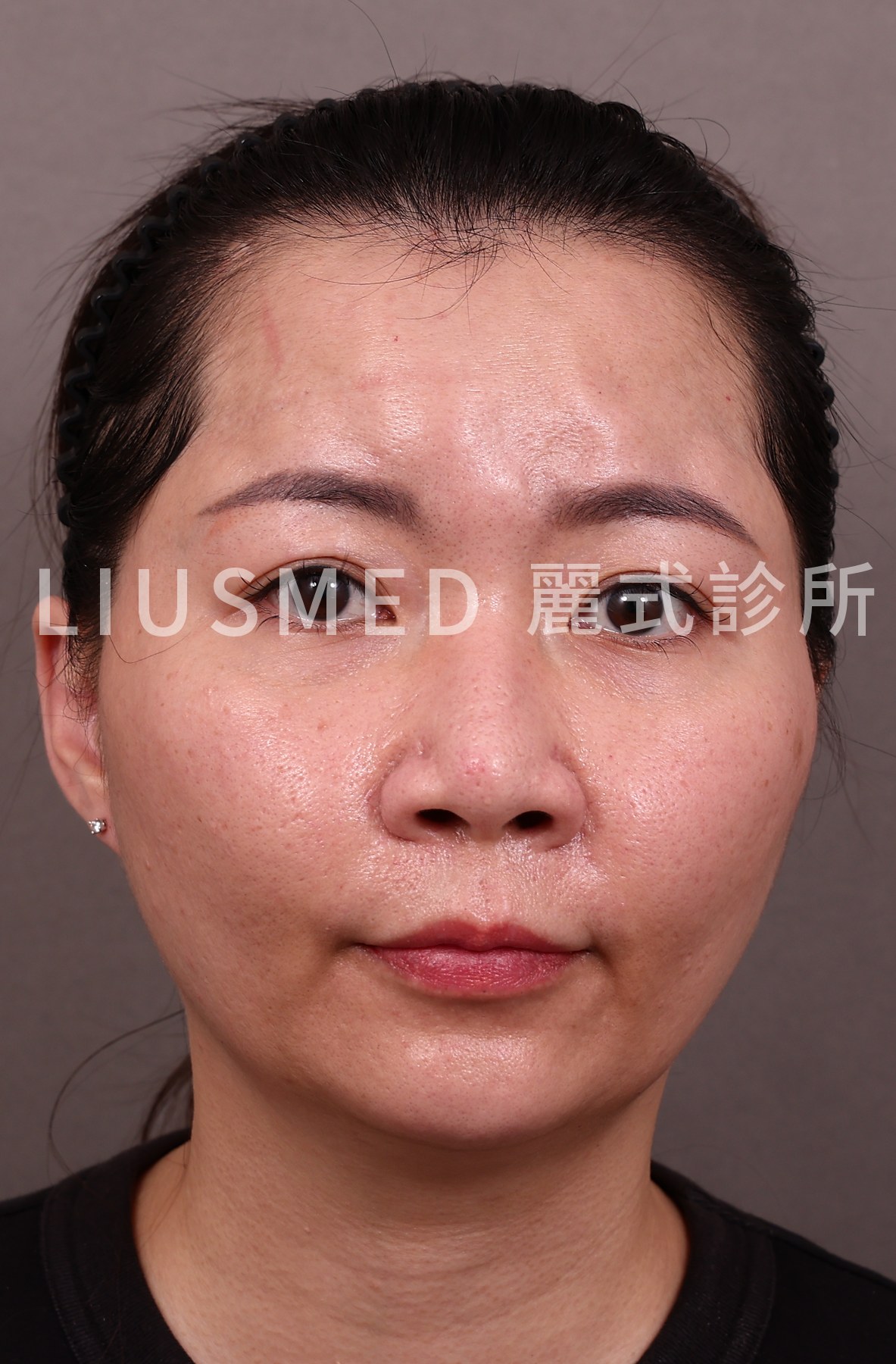
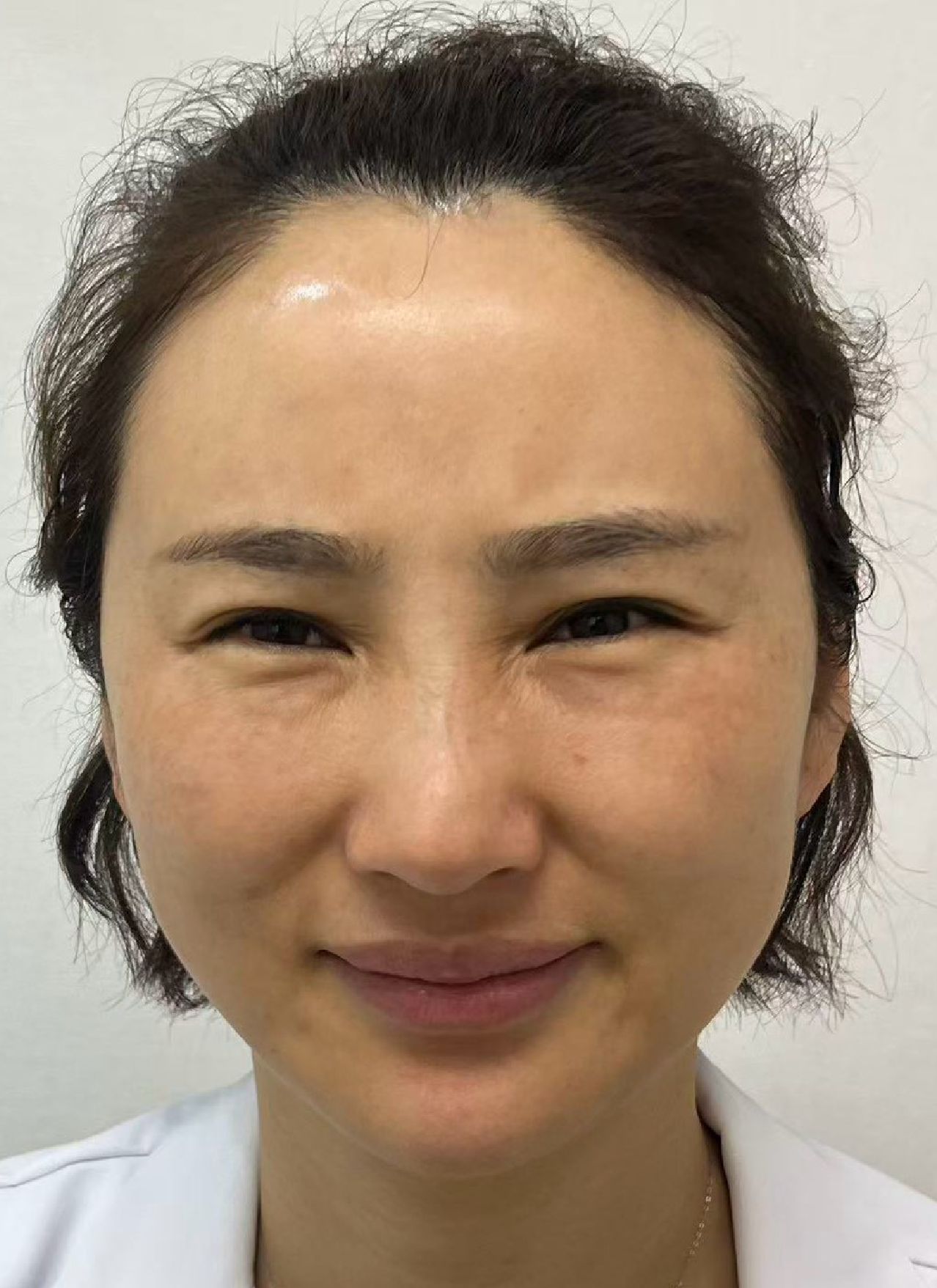
- Visible asymmetry that was not present before treatment
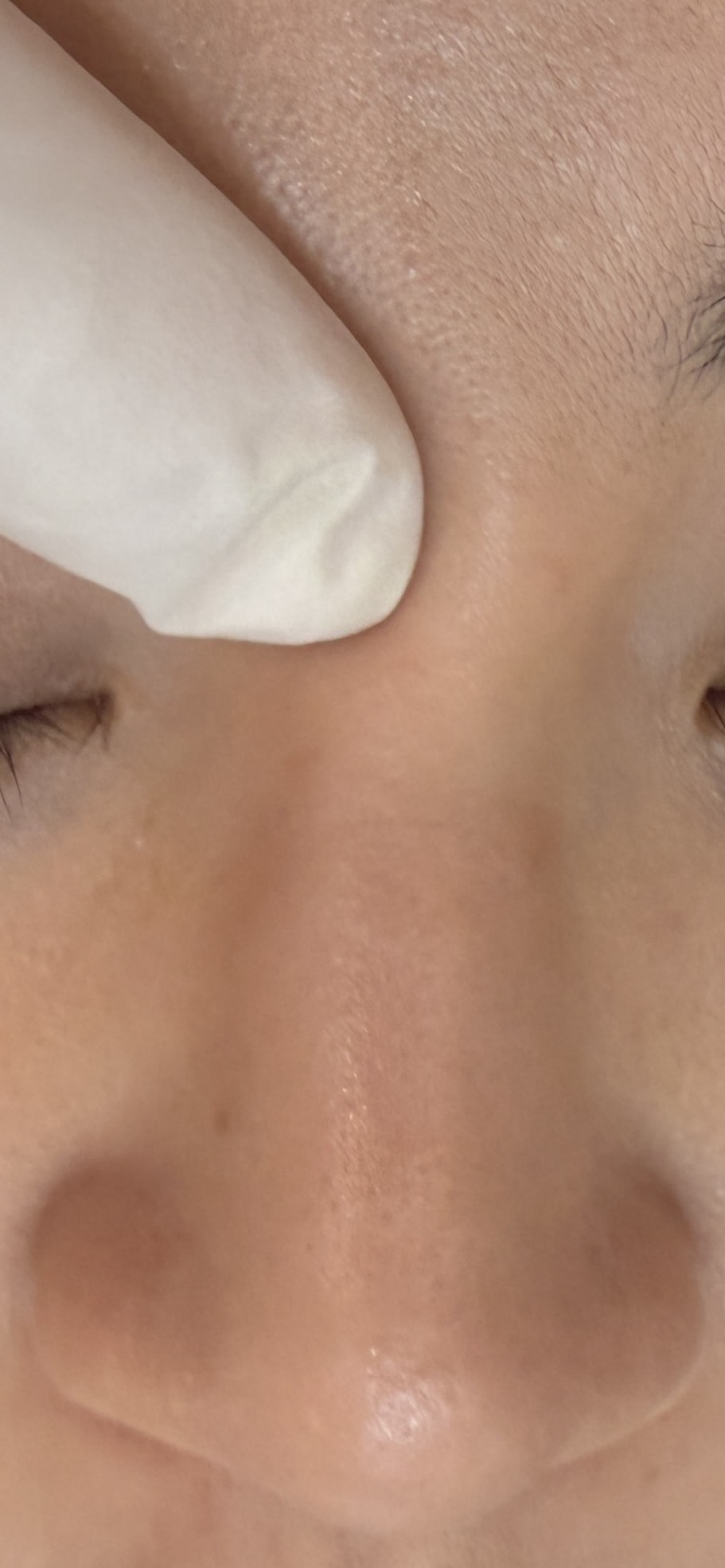
- New lumps or fullness in areas adjacent to the injection site
- Progressive changes in contour that worsen over weeks or months
- Swelling or firmness that does not resolve with time
An experienced filler revision specialist can use high-frequency ultrasound to visualize the exact location and extent of migrated material, enabling a targeted treatment plan.
Take the First Step Toward Correction with FILLER REVISION
If you suspect filler migration, early assessment is essential for the best possible outcome. At FILLER REVISION, Dr. Ta-Ju Liu uses ultrasound-guided imaging to visualize displaced material precisely, identify the forces driving migration, and develop a targeted correction plan — because effective revision starts with understanding exactly what went wrong.
Frequently Asked Questions
How long after a filler injection can migration appear?
Migration does not always happen immediately. Some patients notice changes weeks, months, or even years after their procedure. The filler may shift subtly within the same anatomical zone, or it may travel to an entirely different region of the face.
Which areas of the face are most prone to filler migration?
Certain regions are inherently more susceptible due to their anatomy. The tear troughs and under-eyes have thin tissue and constant orbicularis oculi movement; the lips are highly mobile with constant stress from speaking and eating; nasolabial folds, temples, and the jawline and chin are also higher-risk sites because of gravity and muscle activity.
Why do some fillers migrate more easily than others?
Material properties make the difference. Three matter most: viscosity (how easily it flows), cohesivity (how well it holds together as one mass), and G-prime or elasticity (its resistance to deformation under pressure). A high-viscosity, highly cohesive, firm filler resists gravity and muscle forces better, while thin, low-cohesivity products spread and migrate more readily.
If my filler has already migrated, can it still be corrected?
Yes, and the approach depends on the filler type. Hyaluronic acid fillers can often be dissolved with hyaluronidase, though encapsulated or deeply integrated material may resist it. Non-HA fillers such as Ellanse, Sculptra, and Radiesse have no dissolver, so physical extraction through ultrasound-guided techniques is the primary reliable option. The longer migrated filler stays in place, the more it integrates with surrounding tissue, so earlier evaluation generally leads to better outcomes.
When should I see a specialist after a filler treatment?
Professional evaluation is recommended if you notice visible asymmetry that was not there before, new lumps or fullness in areas next to the injection site, contour changes that progressively worsen over weeks or months, or swelling or firmness that does not resolve with time. An experienced filler revision specialist can use high-frequency ultrasound to visualize exactly where the material has traveled and plan targeted treatment.
Can repeated top-up injections make migration worse?
Yes. Each session adds material to an area that already contains filler, so the tissue becomes progressively distended. This is like overfilling a water balloon: at a certain point the added volume creates outward hydraulic pressure that pushes filler along available pathways. Patients who receive frequent top-ups without allowing previous material to metabolize are at significantly higher risk of migration.
Related Reading
- Nose Filler Shifted or Widened? Migration Correction
- Forehead Filler Bumps & Migration? Precision Correction
- Jawline Filler Shifted or Lumpy? Contour Restoration
- Under-Eye Puffiness After Filler? Aging vs Migration Diagnosis
- Cheeks Sagging After Filler? Gravity-Induced Descent Repair
- Facial Asymmetry After Filler? Precision Correction