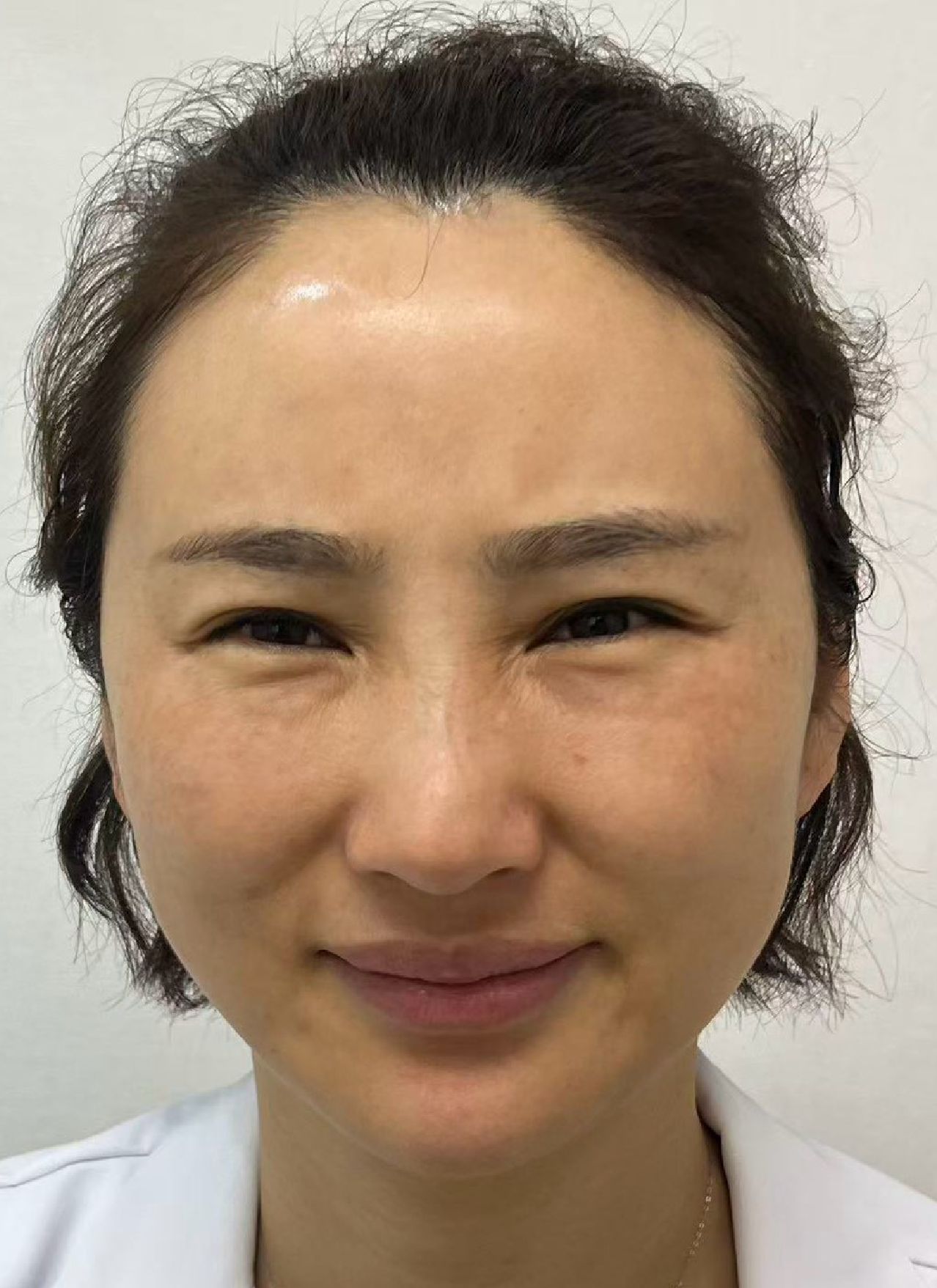
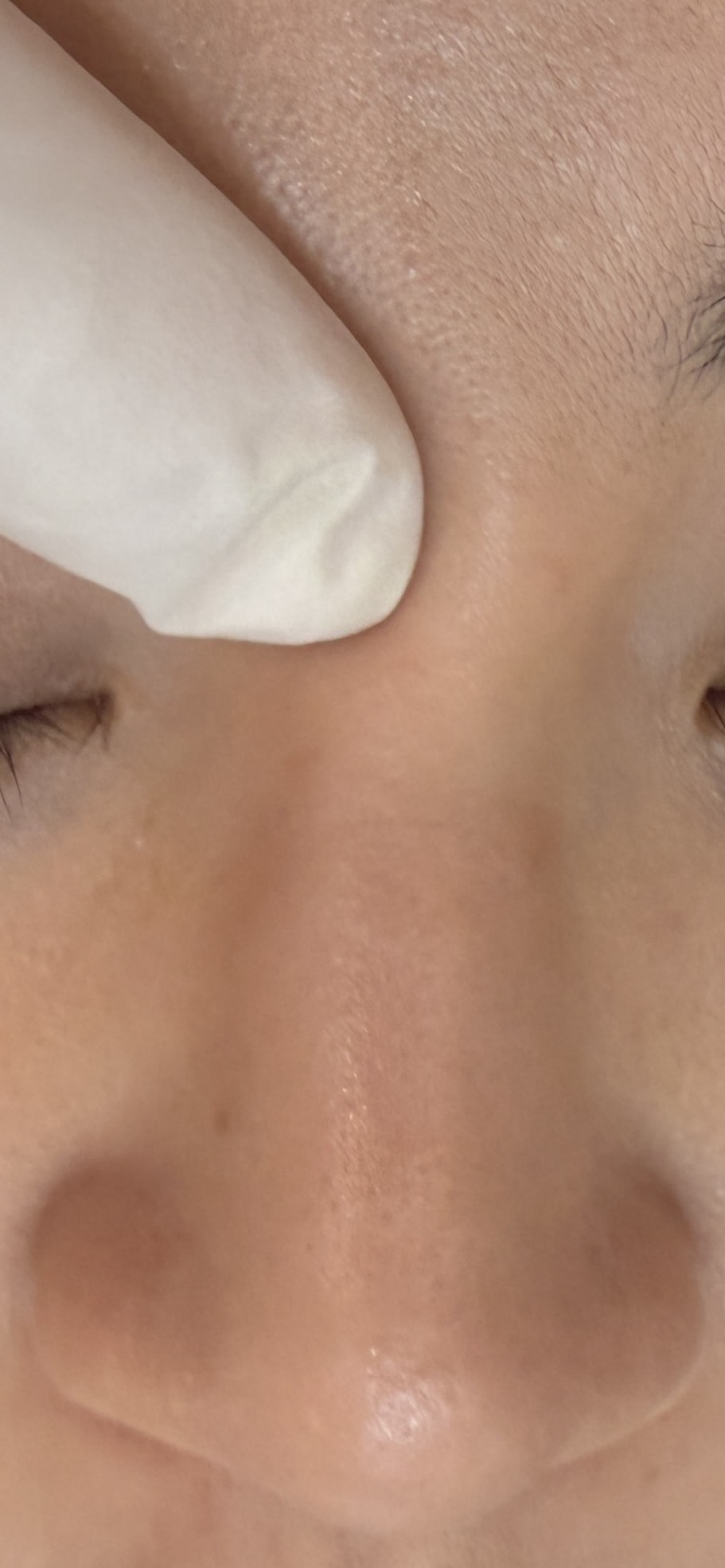
The Core Challenge of Filler Lump Extraction
"I've been to three different clinics. They all told me the lump couldn't be fully removed, or that I'd need open surgery with visible scarring." If this sounds familiar, you are not alone. Many patients arrive at FILLER REVISION after being told their filler lumps were untreatable — only to find that, under ultrasound guidance, much of the material can often still be removed through a pinhole.
The goal of minimally invasive filler lump extraction is to remove as much of the foreign material as can be safely removed while maximally preserving normal tissue. This requires precise localization, skilled technique, and deep understanding of different filler characteristics. This article explains professional extraction techniques and principles.
Types of Filler Lumps
Classification by Filler Material
← Swipe to see more →
| Filler Type | Dissolvable | Lump Characteristics | Removal Difficulty |
|---|---|---|---|
| Hyaluronic Acid | ✅ Yes | Soft, clear boundaries | Lower |
| Collagen | ❌ No | Medium firmness | Medium |
| Radiesse (CaHA) | ❌ No | White, granular | Medium-High |
| Collagen Stimulator | ❌ No | Hard, irregular | High |
| Silicone/Oil | ❌ No | Migrating, diffuse | Very High |
| PMMA (Polymethyl Methacrylate) | ❌ No | Permanent, encapsulated | Very High |
Classification by Problem Type
← Swipe to see more →
| Problem Type | Common Cause | Treatment Approach |
|---|---|---|
| Migrated lump | Post-injection displacement | Locate and extract |
| Overfilled lump | Excessive injection | Partial removal, or as much as can be safely removed |
| Inflammatory lump | Foreign body reaction | Anti-inflammatory then extract |
| Infected lump | Bacterial infection | Control infection first |
| Calcified lump | Long-standing presence | Extensive or deep deposits are treated zone by zone over several sessions, still through a pinhole of about 2 mm |
Why Is Lump Extraction Difficult?
Technical Challenges
← Swipe to see more →
| Challenge | Explanation |
|---|---|
| Localization difficulty | Filler may migrate and diffuse, hard to determine extent |
| Unclear boundaries | Mixed with normal tissue, difficult to separate |
| Sensitive location | Face has important nerves and vessels |
| Secondary damage | Over-extraction causes depression |
| Residue risk | Incomplete removal leads to recurrence |
Difficulty Varies by Material
<svg xmlns="http://www.w3.org/2000/svg" viewBox="0 0 380 262" role="group" aria-labelledby="dg-b6ca4c" style="width:100%;max-width:440px;height:auto;display:block;margin:2rem auto"> <title id="dg-b6ca4c">Difficulty Varies by Material: flow diagram</title> <defs><marker id="ah" viewBox="0 0 8 8" refX="6.5" refY="4" markerWidth="5" markerHeight="5" orient="auto"><path d="M0 0.5 L7 4 L0 7.5 z" fill="rgb(var(--color-accent-rgb) / 0.7)"/></marker><marker id="ahs" viewBox="0 0 8 8" refX="6.5" refY="4" markerWidth="4" markerHeight="4" orient="auto"><path d="M0 0.5 L7 4 L0 7.5 z" fill="rgb(var(--color-accent-rgb) / 0.8)"/></marker></defs> <text x="190.0" y="18.0" text-anchor="middle" font-size="11" fill="var(--color-text-secondary)">Difficulty from low to high</text> <rect x="10" y="41.5" width="360" height="29.0" rx="8" fill="rgb(var(--color-bg-elevated-rgb))" stroke="var(--color-border)"/> <text x="190.0" y="58.8" text-anchor="middle" font-size="12.5" font-weight="600" fill="var(--color-text-primary)">Hyaluronic Acid (dissolvable)</text> <path d="M190.0 70.5 v13.0" fill="none" stroke="rgb(var(--color-accent-rgb) / 0.7)" stroke-width="1.5" stroke-linecap="round" marker-end="url(#ah)"/> <rect x="10" y="87.5" width="360" height="29.0" rx="8" fill="rgb(var(--color-bg-elevated-rgb))" stroke="var(--color-border)"/> <text x="190.0" y="104.8" text-anchor="middle" font-size="12.5" font-weight="600" fill="var(--color-text-primary)">Radiesse (granules can be curetted)</text> <path d="M190.0 116.5 v13.0" fill="none" stroke="rgb(var(--color-accent-rgb) / 0.7)" stroke-width="1.5" stroke-linecap="round" marker-end="url(#ah)"/> <rect x="10" y="133.5" width="360" height="29.0" rx="8" fill="rgb(var(--color-bg-elevated-rgb))" stroke="var(--color-border)"/> <text x="190.0" y="150.8" text-anchor="middle" font-size="12.5" font-weight="600" fill="var(--color-text-primary)">Collagen Stimulator (severe fibrosis)</text> <path d="M190.0 162.5 v13.0" fill="none" stroke="rgb(var(--color-accent-rgb) / 0.7)" stroke-width="1.5" stroke-linecap="round" marker-end="url(#ah)"/> <rect x="10" y="179.5" width="360" height="29.0" rx="8" fill="rgb(var(--color-bg-elevated-rgb))" stroke="var(--color-border)"/> <text x="190.0" y="196.8" text-anchor="middle" font-size="12.5" font-weight="600" fill="var(--color-text-primary)">Silicone (migrating diffusion)</text> <path d="M190.0 208.5 v13.0" fill="none" stroke="rgb(var(--color-accent-rgb) / 0.7)" stroke-width="1.5" stroke-linecap="round" marker-end="url(#ah)"/> <rect x="10" y="225.5" width="360" height="29.0" rx="8" fill="rgb(var(--color-bg-elevated-rgb))" stroke="var(--color-border)"/> <path d="M10.5 233.5 v13.0" stroke="rgb(var(--color-accent-rgb))" stroke-width="3" stroke-linecap="round"/> <text x="190.0" y="242.8" text-anchor="middle" font-size="12.5" font-weight="600" fill="var(--color-text-primary)">PMMA (permanent encapsulation)</text> </svg>💡 Dr. Liu explains: "At FILLER REVISION, we've refined this technique through thousands of cases — matching each filler type to its optimal extraction approach. Hyaluronic acid can be dissolved first, Radiesse needs curettage, collagen stimulator requires careful separation of fibrotic tissue. No single method works for all cases, which is why material-specific expertise matters."
Ultrasound (Ultrasonography)-Guided Technology
Why Is Ultrasound Necessary?
← Swipe to see more →
| Advantage | Explanation |
|---|---|
| Precise localization | Real-time imaging shows filler location |
| Boundary identification | Distinguishes foreign material from normal tissue |
| Depth assessment | Understands filler depth and extent |
| Safe guidance | Avoids important vessels and nerves |
| Intraoperative monitoring | Checks what has been removed and what remains |
Ultrasound Characteristics of Different Fillers
← Swipe to see more →
| Filler | Ultrasound Features |
|---|---|
| Hyaluronic Acid | Hypoechoic, homogeneous |
| Radiesse | Hyperechoic, granular |
| Collagen Stimulator Lump | Mixed echogenicity, irregular |
| Silicone | Hyperechoic, "snowflake" phenomenon |
| Calcified Tissue | Strong echo, posterior shadow |
Precision Extraction Technique
Surgical Principles
- Pinhole access: Work through a pinhole of about 2 mm, with no incision, to reduce scarring
- Precise localization: Confirm position under ultrasound guidance
- Conservative excision: Remove only foreign material, preserve normal tissue
- Layer separation: Separate along tissue planes
- Check for residue: Ultrasound check of remaining material
Surgical Steps
Step 1: Pre-operative Assessment
← Swipe to see more →
| Item | Content |
|---|---|
| History taking | Filler type, injection time, clinic |
| Physical exam | Lump location, size, depth |
| Ultrasound exam | Precise localization and extent assessment |
| Treatment plan | Determine optimal extraction method |
Step 2: Anesthesia and Preparation
- Local anesthesia plus gentle pain-relief anesthesia
- Mark pinhole location
- Ultrasound preparation
Step 3: Pinhole Design
We use pinhole minimally invasive extraction, with pinhole size typically 1-2mm.
← Swipe to see more →
| Consideration | Design Principle |
|---|---|
| Hidden scar | Along skin lines or concealed areas |
| Close to lesion | Shorten operating distance |
| Adequate view | Keeps the extraction field clearly visible |
| Minimal wound | Usually 1-2mm |
Step 4: Lump Extraction
<svg xmlns="http://www.w3.org/2000/svg" viewBox="0 0 380 181" role="group" aria-labelledby="dg-05ccb3" style="width:100%;max-width:440px;height:auto;display:block;margin:2rem auto"> <title id="dg-05ccb3">Surgical Steps: flow diagram</title> <defs><marker id="ah" viewBox="0 0 8 8" refX="6.5" refY="4" markerWidth="5" markerHeight="5" orient="auto"><path d="M0 0.5 L7 4 L0 7.5 z" fill="rgb(var(--color-accent-rgb) / 0.7)"/></marker><marker id="ahs" viewBox="0 0 8 8" refX="6.5" refY="4" markerWidth="4" markerHeight="4" orient="auto"><path d="M0 0.5 L7 4 L0 7.5 z" fill="rgb(var(--color-accent-rgb) / 0.8)"/></marker></defs> <rect x="10.0" y="8.0" width="116.0" height="39.0" rx="8" fill="rgb(var(--color-bg-elevated-rgb))" stroke="var(--color-border)"/> <text x="68.0" y="21.7" text-anchor="middle" font-size="11" fill="var(--color-text-primary)">Ultrasound</text> <text x="68.0" y="36.2" text-anchor="middle" font-size="11" fill="var(--color-text-primary)">localization</text> <path d="M127.0 27.5 h4" stroke="rgb(var(--color-accent-rgb) / 0.8)" stroke-width="1.4" marker-end="url(#ahs)"/> <rect x="132.0" y="8.0" width="116.0" height="39.0" rx="8" fill="rgb(var(--color-bg-elevated-rgb))" stroke="var(--color-border)"/> <text x="190.0" y="21.7" text-anchor="middle" font-size="11" fill="var(--color-text-primary)">Pinhole entry</text> <path d="M249.0 27.5 h4" stroke="rgb(var(--color-accent-rgb) / 0.8)" stroke-width="1.4" marker-end="url(#ahs)"/> <rect x="254.0" y="8.0" width="116.0" height="39.0" rx="8" fill="rgb(var(--color-bg-elevated-rgb))" stroke="var(--color-border)"/> <text x="312.0" y="21.7" text-anchor="middle" font-size="11" fill="var(--color-text-primary)">Find filler layer</text> <path d="M190.0 47.0 v13.0" fill="none" stroke="rgb(var(--color-accent-rgb) / 0.7)" stroke-width="1.5" stroke-linecap="round" marker-end="url(#ah)"/> <rect x="10.0" y="64.0" width="177.0" height="39.0" rx="8" fill="rgb(var(--color-bg-elevated-rgb))" stroke="var(--color-border)"/> <text x="98.5" y="77.7" text-anchor="middle" font-size="11" fill="var(--color-text-primary)">Careful separation</text> <text x="98.5" y="92.2" text-anchor="middle" font-size="11" fill="var(--color-text-primary)">(preserve normal tissue)</text> <path d="M188.0 83.5 h4" stroke="rgb(var(--color-accent-rgb) / 0.8)" stroke-width="1.4" marker-end="url(#ahs)"/> <rect x="193.0" y="64.0" width="177.0" height="39.0" rx="8" fill="rgb(var(--color-bg-elevated-rgb))" stroke="var(--color-border)"/> <text x="281.5" y="77.7" text-anchor="middle" font-size="11" fill="var(--color-text-primary)">Extract material</text> <path d="M190.0 103.0 v13.0" fill="none" stroke="rgb(var(--color-accent-rgb) / 0.7)" stroke-width="1.5" stroke-linecap="round" marker-end="url(#ah)"/> <rect x="10.0" y="120.0" width="116.0" height="53.5" rx="8" fill="rgb(var(--color-bg-elevated-rgb))" stroke="var(--color-border)"/> <text x="68.0" y="133.7" text-anchor="middle" font-size="11" fill="var(--color-text-primary)">Ultrasound</text> <text x="68.0" y="148.2" text-anchor="middle" font-size="11" fill="var(--color-text-primary)">checks for</text> <text x="68.0" y="162.7" text-anchor="middle" font-size="11" fill="var(--color-text-primary)">residue</text> <path d="M127.0 146.8 h4" stroke="rgb(var(--color-accent-rgb) / 0.8)" stroke-width="1.4" marker-end="url(#ahs)"/> <rect x="132.0" y="120.0" width="116.0" height="53.5" rx="8" fill="rgb(var(--color-bg-elevated-rgb))" stroke="var(--color-border)"/> <text x="190.0" y="133.7" text-anchor="middle" font-size="11" fill="var(--color-text-primary)">Hemostasis</text> <path d="M249.0 146.8 h4" stroke="rgb(var(--color-accent-rgb) / 0.8)" stroke-width="1.4" marker-end="url(#ahs)"/> <rect x="254.0" y="120.0" width="116.0" height="53.5" rx="8" fill="rgb(var(--color-bg-elevated-rgb))" stroke="var(--color-border)"/> <text x="312.0" y="133.7" text-anchor="middle" font-size="11" fill="var(--color-text-primary)">No suture needed</text> </svg>Step 5: Post-operative Care
- Pressure dressing
- Antibiotics for infection prevention
- Schedule follow-up
Extraction Strategies by Filler Type
Hyaluronic Acid Lumps
← Swipe to see more →
| Approach | Suitable Situation |
|---|---|
| Hyaluronidase injection | Mild irregularity, small area |
| Dissolve + curettage | Incomplete dissolution residue |
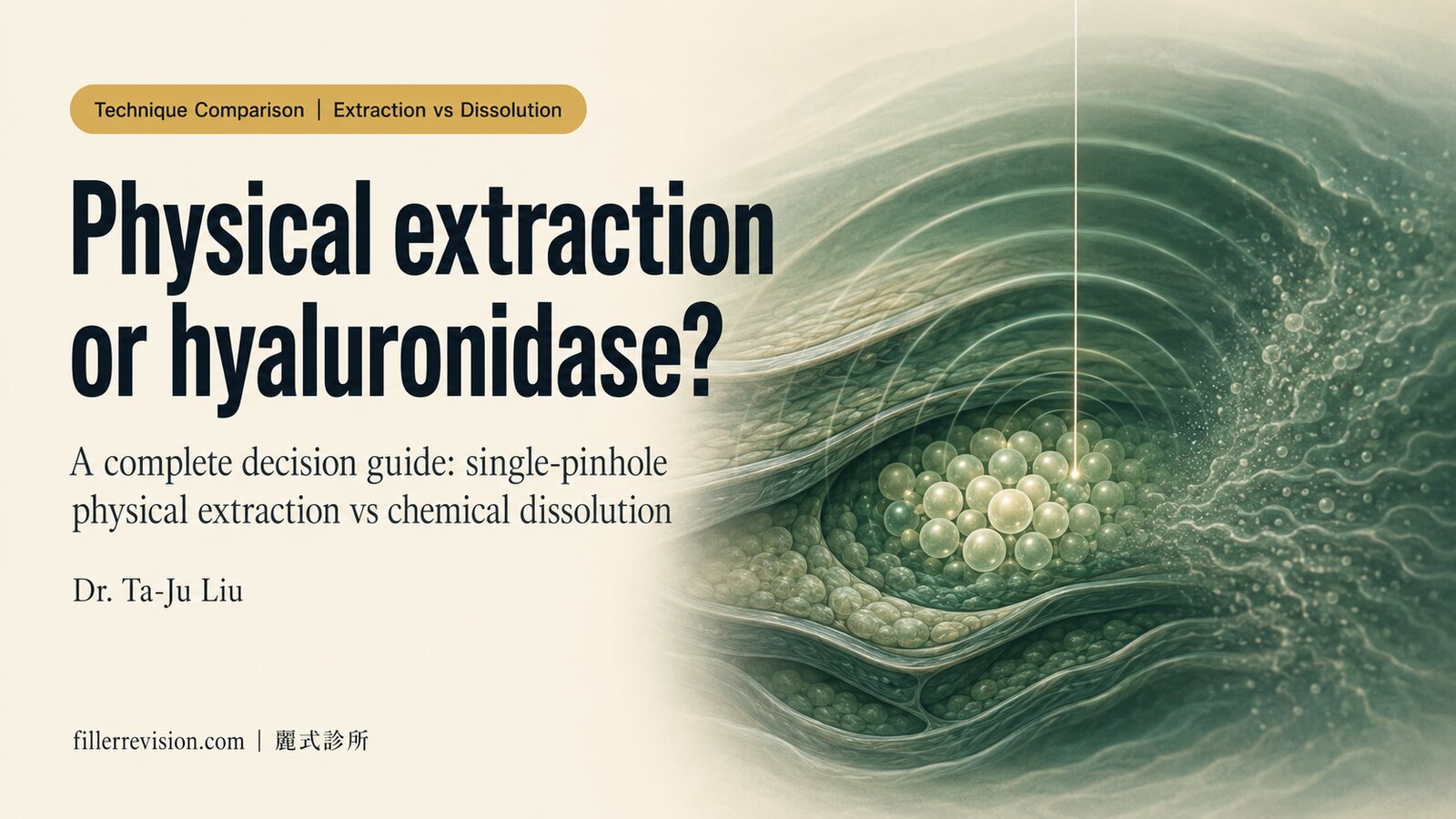
| Direct extraction | Encapsulated, hyaluronidase ineffective |
About Hyaluronidase:
- Can dissolve hyaluronic acid, but limited effect on encapsulated lumps
- Takes effect 24-48 hours after injection
- If ineffective, ultrasound-guided pinhole extraction is considered
Radiesse Lumps
← Swipe to see more →
| Characteristic | Approach |
|---|---|
| Granular | Primarily curettage |
| May spread | Need careful clearing of surroundings |
| Not dissolvable | Physical removal only |
Collagen Stimulator Lumps
← Swipe to see more →
| Characteristic | Difficulty |
|---|---|
| Stimulates tissue growth | Lump and normal tissue hard to distinguish |
| Severe fibrosis | Unclear boundaries |
| May continue growing | Needs as much removal as is safely possible |
Key Points:
- Remove fibrotic tissue through the pinhole as thoroughly as is safe
- Ultrasound confirmation of extent
- Post-op monitoring for recurrence
Silicone/Silicone Oil
← Swipe to see more →
| Characteristic | Extremely Difficult |
|---|---|
| Migrating diffusion | Cannot completely clear |
| Mixed with tissue | Extraction damages normal tissue |
| Often illegal injection | Very high risk |
⚠️ Warning: Silicone oil filler extraction is extremely difficult, usually can only improve rather than cure, and may require multiple surgeries. The best strategy is "prevention"—don't accept injections from unknown sources.
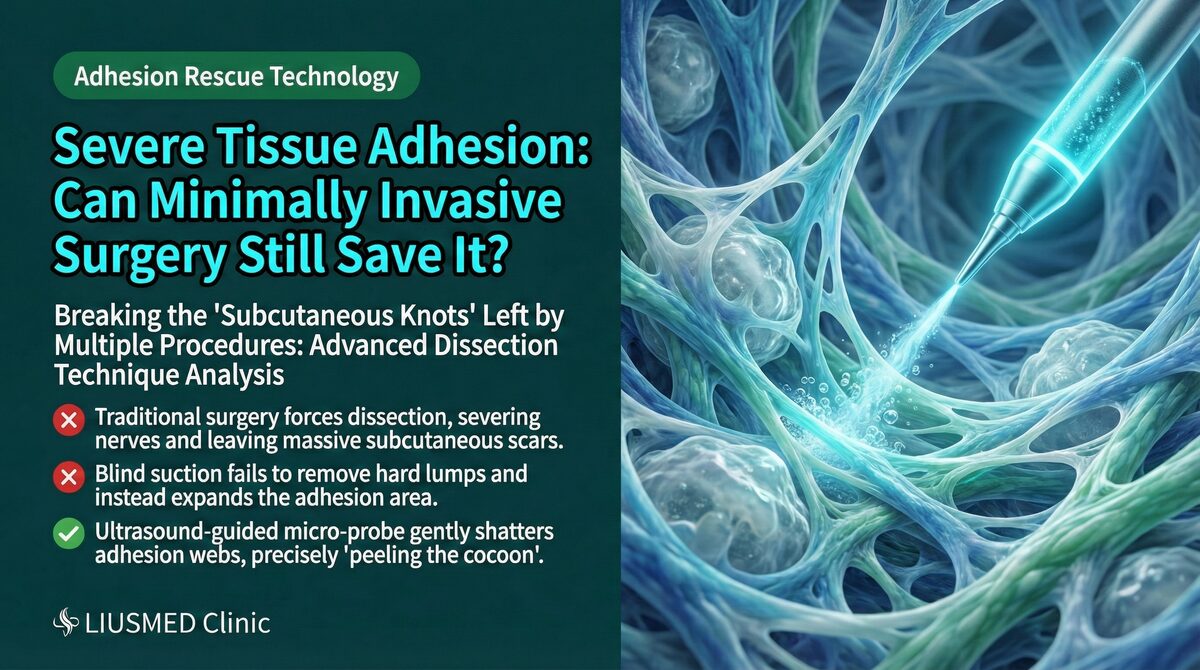
Why Ultrasound-Guided Extraction Can Help When Previous Attempts Did Not
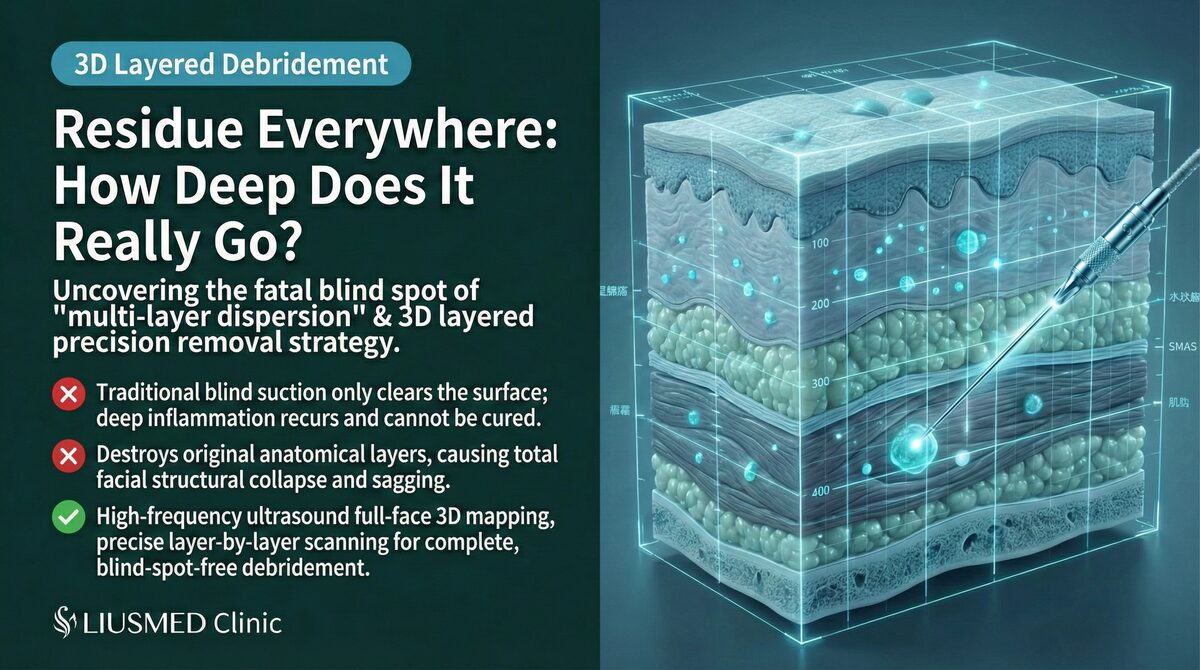
Most filler lump extraction failures stem from one root cause: operating without real-time imaging. Without ultrasound guidance, the surgeon is essentially working blind — unable to distinguish filler boundaries from normal tissue, unable to track migrated material, and unable to check for residue. At FILLER REVISION, every extraction is performed under continuous high-resolution ultrasound navigation. This means we can trace filler deposits that have migrated far from their original injection site, separate material from tissue planes that appear fused to the naked eye, and check in real time for visible residue. Combined with pinhole access of about 2 mm and material-specific extraction protocols, this approach lets us remove as much material as is safe, including in cases where earlier attempts did not help.
How to Preserve Normal Tissue?
Technical Keys
← Swipe to see more →
| Technique | Explanation |
|---|---|
| Layer recognition | Understand anatomical layers, separate correctly |
| Blunt dissection | Use blunt instruments when possible, reduce bleeding |
| Conservative excision | Only remove confirmed foreign material |
| Intraoperative confirmation | Ultrasound real-time check for residue |
| Staged approach | Multiple sessions if needed to avoid excess damage |
Avoiding Over-Extraction
Over-extraction can cause:
- Tissue depression
- Functional impact (lips, nose)
- Unnatural appearance
- Need for secondary filling
💡 Dr. Liu's Philosophy: "I'd rather do two sessions than extract too much at once. Depression from over-extraction is harder to fix than the original lump."
Frequently Asked Questions
Can hyaluronic acid lumps be dissolved with hyaluronidase?
A1: It depends:
- Newly injected HA (Hyaluronic Acid) (< 1 year): Usually dissolvable
- Old or encapsulated: Hyaluronidase has limited effect, may need pinhole extraction
- Mixed with other fillers: Hyaluronidase only works on HA
Recommend trying dissolution first; consider ultrasound-guided pinhole extraction if ineffective.
Will minimally invasive extraction leave scars?
A2: Minimally invasive extraction pinholes are usually very small (1-2mm) and placed in concealed locations where possible (hairline, inside nostril, inside mouth). They heal in about 2 weeks and are usually inconspicuous afterwards, although scarring still depends on the individual.
Will my face look sunken after extraction?
A3: With proper extraction, there won't be obvious depression. But if the original lump was large or in a special location, post-extraction may require:
- Waiting for the tissue to settle (the final result takes about 3 months)
- Modest filling (using safe hyaluronic acid)
Is general anesthesia needed?
A4: General anesthesia is not needed. Extraction is done under local anesthesia plus gentle pain-relief anesthesia; during the procedure the doctor talks with you and can pause or adjust at any time.
Will the lump grow back after minimally invasive extraction?
A5:
← Swipe to see more →
| Filler Type | Recurrence Risk |
|---|---|
| Hyaluronic Acid | Very low (won't recur if completely removed) |
| Radiesse | Low (ultrasound-guided removal aims to clear it cleanly; how complete that is varies with material and adhesion) |
| Collagen Stimulator | Low (ultrasound-guided removal aims to clear it cleanly; how complete that is varies with material and adhesion) |
| Ellansé | Low (ultrasound-guided removal aims to clear it cleanly; how complete that is varies with material and adhesion) |
| Silicone | High (often cannot completely clear, but can significantly reduce silicone residue) |
Collagen stimulator lumps require particularly close follow-up.
Post-Op Recovery and Follow-Up
Post-Op Timeline
← Swipe to see more →
| Period | Status and Care |
|---|---|
| Early days | Swelling and bruising are noticeable; ice to reduce swelling |
| About 2 weeks | The pinhole heals in about 2 weeks; no sutures to remove |
| 2–3 weeks | Swelling and bruising usually settle in this period |
| About 3 months | The final result takes about 3 months; evaluate the outcome (varies from person to person) |
| 6-12 months | Long-term follow-up (especially for collagen stimulator) |
The pinhole is small, but this is an extraction, so swelling and bruising are expected. After extraction there is a period in which the swelling settles and firmness gradually softens; we go through the details at your consultation.
Guidelines
← Swipe to see more →
| ✅ OK | ❌ Avoid |
|---|---|
| Ice to reduce swelling | Heat (first 3 days) |
| Normal diet | Irritating foods |
| Light activity | Strenuous exercise (2 weeks) |
| Attend follow-ups | Self-treating problems |
Conclusion: FILLER REVISION's Approach to Filler Lump Extraction
← Swipe to see more →
| Key Point | Explanation |
|---|---|
| Core principles | Precise localization, conservative extraction, as clean as can be safely achieved |
| Technical support | Ultrasound guidance greatly improves precision |
| Material differences | Different fillers need different strategies |
| Prevention is best | Choose reputable clinics, legitimate fillers |
At FILLER REVISION, much of our practice is cases that previous treatment did not resolve. If you have a filler lump that has resisted previous treatment attempts — or if you have been told your primary option is open surgery — we invite you to see what ultrasound-guided precision extraction can achieve.
Related Reading
- When Can Failed Aesthetics Be Repaired? Ultrasound-Guided Evaluation
- Multi-Layer Filler Extraction: Clearing Deposits Single-Approach Methods Miss
- Safe Filler Extraction Near Facial Nerves and Vessels
- Told You Need Surgery for Filler Lumps? Pinhole Alternative
- Blind Extraction Made It Worse? How to Repair the Damage
- Forehead and Temple Filler Extraction: High-Risk Zone Safety
- Under-Eye Filler Extraction: The Face's Most Delicate Zone
About the Author
Dr. Ta-Ju Liu
- Current Position: Director, Liushi Clinic
- Specialties: Minimal incision surgery (lipoma, cyst), hyperhidrosis surgery, thread lifting
- Experience:
- 20 years of clinical minimal incision surgery experience
- 10,000+ minimally invasive procedures, including 5,000+ filler revision cases
- Board-certified dermatologist
- Philosophy: "Filler lump treatment requires precision and patience. My goal is to remove the problem while preserving the patient's natural appearance."