How Many Types of Filler Might Be in Your Face?
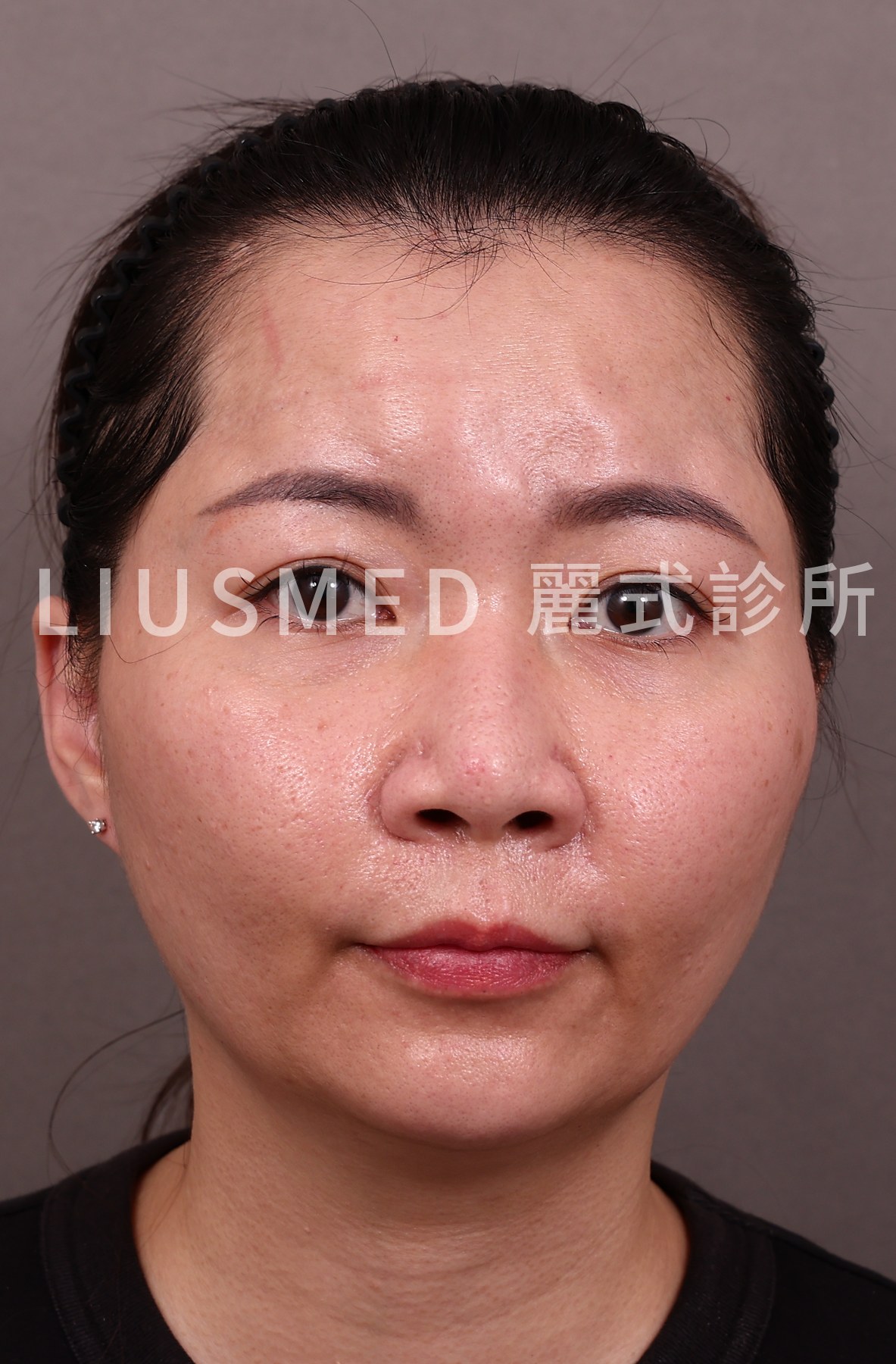
If you have visited multiple clinics over the years and received different treatments each time, you may not fully remember what was injected or where. Now that a problem has developed, you are facing a question that many patients in your situation share: "What is actually inside my face?" This uncertainty makes everything harder — diagnosis, treatment planning, and setting realistic expectations for correction.
When these materials of different properties coexist in the same or adjacent areas, the situation becomes exceptionally complex. Each material has different tissue reaction characteristics, degradation timelines, and complication risks, and their interactions are often unpredictable.
Key Insight: At FILLER REVISION, our clinical experience confirms that multi-filler coexistence is not simply "1+1=2." The interaction between different materials in tissue can produce compound reactions that would not occur with any single material alone — including amplified immune responses, more complex imaging interpretation, and more difficult repair strategies. This is precisely why we emphasize comprehensive ultrasound assessment before any revision attempt.
How Different Fillers Behave in Tissue
Tissue Response by Filler Type
← Swipe to see more →
| Filler Type | Tissue Response | Degradation Time | Immune Stimulation | Reversibility |
|---|---|---|---|---|
| Hyaluronic acid (HA) | Hydration expansion | 6-18 months | Low | High (hyaluronidase) |
| Calcium hydroxylapatite (CaHA) | Collagen stimulation | 12-24 months | Moderate | Low |
| Poly-L-lactic acid (PLLA) | Foreign body granulomatous reaction | Progressive stimulation, effects 2-3 years | Moderate-High | Low |
| PCL (Polycaprolactone) microspheres | Collagen stimulation | 3-4 years | Moderate | Low |
| Liquid silicone | Permanent foreign body reaction | Permanent | High | Very low |
| Autologous fat | Tissue integration or necrosis | Highly variable | Low | Not applicable |
The Critical Distinction: Degradable vs. Non-Degradable
The most dangerous mixed filler scenario is coexistence of degradable and non-degradable materials. As degradable components are gradually absorbed, non-degradable components remain in place, and changes in tissue structure can cause residual material to shift or become exposed.
Compound Risks of Mixed Materials
Risk 1: Amplified Immune Response
Different materials may each trigger mild immune responses that individually are insufficient to cause clinical problems. But when multiple materials coexist, immune responses can compound and amplify.
Mechanism: Each foreign body is recognized by macrophages and triggers a foreign body cascade reaction. Multiple materials mean multiple simultaneous foreign body stimuli, increasing the immune system's "burden." Under certain trigger conditions — infection, trauma, changes in immune status — this compounding effect can suddenly manifest as a severe inflammatory reaction.
Risk 2: Complex Degradation Dynamics
Different materials degrade at different rates, meaning tissue structure continuously changes over time.
Clinical Problems:
- HA (Hyaluronic Acid) is gradually absorbed over 6-18 months, but CaHA (Calcium Hydroxyapatite) in the same area may persist
- As one material recedes, changes in surrounding tissue pressure can cause residual material to migrate
- Asymmetric degradation causes gradual appearance changes, increasing dissatisfaction
Risk 3: Imaging Interpretation Difficulty
When assessment is needed, the presence of multiple materials significantly increases imaging diagnostic complexity.
Challenges:
- Different materials present different echo characteristics on ultrasound; boundaries become difficult to identify when mixed
- Signal characteristics of different materials on MRI (Magnetic Resonance Imaging) may overlap, making component distinction difficult
- Accurate determination of each material's distribution range and volume becomes challenging
Risk 4: Contradictory Treatment Strategies
When repairing multi-filler problems, treatment strategies often contradict each other.
Examples of Dilemmas:
- Hyaluronidase can dissolve HA but will not affect CaHA or collagen stimulators in the same area
- After dissolving HA, residual non-dissolvable materials may become more visible
- Treatment of one material may affect the stability of another
Key Insight: Multi-filler repair is like demolishing a building made of mixed materials — you cannot remove one material without affecting the others. Every treatment step must consider the impact on coexisting materials. This is why ultrasound-guided precise assessment is particularly critical in mixed filler cases.
What Compound Risks Mean for FILLER REVISION Patients
Mixed-filler cases represent some of the most complex revision scenarios at FILLER REVISION. When multiple materials coexist, every treatment decision must account for how it will affect all materials present — not just the one causing the immediate problem. Dissolving HA in an area that also contains CaHA or collagen stimulator residues may unmask or destabilize those remaining materials. This is why our approach begins with comprehensive ultrasound mapping: identifying each material type, its distribution, and its current state before developing a staged treatment plan. Patients with mixed fillers should expect a more gradual revision process, with careful observation between treatment phases to assess how the tissue responds as one material is addressed at a time.
Common Problem Combinations
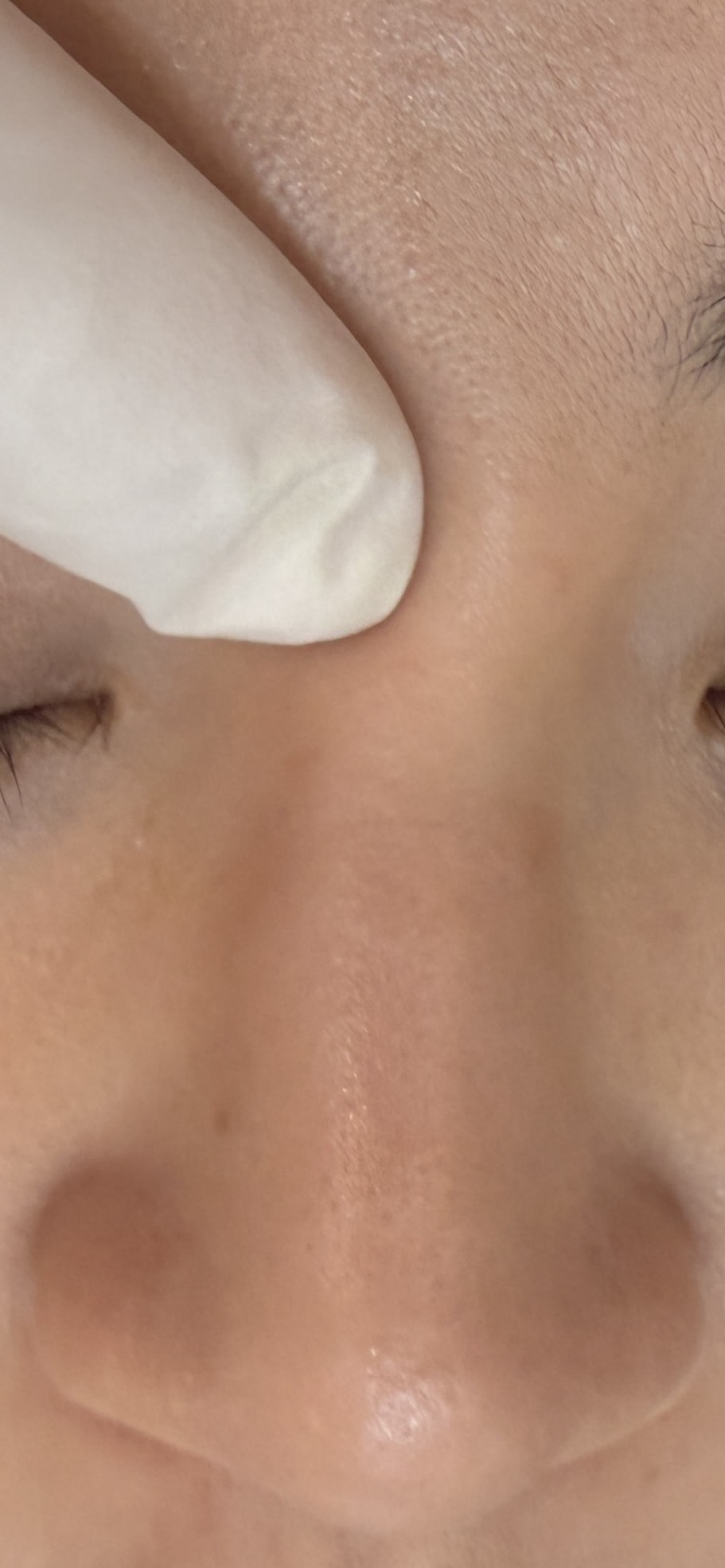
Nose: CaHA + Hyaluronic Acid
This is one of the most common mixed scenarios. Many patients first received CaHA for nose augmentation, then added HA after the initial effect faded. The problems:
- CaHA residual volume is often greater than expected (not fully degraded)
- HA distributes unevenly around CaHA remnants
- The two materials have different physical properties, creating an unnatural feel
- If HA dissolution is needed, CaHA remnants may become more prominent
Cheeks/Temples: Collagen Stimulator + Hyaluronic Acid
Layering HA on top of collagen stimulator-induced tissue (such as PLLA or PCL microspheres) is also common.
- Stimulated collagen changes tissue density and elasticity
- HA injected into stimulated tissue may distribute unevenly
- The immune responses of both materials may reinforce each other, increasing granuloma formation risk
Full-Face Multi-Material
The most complex scenario involves multiple different fillers across the entire face. Assessment and treatment for these patients requires:
- Complete injection history tracking (though patient memory is often incomplete)
- High-resolution ultrasound full-face scanning to identify different materials
- Staged, zone-by-zone treatment strategy
- Thorough patient communication and expectation management
Assessment Strategy for Multiple Fillers
The Critical Role of Ultrasound (Ultrasonography)
In multi-filler assessment, high-resolution ultrasound plays an irreplaceable role:
- Material identification: Different fillers have distinct ultrasound echo signatures; experienced operators can distinguish most material types
- Distribution mapping: Real-time scanning creates a three-dimensional distribution map of each material
- Problem localization: Confirms which material in which location is causing the problem
- Treatment guidance: Ultrasound guidance enables precise targeting of specific materials for treatment
Treatment Principles
- Assess first, treat later: Develop strategy only after fully understanding all material distributions
- Proceed in stages: Do not attempt to resolve all problems in one session
- Prioritize highest-risk materials: For example, areas with active inflammatory response take priority
- Conservative and gradual: Observe tissue response after each treatment before deciding on the next step
Learn more about the filler repair evaluation process and filler extraction techniques. If your face may contain multiple coexisting fillers, FILLER REVISION provides the comprehensive ultrasound mapping needed to understand exactly what is there — because effective mixed-filler revision demands knowing every material present before taking any action.
Key Insight: Before injecting multiple fillers into the same area, the most important question is not "which one works better" but "has the previous material fully degraded? Is the new material compatible with what remains?" Knowing what is in your face is the first step toward making safe decisions. And when multiple fillers already coexist, "seeing" the location and status of each material is the foundation for developing an effective repair strategy.
Frequently Asked Questions
I don't remember what fillers were injected or where. Can a clinic still figure out what is in my face?
Many patients in this situation cannot fully recall what was injected, and the article notes that patient memory of past injections is often incomplete. This is why the approach begins with comprehensive ultrasound mapping to identify each material type, its distribution, and its current state before any revision is attempted. Different fillers show distinct ultrasound echo signatures, so an experienced operator can distinguish most material types and build a distribution map. Knowing what is present is described as the first step toward safe decisions.
I had hyaluronidase but only part of the filler dissolved. Why didn't it remove everything?
Hyaluronidase dissolves only hyaluronic acid (HA). It will not affect non-HA materials such as calcium hydroxylapatite (CaHA) or collagen stimulators in the same area, so if more than one type of filler is present, only the HA portion is removed. The article also notes that after the HA is dissolved, residual non-dissolvable materials may actually become more visible. This is one reason mixed-filler areas need imaging assessment before deciding how to treat.
Which combination of fillers is the most risky to have together?
The article describes the most dangerous mixed-filler scenario as the coexistence of degradable and non-degradable materials. As the degradable components are gradually absorbed, the non-degradable components remain in place, and the resulting change in tissue structure can cause the residual material to shift or become exposed. Different fillers also degrade at very different rates, so the tissue keeps changing over time. This is why each material's type and current state should be identified before any correction.
If I already have multiple fillers, can everything be fixed in one session?
The article advises against trying to resolve everything at once. Mixed-filler revision is described as needing a staged, zone-by-zone approach, with careful observation of how the tissue responds between treatment phases. Because every treatment step can affect the other materials present, the highest-risk areas (for example, those with active inflammation) are addressed first, and the next step is decided only after observing the tissue response. Patients with mixed fillers should expect a more gradual process rather than a single procedure.
I had CaHA in my nose then added HA later. Why does it feel unnatural and lumpy now?
Nose CaHA plus HA is one of the most common mixed scenarios the article describes. CaHA residual volume is often greater than expected because it has not fully degraded, and the later HA tends to distribute unevenly around those CaHA remnants. The two materials have different physical properties, which can create an unnatural feel. The article also notes that if HA dissolution becomes necessary, the CaHA remnants may become more prominent, which is why imaging the area first matters.