Filler Encyclopedia
Understand your filler type and its complication profile

Filler Brands by Market
Find a product by market, see its ingredient class at a glance, then open the class for full mechanism, complications and removal options.
Hyaluronic Acid (HA)
Reversible — dissolvable with hyaluronidase (fresh, non-encapsulated cases)
a.k.a. 塑形玻尿酸/液態下巴
豐顏 Voluma・豐麗緹 Volift・夢蓓菈 Volbella・豐塑 Volux・芙潤 Volite・極緻 Ultra Plus XC
a.k.a. 女神玻尿酸/水光
麗芙 Lyft・漾采 Kysse・亮采 Defyne・晶采 Refyne・丰采 Volyme・特麗朗 Vital
a.k.a. 緹奧希/隱形玻尿酸/熊貓針
RHA 1–4・Redensity
a.k.a. 水無痕/仿生玻尿酸
保柔 Balance・比柔 Intense・丰柔 Volume・舒柔 Soft・水柔 Revive
a.k.a. 公主玻尿酸
a.k.a. 魔V針/小香風玻尿酸
L・XXL
a.k.a. 仙女玻尿酸
豐潤 Volume・優潤 Deep
a.k.a. LG 玻尿酸
Volume Plus・Classic Plus
a.k.a. 極濃/特濃玻尿酸/V50
Contour(50 mg/mL 高濃)
a.k.a. 蜂巢玻尿酸
a.k.a. 星球針
雪柏 Shape+・歐森 Ultra+
HA Bio-remodelling Booster
HA-based; a skin booster, not a structural volumizing filler
a.k.a. 逆時針
PLLA (poly-L-lactic acid)
Not dissolvable — stimulates your own collagen; no enzyme antidote
a.k.a. 童顏針/童妍針
a.k.a. 曙光瓶
PCL (polycaprolactone)
Not dissolvable — immediate gel fill plus long-lasting collagen stimulation
a.k.a. 少女針/依戀詩
S・M・L・E
a.k.a. 液態 PCL/王妃針
PDLLA (poly-D,L-lactic acid)
Not dissolvable — collagen stimulator (NOT the same as PLLA)
a.k.a. 精靈針/第三代童顏針
a.k.a. 澎怦針
PDLLA + HA composite
Not fully reversible — only the HA phase responds to enzyme; PDLLA particles do not dissolve
a.k.a. 新童妍/水光針
a.k.a. 魔法針
CaHA (calcium hydroxylapatite)
Not dissolvable — immediate support plus collagen stimulation
a.k.a. 晶亮瓷/微晶瓷/再生針
±利多卡因
HA + CaHA hybrid
Not fully reversible — only the HA phase responds to enzyme; CaHA + new collagen do not dissolve
a.k.a. 媄神針
Collagen (injectable)
Not enzyme-dissolvable (hyaluronidase only works on HA); naturally resorbable over months — persistent nodules need physical removal
a.k.a. 熊貓針/稚齡針
膚力原 FACIALGAIN・膚漾美 Deusaderm ULTRA・双美 I 號(含加強型);豬源 atelocollagen
Note: Rejuran (polynucleotide / salmon-DNA skin booster) is a regenerative injectable, NOT a dermal filler. phADM boosters — RE2O (Elravie Re2O), JuveaCell and MegaFill, particulated human acellular dermal matrix — are likewise regenerative injectables, NOT dermal fillers, are not TFDA-approved in Taiwan, and are an emerging complication source. Permanent injectables such as PAAG / Aquamid and liquid silicone are banned or discontinued in many markets and are a major complication source.
Filler Types — Mechanism, Complications & Removal
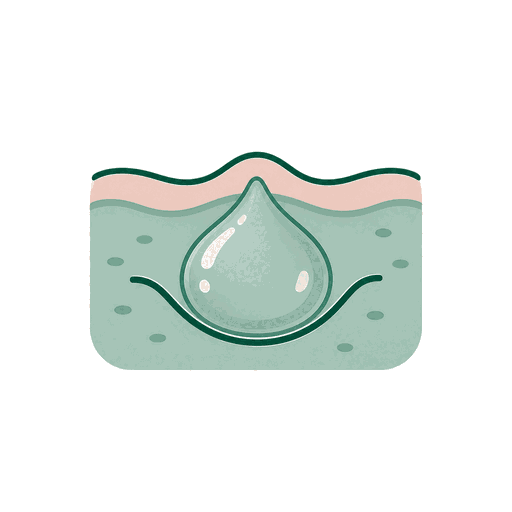
Hyaluronic Acid (HA) Fillers — Juvederm, Restylane, Belotero Brands & Removal
Juvederm · Restylane · Belotero · Teosyal · Revanesse
The most commonly used dermal filler worldwide. HA is a naturally occurring substance in the body, making it generally safe and dissolvable with hyalu...
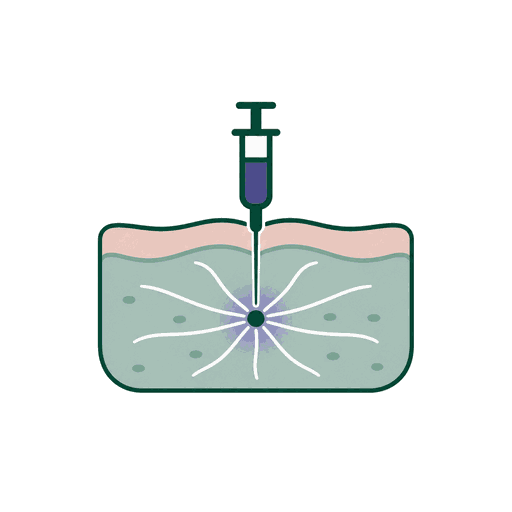
Sculptra (Poly-L-Lactic Acid)
Sculptra · Lanluma · Aesplla
A collagen stimulator that works by triggering the body's own collagen production. Results develop gradually over months....
Ellanse (Polycaprolactone / PCL) — Nodules, S/M/L Variants & Removal
Ellanse S · Ellanse M · Ellanse L · Ellanse E · Gouri
A semi-permanent collagen stimulator sold in versions whose stated durations rise with the length of the PCL polymer chain (S 1 year, M 2 years, L 3 y...
Radiesse (Calcium Hydroxylapatite)
Radiesse
A calcium-based filler that also stimulates collagen. Thicker consistency, often used for deeper facial contouring....

Permanent Fillers (Silicone, PAAG, PMMA)
Silikon-1000 · Artecoll · Bio-Alcamid · Aquamid
Non-absorbable fillers designed to last permanently. Include liquid silicone, polyacrylamide gel (PAAG), and polymethyl methacrylate (PMMA). Highest c...
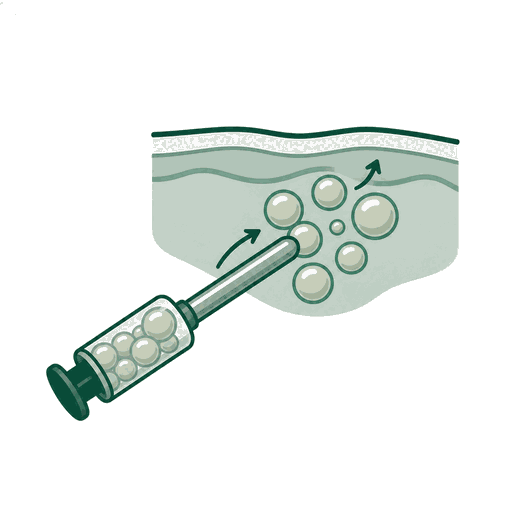
Autologous Fat Grafting
Uses the patient's own fat harvested from another body area. Considered "natural" but carries unique risks including calcification and unpredictable s...
AestheFill (Poly-D,L-Lactic Acid / PDLLA) — Nodules & Removal
AestheFill
A collagen stimulator based on poly-D,L-lactic acid (PDLLA). Like other stimulators, it works by gradually inducing your own collagen, so results buil...
NeoFilera (Taiwan-made PDLLA) — Delayed Nodules, Off-Label Placement & Removal
NeoFilera · NeoFilera S-100 · NeoFilera S-200
A poly-D,L-lactic acid collagen stimulator made in Taiwan, not in Korea as is often assumed. The licence is a domestic-manufacture one (衛部醫器製字第008439號...
Juvelook & Lenisna (PDLLA + HA Composite) — Collagen-Stimulating Skin Booster, Nodules & Removal
Juvelook · Lenisna · VIVABELLA
A collagen-stimulating injectable that combines PDLLA (poly-D,L-lactic acid) microspheres with non-cross-linked hyaluronic acid. It is marketed as a "...
HArmonyCa (HA + CaHA Hybrid) — Nodules, Partial Reversibility & Removal
HArmonyCa
A hybrid injectable that combines cross-linked hyaluronic acid (HA) with calcium hydroxylapatite (CaHA) microspheres. The HA provides immediate volume...
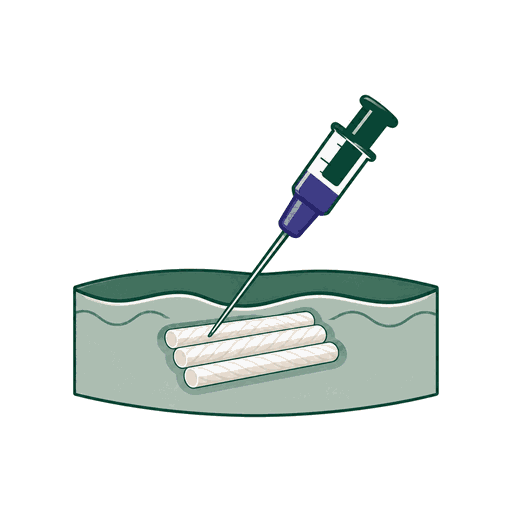
Injectable Collagen Filler (Sunmax / 雙美 Porcine Collagen) — the "Panda Needle" Explained & Removal
Sunmax 雙美 · FACIALGAIN 膚力原 · Deusaderm ULTRA 膚漾美
An injectable collagen filler is collagen itself — it physically fills tissue the moment it is placed. That makes it fundamentally different from a "c...
Featured Poster
New materials, old problems.
Collagen-stimulating injectables keep arriving under new names, but the way lumps form hasn't changed. Ultrasound first shows which material it is and which layer it sits in; then we decide how to treat it.
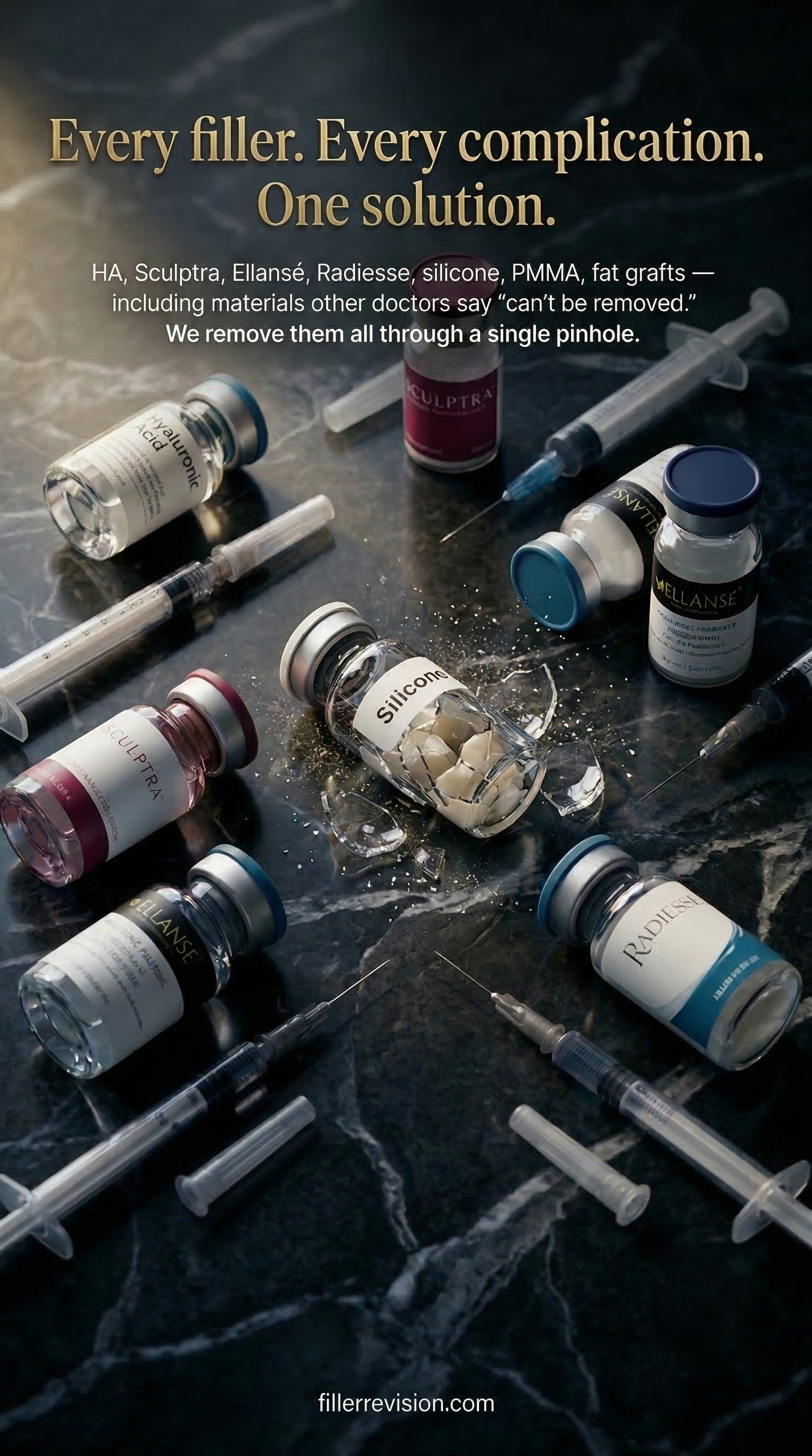
Not only HA — other fillers can be assessed for removal too.
HA, Sculptra, Ellansé, Radiesse, silicone, PMMA, polyacrylamide gel (PAAG), fat grafts — ultrasound first confirms the material and where it sits, then we assess how much can be removed.
Other Ways to Find Your Answer
Know the affected area or your symptom instead of the brand? Start from there.