Clinical Evidence
Our evidence-based approach to filler revision — methodology, outcomes, and the research behind ultrasound-guided extraction.
Our Methodology

Liusmed Clinic employs ultrasound-guided single-pinhole filler extraction, a technique continuously refined by Dr. Ta-Ju Liu over more than 15 years of filler revision practice.
- Real-time ultrasound guidance: High-frequency ultrasound precisely locates filler material — its position, extent, and depth — eliminating blind manipulation.
- Single-pinhole approach: Extraction is performed through a minimal pinhole entry point, so the wound is small; the pinhole heals in about 2 weeks and is usually barely visible afterward.
- Intraoperative verification: Ultrasound is used during and immediately after the procedure to check how much has been removed and what remains.
- Multi-material capability: Applicable to hyaluronic acid, Ellanse, Sculptra, Radiesse, silicone, autologous fat, and other filler materials.
Clinical Outcomes
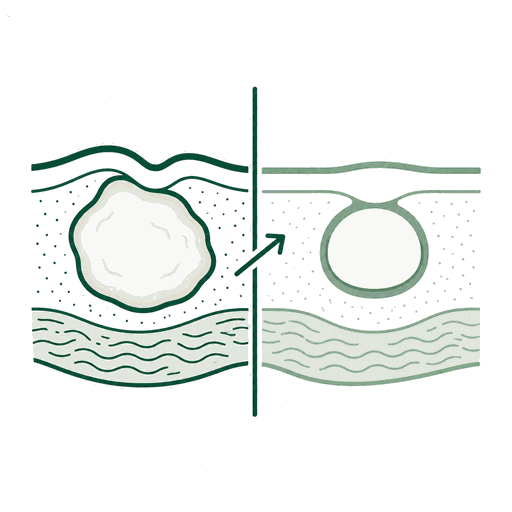
How removal is assessed: After the procedure, ultrasound follow-up checks how much has been removed and what remains. We can't guarantee 100% removal; the goal is as much improvement as can be achieved safely, and a return to natural contours. Depending on the extent and depth, it may need to be done zone by zone, in stages, or over more than one session.
Recovery: The pinhole is small, but this is an extraction, so swelling and bruising are expected. Swelling and bruising usually settle in about 2–3 weeks, the pinhole heals in about 2 weeks, and the final result takes about 3 months, varying from person to person. Possible risks include swelling, bruising, temporary numbness at the extraction site and minor asymmetry during healing; they are discussed individually at your consultation.
Note: Individual results vary.
Evidence Base

The following peer-reviewed publications support the principles underlying our ultrasound-guided filler extraction approach:
Schelke LW, Van Den Elzen HJ, Erkamp PPM, Neumann HAM. Use of ultrasound to provide overall information on facial fillers and surrounding tissue. Dermatol Surg. 2010;36 Suppl 3:1843-1851.
Establishes ultrasound as a reliable imaging modality for detecting and characterizing dermal fillers in facial tissue.
Lemperle G, Gauthier-Hazan N, Wolters M, Eisemann-Klein M, Zimmermann U, Duffy DM. Foreign body granulomas after all injectable dermal fillers: part 1. Possible causes. Plast Reconstr Surg. 2009;123(6):1842-1863.
Comprehensive review of granulomatous reactions to injectable fillers, informing complication classification and management strategies.
DeLorenzi C. New high dose pulsed hyaluronidase protocol for hyaluronic acid filler vascular adverse events. Aesthet Surg J. 2017;37(7):814-825.
Landmark protocol for managing vascular occlusion from HA fillers, establishing the urgency framework for filler emergencies.
Beleznay K, Carruthers JDA, Carruthers A, Mummert ME, Humphrey S. Delayed-onset nodules secondary to a smooth cohesive 20 mg/mL hyaluronic acid filler: cause and management. Dermatol Surg. 2015;41(8):929-939.
Documents delayed filler complications and the longevity of HA fillers beyond expected duration, supporting the need for imaging-guided removal.
Lim TS, Wanitphakdeedecha R, Suphatsathienkul P, Eimpunth S, Manuskiatti W. Facial overfilled syndrome (FOS): a review of the literature on clinical features and grading scale. J Cosmet Dermatol. 2023;22(9):2380-2388.
Defines and categorizes Facial Overfilled Syndrome (FOS), providing a standardized grading system for filler overfilling severity.
Follow-up and Assessment

The case count and removal assessment on this page are compiled as follows:
- Sample size: Consecutive cases of ultrasound-guided filler extraction performed at Liusmed Clinic from 2010 to 2025, totaling over 3,000 cases.
- Follow-up: Ultrasound follow-up examinations after the procedure, with select cases followed up to 6 months.
- Assessment: Post-procedure ultrasound checks how much of the target filler has been removed and what remains, reviewed by both the treating physician and the ultrasound examiner. We can't guarantee 100% removal; the goal is as much improvement as can be achieved safely.
Conflict of Interest Disclosure

The clinical outcome data presented on this page is derived from Liusmed Clinic's own practice records. This data has not been independently audited by a third party or published in a peer-reviewed journal. Liusmed Clinic provides the filler revision treatments described herein and has a financial interest in these services. Patients should consider this context when evaluating the information presented. We encourage prospective patients to seek independent medical opinions and to review the peer-reviewed literature cited above.
Featured Poster
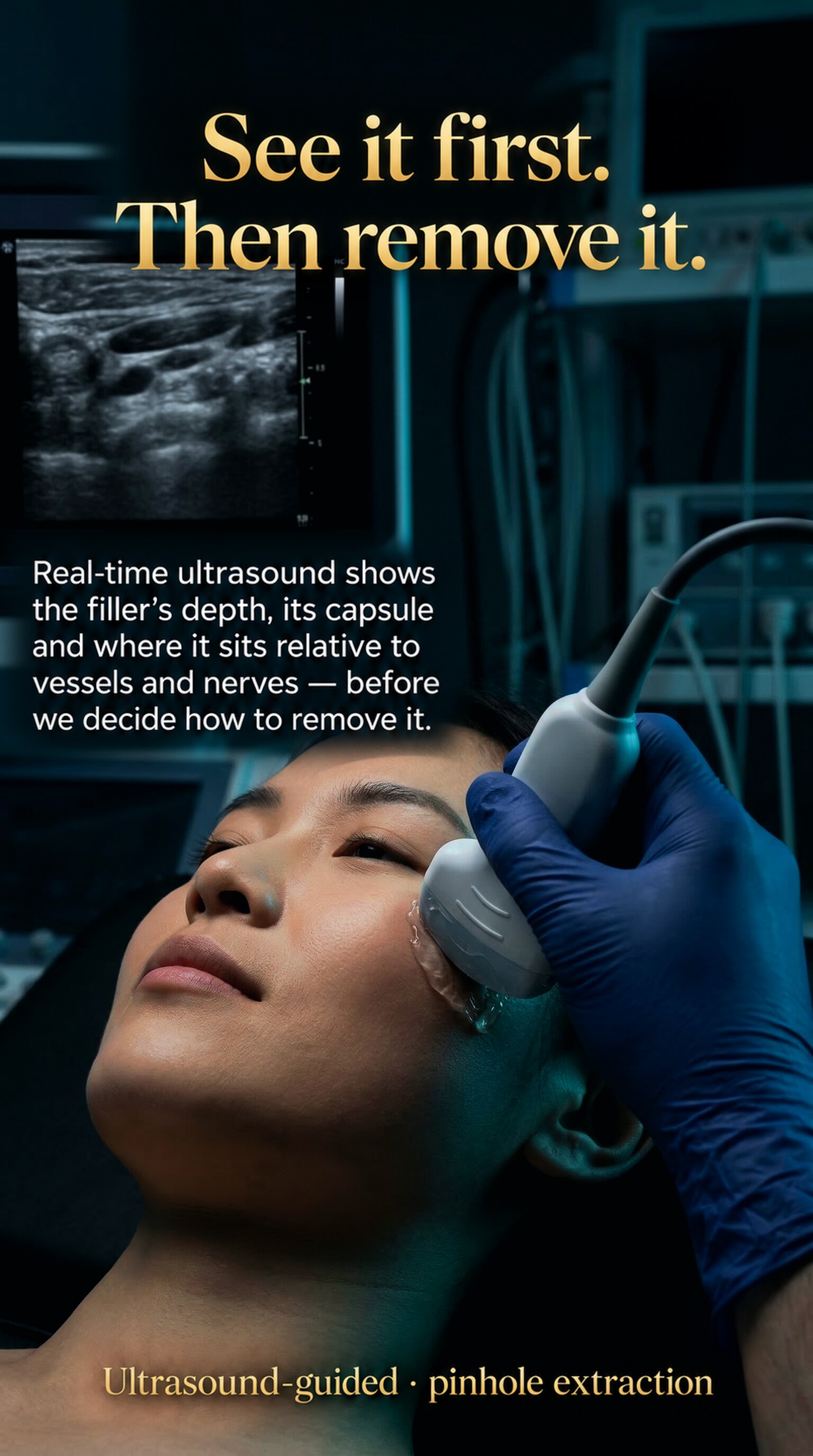
See it first. Then remove it.
Real-time ultrasound shows the filler's depth, its capsule and where it sits relative to vessels and nerves — before we decide how to remove it.
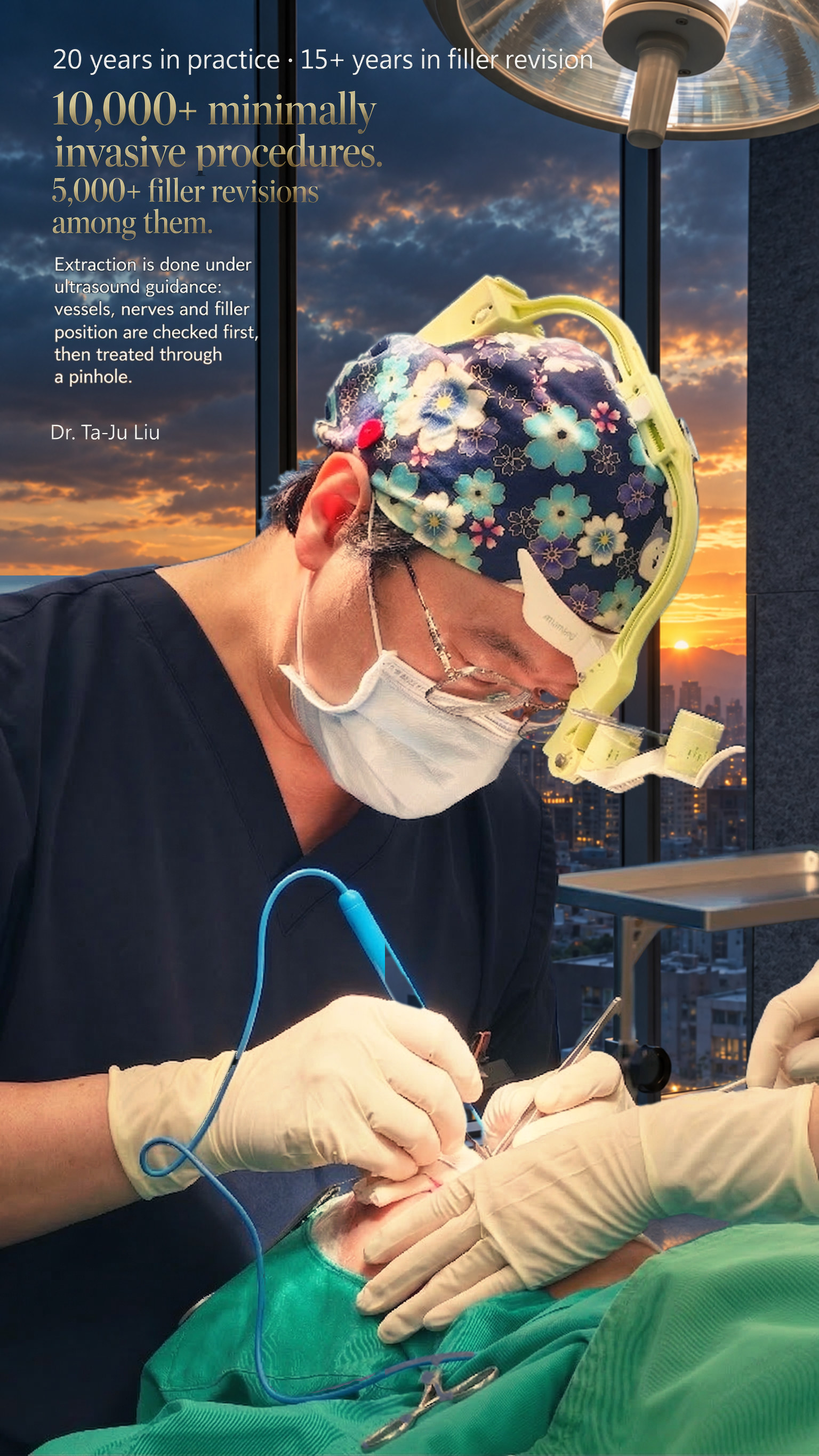
10,000+ minimally invasive procedures. 5,000+ filler revisions among them.
20 years in practice, 15+ years in filler revision. Extraction is done under ultrasound guidance: vessels, nerves and filler position are checked first, then treated through a pinhole.