"It's day three and my face is still swollen. Is that normal?"
I hear that question every week in clinic. The awkward part is that most of what happens after a filler injection is expected and passes on its own, while a smaller share turns into a real problem if left alone. For the first few days, the two look very similar.
So this article isn't a list of side effects. It follows the clock instead, because time is the most useful diagnostic tool you have. Whether something faded as it should, faded and came back, or appeared months later tells you three completely different stories.
What Is Expected After an Injection
Swelling, Bruising and Tenderness in the First Days
A needle passes through tissue and the filler draws water as it opens up space, so swelling is expected. Small vessels get nicked along the way, so bruising is too. A slight firmness or sense of something being there is also common.
What these share is a pattern: they are reasonably symmetrical, they don't single out one side, and each day is a little better than the last. Early left-right differences are often an illusion created by uneven swelling, and you can only judge shape properly once that settles.
Signals That Don't Look Like Recovery
A few presentations fall outside the recovery process and are worth an appointment:
- Swelling clearly out of proportion to the volume injected
- Pain that intensifies rather than fades
- A one-sided, localised area that keeps enlarging
- Redness spreading outward, with warmth to the touch
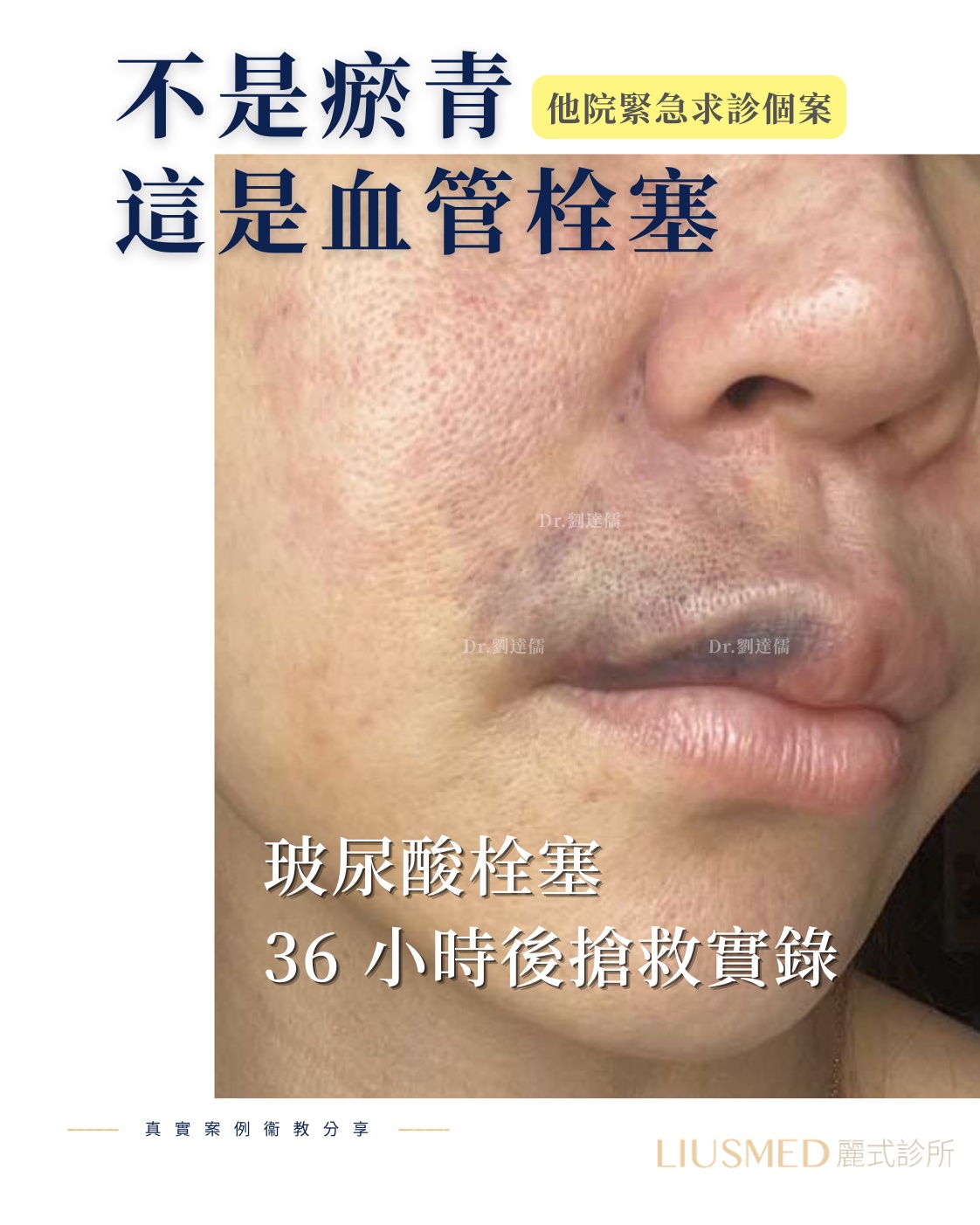
- Skin turning pale, then mottled, or going dusky purple
← Swipe to see more →
| Feature | Typical recovery | Book a review | Seek care immediately |
|---|---|---|---|
| Pain | Sore only on pressure, easing daily | Persistent, not easing with time | Severe and out of proportion to the volume injected |
| Swelling | Symmetrical, settles in one to two weeks | Still present after two weeks, or one side enlarging | With spreading redness, warmth or fever |
| Colour | Bruise fades purple to yellow, then clears | Localised redness that won't clear | Blanching, mottled skin, dusky purple |
| Texture | Slightly uneven, softens over time | Well-defined, palpable, unchanged over time | — |
| Other | — | Swelling that first appears months later | Vision changes, eye pain, severe headache |
Let the Clock Do Some of the Work
Day One to Two Weeks
Most swelling, bruising and tenderness in this window is tissue dealing with an added volume. What matters is not whether you have symptoms but whether the direction is right. A little better each day is the right direction.
Still There After Two Weeks
Swelling that hasn't gone, or a firm area with clear edges that sits in one place and doesn't deform under your finger, is no longer a recovery question. What you need now is to know what the material is and which layer it sits in, rather than more waiting. Watching and waiting has its own cost.
Months or Even Years Later
Delayed reactions are the ones most often missed. Filler can sit quietly in tissue for a long time and then draw the immune system's attention again after some trigger, such as an infection, a bad cold, or a vaccination. It usually shows up as sudden swelling or repeated episodes, sometimes every few days, and at its worst swollen enough that the eye won't open properly.
Because the gap is so long, many people never connect it to an injection from years ago and end up at an allergy or dental clinic first. The pattern behind delayed swelling is worth reading on its own.
Key insight: The clock is itself a diagnostic tool. Something that should have settled but didn't, something that settled and returned, and something that appeared months later point to different problems and are handled differently.
A Lump You Can Feel: Whether It Dissolves Depends on What Was Injected
Almost every answer online about filler side effects stops at "just have it dissolved." That holds true for one material only.
Identify the Material First
My first question in clinic is usually this: what were you actually injected with?
- HA (hyaluronic acid): can be broken down by hyaluronidase, with use decided at an in-person assessment
- Collagen stimulators: PLLA (poly-L-lactic acid), PCL (polycaprolactone) and PDLLA (poly-D,L-lactic acid) particles are not HA, and the enzyme has no effect on them
- CaHA (calcium hydroxylapatite): a mineral-based particle, also not an enzyme target
- Autologous fat and non-absorbable permanent fillers: not dissolvable either
This is where many people get stuck. They are told it can simply be dissolved, nothing happens after several attempts, and they conclude the dose was too low or that their body is unusual. Why collagen stimulator lumps don't dissolve is another common dead end.
If you can't say what was injected, ultrasound can work backwards from the echo characteristics of the material rather than relying on records alone. That is exactly what a full-face filler audit is for.
Encapsulation: Where the Drug Can't Reach
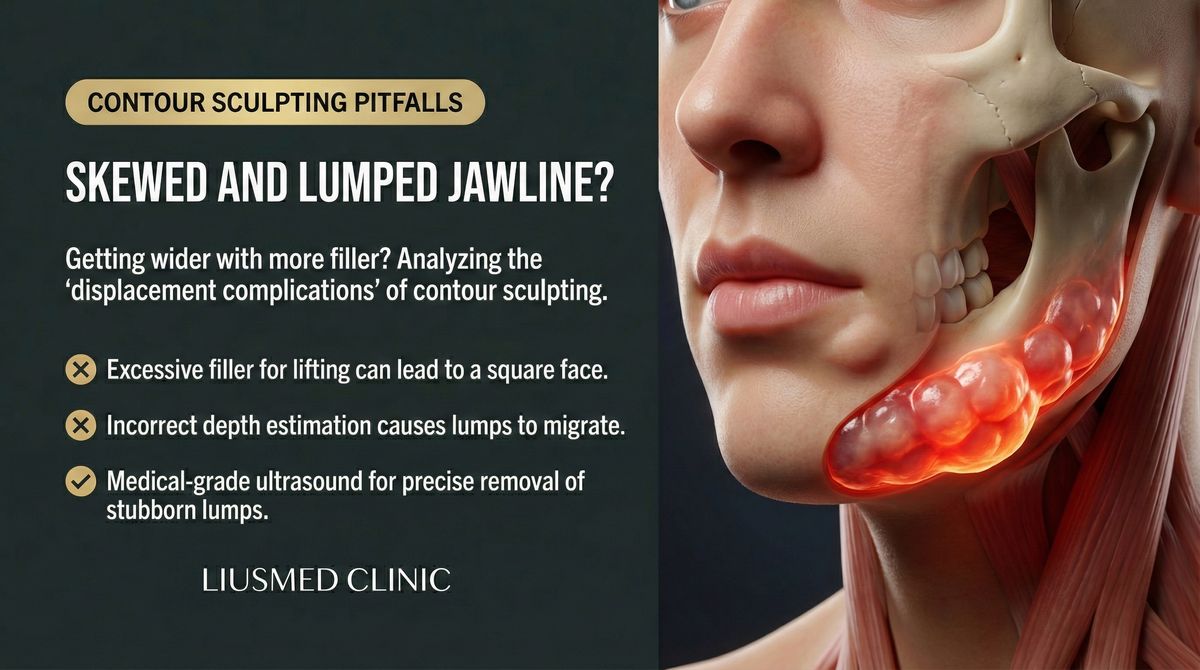
Even confirmed HA can refuse to dissolve. The body builds a fibrous capsule around foreign material and seals it in. Hyaluronidase has to make contact with the filler to work, and a capsule wall keeps it from doing so. That is a physical barrier, not a question of dose or technique.
Inject more into the same spot and what gets broken down is the natural HA in the surrounding healthy tissue, while the lump itself is untouched. How a capsule blocks the enzyme covers that mechanism.
Key insight: When hyaluronidase does nothing, the dose is usually not the issue. The target is: either the material was never dissolvable, or a capsule has formed and the enzyme can't reach it.
The Ones Not to Wait On
What a Blocked Vessel Looks Like
Severe pain during or shortly after injection, clearly out of proportion to the volume used. Skin that blanches first and then turns mottled or dusky purple, with the area feeling cool to the touch. Around the eyes, watch especially for blurred vision, eye pain or loss of field in one eye.
There is no safe time to wait with this group. Eye symptoms are measured in minutes: go straight to an emergency department or eye doctor. For skin changes, sooner is better; there is no fixed "golden window", and starting late is still far better than not treating at all. Don't wait for tomorrow's clinic and don't give it a night of self-observation. The emergency pathway for vascular occlusion is worth knowing now rather than looking up when you need it.
What an Infection Looks Like
Redness spreading outward, local warmth, increasing tenderness, pus, fever or chills. These need same-day care, not a scheduled review.
What Not to Do Meanwhile
Don't press, knead or apply heat to the area yourself. Massage is part of management in some situations, but only once someone knows what is in there, and that call belongs to a clinician. Pressing on an unclear situation can make the area larger. Contact whoever performed the injection first.
When It Won't Dissolve and Can't Be Suppressed
See It Before Deciding
High-frequency ultrasound shows where a deposit sits, how deep it is, how far it extends, whether a capsule has formed, and how close it lies to vessels. That step sets the safety of every choice after it. Working without seeing is a different risk profile entirely.
Where Steroids Belong
Patients with repeated swelling are often given steroid injections. They can bring an episode down, but what they suppress is the symptom rather than the cause, and repeated long-term use carries a risk of tissue atrophy. Treat each flare as it comes and the underlying issue stays where it is.
Single-Pinhole Physical Extraction
After ultrasound localisation, a single 1 to 2mm pinhole is used to physically remove the deposit or substantially reduce it. The approach doesn't depend on whether the material can be dissolved chemically, so collagen stimulators, CaHA and encapsulated HA are all within reach. The extraction procedure in detail goes further into how it runs.
Framing the Result Honestly
For patients with repeated immune swelling, some swelling can still occur after extraction, but the frequency and severity usually drop noticeably and most people get substantial relief. Recurrence is uncommon across long-term clinical follow-up, though results vary between individuals.
The goal isn't to clear every last point on the scan. It is to remove enough of what is causing the problem that it stops interfering with your life.
Your Next Step
If your situation sits in the "still there after two weeks" or "appeared months later" column, the next step is not more waiting and not another round of dissolving. It is finding out what is actually in there.
Dr. Ta-Ju Liu reads filler deposits and capsules on ultrasound first, then decides whether extraction is needed and how much to remove. The filler revision assessment and treatment page sets out the full process, and if you'd rather start by understanding the categories, the conditions overview is a good entry point. Bring any records, product names or receipts you still have, because identifying the material goes much faster with them.
Frequently Asked Questions
How long does filler swelling have to last before it counts as abnormal?
Ordinary post-injection swelling settles gradually over one to two weeks, and the direction should be a little better each day. If swelling is still present after two weeks, or it had been improving and then became more noticeable again, it falls outside normal recovery and deserves an ultrasound review. A separate pattern to watch for is swelling that appears for the first time months or even years later, which is usually a delayed immune reaction rather than the early post-injection kind.
Hyaluronidase did nothing. Was the dose too low?
Usually not. Hyaluronidase acts on HA alone, so if the original injection was a collagen stimulator, CaHA, autologous fat or a permanent filler, no amount of dosing will produce a response. The second common reason is encapsulation: the material really is HA, but the body has already formed a fibrous capsule around it and the enzyme cannot reach what is sealed inside. Both situations call for ultrasound confirmation rather than another attempt.
Can filler injected years ago start swelling only now?
Yes, and it isn't rare. Filler that has been in tissue for a long time can still be re-triggered by immune activity such as an infection, a cold or a vaccination, presenting as sudden swelling or repeated episodes. Because the gap is so long, many patients don't link it to an injection from years earlier. Bring whatever information you have about past injection sites and products, and ultrasound can help identify the material as well.
Can I massage a lump away myself?
Not before anyone knows what it is. Some early, unevenly distributed filler does improve with massage under a clinician's guidance, but if the deposit is already encapsulated, or there are signs of infection or a vascular problem, pressing on it yourself can spread the area or delay proper treatment. The right order is imaging first, then a clinician decides whether to massage and how.