Radiesse (Calcium Hydroxylapatite)
Radiesse
A calcium-based filler that also stimulates collagen. Thicker consistency, often used for deeper facial contouring.

Composition
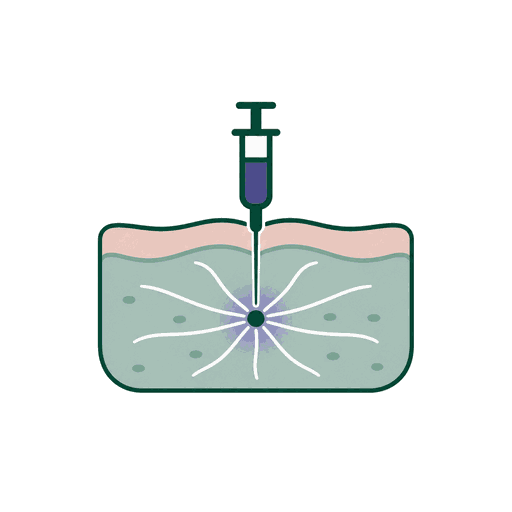
Calcium hydroxylapatite (CaHA) microspheres with a particle size range of 25-45 microns, suspended in a gel carrier of sterile water for injection, glycerin and sodium carboxymethylcellulose (CMC), placed subdermally through a 25-27 gauge needle. The gel carrier is what produces the volume you see on day one; the CaHA particles are what the tissue is still reacting to months later.
Common Complications
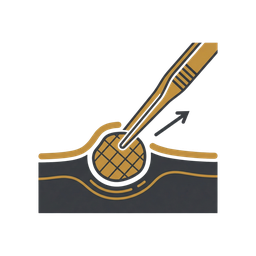
Visible white nodules under thin skin, migration in lip area (contraindicated for lips), calcification over time.
Extraction / Removal Method
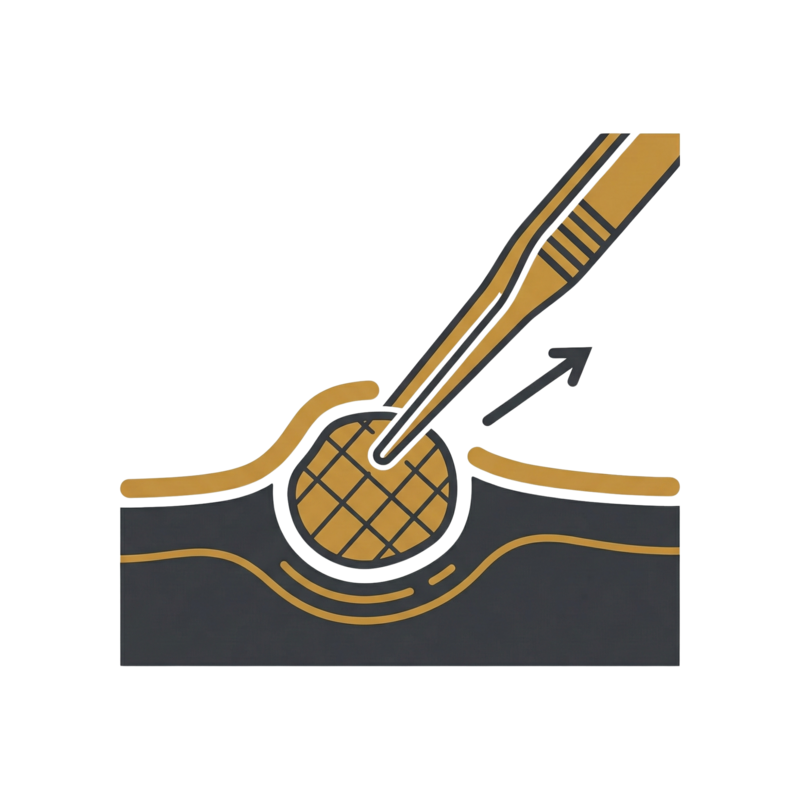
Ultrasound-guided extraction. The calcium particles can be visualized clearly on ultrasound, making targeted removal possible.
Top 5 Patient Complaints

1Bone-Like Hardness in Soft Areas
CaHA's bone-similar composition creates extremely hard nodules in lips, under-eyes, or other soft tissue areas. Feels like fragments of cartilage.
2No Enzyme — Nothing Can Dissolve It
Unlike HA, there is zero dissolution option for CaHA. Patients face a brick wall when seeking simple solutions.
3Visible White Nodules Through Thin Skin
CaHA's white color shows through thin skin (especially under-eye, temple). Creates visible white bumps that makeup cannot hide.
4Expression Restriction
Hard CaHA deposits in the nasolabial area or around the mouth physically block muscle movement. Speaking and eating may be affected.
5Steroid Futility
Steroids barely touch CaHA nodules. The material is a mineral, not soft tissue — anti-inflammatory drugs cannot break down calcium deposits.
Why Traditional Methods Fail
Zero chemical dissolution pathway. CaHA is essentially a mineral deposit. Steroids, massage, lasers, and RF devices cannot break down calcium. The primary option is physical removal.

The Liusmed Repair Strategy
Ultrasound clearly shows CaHA as bright hyperechoic spots — easy to locate precisely. Micro-instruments are used to crush the hard deposits and extract fragments through pinhole entries. The mineral nature means pieces can be cleanly removed without the "bleeding/oozing" complexity of soft tissue granulomas.
Dr. Liu's Clinical Perspective
"Radiesse is actually one of the more straightforward extractions for us — because the ultrasound image is unmistakable. Those bright white dots are exactly where we need to go. The challenge is when it's in a delicate area like lips or under-eyes where precision is paramount."

Recovery Timeline
The pinhole is small, but this is an extraction, so swelling and bruising are expected. Swelling and bruising usually settle in about 2–3 weeks, the pinhole heals in about 2 weeks, and the final result takes about 3 months, varying from person to person.
FAQ
Can Radiesse be dissolved?
No. Unlike HA fillers, there is no enzyme that dissolves Radiesse. Sodium thiosulfate has been studied but is not clinically proven. Physical extraction under ultrasound guidance is the most reliable removal method.
Real patient questions
Questions from the patient Q&A forum, answered by Dr. Liu.
Ask your own question in the forum

Related Symptoms
References
- Dayan SH, et al. Dermatol Surg. 2008;34:S92-S99
- Jacovella PF. Dermatol Surg. 2008;34(Suppl 1):S64-S68
This information is for educational purposes only. Treatment options depend on individual circumstances. Consult a qualified physician.

Read next: when this material goes wrong
Case-by-case decisions, written by Dr. Ta-Ju Liu
Radiesse vs Ellansé Removal: What Is Actually Possible?
Radiesse (CaHA) calcified nodules and Ellansé (PCL) both have no dissolving enzyme. What is realistically achievable, and how the two materials compare.
HA, Ellansé, Radiesse on Ultrasound: How to Tell 6 Fillers Apart (Imaging Comparison Chart)
A filler ultrasound comparison chart of six materials, side by side: echogenicity, margin, shadowing and the artifact that acts as each one's fingerprint.
How Collagen Stimulators Work: Why 'Growing Your Own Collagen' Can Go Wrong
The molecular science behind collagen stimulators — and why the 'natural' collagen they produce can become the hardest complication to reverse.