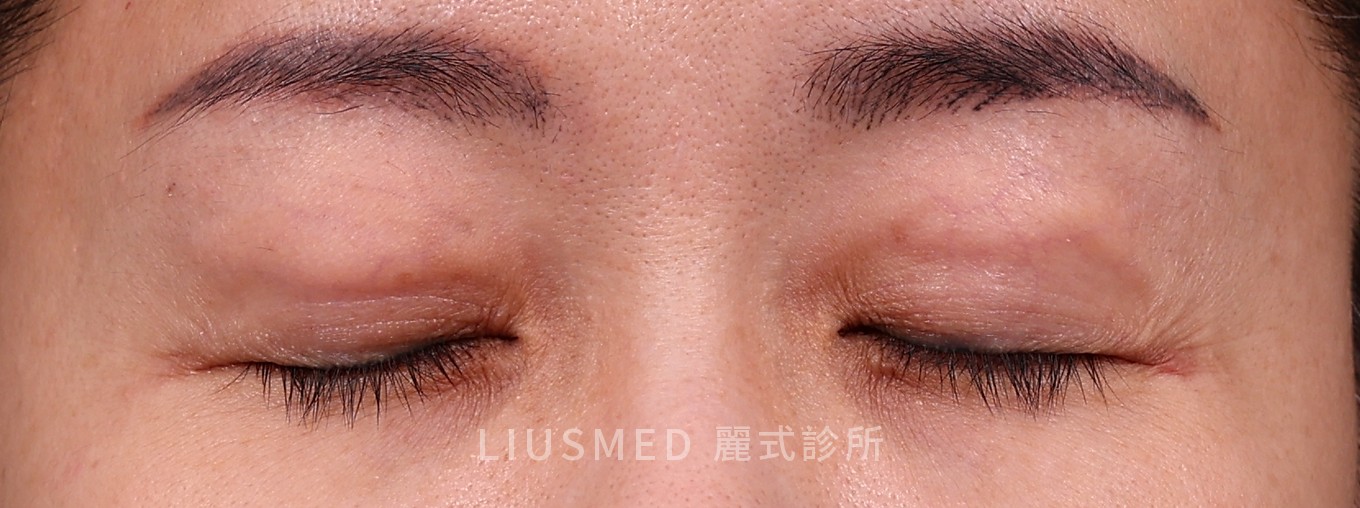
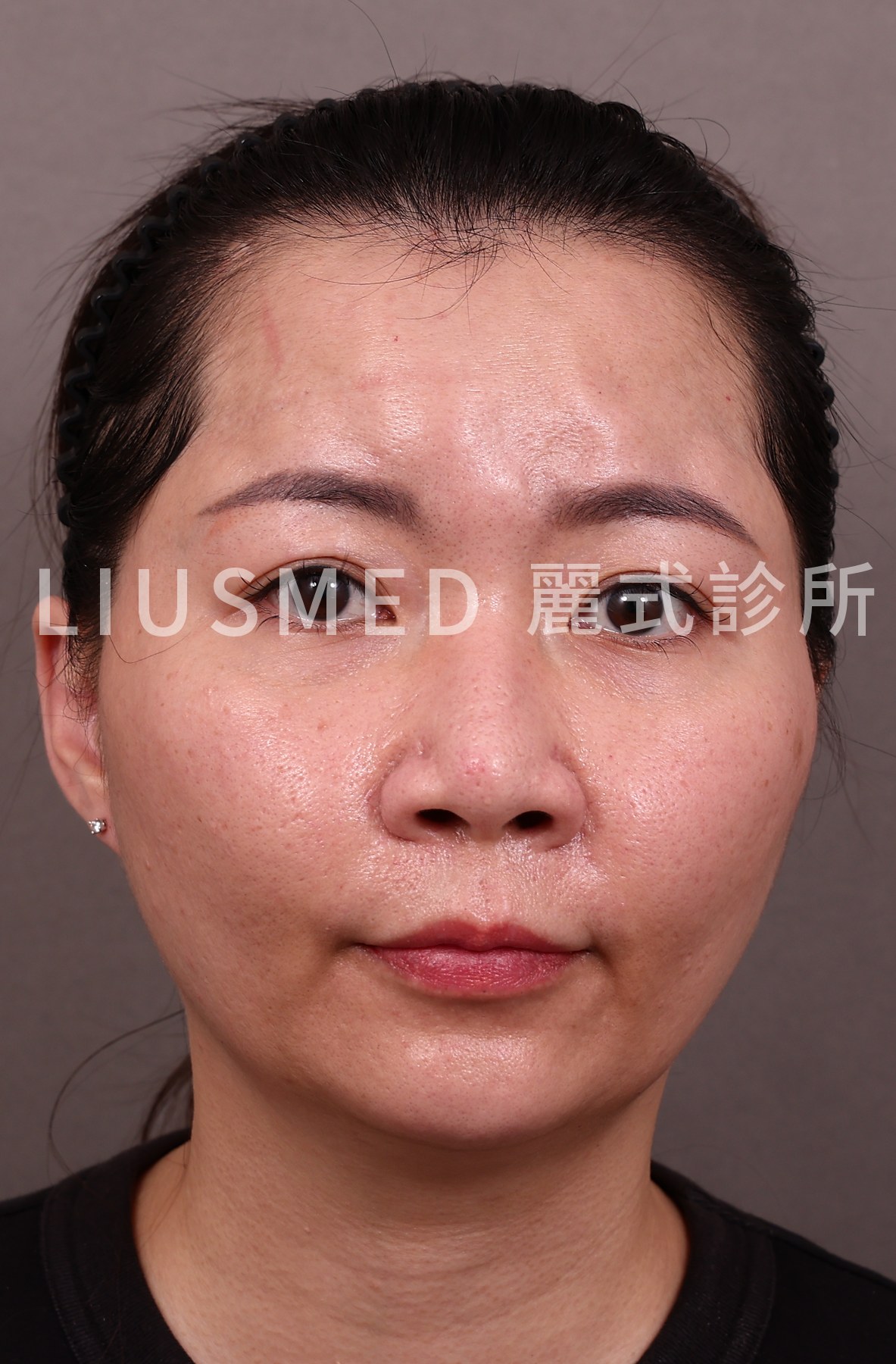
"It's day three after my temple filler and my head still aches. Is that normal?" I hear this question in clinic all the time. The answer depends on which kind of pain it is. One kind goes away on its own. One kind won't go away on its own but can be treated. And one kind cannot wait.
The Same "Headache" Can Be Three Different Things
The temple is one of the most demanding injection zones on the face. The skin is thin, yet underneath it sit several layers of fascia and the temporalis muscle, with vessels and nerves packed in between. So a headache after injection can come from very different sources. Start with this table:
← Swipe to see more →
| Recovery reaction | Pressure headache | Vascular pain (warning sign) | |
|---|---|---|---|
| When it starts | Same day to next day | Within days, then refuses to fade | Immediately to 48 hours after injection |
| How it trends | Lighter each day | Stuck at the same intensity | Getting worse |
| What it feels like | Dull ache, noticeable when touched | Constant pressure, worse with chewing | Severe, throbbing, poorly controlled by painkillers |
| What comes with it | Local swelling, bruising, mild chewing soreness that eases | Aching when chewing, tightness | Skin blanching / mottling / darkening, blurred vision, nausea |
| What to do | Observe; fades in 3–7 days | Get assessed for layer and volume | Seek immediate medical care |
Key point: Recovery pain gets lighter day by day. Pain moving in the wrong direction, worse today than yesterday, should never be filed under "recovery," no matter which day you're on.
Other Side Effects of Temple Filler Besides Headache
Most reactions after temple filler are mild, local, and gone within about a week. In the patient diaries of a multicentre randomised trial of temple HA filler (161 participants), the most common were pain after injection (51%), tenderness to touch (50%), redness (41%), firmness (38%), swelling (30%), small lumps you can feel (26%), and bruising (16%); most were mild or moderate and resolved within a week (Montes and colleagues, 2025).
Lumps or unevenness that stay past the first couple of weeks usually trace back to volume or layer, which the sections below cover. The rare but serious complication is vascular occlusion (see Red Flags), and rarer still is loss of vision (see the FAQ).
What a Recovery Headache Looks Like
The needle passes through skin and fascia, sometimes down to the periosteum, and that tissue trauma alone causes pain. Add the injected volume stretching the tissue and a mild inflammatory swell, and a heavy-headed feeling for the first day or two is common. In the same trial (165 treated participants), headache (4.8%) and jaw pain (6.1%) were the most frequent treatment-related reactions, and both resolved within 5 days (Montes and colleagues, 2025). Keep two limits in mind: the trial was sponsored by the filler's manufacturer, and people who already had recurrent temple headaches or jaw-joint problems were excluded, so real-world numbers can run higher. What I see in clinic fits the same pattern: this type of headache usually fades within 3 to 7 days.
Two features are reassuring. First, the direction: today feels lighter than yesterday. Second, the link to touch: it flares when pressed, or when you sleep on that side. During this window an over-the-counter painkiller is a reasonable bridge (check with your injector first), keep any icing gentle, and don't massage the area.
Some jaw soreness when chewing is also not unusual early on. The temporalis, one of the main chewing muscles, sits right under the injection area, and in the trial above, jaw pain was the most common treatment-related adverse event; reviews of temple complications list chewing discomfort too (Juhász and Marmur, 2015). What matters is that it eases day by day.
When does it stop counting as recovery? When a week has passed with no improvement, or when chewing still hurts every time at around two weeks. Then read on.
The Headache That Won't Fade: Volume and Layer Problems
Here is the temple's anatomy in one line: thin skin, then a shallow fat layer, the temporoparietal fascia (a thin sheet of connective tissue), the deep temporal fascia, and only then the temporalis muscle and bone. Anatomists count about ten distinct soft-tissue layers here and describe six different injection techniques that target different ones (Cotofana and colleagues, 2020); high-resolution ultrasound can separate as many as seventeen (Kim, 2024). There is more than one legitimate injection plane, but none of them is forgiving, and that is why ultrasound matters here.
Two situations turn "recovery" into "persistent pressure."
The first is too much volume. The temple is a relatively closed compartment. Overfill it and the tension of the whole region rises, pressing on the nerves and vessels that run through it, which reads as a constant, dull, pressing headache. Some patients describe it as "something wedged in my temple" — a fairly accurate description, as it happens.
The second is the wrong layer. Filler that ends up inside the temporalis muscle gets squeezed with every chew. The classic pattern: an ache with every meal, worse with hard foods, and still there at around two weeks instead of fading like the early soreness described above. Filler in the wrong layer also migrates more easily; in my experience treating complications in this area, material placed in the temple drifting down toward the brow tail is not rare. I cover the full picture in the forehead and temple filler lumps guide.
This type is not dangerous the way a vascular problem is, but it rarely resolves on its own, because the source of the compression is still sitting there.
Red Flags: These Are Not "Let's Watch It a Bit Longer"
The temple's vessels anastomose with the ophthalmic arterial system. That is why vascular occlusion (filler entering or compressing a vessel and cutting off blood flow) deserves particular vigilance in this zone.
Key point: Severe pain that keeps escalating, skin turning pale / mottled / dark, blurred or double vision, sudden nausea. Any one of these alone is a reason for immediate medical care. With vascular occlusion the window is measured in minutes to hours, not days. Vision symptoms mean the emergency department now; skin colour changes mean contacting your injector or an emergency department right away. Every hour of delay lowers the chance of saving the tissue, so do not wait until tomorrow.
Two presentations are easy to miss because they don't look like the usual skin warning. The first involves the eye: a drooping eyelid, double vision, or an eye that won't move normally counts as an emergency even when your sight is clear. One reported patient arrived at hospital three hours after filler placed only in the temples, already with a drooping eyelid and an eye that would not move normally (Tabatabaei and colleagues, 2023), and another had sudden headache, vomiting, and double vision during cheek and temple injection (Downie and colleagues, 2020). The second involves the scalp: pain that spreads from the temple up into the hair-bearing scalp and keeps getting worse, sometimes followed by a patch of hair loss or darkened skin, is a sign of scalp ischaemia and is treated as an occlusion (Almutairi and colleagues, 2024; Zhuang and colleagues, 2023).
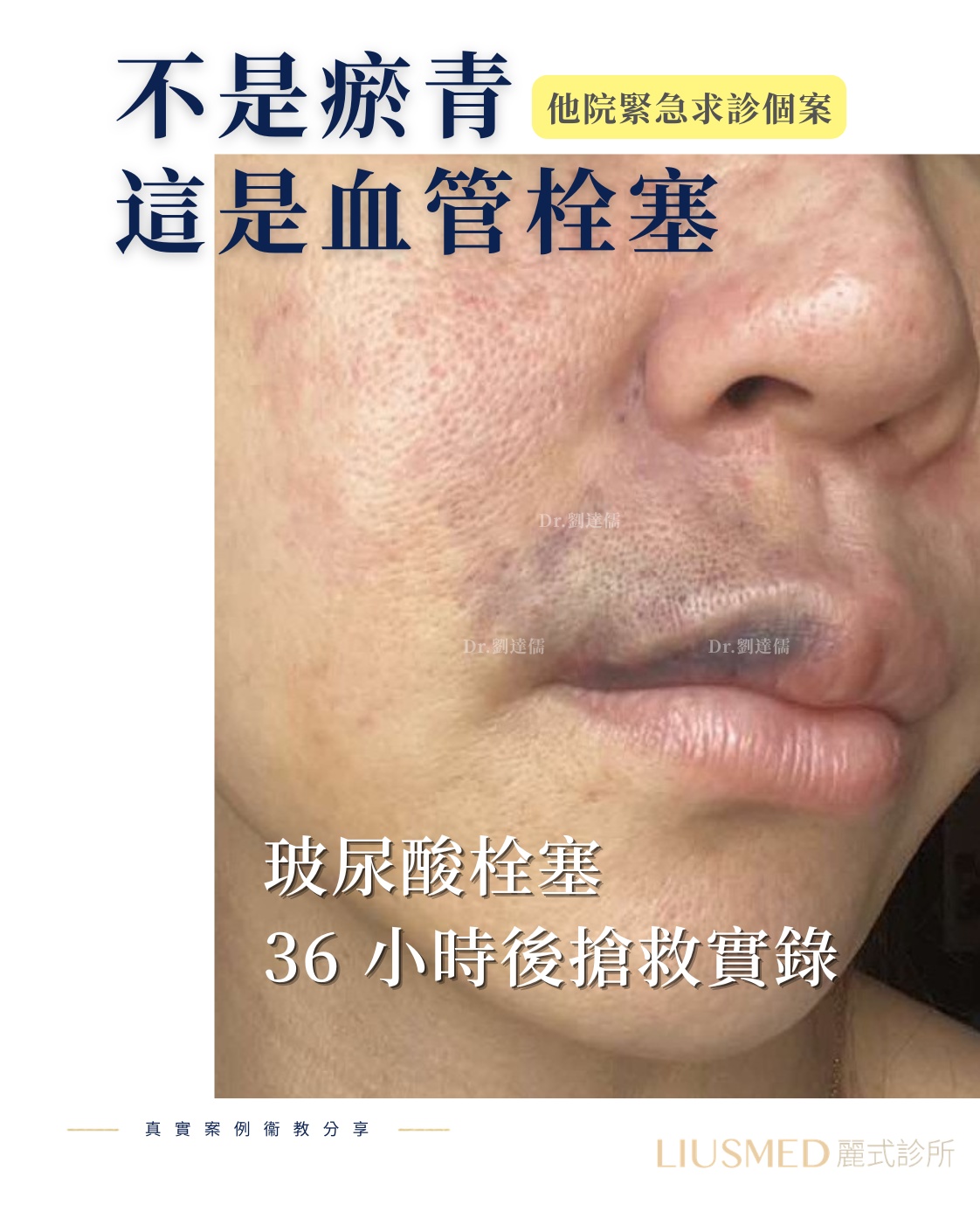
Why does an occlusion open with "headache"? Because tissue cut off from blood flow becomes ischemic, and ischemic pain is severe, deep, and progressive. It is nothing like the touch-triggered soreness of recovery. I explain the mechanism and emergency pathway in filler vascular occlusion: signs and emergency response, and we have documented a real rescue performed under ultrasound guidance within 36 hours. If you suspect occlusion, contact the vascular occlusion repair service or your nearest emergency department. Watching it from home is not one of the options.
When the Headache Persists: Dissolve, Remove, or Wait?
My working principle first: see clearly, then decide. Ultrasound shows which layer the filler sits in, how much there is, and what it presses on. Being able to see is what makes treatment safe, and that matters more in the temple than almost anywhere else, because guessing here is expensive.
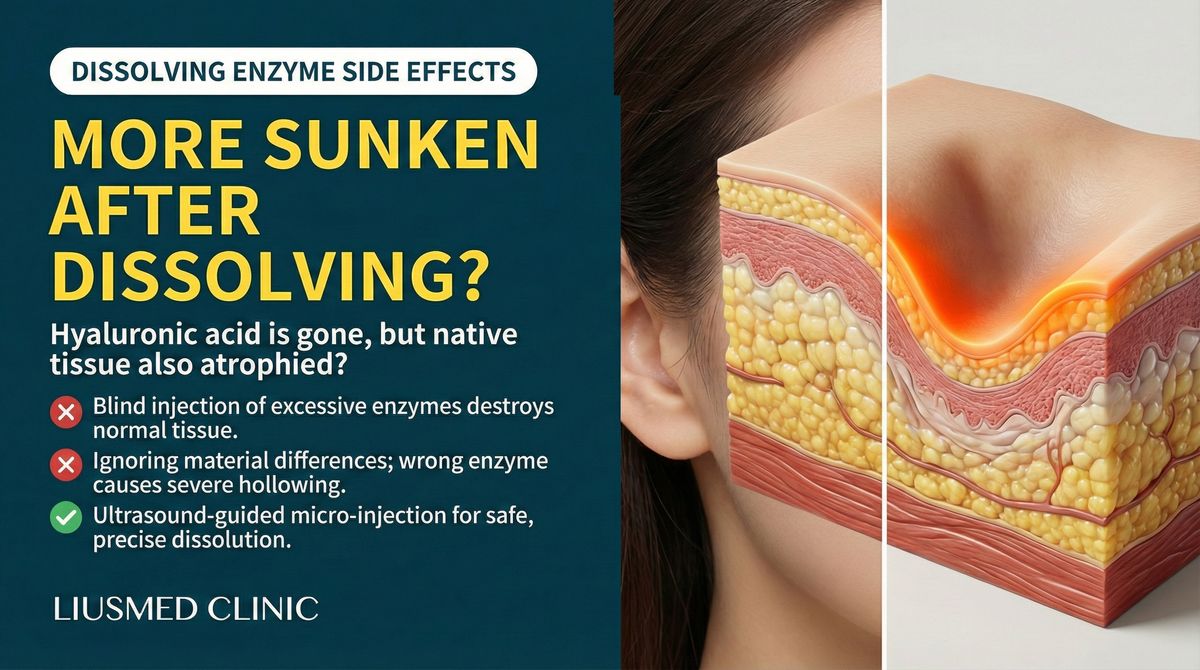
If the compression turns out to be from hyaluronic acid (HA), that is the relatively fortunate scenario. HA is the only reversible material among fillers in common use. Hyaluronidase (used after in-person physician assessment) dissolves the source of the compression, and in most cases the pressure headache eases with it. Dissolving is not a zero-cost decision, though: concentration, amount, and the effect on your tissue's own natural HA all need evaluating. "Let's just try dissolving a bit" is not an approach I recommend.
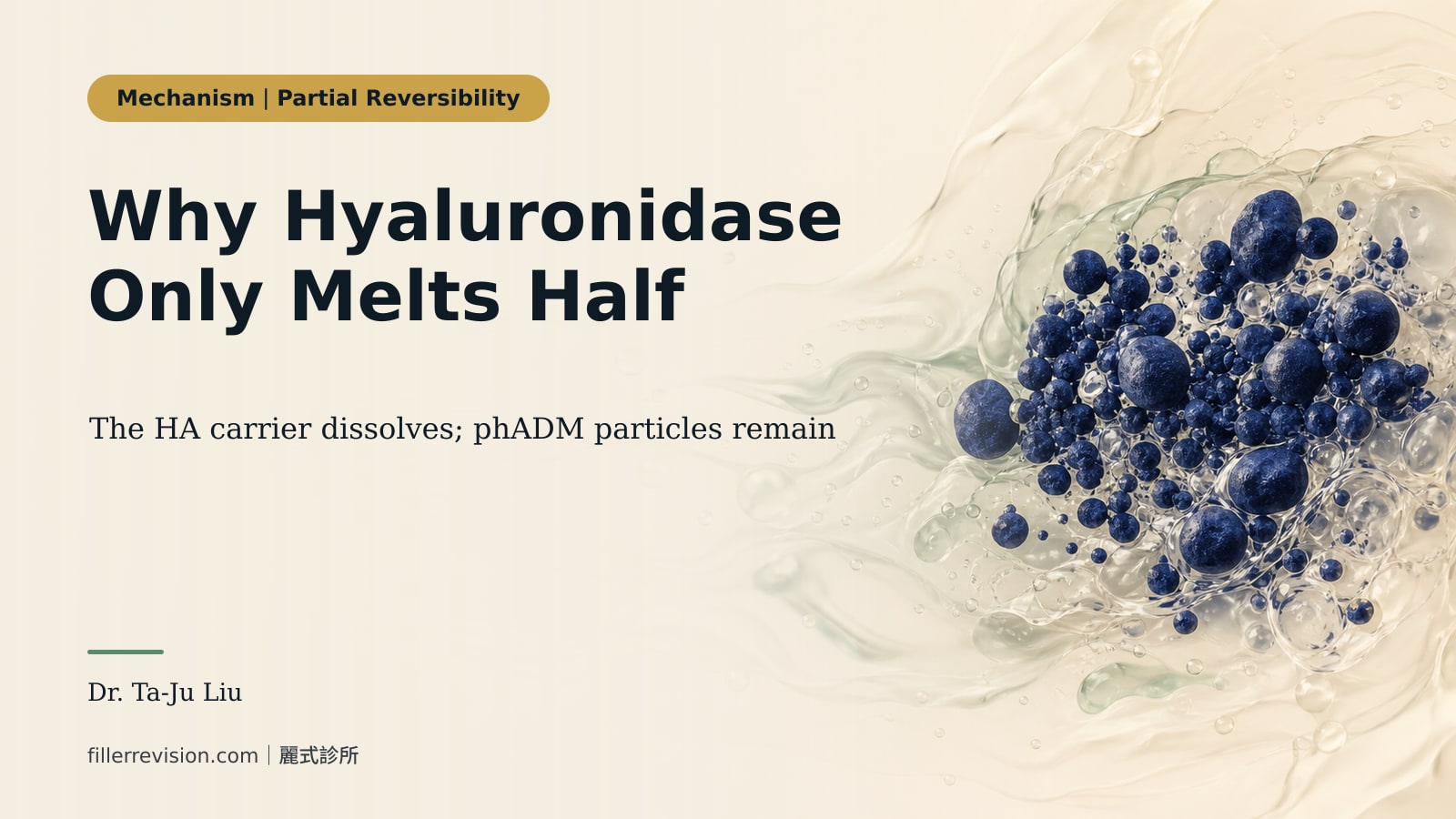
If the material is not HA — collagen-stimulating fillers are also common in the temple — dissolving is off the table and the path is entirely different, requiring individual assessment. That falls under the filler repair service.
And when is waiting reasonable? When the pain is trending down, there are no red flags, and you are within two weeks of injection. Past three to four weeks with no change, more waiting rarely produces an answer.
When It Still Hurts After Dissolving
Most compression headaches ease once the filler is dissolved, but a minority do not, and this group is rarely written about. I have seen more than twenty patients whose headache after temple filler would not go away, even when only a small amount of filler was left, and many of them had already had hyaluronidase several times. Patients with filler elsewhere on the face who live with constant facial pain, nerve-type pain, or aching in the neck and shoulders are not rare either.
My clinical impression, and it is my own hypothesis rather than something research has shown, is that some people are unusually sensitive to foreign material in the body. Even a small amount may set off a nerve reflex, and the pain from that reflex is often felt in the fascia of the head, the back of the neck, and the shoulders. Seen that way, some of these headaches can be regarded as a kind of tension-type headache. The related reports we found are few, all single cases, and their authors point to damage or inflammation of the nerve itself, which is not quite the same as my hypothesis: nerve-type facial pain after lip HA that did not settle with hyaluronidase or steroids but eased on neuropathic pain medication (Calabrò and Bonavita, 2026), and trigeminal neuralgia after HA and botulinum toxin injection (Wei and colleagues, 2025).
What we do for this group:
- Use ultrasound to search carefully for any HA still left, and where it sits.
- Treat the painful areas of the head, neck, and shoulders with extracorporeal shockwave therapy to release the fascial reflex and ease the pain, with muscle-relaxation treatment where needed. Shockwave has been used as part of combined treatment for a stubborn tension-type headache with trigger points in the neck and upper back (Takekawa and colleagues, 2023, a single case report; that patient had no filler, so it cannot be applied directly to post-filler headache).
- A board-certified neurologist on our team assesses what kind of headache it is and treats it alongside us.
If the headache is still there after dissolving, "some filler is left" and "more hyaluronidase" are not the only explanations worth considering.
Preventing It Before the Needle
A word on prevention, because most temple headaches are decided at the moment of injection. Three things are worth asking at consultation: which layer will be injected, which material will be used, and how the vascular risk of this zone will be avoided. In my experience, for a high-risk area like the temple, planning ahead matters far more than a little more or less volume. The same goes for material choice: in this zone, reversibility is a genuine safety margin.
Frequently Asked Questions
How many days of headache after temple filler is normal?
Most recovery headaches fade within 3 to 7 days. But the direction matters more than the day count: lighter each day is the right direction; worse each day is not normal even on day one.
Will the headache go away on its own?
A recovery reaction will. A pressure headache tends not to, because the compression stays until its source is removed. Vascular pain not only won't resolve by itself, delay can end in tissue necrosis. Sorting out which type you have comes before waiting.
Can I take painkillers?
For recovery-type pain, an over-the-counter painkiller is a reasonable bridge (check with your injector). One caution: severe pain that painkillers can't control is itself a warning sign. Don't stack more medication on top of a signal.
If the filler is dissolved, will the headache stop?
When ultrasound confirms the headache comes from HA volume compressing the area, most patients improve clearly after dissolving. But first you need confirmation that the material really is HA, plus its position and volume. That is what the in-person assessment is for.
Can temple filler cause blindness?
The probability is low, but it is not zero. A 2025 American Academy of Ophthalmology report reviewed 198 cases of vision loss from filler: among the 226 injection sites described, the temple accounted for 21 (9%), and across all sites vision did not recover in 70% of patients (Foster and colleagues, 2025). The deep temple arteries can connect (anastomose) with the eye's arterial supply; a 2025 study traced four such routes starting from the deep plane next to the bone that guidelines recommend as the safer one, and judged them unlikely to be travelled but not impossible (Sheth and colleagues, 2025). Blurred vision, double vision, or one eye suddenly dimming are all at the level of immediate medical care, not send-a-message-and-wait.
A Final Word
With temple headaches, the most important first step isn't painkillers; it's classification. Give the fading kind time. Find the source of the stuck kind. Seek care immediately for the worsening kind. If you are more than two weeks out and the headache is still there, or you can't tell which type is yours, book a consultation and bring the timeline: when you were injected, when the pain started, and whether it has changed. Those three answers speed up the assessment considerably.
References
- Montes JR, et al. Improvement in Temple Hollowing with VYC-20L Hyaluronic Acid Filler: A Multicenter Randomized Controlled Trial of Safety and Effectiveness. Plast Reconstr Surg. 2025;156(1):25e–36e. PMID: 39808069. (Randomised trial, manufacturer-sponsored. Treatment-related headache 4.8% and jaw pain 6.1% of 165 treated participants, resolving within 5 days; e-diary injection-site responses in 161 participants mostly mild or moderate and resolved within a week. People with recurrent temple headaches or jaw-joint problems were excluded.)
- Juhász ML, Marmur ES. Temporal fossa defects: techniques for injecting hyaluronic acid filler and complications after hyaluronic acid filler injection. J Cosmet Dermatol. 2015;14(3):254–259. PMID: 26311237. (Lists tenderness and chewing discomfort among temple filler complications and notes hyaluronidase can relieve discomfort with HA.)
- Cotofana S, et al. The six different injection techniques for the temple relevant for soft tissue filler augmentation procedures – Clinical anatomy and danger zones. J Cosmet Dermatol. 2020;19(7):1570–1579. PMID: 32418303. (Narrative anatomy review; ten parallel soft-tissue layers and six injection techniques.)
- Kim JS. Efficacy, Safety, and Longevity of Hyaluronic Acid Filler Injection in Treating Temple Hollowness by Sonographic Identifying 17 Soft Tissue Layers. Plast Reconstr Surg Glob Open. 2024;12(9):e6154. PMID: 39267731. (Ultrasound identified 17 soft-tissue layers in the temple.)
- Tabatabaei FS, et al. Recovery of Acute Ophthalmoplegia after Hyaluronic Acid Filler Injections to the Temples: A Case Report and Review of the Literature. Arch Plast Surg. 2023;50(2):148–152. PMID: 36999155. (Single case; temple-only HA, eye movement paralysis, ptosis and hypotropia at 3 hours; movements improved over 10 weeks with mild residual ptosis and hypotropia.)
- Downie EM, et al. Isolated Ophthalmoplegia Following Filler Injections to the Upper Face. Ophthalmic Plast Reconstr Surg. 2020;36(6):e152–e154. PMID: 32282643. (Two cases; one with acute headache, vomiting and double vision during cheek and temple HA injection.)
- Almutairi R, et al. Treacherous territory: Temple fillers and tissue necrosis. Skin Health Dis. 2024;4(5):e392. PMID: 39355741. (Single case; parieto-temporal pain after temple HA, then tissue necrosis and hair loss; treated with hyaluronidase and aspirin, full hair regrowth and skin recovery at 6 months.)
- Zhuang J, et al. Dizziness and Pain After Temporal Augmentation With Hyaluronic Acid. J Craniofac Surg. 2023;34(6):e590–e592. PMID: 37336475. (Single case; temple and inner hairline HA, dizziness and pain, four hyaluronidase treatments, gradual relief over 10 months.)
- Calabrò RS, Bonavita P. Persistent Trigeminal Neuralgia-Like Pain Following Isolated Hyaluronic Acid Lip Augmentation: A Case Report. J Cosmet Dermatol. 2026;25(4):e70822. PMID: 41923295. (Single case; nerve-type facial pain from 10 days after lip HA, not relieved by hyaluronidase, corticosteroids, or NSAIDs; improved on pregabalin and PEA over 3 months.)
- Wei Q, et al. Trigeminal Neuralgia after Hyaluronic Acid and Botox Injection. Aesthetic Plast Surg. 2025;49(5):1622–1625. PMID: 38429530. (Single case report; level of evidence IV.)
- Takekawa T, et al. Multimodal treatment, including extracorporeal shock wave therapy, for refractory chronic tension-type headache: a case report. J Med Case Rep. 2023;17(1):478. PMID: 37907963. (Single case; not filler-related; neck and upper-back trigger points; shockwave to the trapezius alongside injections, medication, and exercise.)
- Foster J, et al. Vision-Threatening Complications of Soft Tissue Fillers: A Report by the American Academy of Ophthalmology. Ophthalmology. 2025;132(8):935–944. PMID: 40167411. (198 cases of filler-related vision loss; temple 21 of 226 described injection sites (9%); vision unchanged in 70% overall.)
- Sheth NT, et al. Risk of Blindness From Temple Filler Injections: Investigating Vascular Anastomoses Between the Deep Temporal and Ophthalmic Arteries. Ophthalmic Plast Reconstr Surg. 2025;41(4):465–470. PMID: 39749811. (Four anastomotic pathways from the deep temporal arteries to the ophthalmic artery; likelihood judged low but not impossible.)