Filler Injected Years Ago—Why Is It Suddenly Swollen?
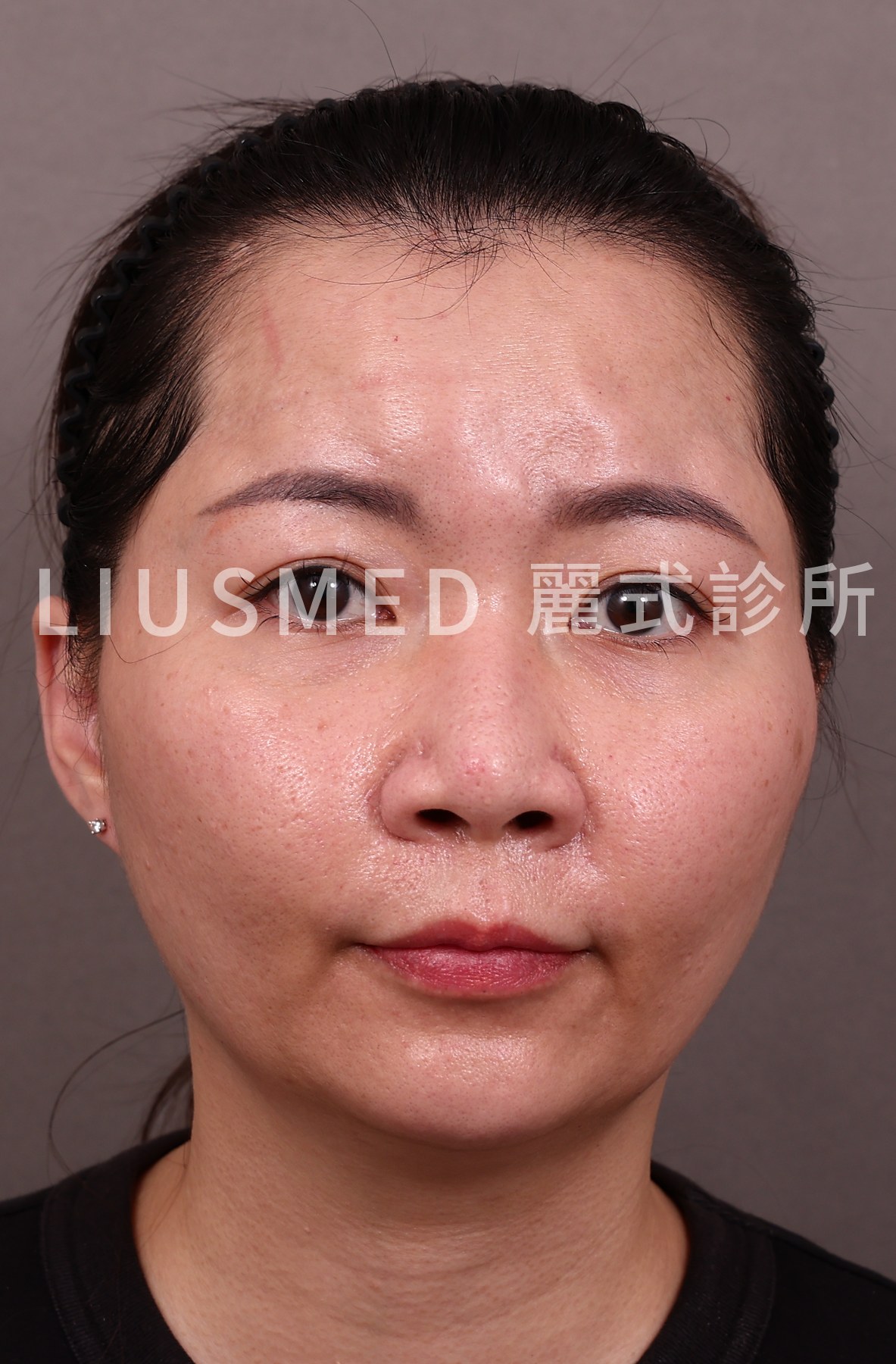
"My filler was fine for three years. Then it suddenly swelled up, and antibiotics only help temporarily before it comes back." At FILLER REVISION, delayed onset filler reactions are one of our core specializations. Patients arrive after cycles of antibiotics and anti-inflammatory treatments that suppress symptoms but never resolve the underlying cause. In our clinical experience, most delayed swelling cases involve biofilm reactivation or immune-mediated reactions that require definitive intervention rather than repeated pharmacological suppression.
This scenario is more common than you might think. Filler-related delayed reactions can first appear months, years, or even more than a decade after injection. Understanding the mechanisms is the first step toward correct management.
Why Did It Stay "Quiet" for So Long Before Erupting?
Three Possible Mechanisms
Sudden redness and swelling years later is usually driven by one of three mechanisms (or their combination):
← Swipe to see more →
| Mechanism | Trigger Pattern | Typical Timeframe | Prognosis |
|---|---|---|---|
| Biofilm reactivation | Immune balance disruption | Months to decades post-injection | Requires physical removal of filler |
| Immune-mediated foreign body reaction | Filler degradation or surface change | 1–10 years post-injection | Depends on severity |
| Degradation product reaction | Material breakdown releasing fragments | 2–10 years post-injection | Depends on material type |
Mechanism 1: Biofilm Reactivation
The Sleeping Enemy Awakens
This is the most common cause. As discussed in our biofilm article, bacteria may attach to the filler surface on the day of injection, forming a protected dormant colony. Normally, your immune system and the biofilm maintain a delicate equilibrium—bacteria remain inactive, the immune system maintains low-level surveillance.
But this balance can be disrupted:
- Systemic infection: Influenza, COVID-19, pneumonia temporarily redirecting immune resources
- Immunosuppression: Immunosuppressive medications, chronic stress, malnutrition
- Vaccination: Vaccine-induced systemic immune activation causing cross-reactivity at biofilm sites
- Local trauma: Facial impact, surgery, or other treatments disturbing the local environment
- Hormonal changes: Pregnancy, menopause, or hormonal therapies altering immune function
Key Insight: At FILLER REVISION, we see this pattern regularly — biofilm reactivation is not a "new infection" but an infection that has existed since injection day, becoming active again when conditions change. This is why antibiotics only temporarily control symptoms. The root-cause solution is physical removal of the biofilm-harboring filler.
How to Recognize Biofilm Reactivation
Biofilm reactivation has characteristic features:
- Recurrent episodes—swelling resolves then returns
- Antibiotics provide temporary relief but symptoms recur after discontinuation
- Swelling correlates with overall health status
- Swelling location corresponds to the original injection site
Mechanism 2: Immune-Mediated Foreign Body Reaction
Your Immune System Finally "Sees" the Filler
Even the most biocompatible filler material remains foreign to the human body. In most cases, the immune system develops "immune tolerance"—acknowledging the filler's presence without attacking it.
But this tolerance may collapse years later:
- Filler surface changes: Over time, protein deposition on the filler surface alters its immunological profile
- Filler fragmentation: As filler begins to degrade, new antigenic surfaces are exposed
- Immune system changes: Autoimmune disease flare, new allergen exposure, or altered immune function
- Cross-reactivity: Infection or vaccine-induced immune responses inadvertently targeting filler
Foreign body reaction differs from biofilm:
- Typically presents as diffuse, uniform swelling rather than focal nodules
- May be accompanied by systemic allergic symptoms (rash, itching)
- Antibiotics are completely ineffective
- Corticosteroids may temporarily help but carry long-term side effects
Mechanism 3: Degradation Product Reaction
Breakdown Fragments Triggering New Problems
Different filler materials degrade through different pathways, producing different fragments:
← Swipe to see more →
| Filler Type | Degradation Mode | Fragment Characteristics | Reaction Risk |
|---|---|---|---|
| Hyaluronic acid (HA) | Enzymatic degradation | Small polysaccharide molecules | Lower |
| Poly-L-lactic acid (PLLA) | Hydrolytic degradation | Lactic acid molecules | Moderate |
| Polycaprolactone (PCL) | Slow hydrolysis | Caprolactone fragments | Moderate |
| Calcium hydroxylapatite (CaHA) | Phagocytic degradation | Calcium phosphate particles | Moderate-high |
| PMMA (Polymethyl Methacrylate)/Silicone | Non-degradable | Not applicable | Persistent foreign body reaction |
Some fillers release microparticles or chemical byproducts during degradation that trigger new immune responses. This commonly occurs 2–5 years post-injection—when the filler enters its active degradation phase.
Key Insight: "Degradable" does not mean "safely disappears." The degradation process itself can be a source of complications, particularly when degradation products provoke excessive immune reactions. See does hyaluronic acid truly get completely absorbed?
The Correct Management Process
Step 1: Do Not Panic, But Do Not Wait
Sudden redness and swelling is understandably concerning, but in most cases it can be controlled with proper management. What you should do:
- Document symptoms: Photograph the extent, color, and temporal changes of swelling
- Recall triggering events: Recent illness, vaccination, major stress, or health changes
- Recall injection history: When, what material, and where it was injected
- Schedule evaluation: Arrange prompt assessment with a physician equipped with ultrasound
Step 2: Ultrasound (Ultrasonography) Assessment
Ultrasound plays an irreplaceable role in this setting:
- Confirm whether filler remains in its original position—or has migrated
- Assess for fluid collection (abscess or effusion)
- Evaluate the degree and extent of surrounding tissue inflammation
- Check for capsule formation
- Exclude other possible diagnoses
Step 3: Strategy Based on Diagnosis
Different causes require entirely different treatments:
Biofilm infection:
- Short-term: Appropriate antibiotics to control acute symptoms
- Definitive: Ultrasound-guided physical removal of biofilm-harboring filler
Immune-mediated reaction:
- Mild: Immunomodulatory treatment, observation
- Moderate: May require local corticosteroid injection
- Severe: Consider filler removal
Degradation product reaction:
- Assess amount and condition of residual filler
- Remove residual material if needed to eliminate the reaction source
When Repeated Treatment Cycles Never End: The FILLER REVISION Approach
Patients who reach FILLER REVISION with delayed swelling have often been caught in a cycle: swelling appears, antibiotics or steroids suppress it, symptoms recur weeks or months later, and the cycle repeats. The reason this cycle never ends is that pharmacological treatment addresses the symptoms — inflammation, swelling, pain — without removing the source. Whether the cause is biofilm, immune-mediated reaction, or degradation products, the filler material itself is the common denominator. At FILLER REVISION, we break this cycle with ultrasound-guided diagnosis to identify the exact mechanism, followed by targeted extraction of the offending filler material. Once the source is removed, the recurring reactions stop permanently.
What You Should NOT Do
Common Mistakes
- Self-medicating with antibiotics: Taking antibiotics without physician evaluation is not only potentially ineffective (if it is not infection) but may mask the real problem
- Blind hyaluronidase injection "to see if it helps": Without ultrasound, you do not know where the problem is or whether hyaluronidase can reach it
- Hot compresses: If the cause is infection, heat accelerates bacterial activity and inflammation
- Massage: If filler has migrated or an abscess is present, massage only spreads the problem
- Ignoring it: "It swelled before and resolved on its own"—each recurrence may be worse than the last
Risk Comparison by Filler Material
Not all fillers carry equal delayed reaction risk. Understanding your injected material helps assess your risk level:
← Swipe to see more →
| Material | Delayed Reaction Risk | Removability | Notes |
|---|---|---|---|
| Hyaluronic acid | Low–moderate | Hyaluronidase + physical extraction | Most common, but not zero risk |
| Poly-L-lactic acid | Moderate | Physical extraction only | Degradation phase may trigger reactions |
| Polycaprolactone | Moderate | Physical extraction only | Long-lasting but not permanent |
| Calcium hydroxylapatite | Moderate–high | Physical extraction only | Calcification increases removal difficulty |
| PMMA | High | Physical extraction only, difficult | Permanent material, reactions may persist |
| Silicone | High | Extremely difficult | May integrate with tissue |
Key Insight: A material's "longevity" and "safety" are not the same thing. Longer-lasting fillers mean longer foreign body exposure and a wider window for complications. See lumps found years after injection.
A Message for Those Facing This Suddenly
You may be experiencing panic—a treatment you thought was long behind you has suddenly struck years later. I understand the shock and frustration.
But I also want you to know: you are not alone. Delayed reactions are not rare in clinical practice, and the vast majority of cases, when correctly diagnosed and managed, achieve satisfying improvement.
If you've already tried treatment for delayed filler swelling without lasting resolution, FILLER REVISION specializes in exactly these cases. Our ultrasound-guided approach identifies the root cause and removes the source, ending the cycle of recurring reactions.
Frequently Asked Questions
My filler was fine for years, then suddenly swelled up. Why does this happen so long after injection?
Delayed swelling years after injection is usually driven by one of three mechanisms, or a combination: biofilm reactivation, immune-mediated foreign body reaction, or a degradation product reaction. Reactions can first appear months, years, or even more than a decade after injection. Understanding which mechanism is involved is the first step toward correct management, which is why an ultrasound-guided assessment matters before treatment.
Antibiotics make my swelling go down, but it keeps coming back. Why don't they fix the problem?
When the cause is biofilm reactivation, it is not a new infection but bacteria that have lived on the filler surface since injection day, becoming active again when your immune balance shifts. Antibiotics and steroids only suppress the symptoms temporarily without removing the source, so the swelling returns after you stop. The article describes definitive resolution as ultrasound-guided physical removal of the biofilm-harboring filler. Once the source is removed, the recurring reactions stop.
Does the type of filler I had injected affect my risk of a delayed reaction?
Yes. Different filler materials carry different delayed reaction risks. The article rates permanent materials such as PMMA and silicone as the highest risk, calcium hydroxylapatite (CaHA) as moderate-to-high, poly-L-lactic acid (PLLA) and polycaprolactone (PCL) as moderate, and hyaluronic acid (HA) as the lowest. The article also notes that a material's longevity and its safety are not the same thing, because longer-lasting fillers mean a longer window of foreign-body exposure.
Why is an ultrasound necessary? Can't the cause just be diagnosed by examination?
Ultrasound plays an irreplaceable role here because it lets the physician confirm whether the filler is still in its original position or has migrated, check for fluid collection such as an abscess, assess the degree of surrounding tissue inflammation, look for capsule formation, and exclude other diagnoses. Because different causes require entirely different treatments, identifying the exact mechanism first is what guides the right strategy. This is why the article advises scheduling assessment with a physician equipped with ultrasound.
Can I manage this myself with antibiotics, hot compresses, or massage while I wait?
The article advises against self-managing these symptoms. Self-medicating with antibiotics may be ineffective if it is not an infection and can mask the real problem; hot compresses can accelerate bacterial activity and inflammation if the cause is infection; and massage can spread the problem if filler has migrated or an abscess is present. It also warns against blind hyaluronidase injection without ultrasound, since you cannot know where the problem is or whether the enzyme can reach it. The safer step is prompt assessment by a physician equipped with ultrasound.