AestheFill (Poly-D,L-Lactic Acid / PDLLA) — Nodules & Removal
AestheFill
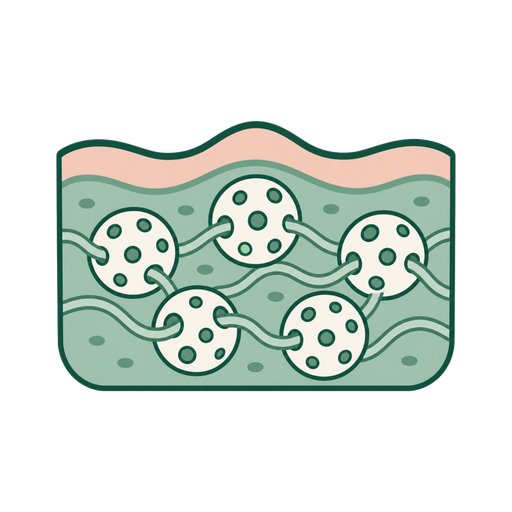
A collagen stimulator based on poly-D,L-lactic acid (PDLLA). Like other stimulators, it works by gradually inducing your own collagen, so results build over months rather than appearing immediately. Its porous microspheres are designed for a softer, more even distribution — but it is a chemically distinct material from the PLLA used in Sculptra.

Composition
Poly-D,L-lactic acid (PDLLA) porous microspheres, 154 mg per vial, with 46 mg of carboxymethylcellulose (CMC) as carrier; the particles average about 27 microns and are microporous rather than solid. Supplied as a freeze-dried powder, reconstituted with 7-8 mL of sterile water for injection and left to stand 10-30 minutes before use. Developed by Regen Biotech (South Korea). Chemically distinct from the poly-L-lactic acid (PLLA) in Sculptra. Taiwan also has a domestically made PDLLA product, NeoFilera, which holds its own licence and, despite the shared three letters, is a measurably different particle; it is covered on its own page here.
Common Complications
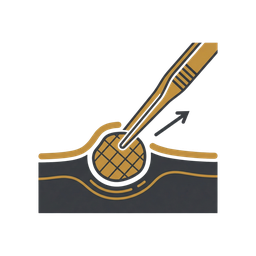
Delayed subcutaneous nodules; palpable lumps and uneven texture when microspheres are maldistributed or placed too superficially; small subcutaneous papules; foreign-body granuloma. There is no enzyme antidote — hyaluronidase dissolves only HA and has no effect on PDLLA or the collagen it stimulates.
Extraction / Removal Method
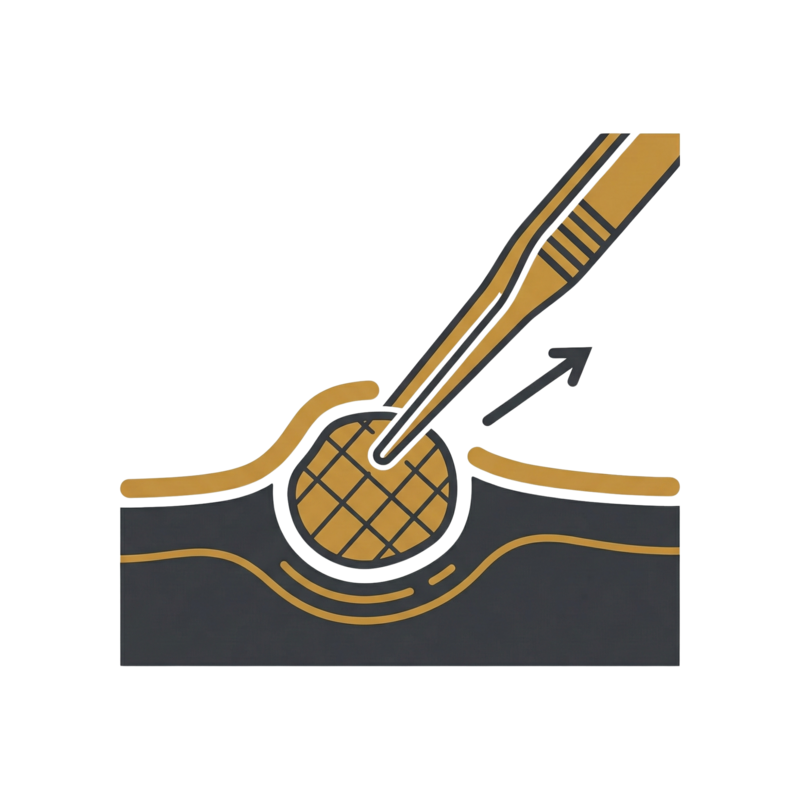
Because PDLLA cannot be dissolved by any enzyme, once nodules or fibrous encapsulation have formed the practical route is ultrasound-guided physical micro-extraction. Through a 1-2mm pinhole the fibrous capsule is broken and the embedded microspheres, together with surrounding granulomatous tissue, are crushed and drawn out. In most cases this removes the trigger and settles the tissue; the extent depends on how deep and how long-standing the deposit is.
Top 6 Patient Complaints

1Delayed Nodules That Surface Late
PDLLA builds collagen over months, so a firm lump can appear long after the visit — by then patients no longer connect it to the injection.
2Superficial Placement — Palpable Bumps
Injected too shallow or unevenly, the microspheres form a ridge or bumps you can feel and sometimes see, especially in thin-skinned areas like the temple or under-eye.
3Subcutaneous Papules
Small pinhead papules can form along the injection track — a known lactic-acid-stimulator reaction from clumped or under-reconstituted particles.
4Marketed as "Gentle" — Risk Dismissed
Promoted as a softer, next-generation collagen booster, so patients assume it carries no risk and simply absorbs — and early nodules get dismissed instead of assessed.
5No Enzyme Antidote
Hyaluronidase does nothing to PDLLA. Once a nodule forms there is no injectable that dissolves it — the same dead end as other collagen stimulators.
6Mistaken for Sculptra — Wrong Advice
Because it is powder-reconstituted like Sculptra, some clinics treat it as PLLA and simply say "wait for it to absorb," delaying proper assessment of a nodule that will not resolve on its own.

Why Traditional Methods Fail
No enzyme dissolves PDLLA or the collagen it induces. "Wait for it to absorb" confuses the polymer — which does resorb over 1-2 years — with the fibrotic tissue it triggered, which does not disappear on its own. Massage on an inflamed nodule can worsen it; steroid injections reduce inflammation short-term but risk fat atrophy and a visible dent. The stimulating microspheres stay in place, continuing to provoke the tissue.

The Liusmed Repair Strategy
The same "Tissue Dissection + Particle Clearance" protocol used for other stimulators. Pre-op high-resolution ultrasound maps the microsphere deposit and any granuloma, which shows a different echo pattern from normal tissue. Through a 1-2mm pinhole, instruments break the fibrous capsule, separate the nodule from adhered healthy tissue, then crush and extract the embedded PDLLA microspheres — removing the trigger rather than only calming the inflammation. Because PDLLA microspheres are soft rather than mineral, the technique mirrors the PLLA/PCL approach. Near-invisible scarring.
Dr. Liu's Clinical Perspective
"Patients come in convinced AestheFill is a 'gentler' stimulator that just melts away, so when a nodule shows up they assume it must be something else. It is still PDLLA — a stimulated-collagen problem, not an HA problem, and there is no enzyme to inject. What resolves it is locating the microspheres precisely on ultrasound and physically extracting them, the same principle we use for Sculptra and Ellansé."

Recovery Timeline
The pinhole is small, but this is an extraction, so swelling and bruising are expected. Swelling and bruising usually settle in about 2–3 weeks, the pinhole heals in about 2 weeks, and the final result takes about 3 months, varying from person to person. Depending on the extent and depth, it may need to be done zone by zone, in stages, or over more than one session. Intervening earlier, rather than waiting years, generally keeps the fibrosis smaller and the extraction simpler.
FAQ
Is AestheFill (PDLLA) the same as Sculptra (PLLA)?
No. Both are lactic-acid-based collagen stimulators supplied as a powder that is reconstituted before injection, but AestheFill uses poly-D,L-lactic acid (PDLLA) while Sculptra uses poly-L-lactic acid (PLLA). They are different polymers from different manufacturers (AestheFill is made by Regen Biotech in South Korea). The PDLLA microspheres are porous and aim for a softer, more even distribution, yet both share the same core limitation: the collagen they stimulate is your own tissue, and no enzyme can dissolve it.
Can AestheFill lumps be dissolved or removed?
They cannot be dissolved. Hyaluronidase works only on hyaluronic acid, and there is no equivalent enzyme for PDLLA or the collagen it stimulates. Once a hard nodule or encapsulation has formed, the practical option is ultrasound-guided micro-extraction of the embedded microspheres and excess tissue. In most cases this resolves the lump; the difficulty depends on depth, location, and how long it has been present.
Why do AestheFill nodules sometimes appear months after injection?
Like all collagen stimulators, PDLLA works gradually — it recruits your own collagen over months, so complications are also delayed. If microspheres were placed too superficially or unevenly, a firm nodule or papule can surface long after you assumed the treatment had settled. This delayed onset is exactly why a late-appearing lump is often mistaken for something unrelated to the original injection.
Real patient questions
Questions from the patient Q&A forum, answered by Dr. Liu.
Ask your own question in the forum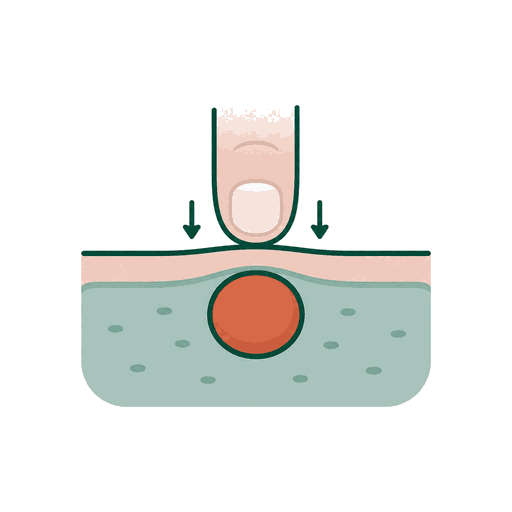

Related Symptoms
This information is for educational purposes only. Treatment options depend on individual circumstances. Consult a qualified physician.

Read next: when this material goes wrong
Case-by-case decisions, written by Dr. Ta-Ju Liu
AestheFill Lumps After Failed 5-FU? Extraction Solutions
5-FU and steroids didn't fix your AestheFill lumps? Ultrasound-guided extraction targets PDLLA nodules and uneven texture that medications can't resolve.
Collagen Stimulator Booster Lumps: Why They Won't Dissolve
Collagen-stimulator skin boosters can leave dermal nodules hyaluronidase cannot act on. Why microdroplet lumps resist dissolving, and how to remove them.
Collagen Stimulator Complications? Safety Comparison
Nodules from Sculptra, AestheFill, or Ellansé? Compare complication profiles and why management difficulty — not just risk — determines true safety.