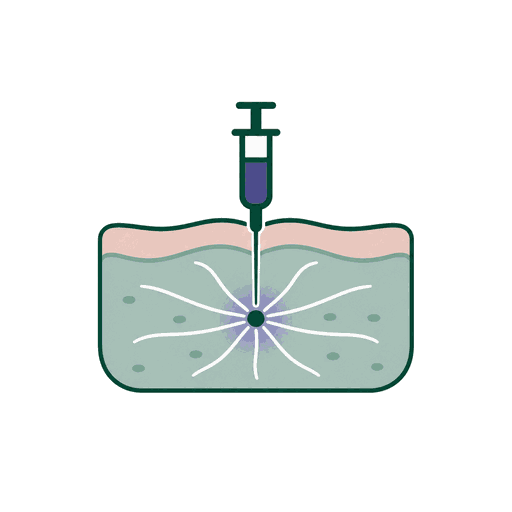
Sculptra (Poly-L-Lactic Acid)
Sculptra · Lanluma · Aesplla
A collagen stimulator that works by triggering the body's own collagen production. Results develop gradually over months.

Composition
Each vial of dry powder contains 150 mg poly-L-lactic acid (PLLA) microparticles, 90 mg sodium carboxymethylcellulose (CMC) and 127.5 mg non-pyrogenic mannitol, reconstituted with 5-8 mL of sterile water for injection before use. The CMC and mannitol are carrier only — they clear within days. What stays behind, and what the collagen response is built on, is the PLLA. Taiwan has a second PLLA brand as well: aesPlla (TFDA 037615, manufactured in Korea by PRP Science). Its vial is 365 mg — PLLA 150 mg, sodium carboxymethylcellulose 90 mg, mannitol 125 mg — reconstituted with 5 mL of sterile water for injection, left to stand at least 3 hours without shaking, and used within 72 hours. Notice how close that is to Sculptra: the same 150 mg of PLLA, the same 90 mg of CMC, and mannitol differing by 2.5 mg. Brand count is not material count — PRP Science alone supplies three separately branded PLLA products sold in Taiwan. One asymmetry between them is worth noting: the Sculptra licence (021227) enumerates its approved indications — nasolabial folds, skin folds and wrinkles, plus large-volume facial fat loss in HIV patients — while the efficacy field on the aesPlla licence only points to the approved Chinese insert.
Common Complications
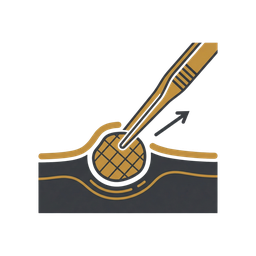
Subcutaneous nodules, visible lumps, uneven texture, granuloma formation. Cannot be dissolved — removal requires physical extraction.
Extraction / Removal Method
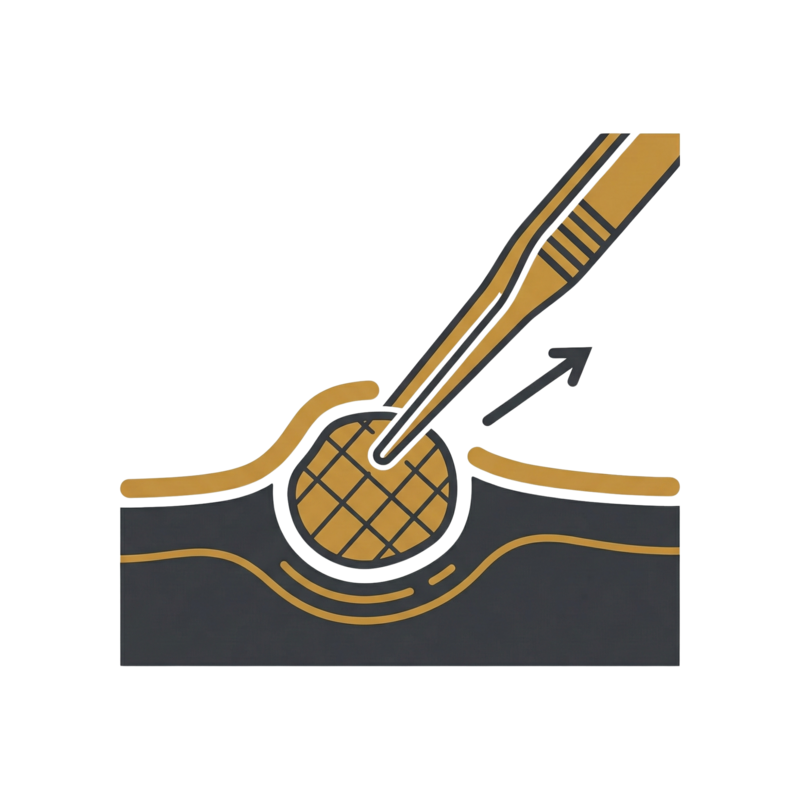
Ultrasound-guided micro-extraction is the primary method. 5-FU injections may help soften nodules but have limited effectiveness. Steroid injections carry tissue atrophy risk.
Top 10 Patient Complaints

1Rock-Hard Subcutaneous Nodules
Excessive concentration or uneven particle suspension causes intense foreign body reaction, forming extremely hard nodules.
2Foreign Body Granuloma
Multinucleated giant cells surround PLLA particles, creating chronic inflammatory granulomas that keep growing.
3Unpredictable Overgrowth
Final volume depends on patient's collagen production capacity. Some patients' faces inflate like balloons for months.
4Massage-Induced Disaster
Patients massage lumps out of instinct. Mechanical rubbing on inflamed granulomas causes secondary trauma, making lumps bigger and harder.
5PLLA Bead-Like Particle Accumulation
Insufficiently hydrated PLLA powder clumps under skin. Feels like a string of beads along hairline or forehead.
6Irreversibility — No Dissolving Agent
No hyaluronidase equivalent exists. Steroids cause fat atrophy. Nothing dissolves your own collagen tissue.
7CaHA Bone-Like Hardening (Radiesse context)
(For when patients confuse stimulator types) CaHA in soft areas creates cartilage-like hardness.
8Delayed PCL Inflammation (Ellansé context)
CMC carrier absorbs, then PCL triggers delayed immune rejection months later.
9Nerve and Vessel Compression
Growing masses compress facial microvasculature and nerve endings, causing numbness, tingling, or skin darkening.
10Whole-Face Leather-Like Fibrosis
Repeated cumulative treatments replace normal tissue with dense fibrotic matrix. Face becomes thick, heavy, and rigid.

Why Traditional Methods Fail
No enzyme exists to dissolve PLLA/PCL-stimulated collagen. Steroids temporarily reduce inflammation but cause irreversible fat atrophy — creating permanent dents. The stimulating particles remain untouched, continuing to provoke immune response.

The Liusmed Repair Strategy
"Tissue Dissection + Particle Clearance" technique. Ultrasound differentiates granuloma tissue (different echo pattern) from normal tissue. Through micro-pinhole, instruments physically separate fibrotic nodule from adhered healthy tissue, then crush and extract embedded PLLA particles. Removes the trigger, stops the cycle.
Dr. Liu's Clinical Perspective
"Collagen stimulators create a paradox: the 'complication' IS your own tissue. You can't dissolve yourself. The primary way to treat overgrowth is to physically remove the excess tissue AND the particles that caused it. It's delicate surgery, not a simple injection."

Recovery Timeline
The pinhole is small, but this is an extraction, so swelling and bruising are expected. Swelling and bruising usually settle in about 2–3 weeks, the pinhole heals in about 2 weeks, and the final result takes about 3 months, varying from person to person. Depending on the extent and depth, it may need to be done zone by zone, in stages, or over more than one session. After extraction there is a period in which the swelling settles and firmness gradually softens; we go through the details at your consultation.
FAQ
Can Sculptra lumps be removed?
Yes. Unlike HA fillers, Sculptra cannot be dissolved with an enzyme. The nodules must be physically extracted, ideally using ultrasound guidance for precision.
Why do Sculptra lumps appear months or even years after injection?
Sculptra (PLLA) works by stimulating your own collagen over time, so complications are also delayed. As the particles trigger a prolonged tissue response, granulomas or fibrotic nodules can form months to years later — long after you assumed the treatment had "settled." This delayed onset is exactly why a hard lump appearing late is often mistaken for something unrelated to the original injection.
I was told to wait for Sculptra to absorb — should I keep waiting?
The PLLA particles themselves are gradually absorbed over 1-2 years, but the collagen and fibrotic tissue they stimulated do not disappear with them. A nodule that has already hardened will not soften just by waiting. Once a granuloma or fibrotic capsule has formed, ultrasound-guided extraction of the embedded particles and excess tissue is the practical route to resolution.
Real patient questions
Questions from the patient Q&A forum, answered by Dr. Liu.
Ask your own question in the forum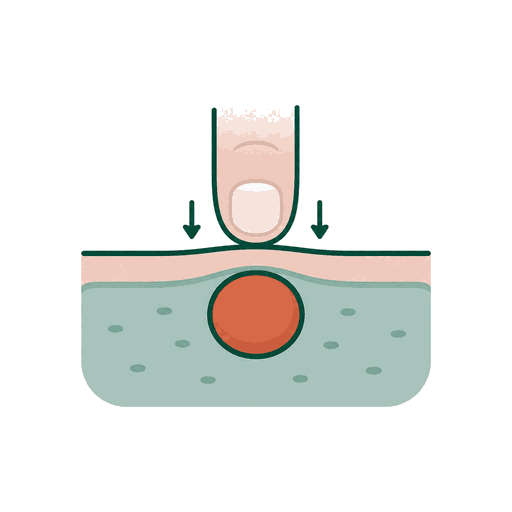

Related Symptoms
References
- Lemperle G, et al. Aesthet Surg J. 2009;29(6):S32-S48
- Fitzgerald R, et al. Dermatol Surg. 2009;35:1672-1681
- Alijotas-Reig J, et al. Autoimmun Rev. 2013;12(9):930-935
This information is for educational purposes only. Treatment options depend on individual circumstances. Consult a qualified physician.

Read next: when this material goes wrong
Case-by-case decisions, written by Dr. Ta-Ju Liu
Sculptra Lumps Steroids Didn't Fix — the Atrophy Risk of More Injections, and When to Extract
Steroids didn't fix your Sculptra lumps? Ultrasound-guided micro-extraction targets encapsulated PLLA nodules that pharmacological treatment can't resolve.
5-FU & Steroids Failed Your Sculptra Lump? The Alternative
Steroid or 5-FU rounds done and the lump persists? Why drugs fail collagen stimulator lumps, and how ultrasound-guided extraction resolves them.
Collagen Stimulator Complications? Safety Comparison
Nodules from Sculptra, AestheFill, or Ellansé? Compare complication profiles and why management difficulty — not just risk — determines true safety.
How Collagen Stimulators Work: Why 'Growing Your Own Collagen' Can Go Wrong
The molecular science behind collagen stimulators — and why the 'natural' collagen they produce can become the hardest complication to reverse.