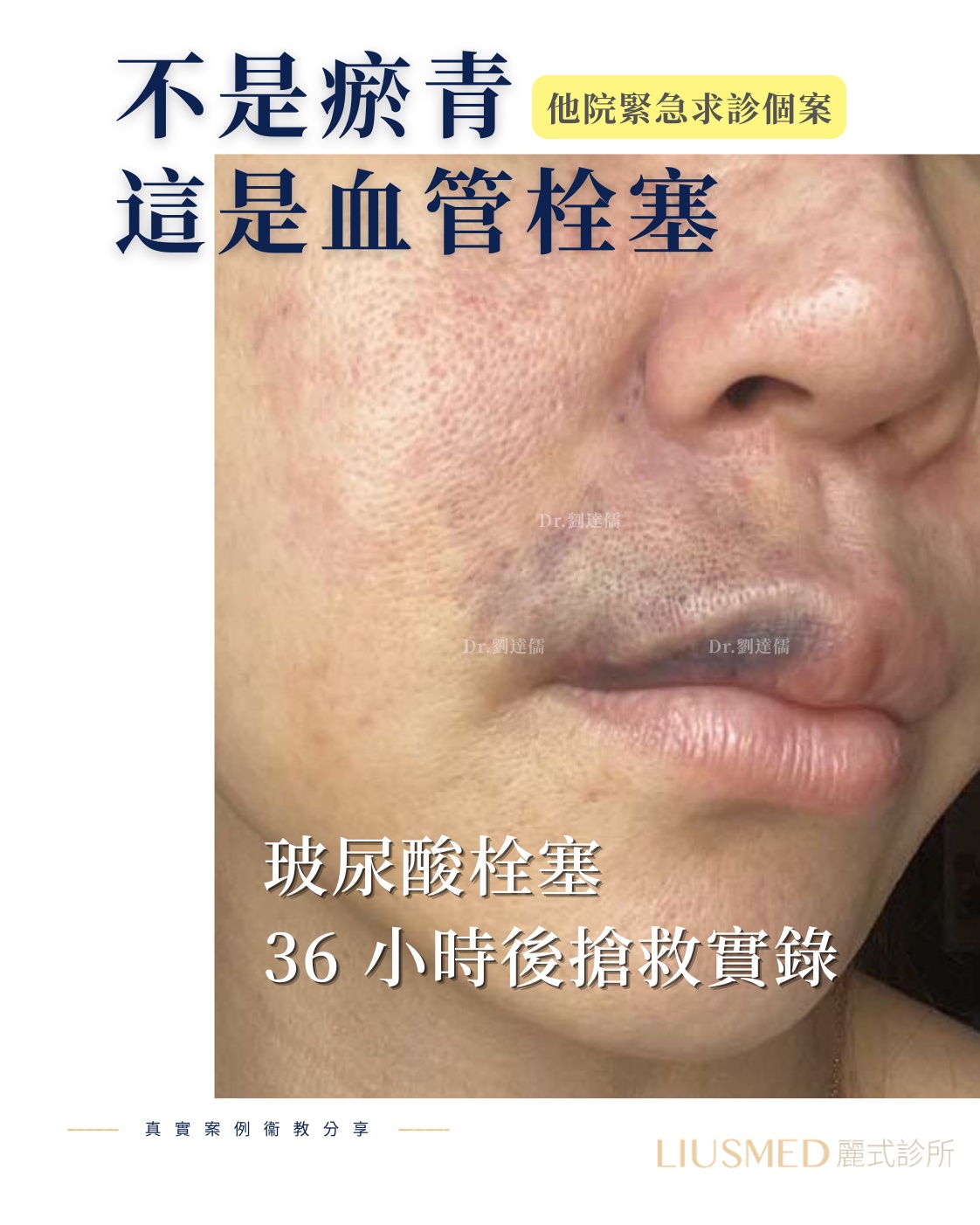
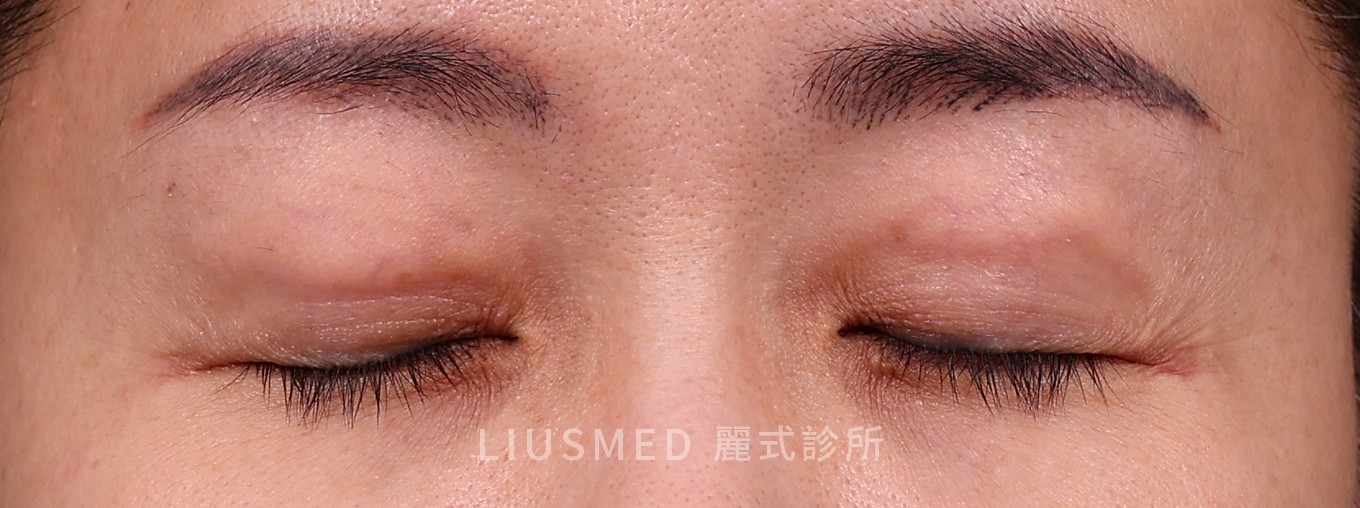
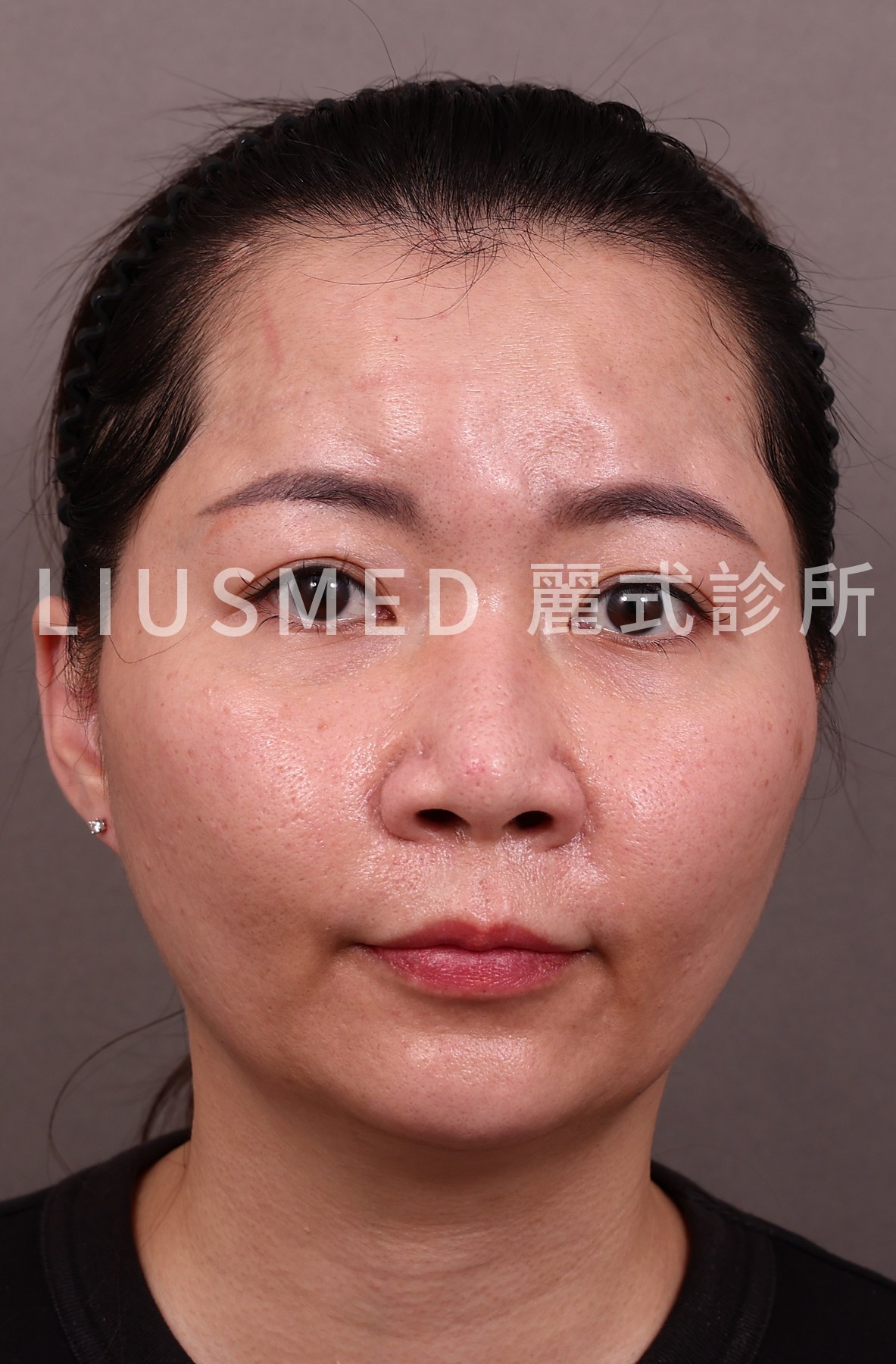
"I had filler in my temple, so why is the lump next to my eye?" I hear this a lot in clinic. The short answer: temple filler moves downward. It ends up collecting at the bottom of the temple, roughly from the brow tail and the corner of the eye back to the front of the ear, just above the zygomatic arch (the bony bar that runs from the cheekbone toward the ear).
Over the past few years I have removed filler from the temple in many patients. Most of them did not know which layer it had originally gone into. The materials varied: hyaluronic acid (HA), Ellansé, other collagen stimulators, even permanent fillers such as Aquamid, Amazingel and liquid silicone. Different materials, yet any of them can collect at the bottom of the temple; some of it turns into firm lumps.
Injected in the Temple, Felt Beside the Eye
Patients usually describe it like this: "there's a bump outside the corner of my eye," "something feels stuck under my temple," "it bulges above my cheekbone, worse when I smile." Few people connect this with the temple, because the injection itself was clearly higher up and further back.
Before any removal I use ultrasound to see where the material actually is. After this many cases the pattern is clear. Wherever in the temple it was first placed, it mostly settles in the lower half. HA does this, collagen stimulators do this, permanent materials do this. The only difference is how fast.
The Temple Is a Bowl: Where Filler Ends Up
Think of the temple as a round, shallow bowl. Its upper rim is the bony ridge along the side of the forehead; its bottom sits just above the zygomatic arch. Put something in a bowl and, given time, it gathers at the bottom.
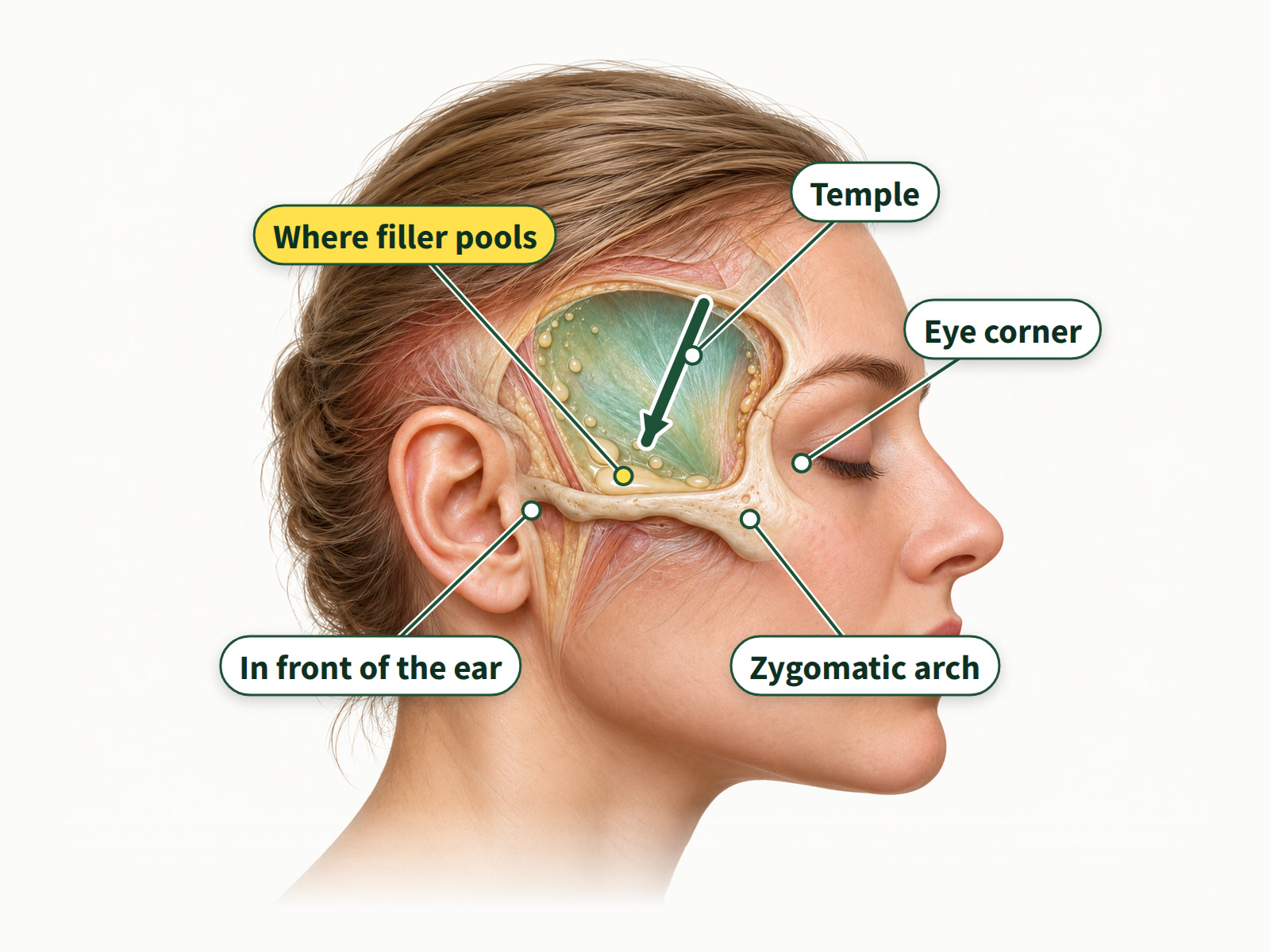
The bowl has several layers. From the surface inward, roughly: skin, subcutaneous tissue, the superficial temporal fascia, a layer of loose connective tissue, the deep temporal fascia, and below that a fat pad and the temporalis muscle. A cadaver dissection study described the loose tissue between the superficial and deep temporal fascia as a "potential space": the layers normally lie against each other, but the space is continuous. The temporal branch of the facial nerve runs right above it, just beneath the superficial temporal fascia (Jiang et al., 2016).
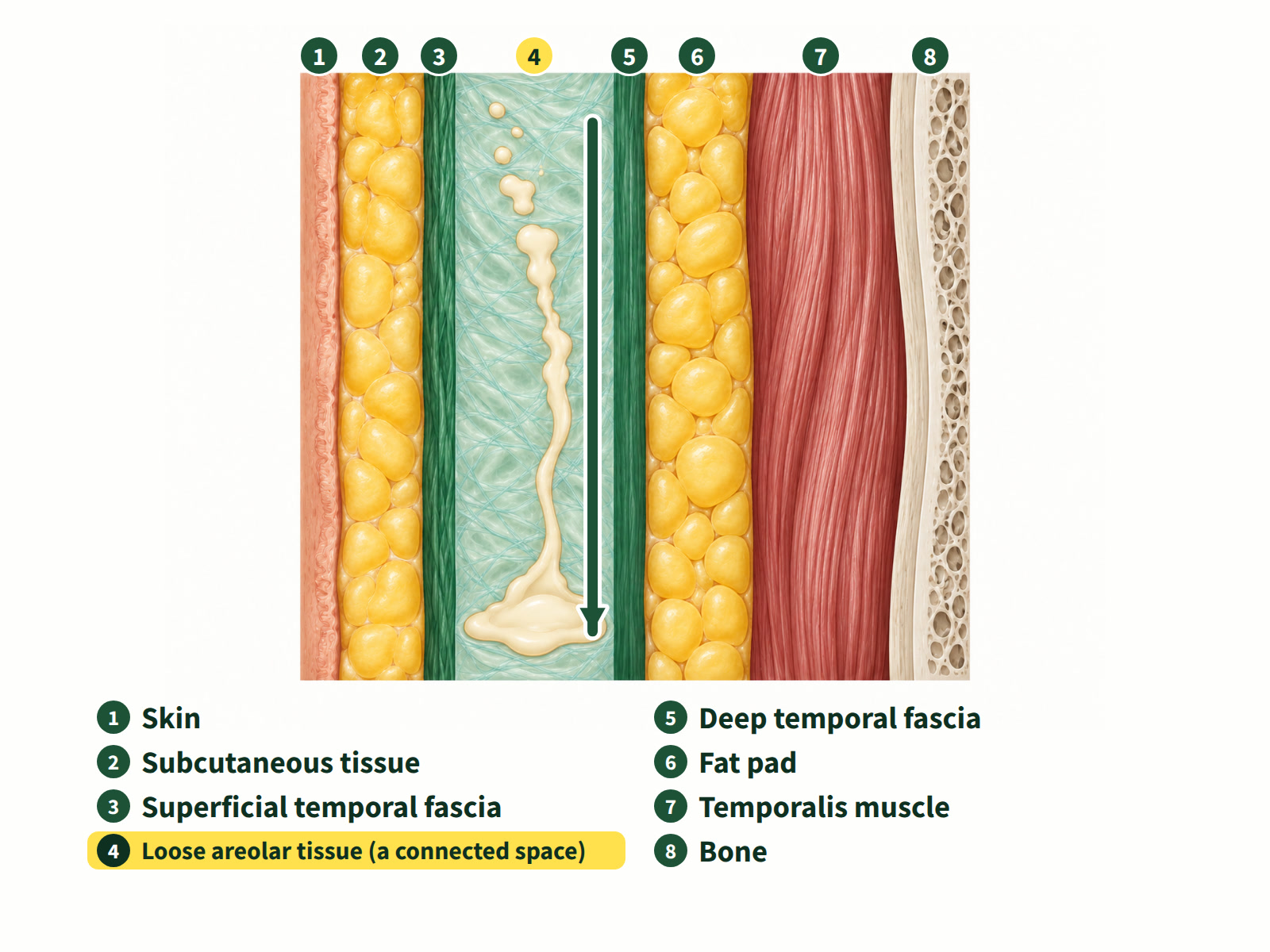
My view is that once filler is placed in this connected space, it can travel along it, and with gravity it eventually collects at the bottom of the bowl. This is my inference from removal cases and from the anatomy. No study has directly confirmed the downward direction yet. The literature does offer some supporting evidence:
- An ultrasound study of 200 patients found that filler placed over the lateral cheekbone moved into the lower part of the temple along routes that depended on its original layer, one of them being the deep interfascial plane of the temple. During injections in a body donor and under ultrasound guidance, the material was even seen shifting into the temple as it was being injected (Schelke et al., 2024).
- A 2026 case report described a woman with chronic upper-eyelid swelling. Surgery showed it was HA that had migrated from a temple injection two years earlier. The authors pointed out that avascular gliding planes like the temple give filler room to move (El Feghaly and Tawa, 2026).
- In a report of 15 cases of migrated polyacrylamide gel (the class Aquamid belongs to), the authors wrote that the gel moved with muscle activity or gravity, especially after incorrect massage broke its capsule (Cheng et al., 2006).
Key Insight: The loose tissue under the temple is one connected space. Filler placed there can flow along it and gather at the bottom of the temple, above the zygomatic arch.
A Real Case: Remembered as Liquid Silicone, Looked More Like Amazingel
This patient told me the temple had been injected with liquid silicone about ten years ago. It looked good at first, but within a month or two it felt as though it was sliding down. When the patient came in ten years later, the material had collected above the zygomatic arch, outside the corner of the eye. When it was later removed, the material looked to me more like Amazingel (a polyacrylamide hydrogel, PAAG) than liquid silicone. The name a patient remembers is not always what was actually injected. The polyacrylamide gel in the migration report above, which moved with gravity and incorrect massage, belongs to this same class.
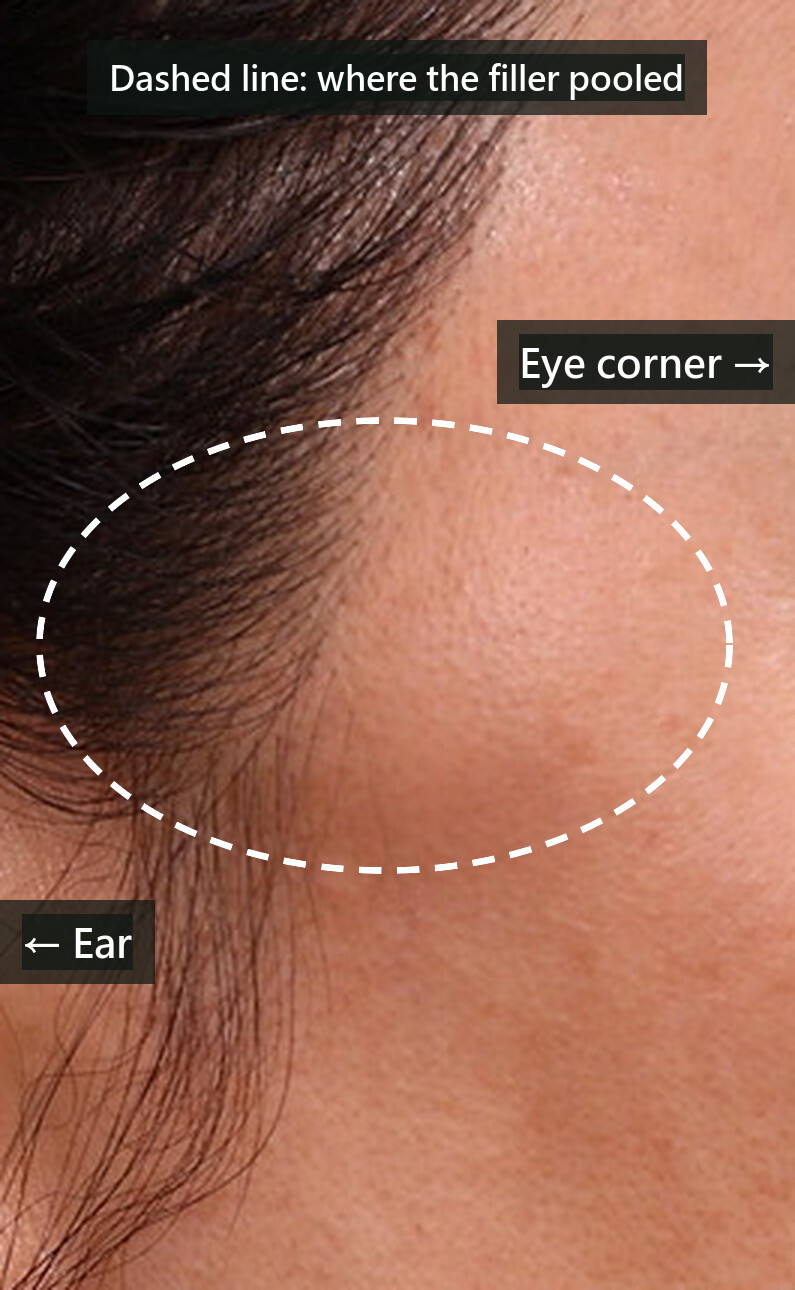
The video below is the same patient. When I press on the pooled area at the bottom of the temple, it feels soft. Pressing upward pushes the material from below up into the space above.
Liquid silicone is a liquid and Amazingel is a soft, water-rich gel. Neither holds a fixed shape, so you can see them move under a finger. HA and collagen stimulators do not shift like this when pressed; they drift down slowly over months to years. What the video does show clearly is that the space inside the temple is connected. Once material is in there, it has somewhere to go.
What a Fan-Shaped Injection Pattern Can and Cannot Do
Two studies published in 2026 injected a collagen stimulator, PLLA (poly-L-lactic acid, the active ingredient in Sculptra), with a blunt cannula in a fan pattern into the temple and the outer contour of the face. Both reported improvement in the mid and lower face and no serious adverse events during the study period.
I do not think the fan technique is a bad one. Spreading material into many thin threads lowers the risk of one large lump forming in a single spot, while injecting one big bolus in one place is more likely to cause a localized lump. That is a real advantage.
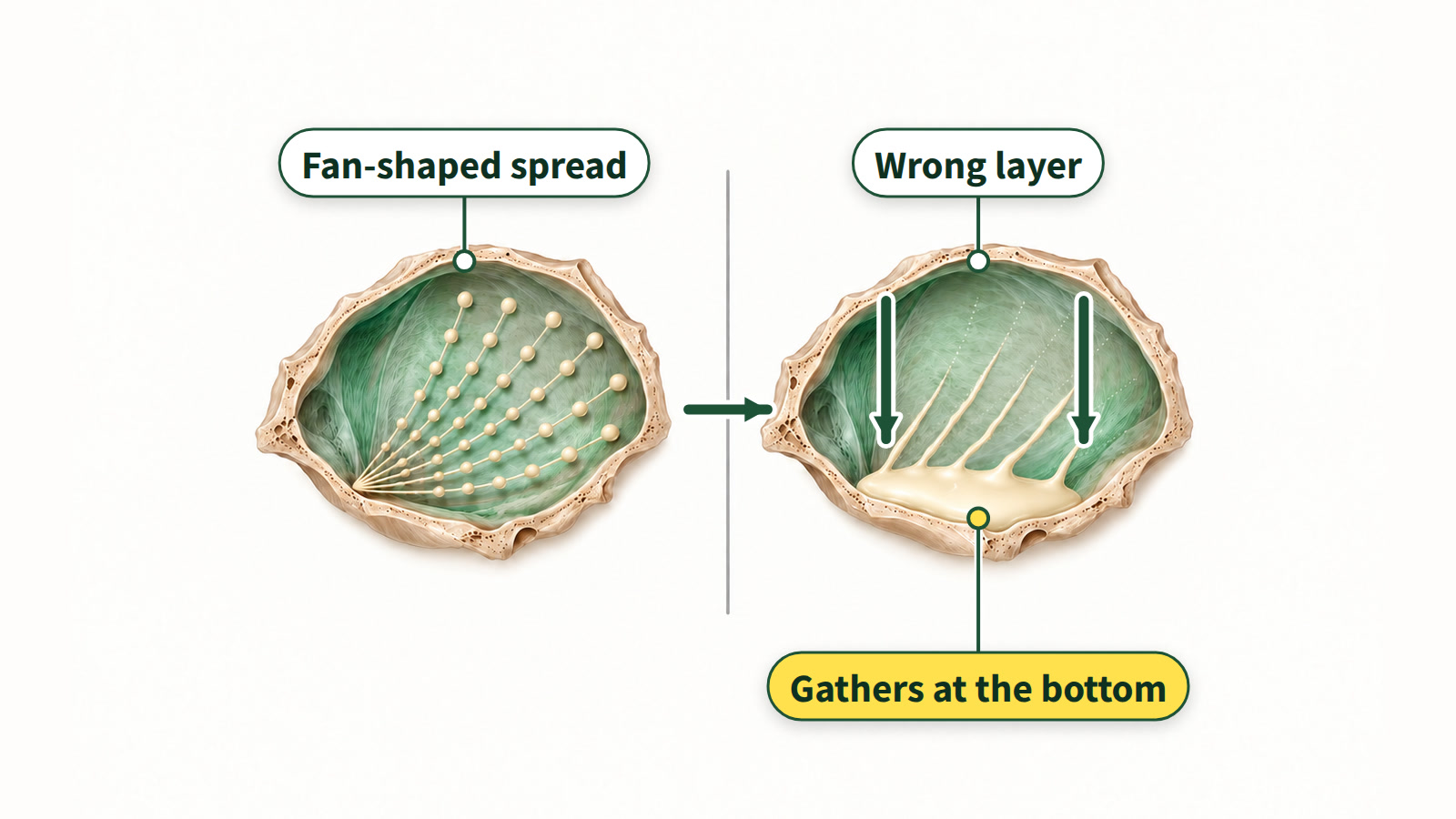
But a fan controls how material spreads across a plane. It does not control depth or gravity. If the product goes into that connected, mobile space, it can still flow and end up gathered in one place at the bottom of the bowl, even if it started out in a fan. Placed in the wrong layer, the result is much like one big deposit. So depth needs to be controlled, volume needs to be controlled, and more is not better.
Timing is the other issue. Both studies followed patients for about six months after the last injection, and the authors themselves note that longer follow-up is needed. Delayed reactions to PLLA often appear later than that. In one case series that included only reactions starting at least six months after injection, the average onset was at 19.2 months, and the latest at 60 months (Alijotas-Reig et al., 2009). A systematic review and meta-analysis estimated the nodule rate for collagen stimulators at about 5% (Smith et al., 2025). So "no nodules within six months" is good news, but it does not tell you nodules will not appear later.
Key Insight: A fan pattern spreads product out across a plane. Whether it migrates downward depends on which layer it went into and how much was used.
Massage After Treatment: Pressure and Technique Matter More Than Frequency
After a collagen stimulator, patients are usually told to massage the area so the product spreads more evenly. In the temple, massage has a side effect: it pushes material downward.
So massage needs the right pressure and the right technique; harder and longer is not better. My advice is that the injecting doctor should demonstrate it on the spot: how to massage, where, and with how much pressure. At home, do exactly that and no more.
Do You Want to Fill a Hollow, or to Lift?
Many people who get temple filler are really hoping for a lift, to bring the outer eye and cheek upward. These are two different goals.
To lift with filler, the temple has to be packed very full and puffy (overfilled) just to pull things up a little, and you take on the risk of lumps as well. Research points the same way. In a randomized split-face trial of 17 people, HA and PLLA injected into the posterior temple produced almost no measurable soft-tissue lift on 3D imaging, and overall aesthetic scores did not improve meaningfully (Germani et al., 2026). A review by the same author concluded that the main effect of temple injections is restoring local volume, with any lift being a secondary benefit of variable size (Germani, 2026).
Here is what I suggest:
← Swipe to see more →
| Your goal | What I would evaluate first | Why |
|---|---|---|
| Drooping brow tail or outer eye; you want a lift | Temporal lift | Lax tissue is repositioned and secured upward, not propped up with volume |
| Hollow temples; you want them filled | Autologous fat grafting | It is your own tissue, not a foreign material, though harvest site, fat survival and volume still take skill |
| Both hollow and sagging | First work out how much is hollowing and how much is laxity, then decide the order or combine | Using one material to solve two problems usually solves neither well |
Already Feel a Lump Outside the Eye Corner, Above the Cheekbone?
The first step is to confirm what the material is and which layer it is in. The approach differs a lot by material:
← Swipe to see more →
| Material | Can it be dissolved? | Direction of treatment |
|---|---|---|
| Hyaluronic acid | Yes, with hyaluronidase (used after in-person physician assessment) | Confirm location and volume on ultrasound before dissolving; over-dissolving in the temple can leave a hollow |
| Collagen stimulators (Sculptra, Ellansé, AestheFill, etc.) | No | Steroids and 5-FU have limits; see Sculptra granulomas and delayed nodules |
| Permanent materials such as Aquamid, Amazingel and liquid silicone | No | Staged removal after ultrasound mapping; see permanent filler removal |
Removal from the temple is harder than from most other areas. The superficial temporal artery (STA, the main artery of the temple) runs here, and the temporal branch of the facial nerve lies close to the layer where material tends to collect. Blind dissection, scraping or squeezing carries real risk. Before removal, ultrasound is used to measure the thickness at each point and the position and depth of the material, building a lump map that guides where to remove and how much. For how this is done, see ultrasound-guided removal of forehead and temple lumps.
If you are not sure what was injected, start with the full guide to forehead and temple filler lumps, unevenness and overfilling, which compares the materials used in this area.
Questions to Ask Before Treatment
If you have not had it done yet and are considering it, these are worth asking first:
- Which layer will it go into, and why that layer?
- How much per side, and over how many sessions?
- How should I massage afterward? Can you show me?
- If my goal is a lift, how much lift can this method actually give? Are there other options?
The temple is also a higher-risk area for blood vessels and headaches. If you have a headache that will not go away after treatment, see how to tell what a headache after temple filler means.
Frequently Asked Questions
Does temple filler move downward?
Yes. In my experience removing it from many patients, temple filler has mostly ended up at the bottom of the temple: from the brow tail and eye corner back to the front of the ear, above the zygomatic arch. I have seen this with HA, collagen stimulators and permanent materials. The difference is how fast it moves.
Is a fan-shaped injection less likely to form lumps?
A fan avoids building one large deposit in a single spot, which is an advantage. But if the product goes into the wrong layer, the connected space where it can flow, it can still gather in one place and end up much like one big deposit. Layer and volume matter more than the shape of the pattern.
After Sculptra in the temple, how long can lumps still appear?
Delayed reactions to PLLA can appear months to years later. In one case series that included only reactions starting six months or more after injection, the average onset was 19.2 months and the latest was 60 months. Current studies of the fan technique in the temple followed patients for only about six months.
Can I massage firmly after temple filler?
I would not massage firmly on your own. In the temple, massage pushes material downward. Ask the injecting doctor to demonstrate the pressure and technique, and follow that.
Not sure whether you had liquid silicone or Amazingel?
This is common, and the case above is an example: the name a patient remembers is not always what was actually injected. Liquid silicone and Amazingel are both permanent fillers that hyaluronidase cannot dissolve, and the approach is similar. Map the distribution and layer on ultrasound first, then decide how to remove it. At your assessment, tell us when and where it was injected and what you were told it was; that helps.
Can liquid silicone or Amazingel in the temple be removed?
It can be treated. The goal is to reduce it substantially within safe limits and improve appearance and symptoms; these materials often spread through tissue, so treatment usually takes more than one session. Published reports mostly describe excision: liquid silicone excised and followed by fat grafting (Arcuri et al., 2025), and lip Aquamid that the authors considered impossible to aspirate, requiring excision and reconstruction (Kästner et al., 2018). Our approach is to map the distribution on ultrasound first, then remove it through pinhole access in stages. For details, see permanent filler removal.
A Final Word
The space under the temple is connected, and filler placed there has somewhere to go. Before treatment, ask about the layer, the volume and how to massage. If you later feel something outside the eye corner, above the cheekbone, get an ultrasound to see what it is and which layer it is in before deciding what to do. If you would like me to assess it, you can book a consultation and tell us when you were treated, the material if you know it, and when you first felt it moving down. For more on how filler problems are treated, see filler repair.
References
- Jiang P, Chen Q, Huang W. An anatomy study of temporal layers: the safe space for hyaluronic acid injection. Zhonghua Zheng Xing Wai Ke Za Zhi. 2016;32(4):280–285. PMID: 30044573. (Dissection of 14 cadaver heads; the loose areolar tissue between the superficial and deep temporal fascia is a potential space, and the temporal branch of the facial nerve lies in this layer just beneath the superficial temporal fascia.)
- Schelke L, et al. Post-Treatment Displacement of Facial Soft Tissue Fillers: A Retrospective Ultrasound-based Investigation of 382 Zygomatic Regions. Dermatol Surg. 2024;50(10):946–952. PMID: 38833408. (Ultrasound in 200 patients; filler from the lateral zygoma redistributed into the caudal temple along four layer-dependent patterns, one being the deep interfascial plane of the temple.)
- El Feghaly C, Tawa P. Late-Onset Upper Eyelid Edema Following Temporal Hollow Correction With Hyaluronic Acid. Plast Reconstr Surg Glob Open. 2026;14(4):e7612. PMID: 41959944. (Single case; temple HA migrated to the upper eyelid two years later and was surgically removed.)
- Cheng NX, et al. Migration of implants: a problem with injectable polyacrylamide gel in aesthetic plastic surgery. Aesthetic Plast Surg. 2006;30(2):215–225. PMID: 16547628. (15 cases of migrated polyacrylamide gel; muscle activity, gravity and incorrect massage.)
- Liu PH, Liao J, et al. A Prospective Cohort Study Demonstrating Measurable Facial Lifting with Fan-Shaped Poly-L-Lactic Acid Injections in Asian Patients. Aesthetic Plast Surg. 2026. doi:10.1007/s00266-026-06346-5. (12 participants, single session, 24-week follow-up.)
- Wu CN, et al. A Prospective Single-Arm Study of Poly-L-Lactic Acid Injection at Outer Facial Contour Points for Mid- to Lower-Face Aesthetic Improvement. J Cosmet Dermatol. 2026;25(7):e71075. doi:10.1111/jocd.71075. (52 participants, three sessions, followed for 6 months after the last session.)
- Alijotas-Reig J, et al. Late-onset immune-mediated adverse effects after poly-L-lactic acid injection in non-HIV patients. Dermatology. 2009;219(4):303–308. PMID: 19797889. (10 cases, onset at least 6 months after injection; mean latency 19.2 months, range 6–60.)
- Smith L, et al. Biostimulants in Aesthetic Medicine: A Systematic Review and Meta-analysis of Efficacy, Safety, and Patient Satisfaction. Aesthet Surg J. 2025;45(12):1278–1284. PMID: 40674466. (Pooled nodule rate 5%, 95% CI 2–10%, high heterogeneity.)
- Germani M, et al. Does the temporal region truly induce facial tissue displacement? A quantitative randomized split-face clinical trial. Plast Reconstr Surg. 2026. PMID: 41528255. (17 participants; 0.5 mL HA versus 4.5 mL PLLA in the posterior temple; minimal soft-tissue displacement and no meaningful GAIS improvement.)
- Germani M. Temporal Filling and Facial Lifting: Rethinking Expectations. Clin Anat. 2026. PMID: 42057570. (Scoping review; the main effect of temple injection is local volume restoration, with lift as a secondary benefit of variable size.)
- Arcuri F, et al. Three-step Approach for Facial Reconstruction After Injectable Silicon: Surgical Excision, Fat Grafting, and Hyaluronic Acid Filler. J Craniofac Surg. 2025;36(2):647–651. PMID: 39878568. (3 cases of liquid silicone granuloma; transoral excision followed by fat grafting and HA filler.)
- Kästner S, et al. Removal of Polyacrylamide Gel (Aquamid) from the Lip as a Solution for Late-Onset Complications: Our 8-Year Experience. Aesthetic Plast Surg. 2018;42(3):791–797. PMID: 29516176. (11 patients with late complications of lip Aquamid; the gel was diffusely distributed and migrated even years later; the authors found aspiration impossible and performed excision with reconstruction.)