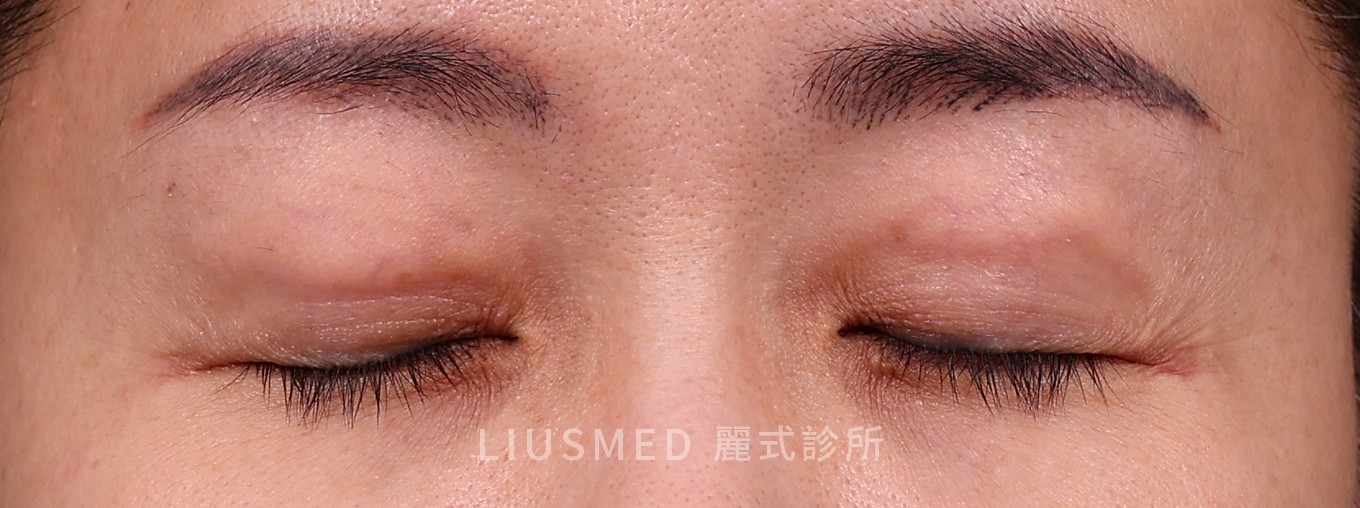
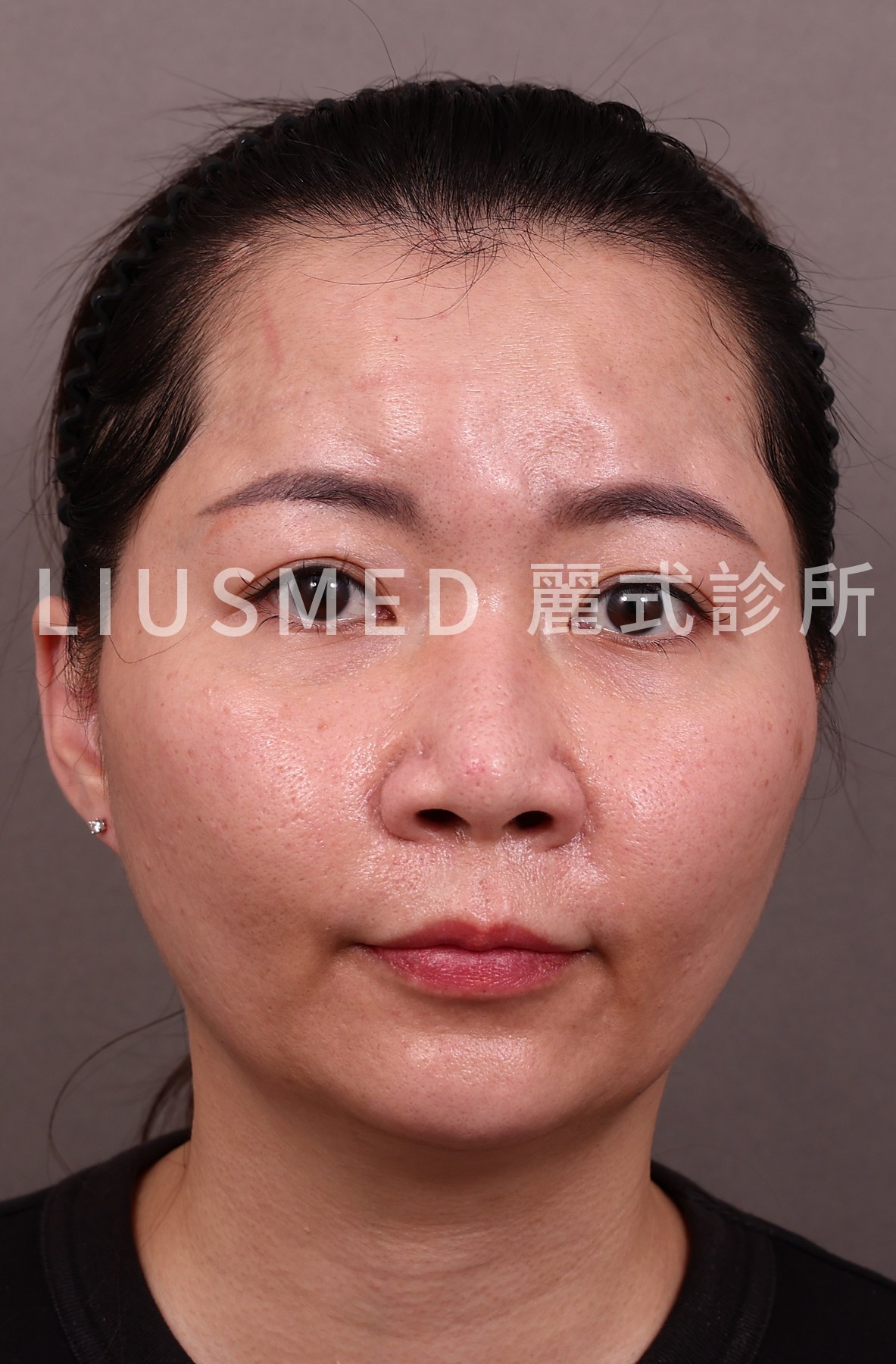
"The toxin wore off months ago, but my face still looks wrong." I hear that in clinic more often than you would expect.
Most people arrive holding one timeline: I had botulinum toxin recently, and then something felt off. But a face usually carries two timelines at once. One is measured in months, the other in years. Collapse them into one and you will keep blaming the wrong thing.
Botulinum toxin changes pull, filler changes volume
Botulinum toxin (the neurotoxin commonly shortened to "tox" or referred to by brand name) acts at the neuromuscular junction, blocking acetylcholine release so the affected muscle contracts more weakly. What it changes is pull, not volume. The liquid volume that enters the tissue is tiny and gets metabolised, so it does not occupy space, does not provide support, and has no physical form that stays behind.
Filler works the other way. Occupying space is exactly how it creates shape, whether it is hyaluronic acid (HA), a collagen stimulator or autologous fat. Whether it resorbs, how much and over how long is a separate question, but for as long as it is there, it is holding something up.
That difference decides what your version of "off" looks like.
← Swipe to see more →
| Botulinum toxin | Filler | |
|---|---|---|
| Acts on | Neuromuscular junction; changes muscle pull | Tissue space; changes volume and contour |
| How it looks wrong | An expression you cannot make, a changed brow shape, a smile that reads differently | Fullness, bulges or unevenness visible at rest; a lump you can feel |
| Time scale | Months, and it fades on its own | Years, and it may not disappear on its own |
| Visible on imaging | No; it has no physical form | Yes on ultrasound, with depth and echo pattern |
So if your problem is a lump you can feel, it sits outside what the toxin's pharmacology can explain. I covered that in more detail in identifying the contents of an injection of unknown origin.
Time is the diagnostic tool: the four-month line
The fact that botulinum toxin wears off is itself the most useful sorting tool you have.
When data from four similarly designed phase III trials were pooled, subjects who received 20 units for glabellar lines had a median duration of effect of about 120 days by the wrinkle scale at maximum contraction, and about 131 days by the scale at rest (PMID 23106853). In other words, most people are back to their original pull at around four months. Adverse effects of upper-face injection are likewise described in clinical reviews as mild, transient and self-limited (PMID 34341857).
The numbers on the filler side look nothing like that. An MRI review of 33 patients who had received hyaluronic acid in the mid-face found filler still present in every one of them, with no case fully resolving within two years, and some patients 8 to 15 years out from their last injection (PMID 39015357). That is a long way from the "6 to 12 months" impression the product literature leaves, and it is why "I stopped having filler ages ago" so often fails to hold up on imaging. I collected the related misconceptions in does hyaluronic acid filler fully absorb.
Key point: Waiting four months is not doing nothing. It is letting the toxin leave the stage. Whatever is still there afterwards was not caused by it.
Something useful to do while you wait: photographs. Front, three-quarter, smiling and not smiling, in the same position and the same light. Take the same set again at four months. Comparing from memory almost always distorts what you see.
Two things were injected on the same day. How do you separate them?
Combined sessions on one face are common. After you leave, memory tends to keep only the most familiar word, so "I only had toxin" is usually not concealment. It is genuinely all that was remembered.
To separate them, go back to the original clinic for three things: the product name, the dose or formulation, and the sites injected. If records exist, ask about depth and dates too. With those three, the timeline sorts itself:
← Swipe to see more →
| When it appeared | More likely source |
|---|---|
| Swelling, bruising and tenderness within the first three days | The needle itself, regardless of what was injected; usually settles |
| Change in expression from day three to seven, peaking around two weeks | The toxin taking effect |
| Contour change that only emerges after two weeks | Filler, as the injection swelling settles and the real volume shows |
| A firm point that persists for weeks to months | Filler, fibrous encapsulation or an inflammatory reaction, not the toxin |
And if no records can be found? Then treat "I do not know what was injected" as a condition to be worked up, not a blank to skip past. What to ask of the doctor who takes over is in a checklist for choosing a filler revision doctor.
Asymmetry: does it follow your expression, or is it there at rest?
Asymmetry is the symptom most often blamed on botulinum toxin, and also the easiest one to triage yourself.
In front of a mirror, do three things and watch both sides each time: frown hard, close your eyes hard, then relax completely so no muscle is working.
- A difference that shows up only on effort and disappears on relaxing points to the muscle side. Differences in dose or placement between the two sides produce exactly this, and so do a brow pulled up or pressed down and a heavy upper lid. Eyelid and brow ptosis are known adverse effects (PMID 33128076) and usually settle as the toxin wears off.
- A difference that is there when you are fully relaxed points to volume and structure. This kind does not improve with waiting, because whatever is holding it is still there. The ways filler causes asymmetry are in facial asymmetry after filler injection.
- Having both at once is common. Let the toxin wear off, and what remains is the second kind.
As for the complaint that "one spot bulges when I smile," the things to separate are not only muscle and filler but also subcutaneous fat and the buccal fat pad; see four reasons the cheek bulges when you smile. If the problem is whole-face tightness and tethering rather than a one-sided difference, the tissue adhesion pathway is in stiffness and tethering after filler.
What ultrasound can answer, and what it cannot
Start with what it cannot: ultrasound does not see botulinum toxin. There is no volume and no interface, so it does not exist on the image. Confirming the toxin's role relies on time and expression, not on a probe.
What it can answer is the filler side. A two-centre retrospective study scanned 60 patients who had previously received filler; 48 showed a single well-defined pattern and 12 a mixed one, and four echo patterns were described (PMID 33641224). The mixed pattern mostly came from different treatments done at different times, which is especially common in a face that has been topped up repeatedly.
Another study made a point of it in its opening lines: more and more people receive cosmetic injections, but the details of the procedure and the agent used are not always disclosed to patients or remembered by them (PMID 21418333). So not knowing is not carelessness on your part.
The real value of imaging is not naming a brand. It is answering three things: what depth it sits at, how much there is, and whether it can be dissolved. Those three decide what can be done next. The reading itself is covered in ultrasound identification of filler material. On the dissolving question, hyaluronidase works only on hyaluronic acid, requires in-person assessment by a doctor before use, and loses effect on anything wrapped in fibrous tissue; the reasons are in seven reasons hyaluronidase fails.
Key point: Ultrasound is not there to prove which brand you had. It is there to decide whether to intervene and where to start.
Some situations should not wait out the clock. Skin blanching at the injection site, a mottled dark purple pattern, severe pain, or a sudden change in vision follow a vascular pathway; see vascular occlusion emergency care. Difficulty swallowing, a changed voice, shallow breathing or limb weakness means going straight to the emergency department rather than booking an aesthetic appointment.
Frequently asked questions
My face looks off after botulinum toxin. How long until I know whether the toxin caused it?
Pooled data from four phase III trials showed a median duration of effect of about 120 days after 20 units for glabellar lines (PMID 23106853), so four months is a reasonable line to observe to. A change still present after four months cannot be explained by the toxin's pharmacology. Photograph yourself under fixed conditions while you wait, so there is something to compare against.
I have not had filler for years. Can it still be the filler?
Yes. In an MRI review, filler was still visible in all 33 patients who had received hyaluronic acid in the mid-face, with some 8 to 15 years out from their last injection (PMID 39015357). So "that was a long time ago" is often still a present-tense finding on imaging.
My brows sit at different heights after botulinum toxin. Will that settle on its own?
Eyelid and brow ptosis are known adverse effects, and adverse effects of upper-face injection are generally described in clinical reviews as mild, transient and self-limited (PMID 34341857). If the two sides still differ when you are fully relaxed, part of that belongs on the volume and structure side and will not go away with the toxin.
Can ultrasound check for both the toxin and the filler?
For filler, yes. For the toxin, no, because it has no physical form to image. Assessment usually runs on two tracks: ultrasound for the filler side, timeline and expression testing for the toxin side.
Can botulinum toxin make filler migrate?
In the literature we reviewed, no study shows botulinum toxin moving filler. If anything, it points the other way: in highly mobile areas such as the nasolabial folds, repeated muscle pull is thought to let misplaced filler migrate (PMID 40900149), and in the nose toxin is even used to relax muscles when managing hyaluronic acid migration (PMID 37496386). Noticing filler only after toxin more likely means your expression changed and a contour that was already there became visible. Whether filler has moved is answered by ultrasound, by seeing which layer it sits in now and whether that matches where it was placed, not by when the toxin was given.
Work out which one is acting before deciding whether to intervene
Putting every change down to the most recent injection usually ends one way: more top-ups, while whatever is actually holding that shape never gets looked at.
At Filler Revision Clinic, Dr. Ta-Ju Liu starts with the timeline, then scans the previously injected areas with ultrasound to establish the echo pattern, depth and extent of the material. The muscle side is judged by time and expression testing. Put the two together and you know whether to wait, to dissolve, or to extract. Being able to see it is what makes handling it safely possible. Results vary between individuals, and the approach for any particular case is decided by the doctor after assessment.
To book an in-person assessment, go to contact us. Patients based overseas can share their current condition and injection history remotely first to get a general sense of direction. The assessment process and available options in filler revision can also be discussed at the consultation.
References
- Glogau R, Kane M, Beddingfield F, et al. OnabotulinumtoxinA: a meta-analysis of duration of effect in the treatment of glabellar lines. Dermatol Surg. 2012;38(11):1794-1803. PMID: 23106853. DOI: 10.1111/j.1524-4725.2012.02582.x (Four pooled phase III trials, 621 subjects treated with 20 U: median duration of effect among day-30 responders was 120 days at maximum contraction and 131 days at repose.)
- Borba A, Matayoshi S, Rodrigues M. Avoiding Complications on the Upper Face Treatment With Botulinum Toxin: A Practical Guide. Aesthetic Plast Surg. 2022;46(1):385-394. PMID: 34341857. DOI: 10.1007/s00266-021-02483-1 (Review of upper-face botulinum toxin complications; adverse effects described as mild, transient and self-limited.)
- Ahsanuddin S, Roy S, Nasser W, et al. Adverse Events Associated With Botox as Reported in a Food and Drug Administration Database. Aesthetic Plast Surg. 2021;45(3):1201-1209. PMID: 33128076. DOI: 10.1007/s00266-020-02027-z (Analysis of the US FDA adverse event database; eyelid and brow ptosis and muscular weakness are known adverse events.)
- Master M, Azizeddin A, Master V. Hyaluronic Acid Filler Longevity in the Mid-face: A Review of 33 Magnetic Resonance Imaging Studies. Plast Reconstr Surg Glob Open. 2024;12(7):e5934. PMID: 39015357. DOI: 10.1097/GOX.0000000000005934 (Filler visible on MRI in all 33 mid-face hyaluronic acid patients; no complete dissipation within two years; longest up to 15 years.)
- Urdiales-Gálvez F, De Cabo-Francés FM, Bové I. Ultrasound patterns of different dermal filler materials used in aesthetics. J Cosmet Dermatol. 2021;20(5):1541-1548. PMID: 33641224. DOI: 10.1111/jocd.14032 (60 patients: 48 with a single well-defined pattern, 12 mixed; four echo patterns described.)
- Wortsman X, Wortsman J, Orlandi C, et al. Ultrasound detection and identification of cosmetic fillers in the skin. J Eur Acad Dermatol Venereol. 2012;26(3):292-301. PMID: 21418333. DOI: 10.1111/j.1468-3083.2011.04047.x (Cutaneous ultrasound detection and identification of filler deposits; the introduction notes that patients are often not told, or do not remember, what was injected.)
- Hong GW, Wong IKJ, Byungki C, et al. Anatomical-Based Diagnosis and Filler Injection Techniques: Nasolabial Folds. J Craniofac Surg. 2025;36(8):e1233-e1238. PMID: 40900149. DOI: 10.1097/SCS.0000000000011890 (Review of nasolabial fold anatomy and injection: in highly mobile areas, misplaced filler can easily migrate.)
- Yi KH, Lee JH, Kim SO, et al. Botulinum neurotoxin injection for treating plunged nose and post-rhinoplasty: anatomical perspectives of depressor septi nasi, nasalis, leveator labii superioris alaeque nasi muscle. Anat Cell Biol. 2023;56(4):409-414. PMID: 37496386. DOI: 10.5115/acb.23.054 (Nasal muscle anatomy for toxin injection, used for plunging nose, post-rhinoplasty care and hyaluronic filler migration.)
Written and reviewed by Dr. Ta-Ju Liu. This article is medical education material and cannot replace an in-person consultation. Individual cases are assessed by a doctor, and results vary between individuals.