Two Different Sides—The Asymmetry Problem After Filler
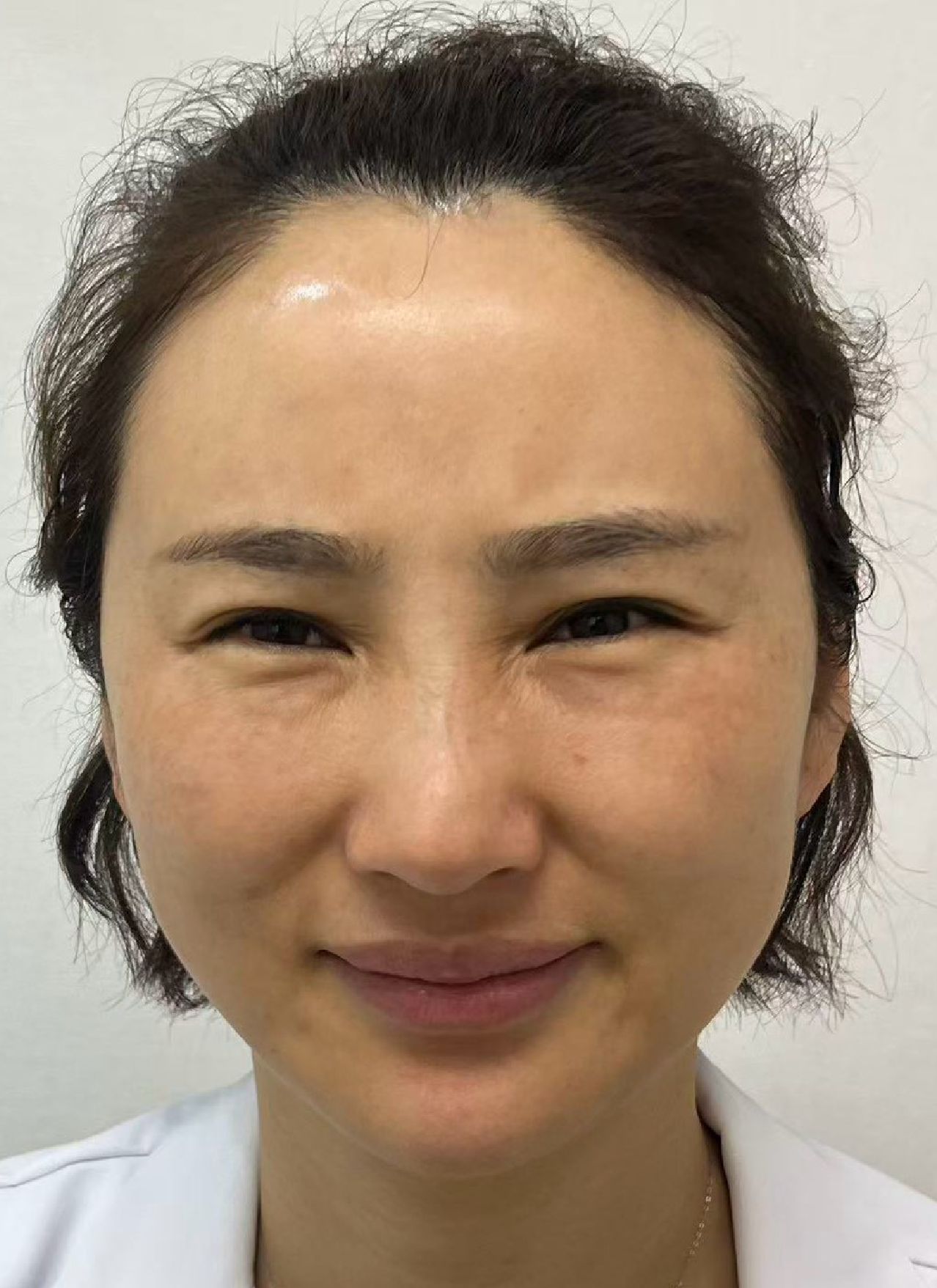
"I went back for a touch-up to even things out, but now the other side looks off instead." At FILLER REVISION, post-filler asymmetry is one of our most common consultations — and most patients arrive after one or more failed correction attempts that shifted the problem from one side to the other. The cycle of "add here, dissolve there" without understanding the underlying cause is one of the most frustrating experiences our patients describe.
First, accept a fact: the human face is naturally never perfectly symmetric. Approximately 97% of people have measurable differences between their two sides. However, if you notice newly appearing or significantly worsened asymmetry after filler injection, the cause is worth investigating.
Four Main Causes of Post-Filler Asymmetry
Cause 1: Uneven Injection Volume or Placement
Even experienced physicians find it extremely difficult to inject identical volumes at identical depths on both sides. Minor differences may be imperceptible initially but become apparent as swelling resolves.
Cause 2: Filler Migration (Filler Migration)
Fillers migrate due to gravity, muscle movement, and tissue pressure. Because facial muscle activity patterns differ between sides (you may habitually chew on one side), migration direction and magnitude may also differ.
Cause 3: Differential Absorption Rates
← Swipe to see more →
| Factor Affecting Absorption | How It Causes Asymmetry |
|---|---|
| Local blood circulation differences | The side with greater blood flow metabolizes filler faster |
| Muscle activity differences | The more active side (habitual chewing side) absorbs faster |
| Tissue structure differences | Varying subcutaneous fat thickness affects filler stability |
| Subtle injection depth differences | Different tissue depths have different metabolic rates |
Cause 4: Pre-Existing Asymmetry Amplified
Filler may amplify facial asymmetry that already existed but was not obvious. Without adequate baseline assessment, identical injection strategies on both sides may make the difference more visible.
Key Insight: At FILLER REVISION, we see this pattern regularly — the cause of asymmetry determines the correction strategy. Blindly "adding more to the lesser side" or "dissolving from the fuller side" may be temporary cosmesis rather than a fundamental solution. Our bilateral ultrasound comparison reveals the true cause before any intervention.
Ultrasound (Ultrasonography) for Precise Diagnosis
Bilateral comparative ultrasound scanning provides:
- Residual filler volume comparison: Which side has absorbed more
- Filler position comparison: Whether one side has migrated
- Tissue structure comparison: Whether subcutaneous fat and fascial planes differ
- Encapsulation comparison: Whether one side has fibrous capsule and the other does not
Key Insight: Bilateral ultrasound comparison is the foundation for a precise correction plan. Without this information, any correction attempt is guesswork.
Correction Strategies
Strategy 1: Unilateral Reduction — For asymmetry from excess or migrated filler on one side. HA (Hyaluronic Acid): ultrasound-guided hyaluronidase. Non-HA: ultrasound-guided pinhole extraction.
Strategy 2: Unilateral Augmentation — For asymmetry from faster absorption on one side. Prerequisite: the other side is in a satisfactory state.
Strategy 3: Bilateral Adjustment — When both sides have different issues (e.g., migration on one side + absorption on the other).
Strategy 4: Complete Reset — When asymmetry is severe or both sides have multiple issues. Remove as much filler from both sides as can be safely removed (100% is not guaranteed, and it may be staged), let the tissue settle (about 3 months overall), then re-inject with correct technique.
When Touch-Ups Keep Making It Worse: The FILLER REVISION Approach
Most asymmetry patients who arrive at FILLER REVISION have been through one or more rounds of "corrective" injections that traded one imbalance for another. The fundamental problem with blind correction is that without knowing exactly how much filler is on each side, where it has migrated, and whether encapsulation has occurred, any intervention is guesswork. At FILLER REVISION, every asymmetry case begins with bilateral ultrasound comparison — scanning both sides to quantify volume, map filler position, and assess encapsulation status. This diagnostic precision allows us to select the right strategy: whether unilateral reduction, repositioning, or complete reset. The result is targeted correction based on evidence rather than visual estimation.
Prevention
- Pre-injection standardized photos: Document baseline symmetry
- Assess existing asymmetry: The two sides may need different strategies
- Gradual small-volume injection: Allows fine-tuning at follow-up
- Post-injection monitoring: Regular evaluation of filler status
Pursuing Perfect Symmetry? Understand Reality First
Perfect facial symmetry essentially does not exist in nature. Pursuing "perfectly identical sides" is not only unrealistic—over-correction may make the face look less natural.
A reasonable goal is: achieving natural, harmonious balance on your natural facial framework that you feel comfortable with.
If you've already tried treatment for post-filler asymmetry without success, FILLER REVISION specializes in exactly these cases. Our bilateral ultrasound comparison identifies the true cause, enabling precise correction rather than repeated guesswork.
Frequently Asked Questions
My face looked uneven after filler, so I went back for a touch-up — why did it get worse instead of better?
Blindly adding more filler to the lesser side or dissolving from the fuller side without diagnostic imaging often shifts the problem from one side to the other rather than solving it. If the underlying issue is migration, adding more just stacks more filler on top and worsens the overall unnatural look. The cause of the asymmetry determines the correct strategy, so the cause needs to be identified first — at FILLER REVISION, bilateral ultrasound comparison is done before any intervention.
What actually causes asymmetry after filler injection?
Post-filler asymmetry has four main causes: uneven injection volume or placement, filler migration, differential absorption rates between the two sides, and amplification of pre-existing asymmetry that was already there but not obvious. For example, the more active side — such as a habitual chewing side — can metabolize and absorb filler faster, while migration direction can differ because muscle activity patterns differ between sides. Because the cause varies, the two sides may need different strategies.
Why do I need an ultrasound scan before correcting my filler asymmetry?
Bilateral comparative ultrasound shows which side has absorbed more filler, whether one side has migrated, whether the tissue structure differs, and whether one side has formed a fibrous capsule while the other has not. This information is the foundation for a precise correction plan — without knowing exactly how much filler is on each side, where it has migrated, and whether encapsulation has occurred, any correction attempt is essentially guesswork. That is why the scan comes before any intervention.
How is the excess or migrated filler on one side actually removed?
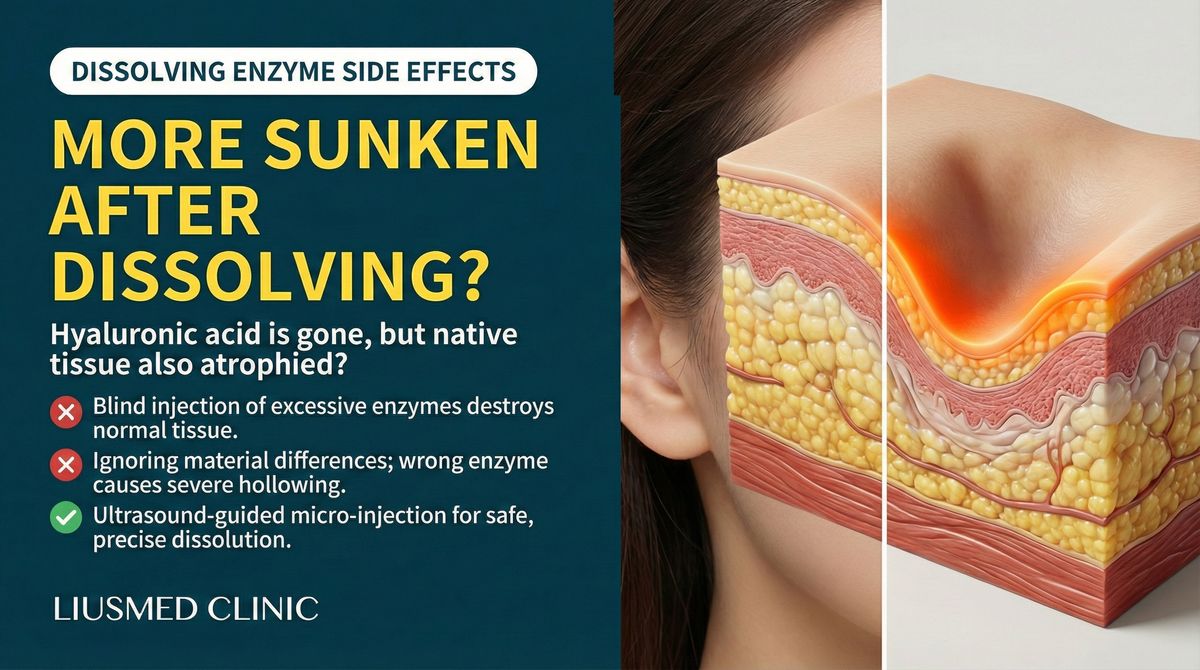
It depends on the filler material. For hyaluronic acid (HA) fillers, the approach is ultrasound-guided hyaluronidase, which dissolves the HA. For non-HA fillers, the approach is ultrasound-guided pinhole extraction. Ultrasound guidance is used in both cases so the targeting is based on imaging rather than visual estimation.
Can my two sides ever be made perfectly identical?
Perfect facial symmetry essentially does not exist in nature — approximately 97% of people have measurable differences between their two sides. Pursuing perfectly identical sides is unrealistic, and over-correction may actually make the face look less natural. A reasonable goal is achieving a natural, harmonious balance on your own facial framework that you feel comfortable with, rather than two sides that are exactly the same.