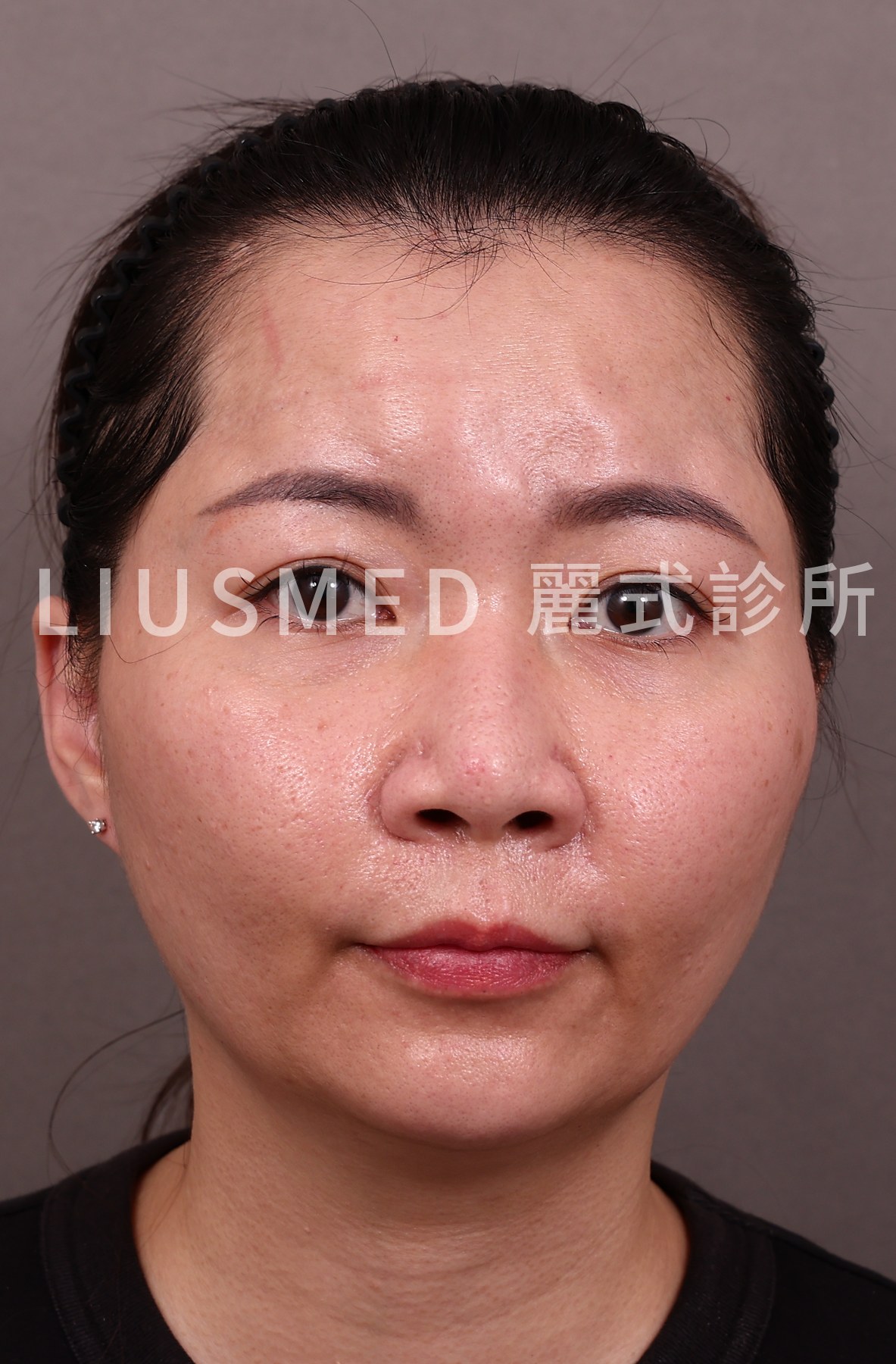
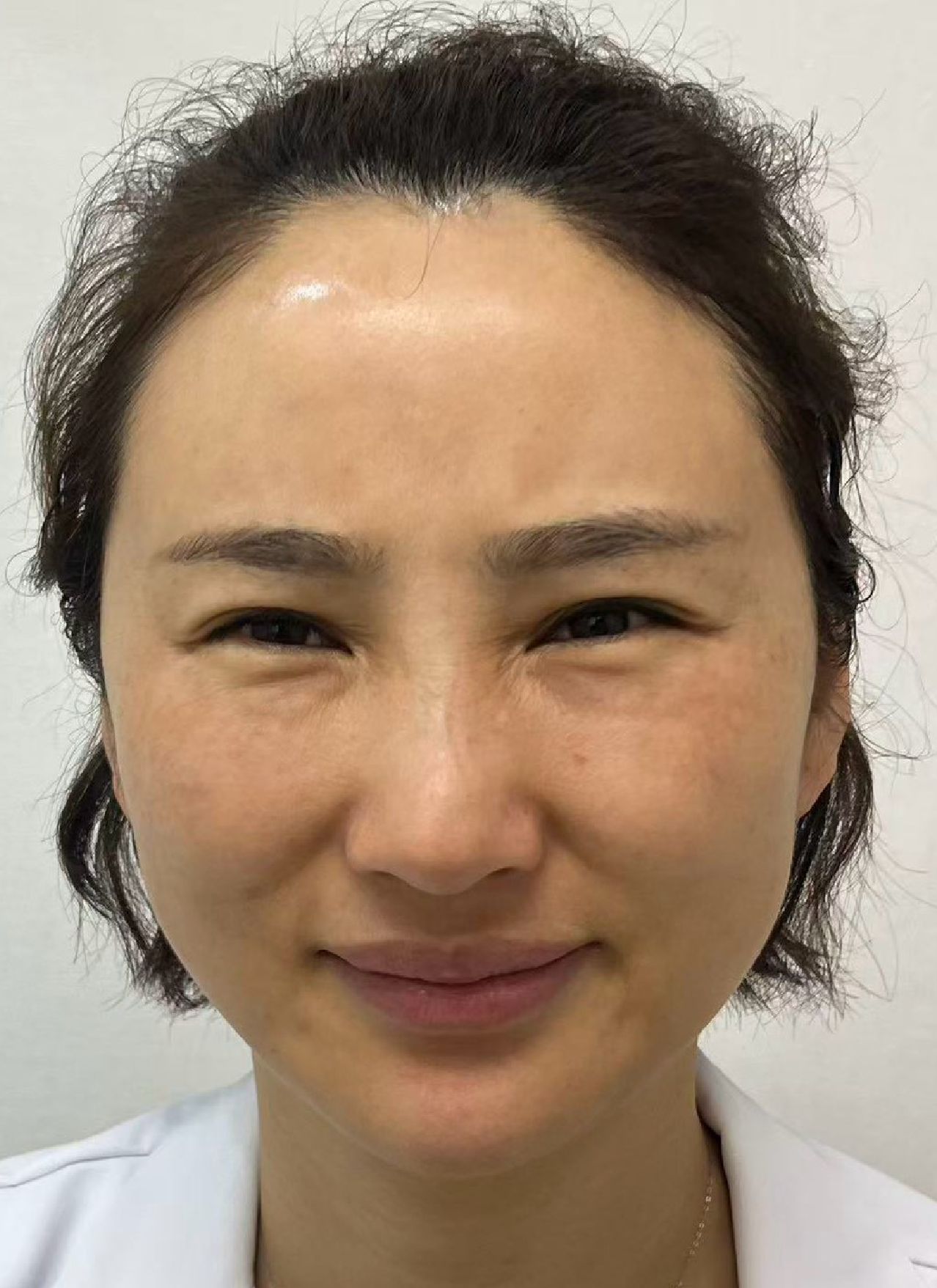
The people who come to me because their cheeks "puff up and protrude when I smile" almost always open with one of two lines: "Doctor, can't I just dissolve the filler?" or "Wouldn't liposuction just make my cheeks smaller?"
Both instincts, very often, are pointed the wrong way.
Because a cheek that's "big when you smile" can have four completely different causes, and each one calls for a different move. Some should be dissolved, some removed, some precisely thinned — and some should be left alone entirely and only assessed. Before you rush to dissolve or to suction, the real first step is to see clearly: what, exactly, is the thing bulging in your cheek?
Key takeaway: "Big cheeks when I smile" isn't a diagnosis — it's a phenomenon. The same smiling, bulging face could be too much filler, too-thick subcutaneous fat, a deep buccal fat pad, or your own muscle and bone. Sort out which one first, and you won't head down the wrong road from the start.
This article does one thing: it helps you sort "big cheeks when I smile" into those four causes, then tells you which route each one belongs on. It doesn't teach you how thinning or removal is done (that's a separate matter) — it's the triage map to look at before you decide on a direction.
Before you sort the cause: do you want to add or to reduce?
Before we go further, there's an even more basic fork to settle, or the whole article serves the wrong person.
The people unhappy with their cheeks actually split into two groups pointed in opposite directions:
- One group feels their cheeks are flat, sunken, or deflated, not full enough when they smile, and wants to add volume back — that's "wanting to add."
- The other feels their cheeks are too big, too puffy, protruding when they smile, and wants to make them smaller, flatter, more close-fitting — that's "wanting to reduce."
These are opposite directions. If you're in the "sunken, want to fill it" group, that's a different story; this article is written for the group that's "too puffy when I smile, want it smaller, want it thinner." Confirm which side you're on first, and everything below makes sense.
Big cheeks when you smile — four possibilities to recognize first
Lay out the people who are "puffy when smiling and want it smaller," and the thing bulging is usually one of these four, or a combination.
(a) Too much filler
The cheek has a lot of space — it can hold a great deal, even 10 or 20 syringes. Hyaluronic acid draws water and slowly spreads, and with repeated top-ups it accumulates, so the whole area keeps getting puffier; on top of that, the tight, firm zygomatic ligament tends to squeeze material off to the side, so the front gets wider and the smile more protruding. If the bulge is mostly filler, the route is "dissolve vs. remove."
(b) Subcutaneous fat that's too thick (naturally heavy soft tissue)
Some people have never had any filler at all — their cheeks are simply naturally big when they smile. If your subcutaneous fat (the shallow layer of fat sitting right under the skin) is naturally thick, then when the smile muscles contract and push that layer outward, the cheek looks especially full. This one doesn't call for dissolving filler — it calls for "thinning."
(c) The buccal fat pad (deep fat) — not the same layer as subcutaneous fat
The buccal fat pad (a pad of fat deep in the cheek) is a deeper, lower, more mid-cheek fat — it is not the same layer as the shallow subcutaneous fat above, and the two shouldn't be lumped together as one word, "fat." This distinction matters enormously: many people chasing a "skin on bone" look go and have the buccal fat pad scooped out from inside the mouth, then lose deep support and watch the cheek hollow and sag — a lot of regret comes from exactly this.
(d) Native muscle / cheekbone structure
There's also a "bulge only when I smile" that comes from the smile muscles (like the zygomaticus) contracting and pushing tissue up, combined with naturally high cheekbones and ligament structure — this "dynamic bulge" isn't necessarily a fat or filler problem at all. Reflexively dissolving, suctioning, or thinning here can take away something that shouldn't have been touched.
Can you tell which of the four it is just by looking?
No. The visual cues people trade online, such as cheeks that sit unusually high, a smile that barely moves the cheek, or a bulge that stays even at rest, don't reliably separate filler from fat or muscle. In the clinic I do listen for a few clues, and I'll be honest about how far each one goes. A bulge that appears only when you smile and is nearly gone at rest points more toward muscle and bone, but thick subcutaneous fat gets pushed out by the same muscles. A fullness that is still there at rest and feels soft points toward volume of some kind, yet filler and fat feel almost the same under a finger. A cheek that changed shape after a known injection history, or changed on one side only, makes filler the first suspect. None of these is a diagnosis. They tell me where to put the probe, and the probe gives the answer.
Key takeaway: "Subcutaneous fat" and "the buccal fat pad" are two different layers — don't call them both "fat" and treat them as one. The close-fitting "skin on bone" feel usually means addressing the shallow subcutaneous fat; scooping out the deep buccal fat pad instead tends to cost you support and let the face hollow and sag. Working on the wrong layer is the root of most regret after fat removal.
How does ultrasound tell these four apart?
You can't tell these four apart with a mirror, a pinch, or trading opinions. What actually tells them apart is ultrasound.
On ultrasound, I look at a few things:
- Position and layer: which layer is the bulge in? The shallow subcutaneous fat, the deep buccal fat pad, or filler and lumps deeper still? Different layers mean completely different directions.
- Thickness: how thick is the subcutaneous fat, really? Genuinely too thick, or actually normal and just being pushed out by something else?
- Filler and lumps: is there residual filler, a capsule, a clump in there? Where did it go, where is it piling up?
- Relationship to tendons, ligaments, nerves, and vessels: this region is dense with nerves and vessels — seeing where they sit is the precondition for safety.
- Dynamics: I'll ask you to give me a smile and watch, in motion, how the muscle contracts and what it pushes up — for the "only bulges when I smile" group, this step is especially key.
Once it's clearly imaged, the direction is clear. That's why I often suggest starting with a full-face ultrasound filler audit — to see clearly what's actually in the cheek and which layer it sits in, before talking about a next step.
Key takeaway: See clearly first, then decide — the order can't be reversed. Dissolving, suctioning, or thinning without ultrasound is working blindfolded in a region dense with nerves and vessels — which is exactly where a lot of complications begin.
The triage map: once you can see clearly, which way do you go?
Once ultrasound separates the four causes, the routes are actually clear.
It's filler holding it up → the "dissolve vs. remove" route
If the bulge is mostly filler — HA topped up repeatedly, drawing water and spreading, or collagen biostimulators and permanent fillers piling up — the route is "can it be dissolved, or can it only be removed." Whether it dissolves is decided by the material, not by time: HA has the enzyme but often won't dissolve cleanly, while collagen biostimulators (Ellansé, AestheFill, Radiesse) and permanent fillers have no antidote at all and can only be physically removed.
Worth noting: even when it is HA, flooding it repeatedly with the enzyme is not without cost — in an article from the American Society of Plastic Surgeons (ASPS), plastic surgeon Richard Reish cautions that flooding tissue with the enzyme "can cause damage to the surrounding tissues." So "first confirm whether it's filler, and which filler" matters more than rushing to dissolve.
The full "dissolve or remove" decision lives in a separate piece: how to fix an overfilled cheek — a dissolve vs. remove decision map. If your issue is repeated top-ups that built into a pillow face, you come back through this same route.
Does the filler in my cheek make my nasolabial folds look deeper?
It can. Volume added to the cheek raises the cheek side of the nasolabial fold, so the height difference across the crease grows and the fold reads deeper, even though the crease itself hasn't changed. The mechanism is mechanical. The nasolabial fold is a fixed line where the skin is tethered to the muscles of the upper lip; the cheek above it is mobile soft tissue. When filler accumulates in that mobile tissue, part of it sits right above the fold, and when you smile the muscles push that extra volume forward and inward toward the crease, so the step between cheek and fold becomes more visible in motion. This is why some people who filled the cheek hoping to soften the fold end up with a heavier cheek and a fold that looks more obvious. Whether reducing the excess changes how the fold looks depends on what the fold was doing before the filler went in, and that is assessed case by case. The full argument, including how to walk it back, is in does cheek filler fix nasolabial folds?.
It's subcutaneous fat that's too thick (you want thinning, "skin on bone") → precisely thin the subcutaneous fat, don't scoop the buccal fat pad, don't blind-suction
If the bulge is mostly naturally thick subcutaneous fat, what you want isn't to dissolve filler but to "thin" — the trendy "skin on bone" simply means a cheek that shouldn't be big and should sit close to the bone. Two important cautions on this route:
- What you thin is the subcutaneous fat, not the buccal fat pad. Many people chasing skin-on-bone go and scoop the buccal fat pad (the deep fat) from inside the mouth, then lose support and watch the cheek hollow and sag. The close-fitting feel comes from precisely reducing the shallow subcutaneous fat. But the key is to thin precisely without over-thinning — an over-thinned, hollowed cheek can actually look older.
- Don't blind-suction. Taking fat from the cheek is the classic "danger zone" — the common blind approaches (liposuction, fat-dissolving injections / BNLS) work where you can't see clearly and carry a high chance of injuring nerves and vessels. By comparison, working under ultrasound to "take only what should be taken" lets you see the nerves and vessels more clearly than blind suction does.
Worth saying: even if you've never had any filler and your cheeks are simply naturally big when you smile, as long as ultrasound shows the soft tissue is genuinely excessive, it can be precisely thinned — this isn't only an option for people "fixing something that went wrong." As for how the technique is actually carried out, I leave that to our sister site that specializes in precise soft-tissue thinning: how to do cheek thinning / skin-on-bone properly — ultrasound-guided subcutaneous fat vs. buccal fat pad vs. blind suction.
It's muscle, bone, or ligament structure → it needs assessment, not reflexive dissolving or filling
If ultrasound shows the main cause is native muscle, cheekbone, or ligament structure, what this case needs most is proper assessment — not a reflexive move to dissolve, suction, or thin. Taking away what shouldn't be taken, or disturbing the structure, is usually harder to clean up than the original "bulge."
Once the cause is confirmed, how long until you see the result?
It depends on which of the three routes you're on, and none of them shows its final shape on the day itself. If it's HA and it's being dissolved, the enzyme itself acts quickly, but the area swells first, and what you're left with after that swelling settles, usually over a few weeks, is the real result; anything that still bulges then is either material the enzyme didn't reach or one of the other three causes. If it's being physically removed or the subcutaneous fat is being thinned, the contour dips and looks uneven right after, and in our experience that local depression usually improves over the following two to four weeks as the tissue rebounds, so I ask people to judge the contour at around the one-month mark rather than in the first days; the final result takes about 3 months. If ultrasound shows muscle and bone, there's no waiting period, because nothing was removed and nothing needs to heal. The dissolve-or-remove specifics are in how to fix an overfilled cheek.
Key takeaway: For the same "big when I smile" face, filler goes "dissolve vs. remove," too-thick subcutaneous fat goes "precise thinning," and muscle and bone go "assessment" — three completely different roads. Take the wrong one and you serve the wrong person.
Will a cheek that bulges when I smile get worse with age, or should I wait and see?
It depends on what the bulge is made of, so "wait and see" is only a safe plan once you know. A bulge that comes from the smile muscles and the cheekbone doesn't grow on its own with age; if that's all ultrasound finds, waiting costs you nothing. Native fat behaves differently. Gierloff et al. 2012 (PMID 21915077), comparing CT scans of younger and older cadaver heads, found that the midfacial fat compartments migrate downward with age and that volume shifts to the lower third of each compartment, while the deep medial cheek fat and the buccal extension of the buccal fat pad lose volume. In plain terms, a cheek that is full from subcutaneous fat at thirty tends not to shrink away; it tends to sit lower, and the complaint changes from "big when I smile" to "heavy and drooping" (cheeks sagging after filler). It also means the deep pad people scoop out for a slimmer face is one the body is already thinning on its own, which is one more reason not to remove it. Filler is the group where waiting is least reliable. Master et al. 2024 (PMID 39015357) reviewed MRI in 33 patients who had HA in the mid-face and found the filler still present in every one, with none gone from the scan at two years and some still visible eight to fifteen years after their last injection. If the volume came from repeated top-ups, it stacks rather than resetting each year, and the yearly "maintenance" is added to a cheek that hasn't emptied. So find out which group you're in first. Waiting is fine for structure. For fat and filler, time tends to move the problem or add to it.
Safety: the cheek and lateral face are a nerve-and-vessel "danger zone"
Whatever route you end up on — dissolving, removing, or thinning — one thing is shared: the cheek and lateral face are a region dense with nerves and vessels.
There are branches of the facial nerve here, important vessels, and the parotid (the salivary gland below the ear). Any treatment in this region has to put safety first. That's why I keep stressing "see clearly before you act" — whatever you're going to do, you have to know where the nerves and vessels are first. To understand the risks of this region, see the danger-zone anatomy of facial injection and treatment; and it's why I frame handling filler within the context of filler revision, rather than treating it as a casual "one injection, a quick suction."
In closing: see clearly first, then decide whether to dissolve, remove, or thin
"My cheeks puff up and protrude when I smile" — that sentence isn't an answer, it's a question that needs unpacking. It could be too much filler, too-thick subcutaneous fat, a deep buccal fat pad, or your own muscle and bone. Each calls for a different move; and telling which one apart isn't guesswork — it's ultrasound.
So if you, too, are carrying a cheek that puffs up when you smile, the first step isn't to rush a decision between "dissolve or suction," but to see clearly what's actually inside first. You're welcome to use an online case-by-case assessment or book an in-person consultation, where Dr. Ta-Ju Liu can help confirm it with ultrasound before you decide which road you should be on.
Frequently asked questions
Q: My cheeks are big when I smile — can't I just dissolve the filler? A: Not necessarily. First confirm whether the bulge is even filler. If it's actually thick subcutaneous fat or your native muscle and bone, dissolving filler does nothing; and if you dissolve away the little filler that was there, the face can end up more hollow. Use ultrasound first to tell apart filler, subcutaneous fat, buccal fat pad, or structure — then decide.
Q: I've never had any filler, but my cheeks are naturally big when I smile. Can they be made smaller? A: It can be assessed. If ultrasound shows the soft tissue (subcutaneous fat) is genuinely excessive, it can be precisely thinned — this isn't an option reserved for people "fixing something that went wrong." The key is that what's thinned is the shallow subcutaneous fat, under ultrasound, avoiding nerves and vessels — not blind suction.
Q: I want a "skin on bone" look — should I just have the buccal fat pad scooped out? A: Be very careful. The buccal fat pad is deep fat, and scooping it out leaves many people losing support, with the cheek hollowing and sagging. The genuinely close-fitting feel usually comes from addressing the shallow subcutaneous fat, not the deep buccal fat pad. They're different layers — sort that out before deciding.
Q: Can liposuction or fat-dissolving injections make my cheeks smaller? A: The cheek and side of the face are a danger zone dense with nerves and vessels, so blind suction or blind fat-dissolving injections where you can't see clearly carry a risk of injuring nerves and vessels. The safer approach is to first see the layers and the nerves and vessels clearly on ultrasound, then decide whether — and how precisely — to thin.
Q: How do I know which route I'm on? A: Ultrasound tells you apart. Filler holding it up goes "dissolve vs. remove," too-thick subcutaneous fat goes "precise thinning," and muscle and bone go "assessment." The same "big when I smile" can be different causes — image it clearly first, and the direction follows.
Q: Can I tell from the outside whether the bulge is filler, fat, or muscle? A: Not reliably. Whether the bulge shows only when you smile, whether it's soft or firm, and whether it appeared after an injection are useful clues, and I ask about all of them, but filler and fat feel alike and thick fat is pushed out by the same muscles that cause a "dynamic" bulge. The clues decide where I put the ultrasound probe; the probe decides the answer.
Q: Will the filler in my cheeks make my nasolabial folds look deeper? A: It can. Filler raises the cheek side of the fold, so the step between cheek and crease grows and the fold reads deeper, especially when you smile and the muscles push that volume toward it. The fold itself didn't deepen; the ground beside it got taller. Whether reducing the excess changes the look of the fold is assessed case by case.
Q: After dissolving, removing, or thinning, when will I see the final result? A: Not on the day. Dissolving swells first and settles over a few weeks; physical removal or thinning leaves a temporary dip that in our experience usually evens out over two to four weeks. Judge the contour at about the one-month mark; the final result takes about 3 months. If ultrasound shows muscle and bone, there's nothing to recover from and no waiting period.
Q: Will my cheeks get bigger when I smile as I get older? A: It depends on the cause. A muscle-and-bone bulge doesn't grow with age. Native fat compartments shift downward with age (Gierloff et al. 2012, PMID 21915077), so a full cheek tends to become a lower, heavier cheek rather than a smaller one. Cross-linked HA filler was still visible on MRI in all 33 mid-face patients in one review, some up to 15 years after injection (Master et al. 2024, PMID 39015357), so filler volume from repeated top-ups tends to stack rather than fade.
References
- Frankeny A. Dissolving vs. removing fillers in the nose prior to rhinoplasty. American Society of Plastic Surgeons (ASPS) — featuring Richard Reish, MD, FACS. https://www.plasticsurgery.org/news/articles/dissolving-vs-removing-fillers-in-the-nose-prior-to-rhinoplasty
- Gierloff M, Stöhring C, Buder T, Gassling V, Açil Y, Wiltfang J. Aging changes of the midfacial fat compartments: a computed tomographic study. Plast Reconstr Surg. 2012;129(1):263-273. PMID: 21915077. DOI: 10.1097/PRS.0b013e3182362b96 (CT of 12 cadaver heads: inferior migration and inferior volume shift of the midfacial fat compartments with aging; volume loss of the deep medial cheek fat and the buccal extension of the buccal fat pad.)
- Master M, Azizeddin A, Master V. Hyaluronic Acid Filler Longevity in the Mid-face: A Review of 33 Magnetic Resonance Imaging Studies. Plast Reconstr Surg Glob Open. 2024;12(7):e5934. PMID: 39015357. DOI: 10.1097/GOX.0000000000005934 (HA present on MRI in all 33 patients; no complete dissipation at 2 years; longevity up to 15 years.)
Editorial note: This article is educational information, not individual medical advice. Identifying the cause of a bulging cheek and choosing between dissolving, removal, or thinning must be decided case by case after an in-person physician assessment and ultrasound evaluation. Actual treatment and results vary from person to person.