Filler Migration — Product Moving From Injection Site
FOS 30-80★★☆☆☆Revision DifficultyFiller material gradually moves away from the original injection site, creating fullness in unintended areas. Common in lips, under-eyes, and nose.

Why It Happens
Gravity, muscle movement, improper injection technique, excessive volume, and natural tissue dynamics over time.
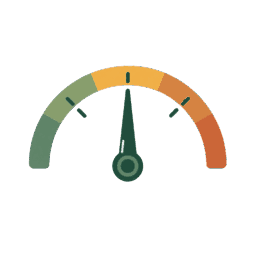
Severity
Mild to severe depending on extent. FOS scores 30-80.

Treatment Solutions
Ultrasound imaging to map migrated filler location, followed by targeted extraction from the displaced areas.

Why Traditional Treatment Fails
Dissolving the migrated filler doesn't address the root cause — the filler keeps migrating because muscle movement pushes it. New filler injected to "correct" often migrates too.

The Liusmed Approach
Ultrasound tracking of the full migration path. Extraction at both the original site AND the migration destination. Addresses the filler along its path, not just the visible displacement — as much as can be safely removed.
Dr. Liu's Perspective
"Migration isn't just about where the filler ended up — it's about the trail it left behind. Ultrasound shows us the entire path, so we can go after what lies along it, not just the tip of the iceberg."

Recovery Timeline
The pinhole is small, but this is an extraction, so swelling and bruising are expected. Swelling and bruising usually settle in about 2–3 weeks, the pinhole heals in about 2 weeks, and the final result takes about 3 months, varying from person to person.
Related Conditions
Related Symptoms
FAQ
How do I know if my filler has migrated?
Signs include fullness in areas that were not injected, a "shelf" or ridge above the lip line, puffiness above the cheekbone, or swelling in new areas when lying down.
Which areas migrate most, and how long after injection?
Lips, the under-eye/tear trough, and the nose migrate most often because of thin tissue and constant muscle movement. Migration is usually gradual — it can appear anywhere from a few months to several years after injection, which is why many patients don't connect a new lump to a filler they had "ages ago." Tear-trough filler in particular tends to drift and trap water, creating persistent under-eye puffiness.
I dissolved the migrated filler but it came back — why?
Two reasons. First, dissolving rarely reaches the entire migration trail — enzyme is injected where the lump is visible, but deposits along the path and at the original site are missed, so fullness returns. Second, dissolving doesn't change the forces (muscle movement, gravity) that caused migration, so any filler injected to "correct" the result tends to migrate the same way. Mapping the full path with ultrasound and extracting it is what actually breaks the cycle.
Can migrated filler be corrected without adding more filler?
Yes — and that is the goal. Adding filler to camouflage migration only increases the total volume that can drift further. Ultrasound-guided extraction removes the displaced filler from both its destination and the original site, restoring the natural contour without adding anything. The final result takes about 3 months.
Real patient questions
Questions from the patient Q&A forum, answered by Dr. Liu.
Ask your own question in the forumReferences
- Beleznay K, et al. Dermatol Surg. 2015;41 Suppl 1:S307-S320
This information is for educational purposes only and does not constitute medical diagnosis. Please consult a qualified physician for proper evaluation.

Read next: how we actually handle it
Case-by-case decisions, written by Dr. Ta-Ju Liu
How Fillers Migrate: The Science Behind Why Your Filler Moved
The physics, biology, and material science behind why fillers move from their injection site — and how science-based revision can correct displacement.
Nose Filler Shifted or Widened? Correction for Migration
Dissolution didn't fix your widened nose after filler? Ultrasound-guided extraction corrects migration, Avatar nose, and failed nose filler cases.
Under-Eye Puffiness After Filler? Ultrasound Diagnosis
Under-eye puffiness after tear trough filler? Ultrasound distinguishes migrated filler from true eye bags, preventing the wrong treatment.
Forehead Filler Bumps & Migration? FILLER REVISION Ultrasound-Guided Correction
Forehead bumps and brow heaviness after filler won't resolve? FILLER REVISION uses ultrasound to map migrated filler and extract it with precision.