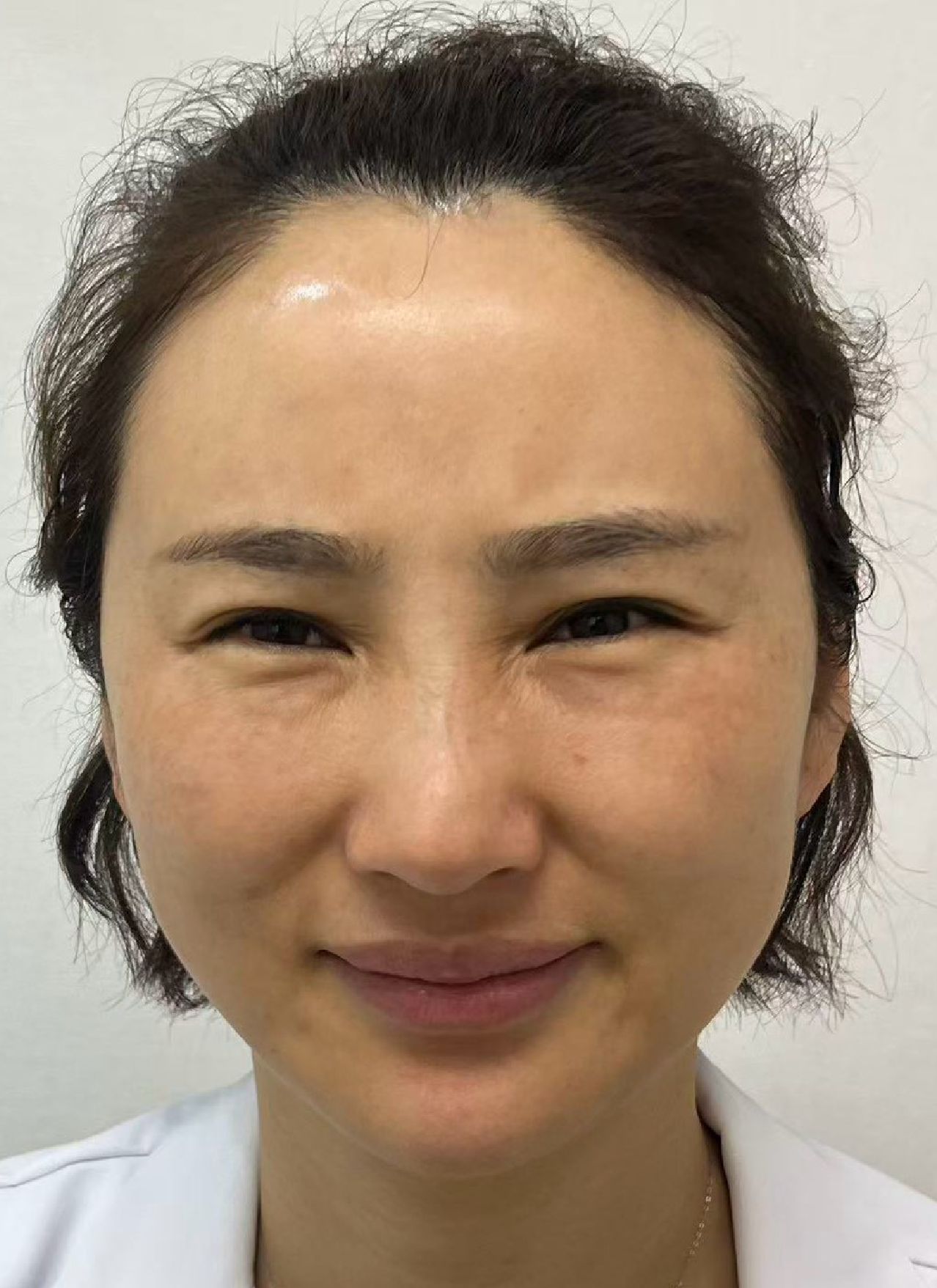
Your Smile Has Changed—The Expression Dilemma After Filler
"My smile feels stuck — like my face has resistance when I try to move it. I tried dissolving the filler but the stiffness didn't change." At FILLER REVISION, expression stiffness is one of the most frustrating complications we treat because dissolution alone rarely resolves it. Patients arrive after hyaluronidase reduced their volume but left the pulling, tightness, and restricted movement unchanged — because the cause was never the filler volume itself. In our experience, expression stiffness stems from three distinct mechanisms, and identifying which one is responsible determines whether the problem can actually be fixed.
Why Can Filler Affect Facial Expression?
The Precision Machinery of Facial Expression
Your face is one of the most precise dynamic systems in the human body. Every micro-expression involves the coordinated action of dozens of muscles, fascial layers, subcutaneous fat pads, nerves, and blood vessels. These structures slide, contract, and stretch with precision across different tissue planes.
When filler is injected into this precision system, it occupies space that was not originally there. If the location, depth, and volume are exactly right, the filler coexists peacefully with surrounding tissue and does not affect dynamic expression. But if any element goes wrong, the filler disrupts this delicate dynamic equilibrium.
Key Insight: At FILLER REVISION, we see this pattern regularly — expression stiffness does not necessarily mean "too much filler." Even a small volume of filler placed in the wrong tissue plane can interfere with the normal gliding of expression muscles.
Three Main Causes of Expression Stiffness
Cause 1: Filler in the Wrong Tissue Plane
Facial tissue structure is like a layered cake. From superficial to deep: skin → subcutaneous fat → SMAS (Superficial Musculoaponeurotic System) fascia → expression muscles → deep fat pads → periosteum. Between each layer exists a gliding plane that allows expression muscles to contract and stretch freely.
← Swipe to see more →
| Injection Plane | Effect on Expression | Risk Level |
|---|---|---|
| Dermis (very superficial) | Usually does not affect deep expression | Low |
| Superficial subcutaneous fat | May restrict natural skin gliding | Medium |
| SMAS fascial layer | May bind the gliding interface between muscles and skin | High |
| Within expression muscles | Directly interferes with muscle contraction | Very high |
| Deep fat pads | Usually less impact, but large volumes may compress | Medium |
| Supraperiosteal | Usually safe, but migration can reach dangerous planes | Low → Medium |
When filler is injected into—or migrates to—the gliding interface between expression muscles and skin, it acts as a physical block. When you make an expression, the muscle contracts, but the skin cannot move smoothly with it. This is the source of that "pulling sensation."
Cause 2: Tissue Fibrosis and Adhesion
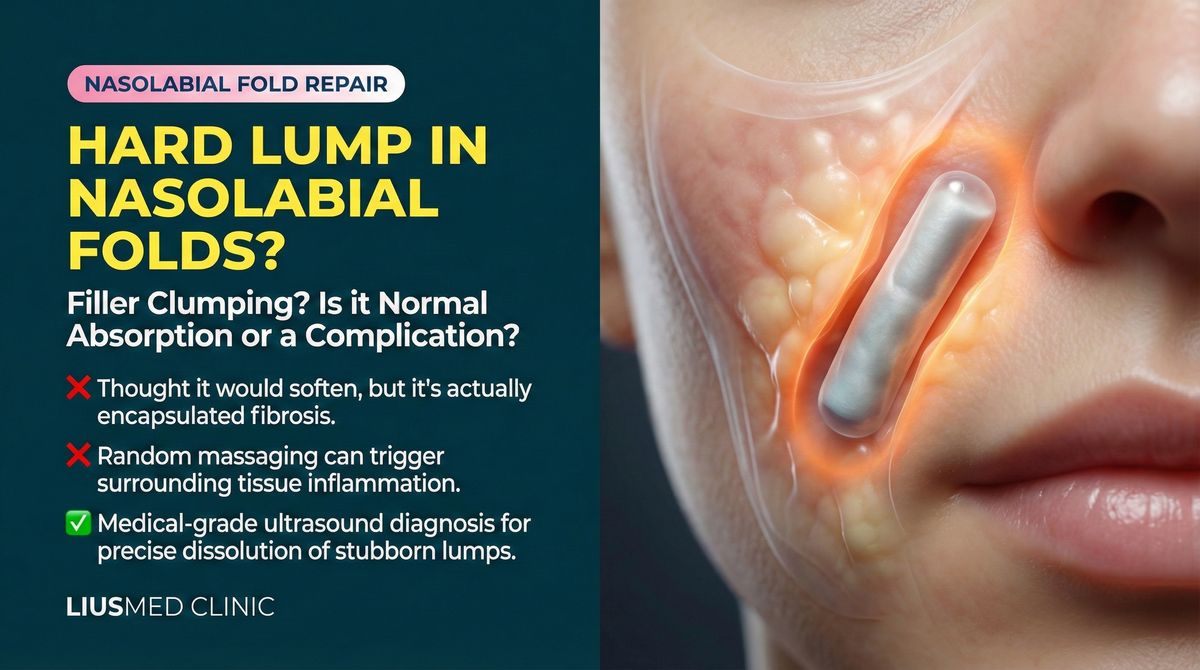
After filler injection, even if no expression problems occur initially, your body gradually responds to the foreign material. One standard response is forming a layer of fibrous tissue around the filler—the capsule.
This process does not necessarily cause problems. But in certain cases:
- Excessive fibrosis: The capsule becomes progressively thicker and harder, eventually "welding" the filler to surrounding tissue
- Cross-layer adhesion: Fibrous tissue binds not just around the filler but across tissue planes that should glide freely
- Scar contracture: Fibrous tissue contracts, pulling on surrounding normal tissue (see why dissolvers fail on encapsulated filler)
Key Insight: Fibrotic adhesion is a gradual process. You may not notice expression stiffness until months or even years after injection—because adhesions form slowly over time.
Cause 3: Nerve Compression or Interference
The face contains a dense network of sensory and motor nerves. Filler can affect nerve function through several mechanisms:
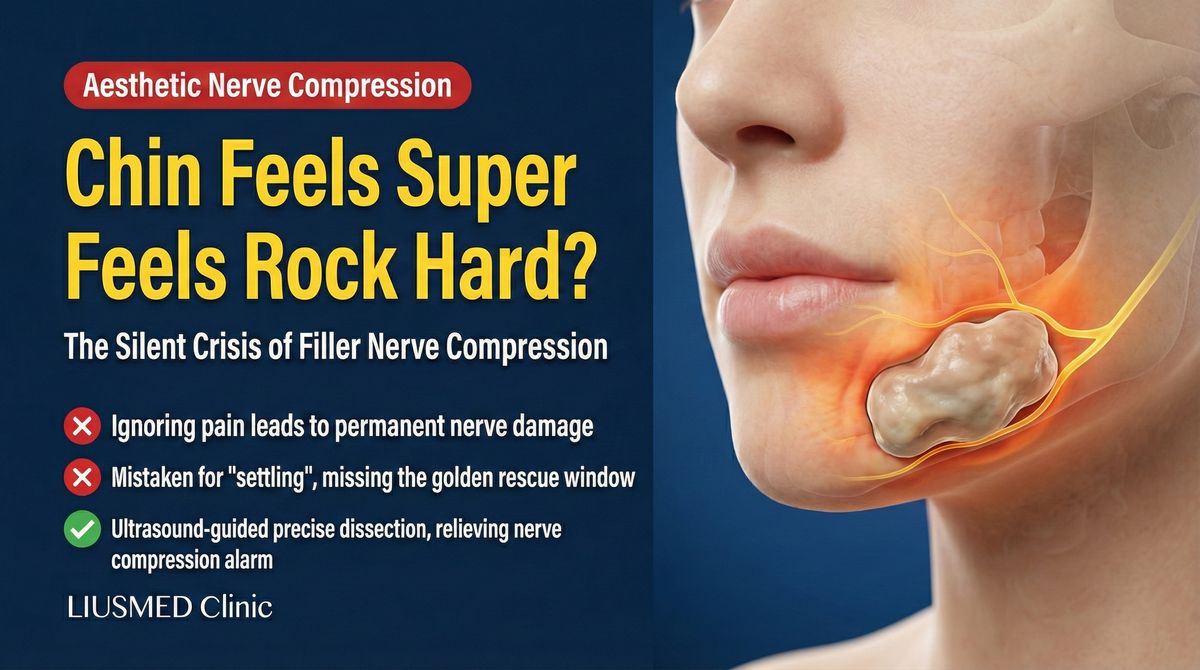
- Direct compression: Large filler deposits pressing on nearby nerve trunks or branches
- Capsule compression: As the fibrous capsule thickens, it compresses adjacent nerves
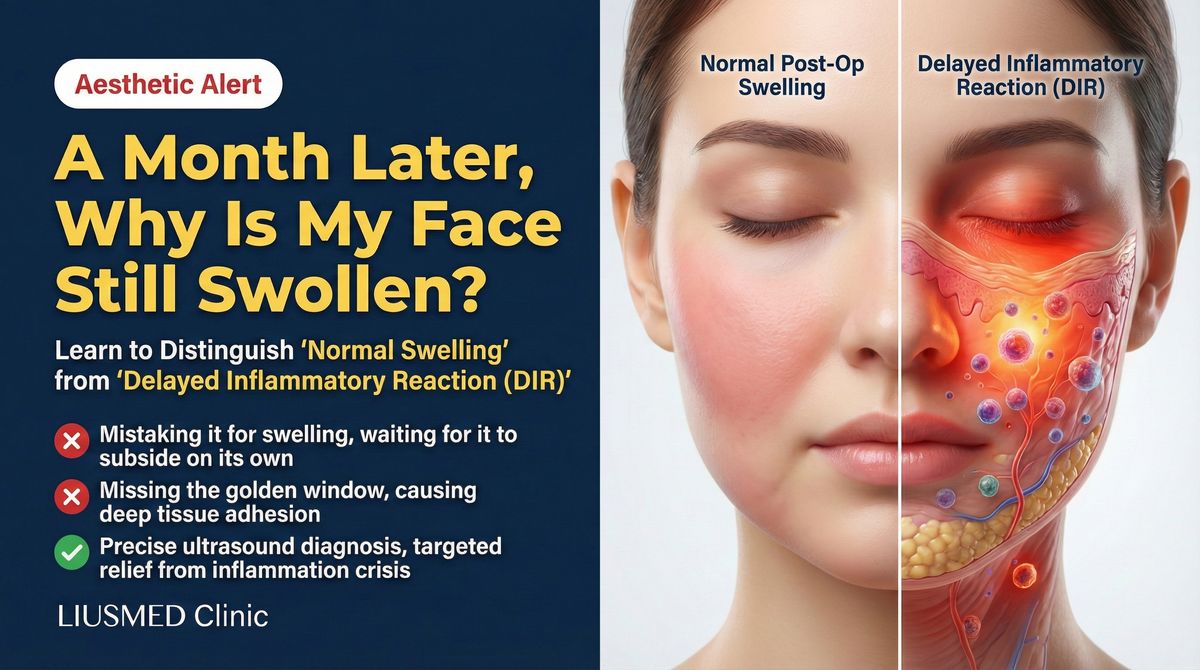
- Inflammatory involvement: Chronic inflammation around filler affecting nearby nerve endings
- Migration (Filler Migration) compression: Filler migrating to positions near important nerves
Nerve compression typically produces not just "stiffness" but also:
- Localized numbness or altered sensation
- Tingling or burning sensations
- Pulling pain with specific directional movements
- In severe cases, localized muscle weakness
Self-Assessment: What Type of Stiffness Do You Have?
Simple Dynamic Tests
Stand before a mirror and perform the following expressions in sequence, observing and feeling:
1. Natural smile
- Observe symmetry of the smile on both sides
- Feel whether one side is notably "tighter" or "stuck"
2. Forceful squinting
- Note whether periorbital skin can wrinkle naturally
- Feel for abnormal tightness under the eyes or at the temples
3. Puckering lips
- Observe whether lips can push forward evenly
- Feel for resistance in any particular direction
4. Wide open mouth
- Note any pulling sensation during jaw opening
- Feel for abnormal traction at the chin or cheeks
5. Unilateral eyebrow raise
- Observe whether forehead skin lifts naturally
- Compare mobility between the two sides
← Swipe to see more →
| Test Result | Possible Cause | Recommendation |
|---|---|---|
| Symmetric but overall reduced expression range | Excessive volume or too-superficial placement | Assess whether volume reduction is needed |
| Clearly unilateral restriction | Localized adhesion or asymmetric filler distribution | Ultrasound (Ultrasonography) evaluation of local structure |
| Definite pulling pain during expression | Possible nerve involvement or deep adhesion | Prompt professional evaluation |
| Restricted movement in specific direction | Filler blocking a specific muscle's gliding path | Assess filler position and plane |
| Accompanied by numbness or altered sensation | Nerve compression | Priority management |
Treatment Strategies
Can Hyaluronidase Resolve Expression Stiffness?
This depends on the cause:
- If caused purely by excess volume or incorrect positioning (no fibrosis): HA (Hyaluronic Acid) filler can be dissolved with hyaluronidase, but ultrasound confirmation of exact position and plane is essential
- If fibrotic adhesion has formed: Hyaluronidase dissolves only hyaluronic acid, not fibrous tissue. Even after dissolving the HA, fibrotic adhesions may persist
- If the filler is non-HA: Hyaluronidase is completely ineffective
Ultrasound-Guided Pinhole Extraction
For expression stiffness caused by filler problems, our ultrasound-guided pinhole extraction offers unique advantages:
- Precise localization: Ultrasound shows the real-time spatial relationship between filler and surrounding structures (including nerves and vessels)
- Selective removal: Only the problematic filler is removed, preserving correctly positioned material
- Adhesion release: Fibrotic adhesions can be addressed simultaneously during extraction
- Nerve protection: Important nerve and vascular structures are avoided under visual guidance
Post-Procedure Rehabilitation
After filler removal and adhesion release, expression recovery is not instantaneous. Like a joint that has been in a cast requires rehabilitation to regain mobility, expression muscles that have been restricted long-term need gradual recovery.
When Dissolution Doesn't Restore Movement: The FILLER REVISION Approach
The reason dissolution fails to resolve expression stiffness is fundamental: hyaluronidase dissolves hyaluronic acid, but it cannot dissolve fibrous adhesions, release nerve compression, or reposition filler that has migrated into muscle gliding planes. Patients who reach FILLER REVISION have often had their HA dissolved but still experience the same pulling, tightness, and restricted movement — because the structural cause was never addressed. At FILLER REVISION, ultrasound reveals the exact mechanism: whether filler is blocking a gliding plane, whether fibrous adhesion has bound tissue layers together, or whether a deposit is compressing a nerve branch. Our extraction protocol then addresses the specific cause — removing mispositioned filler, releasing adhesions, and decompressing nerves under real-time guidance — rather than simply reducing volume and hoping the stiffness resolves on its own.
Prevention Is Better Than Repair
For Those Considering Injection
The following measures significantly reduce the risk of post-injection expression stiffness:
- Choose an experienced injector: Precise command of facial anatomical planes is the key to avoiding expression problems
- Inject gradually in small volumes: Excessive single-session volume increases compression and adhesion risk
- Consider filler rheological properties: Different products vary in hardness and elasticity—select the one appropriate for the target area
- Avoid aggressive massage immediately after injection: While gentle molding is appropriate, excessive massage may cause filler displacement
When to Seek Help
If you experience any of the following after filler injection, seek professional evaluation promptly:
- Unnatural expression persisting beyond two weeks without improvement
- Clear pain or pulling sensation during expression
- Localized numbness, tingling, or altered sensation
- Visibly asymmetric expression
- Progressive worsening of expression restriction
If you've already tried treatment for post-filler expression stiffness without success — including dissolution that reduced volume but didn't restore movement — FILLER REVISION specializes in exactly these cases. Our ultrasound-guided approach identifies and addresses the structural cause, not just the filler.
Frequently Asked Questions
I dissolved my filler but my face still feels stiff and tight. Why didn't dissolution fix it?
Hyaluronidase dissolves hyaluronic acid, but it cannot break fibrous adhesions, release nerve compression, or reposition filler that has migrated into muscle gliding planes. If the stiffness comes from fibrotic adhesion binding tissue layers or a deposit pressing on a nerve, dissolving the filler leaves the structural cause unaddressed. At FILLER REVISION, ultrasound is used to reveal the exact mechanism so the specific cause can be treated, rather than only reducing volume.
Does expression stiffness always mean I had too much filler injected?
Not necessarily. Expression stiffness does not always mean too much filler — even a small volume placed in the wrong tissue plane, such as the SMAS fascial layer or within expression muscles, can significantly restrict natural facial movement. When filler sits in the gliding interface between muscle and skin, it acts as a physical block, which is the source of the pulling sensation. The location and depth of the filler matter as much as the amount.
I had filler months ago with no problems, but my face is slowly getting stiffer. Is that normal?
Stiffness that appears gradually can come from fibrotic adhesion, which is a slow process. Even if no expression problems occur at first, the body forms a fibrous capsule around the filler over time, and in some cases this thickens, binds tissue layers that should glide freely, or contracts and pulls on surrounding tissue. This is why some people only notice expression stiffness months or even years after injection. Persistent or progressively worsening restriction is worth a professional evaluation rather than simply waiting.
How can the problematic filler be removed without taking out the parts that are placed correctly?
Ultrasound-guided pinhole extraction allows selective removal — only the problematic filler is taken out, while correctly positioned material is preserved. Ultrasound shows the real-time spatial relationship between the filler and surrounding structures, including nerves and vessels, so important structures can be avoided under visual guidance. Fibrotic adhesions can also be released during the same extraction. This selective approach helps prevent unnecessary loss of volume.
After the filler is removed, will my expression go back to normal right away?
Recovery is gradual, not instantaneous. After filler removal and adhesion release, the restricted expression muscles need time to regain full mobility — much like a joint that has been in a cast requires rehabilitation after immobilization. Muscles that have been restricted long-term recover step by step rather than all at once. Setting realistic expectations for this gradual recovery is part of the process.
When should I see a doctor about stiffness after filler instead of waiting it out?
Seek a professional evaluation promptly if an unnatural expression persists beyond two weeks without improvement, if there is clear pain or a pulling sensation during expression, or if you have localized numbness, tingling, or altered sensation. Visibly asymmetric expression or progressively worsening restriction are also reasons to be evaluated rather than wait. Numbness or altered sensation in particular can point to nerve compression, which the article flags for priority management.