There is a kind of clinic conversation I have been having more often over the past six months. "I flew all the way to Korea for a skin booster — the clinic manager said recovery would be faster than Rejuran, and then my whole face swelled up terribly the same day"; or, a few weeks after coming back to Taiwan, the cheeks feel bumpy to the touch, and when they ask the original clinic they are simply told "it will go away in a while." What many of them had injected is the same product — RE2O.
Let me say this up front. RE2O is not available in Taiwan, and it is not a Taiwan-approved filler. It is a "skin booster" that has become popular in Korea's Gangnam aesthetics scene over the past year or two, but it is a completely different material from the hyaluronic acid skin booster you may be picturing. Precisely because the material is different, once something goes wrong the treatment logic is different from hyaluronic acid too. I have seen several RE2O complication cases in my filler revision clinic, and all were manageable; but to manage them correctly, the first step is always to work out — what exactly was injected into you.
What Exactly Is RE2O? It Is Not Hyaluronic Acid, and Not Just Collagen
RE2O's full identity is particles of human-derived acellular dermal matrix — in English, phADM (particulated human acellular dermal matrix), meaning human dermis with its cells removed and then ground into microparticles.
To break down where it comes from: donor human dermal tissue is harvested, the cells inside are removed (to reduce rejection), and the extracellular matrix (ECM) — the collagen, elastin, and hyaluronic acid/glycosaminoglycans that form the "scaffolding material" of tissue — is preserved, then ground into very small particles. RE2O ships as this lyophilized powder and is reconstituted at the clinic before injection — the manufacturer's standard is saline, and some injectors add a little non-cross-linked hyaluronic acid (HA) to help it disperse; the reconstituted ADM (acellular dermal matrix) particles are then delivered into the dermis with a microneedle or skin-booster gun, marketed to improve skin texture, elasticity, fine lines, pores, and depressed scars.
A 2026 human trial published in the International Journal of Molecular Sciences disclosed its actual compositional analysis: this phADM contains roughly 80% collagen, 3% elastin, and 0.4% sulfated glycosaminoglycans, with residual DNA below 50 nanograms per milligram. The trial did not inject dry powder either — instead, 150 mg of phADM was mixed with non-cross-linked hyaluronic acid, saline, and lidocaine to make up 4 mL, then injected into the mid-dermis using Dermashine, delivering roughly 56 mg of phADM plus 7.5 mg of hyaluronic acid per half-face.
Key point: The main substance of RE2O is "human dermal matrix particles"; it ships as a powder, and hyaluronic acid is at most a diluent that may be added at reconstitution to carry the particles in. That single fact determines whether it can be dissolved when something goes wrong — more on this later. It is a different thing from a pure hyaluronic acid skin booster, from a collagen solution, and from collagen biostimulators (the PLLA/PDLLA agents such as Sculptra that stimulate your own collagen).
Let me be clear about the branding first, because identifying the material is the first step in any repair. RE2O's product name is Elravie Re2O: the phADM raw material is supplied by L&C Bio and brought to market under Humedix. If you still have the original product photos, labels, or lot numbers, keep them — they are important clues for the repair that follows.
Not Available in Taiwan — and It Has Been Observed for Only a Short Time
I have to be honest about this point, because it directly affects how you should weigh the risk.
RE2O is not approved in Taiwan and is unlikely to receive approval from the Ministry of Health and Welfare in the future, so almost everyone who gets it does so on an aesthetic trip to Korea. And at present the only formally published human study is the one above — 20 people, followed for 20 weeks — recording only transient erythema and mild swelling, which resolved on their own, with no serious adverse reactions.
Sounds safe? But the study's own authors state it plainly: this sample size and follow-up period are insufficient to judge delayed lumps, granulomas, chronic inflammation, or infection. In other words, "no serious side effects seen in the trial" cannot be read as "it won't form nodules." For a product that has been on the market only briefly, whose injection volume is climbing rapidly, and whose formal follow-up is too short, a small early trial is simply not well-positioned to reveal low-frequency or delayed-onset complications.
So the more reasonable stance is neither "it must be absolutely safe because it is a human-derived component" nor "there are horror stories online so it must be very dangerous," but rather: it is a new material still accumulating real-world data; when something goes wrong it should be treated as an "unknown" and classified cautiously, not handled by falling back on old hyaluronic acid experience.
Is RE2O, or Anything Like It, Approved in Taiwan?
We found nothing. In October 2026 we searched the three public databases of Taiwan's Food and Drug Administration (medical devices, drugs and device UDI): RE2O (Elravie Re2O), JuveaCell and MegaFill have no licence, and there is no injectable device or drug licence for PN or PDRN ingredients either. Taiwan does license some "decellularized dermis" materials, but for wound coverage, haemostasis and surgical patches, not for injecting into the skin. Those databases don't cover human tissue or cosmetics, so what we can say is that no injectable device or drug licence turned up, not that the law bans it outright.
As for a legal alternative, the honest answer is that there is no approved product made of the same material. The facial injectables approved in Taiwan are different materials, such as hyaluronic acid, collagen implants, and collagen stimulators like PLLA, PDLLA and PCL. Each has its own approved uses and areas, works differently from RE2O, and isn't an equivalent substitute. For how the materials differ, see the filler materials guide.
Something Worth Knowing More Than "Will It Form a Nodule?"
The regulatory identity these human dermal matrix skin boosters hold in Korea — RE2O and JuveaCell both count — is probably not what you picture.
They do not reach the market as "medical devices" at all. They are classified as human tissue, and regulated under Korea's Human Tissue Safety and Management Act. That classification carries one crucial difference: human tissue can be supplied to clinics without registration of the individual product. The contrast makes it plain — Juvelook, from the same company (Vaim), took the Class IV medical device route and needed clinical trials to earn its approval; JuveaCell's own website carries no Korea MFDS approval number at all, listing instead two patent application numbers covering its manufacturing process.
Korea is debating whether to tighten this. As of September 2026, this kind of ECM (extracellular matrix) booster still circulates in Korea as tissue graft material and needs no individual approval from the MFDS (Ministry of Food and Drug Safety). The rule change the MFDS announced in July only adds the purpose of use, and whether the patient was told in advance, to the graft record, and it is not mandatory; on whether to classify these products as medical devices, the MFDS says it is still studying the question. The points of contention raised locally include the absence of clinical trials and the lack of any standard for surfactant residue left by decellularization. The manufacturers' own claims also contain a technical contradiction — claiming that active growth factors are fully preserved while also claiming that cells and DNA have been completely removed, when those two claims sit in conflict with one another. So the "roughly 30 growth factors" you see in the marketing is, at this stage, a manufacturer's claim with no independent verification behind it.
There is one more fact many people learn only after the injection: the source of these materials is donated human tissue. One of the local controversies in Korea is whether using donated tissue for cosmetic injections fits a tissue-safety law whose stated purpose is treatment and restoring function; the manufacturer says it only uses tissue whose donor consent covers cosmetic use.
I am setting this out not to frighten you. If you have already been injected, you do not need to panic on reading this — a product's regulatory identity and whether your face runs into trouble are two separate things, and none of the classification and management logic above changes because of it. But if you are weighing up whether to fly over for it, this is the information gap that will not appear in the sales deck, and that you have every right to know about.
Why Do Bumps — or a Deep Clump — Form?
RE2O's design principle is to let the ADM particles stay in the tissue so that your own fibroblasts grow into them, new blood vessels form, and the area slowly remodels — which is also why it is said to be "longer-lasting." But look at that same principle in reverse and it is the source of the complications: it is particulate, not a freely diffusing clear liquid.
What I see in clinic falls roughly into two patterns:
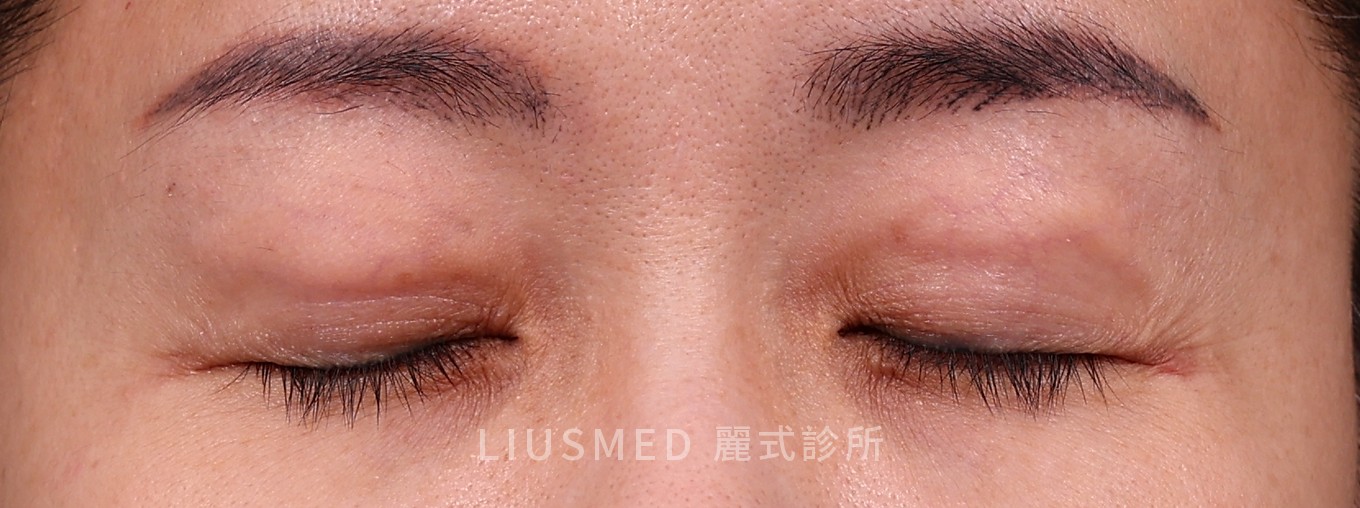
Pattern 1 — Injected too superficially (treated like an ordinary skin booster): skin-colored papules and a gritty texture appear on the face, especially noticeable with facial expressions or in side lighting; some also become inflamed and red, later leaving hyperpigmentation. The more superficially the particles are placed, the more that is deposited per point, and the less evenly it is dispersed, the more likely this becomes.
Pattern 2 — Injected too deep, or piled up in bulk along ligaments to fill volume: here it is not surface bumps but a deep clump, cord-like or band-like, distributed along the injection track, ligaments, or fat septa. This kind usually recedes only with further treatment.
It is worth noting that the product's own evolution confirms that "dispersion is key": the original Korean RE2O had larger particles, and the RE2O Fine launched in 2025 shrank the particles to about 50 micrometers — one of the officially stated aims being to distribute the material more evenly within thin skin and the dermis. Whether the particles can be dispersed finely enough has always been the core challenge for this class of particulate injectable, in both product design and physician technique.
If you already have bumps after RE2O, start with how to tell normal RE2O bumps from a complication.
What Are RE2O's Side Effects? Five Types, from Normal Reaction to Infection
Not every post-injection reaction is a complication, and not every lump is the same. I sort them into five categories so you can tell which box you fall into and whether you should be worried.
← Swipe to see more →
| Type | Typical presentation | Likely cause | How to view it |
|---|---|---|---|
| A — Normal/transient reaction | Day-of skin-booster papules, mild redness, swelling, pain, bruising, subsiding within days | The injection itself | Observation is enough |
| B — Non-inflammatory material accumulation | Skin-colored papules, or a deep cord-like clump; not very red, not very painful | Too superficial, too much per point, uneven dispersion | Physical material; treat after ultrasound localization |
| C — Sterile inflammation/foreign-body reaction | Recurrent redness and swelling, itching, tenderness, a previously subtle nodule suddenly swelling; later fibrosis and pigmentation | Immune/foreign-body reaction, possibly involving biofilm | Control inflammation first, rule out infection |
| D — Infection/biofilm | Unilateral asymmetric swelling, worsening heat and pain, pus or discharge, poor response to antibiotics, recurrent flares | Bacterial contamination, biofilm, even nontuberculous mycobacteria | Rule out first; do not press with steroids first |
| E — Pigmentation/surface irregularity | Localized discoloration, uneven light and shadow | Mostly post-inflammatory pigment, or repeated squeezing/fibrosis | Treat after inflammation and clumping are controlled |
A few easily overlooked points deserve explanation.
"Decellularization" is meant to reduce antigenicity, which is not the same as causing no inflammation at all. The body can still mount a macrophage, foreign-body giant cell, or fibrotic response to particles left in the tissue. So Type C (sterile inflammation) does exist — especially after a cold, dental treatment, or other immune stimulation, when a previously quiet nodule suddenly swells again.
And Type D (infection) is the category you can least afford to delay on, and the one most easily misjudged. If multiple red nodules appear after a skin booster, mesotherapy, or cross-border aesthetics and antibiotics fail to bring them down, then beyond ordinary bacteria you also have to think of nontuberculous mycobacteria (NTM). A systematic review of 30 studies covering 423 patients with mesotherapy-associated infections points out that the most common of these is Mycobacterium chelonae, which often requires prolonged multi-drug antibiotics and may leave scars. It is frequently mishandled as "sterile inflammation" and delayed, because it is not something a surface swab will detect — it may require tissue sampling, special culture, or molecular testing.
Key point: A filler nodule is a "clinical description," not a direct diagnosis. The same palpable lump could be material accumulation, a delayed immune reaction, or an infection or biofilm. Treating every lump as the same problem — to dissolve, to press down — is the most dangerous approach.
As for what "high biocompatibility" of the ADM material itself actually means, there is a randomized trial of porcine-derived micronized ADM worth referencing (not RE2O, but the same class of particulated ADM, so it has reference value): it recorded swelling and pain as more common in the ADM group than in the control group, and it explicitly documented redness, bruising, and hardening — most mild to moderate, most resolving within a week. This shows that "high biocompatibility" does not equal "won't harden, won't swell, won't clump" — it is just that most people's reactions pass, while a minority's do not.
There is one version of Type C I want to address on its own
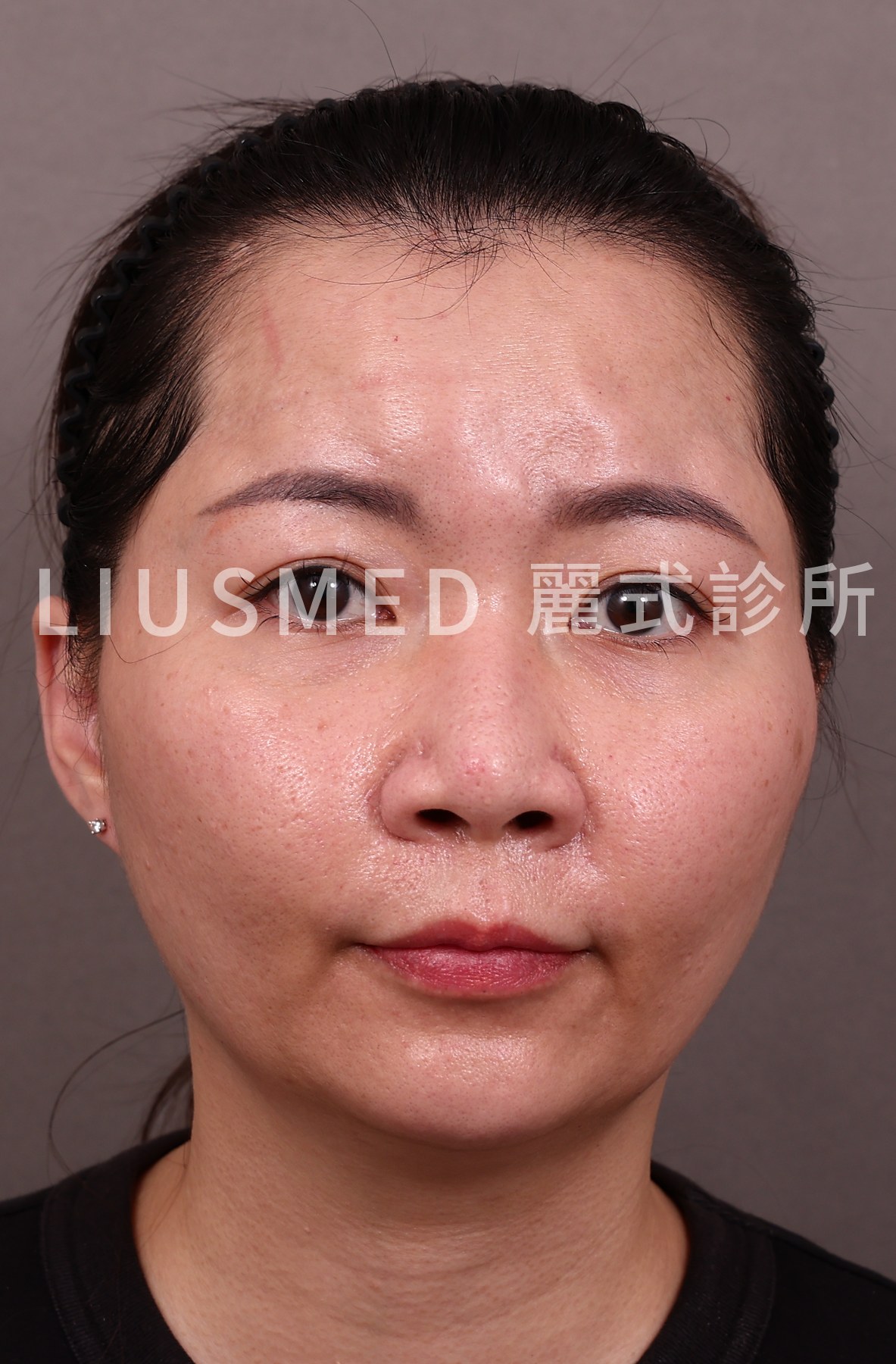
Some people don't get discrete bumps. They get diffuse, recurring swelling. It swells, it settles, and two or three days later it swells again. For some, it simply never fully settles. There is no obvious nodule to feel, and yet these patients suffer far more than the ones with visible bumps.
Their history is almost always the same script. Emergency room for an anti-inflammatory injection, or a course of steroids. Sometimes admission for intravenous antibiotics. It comes down while they are on the drugs, and once the drugs stop, it comes back within days. By the time they reach me, most have been told by several clinics to "wait and see," and nobody has explained why this keeps happening. I have seen patients in pain for more than six months, swelling every two or three days, who eventually stopped leaving the house altogether. What this type takes from you is your quality of life, not just your appearance.
This is not unique to Korean skin boosters. I have seen the same recurring swelling with older collagen injectables, both human- and porcine-derived. As for the mechanism, my read is that it behaves more like a biofilm effect, or a foreign-body rejection response — and I cannot tell you with confidence which of the two it is.
But there is one observation I have to be honest about: among the cases reaching me so far, when this Korean class of human-derived booster does flare, it tends to be more severe and more frequent than the older collagen cases. The older collagen might swell once every week or two. These newer ones are often every two or three days, sometimes continuously. I do not know whether that reflects a real difference in the material, or simply that the product is new and the people willing to travel for help are the worst-affected ones. The numbers are still small and the follow-up is still short. I am not going to present this as settled.
If you are living inside this cycle, Filler Biofilm & Recurring Swelling: Why Antibiotics Fail covers the mechanism in more depth.
Does the Thermage or ultrasound-based tightening done in the same visit have anything to do with it? From what I see: the symptoms are the same whether or not energy treatment was done. People who only had energy treatment, without this class of injectable, do not develop this. So it is not the energy device causing it. But it does make an already-brewing situation worse. That distinction matters, because if you believe Thermage is to blame, you will keep looking for the answer in the wrong place.
So what actually helps? In my clinical experience, what genuinely brings the frequency and severity down is reducing the volume that was put in: map the swelling and the material under ultrasound — and record where each flare happens, which makes it straightforward to localize — then scan the whole region, confirm which layer the material sits in, and take it out gradually. After appropriate volume reduction, the frequency and severity of the swelling usually drop noticeably, and quality of life becomes possible again.
To be honest about the limits: reducing volume makes the source of the flares smaller. It is not a promise that you will never swell again. How much can actually be removed still depends on the location, the extent, and the degree of fibrosis.
One aside: when an outside ultrasound report says "possible panniculitis," that is usually not a diagnosis. It is a general label used when the material cannot be clearly resolved on a standard ultrasound. Telling this class of material apart depends on familiarity with how injectables look on imaging — whether foreign material can be separated from normal tissue, and which layer it occupies, is what determines whether precise volume reduction is possible afterward.
Why Dissolving Enzymes Can't Save It: They Only Dissolve Half
Much of people's sense of safety about fillers comes from one impression: "if it goes wrong, you can just dissolve it." That impression holds only for hyaluronic acid.
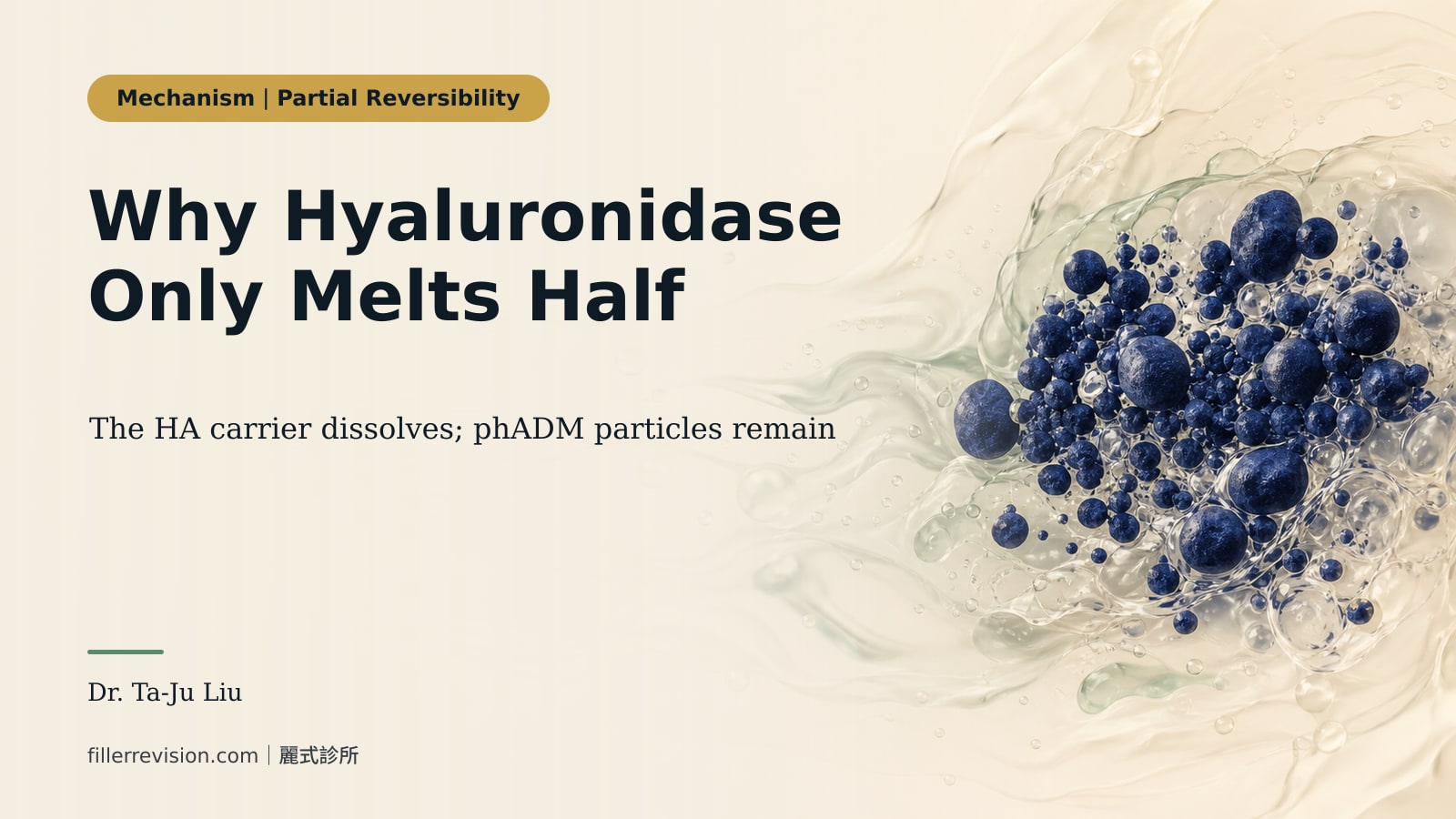
Hyaluronidase (the dissolving enzyme) is an enzyme that specifically breaks down hyaluronic acid; it recognizes only the hyaluronic acid molecule and cleaves its particular bonds. The main substance of RE2O is ADM particles; hyaluronic acid is present only if it was added at reconstitution. So after the enzyme is injected, at most that reconstitution hyaluronic acid is dissolved (and if only saline was used, there is nothing for it to dissolve): the ADM's collagen, elastin, and proteoglycan particles do not budge.
This is why patients often come back after an enzyme injection feeling that "the swelling seems to have gone down a bit, but the lump is still there" — what disappeared was the volume of dissolved hyaluronic acid, while the particles actually propping it up remain in place. This is an expected phenomenon; it does not mean treatment failed, nor that the RE2O has been fully dissolved away.
What about collagenase? Collagenase has off-label use reports in a small number of fibrotic nodules, but at present there is no research on its dose, safety, or facial-tissue selectivity specific to RE2O. And collagenase does not recognize only the foreign ADM — it may also break down your own collagen scaffold. So it is an option that is not yet standardized and requires very conservative evaluation; it is not an antidote for RE2O. For more on why dissolving enzymes cannot save non-hyaluronic-acid materials in many situations, see 7 reasons hyaluronidase fails.
Don't Confuse These: RE2O Fine, MegaFill, and AlloDerm-Type Dermal Powder
These names are easy to blur together, but their composition and purpose are not identical, and getting the identification wrong sends the repair in the wrong direction.
- RE2O Fine: simply the fine-particle version of RE2O (about 50 micrometers), aimed at thin skin such as the periorbital and perioral areas, at a lower concentration, designed to reduce grittiness and the Tyndall effect. It is the same class of material as RE2O, just finer.
- JuveaCell (쥬브아셀): another human acellular dermal matrix skin booster, this one from the Korean company Vaim — the same class of material as RE2O, a different brand; in Korea, clinics routinely compare the two head to head. The liquid form carries 3% or 8% ADM particles per 1cc (if the record in your hand says "3%," that concentration is what it refers to), and since April 2026 there has also been a powder form (v for the face, g for the body). Its headline differentiator is that it is decellularized using supercritical CO₂ rather than surfactants. Because it is the same class of material, hyaluronidase cannot rescue it either — the identification logic and treatment direction are the same as for RE2O. ⚠️ Take particular note: the same company also makes a product called Juvelook (쥬베룩). The name is similar, but it is not the same kind of thing at all — Juvelook is PDLLA (poly-D,L-lactic acid) microspheres, a collagen biostimulator, not dermal matrix. Even Korean-language information online frequently blurs the two together, and coverage in other languages is messier still. Get the material wrong and the whole repair direction goes wrong with it.
- MegaFill: also linked to L&C Bio's human-derived ADM, made by pulverizing MegaDerm, but positioned more toward "filling volume and supporting contour" rather than the skin-nourishing booster route. It is a different product for a different use than RE2O.
- AlloDerm-type acellular dermal matrix powder: also human-derived acellular dermal matrix, but traditionally used in block/large-particle form for volume filling and facial augmentation, where the common problem is poor absorption and hardening. Its difference from RE2O lies in form and injection depth — RE2O is a fine particle in micro-droplet skin-booster form, and its problems tend toward individual papules; AlloDerm-type dermal powder tends toward block form, and its problems tend toward the whole block hardening. To understand the block AlloDerm-type dermal powder/autologous fat hardening category, see What to do when AlloDerm-type dermal matrix absorbs poorly and hardens.
If you want to compare these next-generation collagen/regenerative injectables side by side from the angle of "whether the material can be reversed and how manageable a lump would be," see Next-generation biostimulator reversibility comparison.
If a Lump Does Form, How the Repair Works
Suppose a lump has already formed. Whichever pattern it is, the approach is a staircase — not extracting right away, and not dissolving right away.
- Identify the material first. Confirm whether what you had was RE2O or something else, which layer it went into, what it was mixed with, and when the trouble started. Get the material wrong and the whole plan is wrong.
- High-frequency ultrasound classification. This is the crux. Using high-frequency ultrasound plus Doppler, get a clear view of whether the particles are scattered through the dermis or concentrated into a clump under the skin, whether there is a hypoechoic fluid collection or abscess, whether surrounding blood flow is elevated, and their relationship to vessels and nerves. The 2025 World Federation for Ultrasound in Medicine and Biology (WFUMB) consensus on aesthetic dermatologic ultrasound recommends that this kind of assessment use a high-frequency probe plus color/power Doppler rather than palpation alone. Only what you can see can be treated safely.
- If there is any suspicion of inflammation or infection, rule out infection first. For anything red, hot, painful, discharging, or unresponsive to antibiotics, first determine whether it is an infection and, if needed, aspirate or sample and send for culture. Before infection is ruled out, it is not appropriate to inject high-dose intralesional steroids directly — the international consensus on filler complications specifically cautions that overt and covert infection must be ruled out before considering steroid injection into an inflammatory nodule.
- Only non-inflammatory, concentrated material clumps proceed to physical extraction. When ultrasound shows a material clump with relatively clear borders, concentrated in a layer that can be entered safely, this kind is best suited to image-guided single-pinhole minimally invasive extraction/debulking, rather than blind massage or blind aspiration.
The technical side of that step — how the ultrasound localises the material, how it comes out through a single pinhole, how much can realistically be removed from which layer — I leave to our sister site, which does the micro-extraction itself: RE2O Particulated Human ADM Skin-Booster Complications: Ultrasound Typing & Pinhole Micro-Extraction. To put the split simply: this article helps you identify the material and work out which pattern you have; for the part hyaluronidase cannot address — the extraction itself — see the sister-site page.
At this point I want to be very honest and clear, because it bears on your expectations. I will not tell you "we can solve everyone's RE2O problem," because some situations cannot be guaranteed to fully recover: material in a diffuse distribution with no clear clump, or already integrated with your own tissue and extensively fibrotic, or positioned right next to important vessels and nerves, or where infection, skin necrosis, or permanent pigment change has already occurred — all of these limit how much can be extracted.
So here is how I position this: for RE2O / human-derived ADM particulate skin-booster complications that hyaluronidase cannot address, we offer high-frequency ultrasound classification, inflammation and infection assessment, superficial papule repair, and image-guided single-pinhole minimally invasive extraction. How much can actually be removed depends on the material's location, extent, degree of fibrosis, and nearby critical structures. This is not underselling the expertise; it is so you understand that what we do is "precise repair after classification," not treating every lump as the same problem.
If you are overseas, or were originally injected in Korea, and want an assessment first, you can use our international patient channel to send photos, the original product information, and any treatments already done for a preliminary discussion, then decide whether to arrange anything further. To get in touch directly, use booking a consultation to reach Dr. Ta-Ju Liu's team.
Frequently Asked Questions
Is RE2O hyaluronic acid? Can dissolving enzyme dissolve it?
No. The main substance of RE2O is particles of human-derived acellular dermal matrix (phADM); hyaluronic acid is present only if it was added at reconstitution. Injecting the enzyme at most dissolves that hyaluronic acid (and if only saline was used, not even that); the ADM particles themselves do not dissolve. So "the swelling went down a little, but the lump is still there" is a normal phenomenon, not a sign that it has been fully dissolved.
Bumps and swelling after the injection — how long counts as a normal recovery period?
Skin-booster papules and mild redness, swelling, and bruising from the day of the injection through the next few days are usually a normal reaction. But if the bumps still have clear outlines, have hardened, or show no sign at all of resolving after 7 to 14 days, they should no longer simply be treated as an ordinary recovery period, and a follow-up assessment is advisable. The full timeline and warning signs are in RE2O bumps and nodules.
Is RE2O available in Taiwan? Is it legal?
A search of the Taiwan FDA's medical device and drug databases in October 2026 found no licence for RE2O, and it is unlikely to be approved in the future. At present it is injected almost exclusively in Korea. This is also why, if something goes wrong and you seek help back in Taiwan, it is especially important to spell out the original product information clearly.
Does a lump have to be extracted?
Not necessarily. For small, asymptomatic particles that are not red, not painful, and not growing, sometimes observation and ultrasound follow-up are enough. If there is inflammation, control the inflammation first and rule out infection. Physical extraction is an option for when conservative measures have run their course, or when the material is clearly concentrated into a clump — not the first step.
I had RE2O and now have recurring redness and swelling — is it an infection?
Possibly — or it could be sterile inflammation, and the two are managed in different directions. Unilateral asymmetric swelling, increasing pain, pus or discharge, failure to respond to ordinary antibiotics, or recurrent flares should prompt ruling out infection first (including the uncommon nontuberculous mycobacteria) rather than injecting steroids first. In this situation, seeking medical assessment promptly is advisable.
Is there a standard treatment protocol for RE2O complications yet?
Honestly, there is not yet a validated RE2O-specific standard protocol — it has been on the market only briefly and has little formal research. Management at this stage is mostly extrapolated from data on other fillers and ADM, plus ultrasound classification and clinical judgment. So the honest approach is case-by-case assessment, not applying a supposedly universal formula.
Is RE2O made from cadaver skin?
Its raw material is skin tissue from deceased donors, which is decellularized, ground into a powder and diluted with saline or similar fluids before injection. One of the controversies in Korea is whether cosmetic injection fits the purpose of the tissue-safety law, which is treatment and restoring function; the manufacturer says it only uses tissue whose donor consent covers cosmetic use. At a Korean symposium, a professor also noted that Europe does not allow tissue from deceased donors to be used for cosmetic purposes.
Is there an approved alternative to RE2O in Taiwan?
Not one made of the same material. The facial injectables approved in Taiwan are different materials, such as hyaluronic acid, collagen implants, and collagen stimulators like PLLA, PDLLA and PCL. Each has its own approved uses and areas and works differently from RE2O, so none is an equivalent substitute. Whether any of them suits you is something to discuss at an in-person assessment.
References
- Lee YI, Chau NH, Nguyen NH, et al. Injectable Particulated Human Acellular Dermal Matrix Booster for Skin Restoration: An Integrated Randomized, Split-Face, Double-Blinded Clinical Trial and Preclinical Study. Int J Mol Sci. 2026;27(5):2193. PMID: 41828422.
- Zhang C, et al. Safety and Efficacy of Micronized Acellular Dermal Matrix Injection for Correction of Moderate to Severe Nasolabial Folds: A Double-Blind, Multicenter, Randomized Controlled, Non-inferior Clinical Trial. Aesthetic Plast Surg. 2026;50(10):3710-3719. PMID: 41381953.
- Chammas MC, Sigrist R, Alfageme F, et al. WFUMB Position Paper: Consensus on Best Practice in Aesthetic Dermatologic Ultrasound. Ultrasound Med Biol. 2025;51(11):2173-2193. PMID: 40866164.
- Signorini M, Liew S, Sundaram H, et al. Global Aesthetics Consensus: Avoidance and Management of Complications from Hyaluronic Acid Fillers. Plast Reconstr Surg. 2016;137(6):961e-971e. PMID: 27219265.
- Singsing ME, et al. Clinical features of mesotherapy-associated non-tuberculous mycobacterial infections: A systematic review. Int J Womens Dermatol. 2022;8(4):e059. PMID: 39916988.
- Buhren BA, Schrumpf H, Hoff NP, et al. Hyaluronidase: from clinical applications to molecular and cellular mechanisms. Eur J Med Res. 2016;21:5. PMID: 26873038.
- 머니투데이. 2026-09-21. https://www.mt.co.kr/article/2026092116140439467
- 머니투데이. 2026-09-22. https://www.mt.co.kr/article/2026092214293796477
- 뉴시스. 2026-07-28. https://www.newsis.com/view/NISX20260728_0003726587
- Taiwan Food and Drug Administration open data: medical device licences (dataset 68), drug licences (dataset 36), medical device UDI (dataset 197). Searched 2026-10-12. https://data.fda.gov.tw/
Content review statement: This article was written by Dr. Ta-Ju Liu based on clinical experience and the existing literature, for health-education reference; it cannot replace an in-person consultation. RE2O is a product not approved in Taiwan and sourced from abroad; this article is health education and repair explanation about complications, not product promotion. All individual situations and treatment approaches still require case-by-case judgment following an in-person consultation and imaging assessment with a physician.