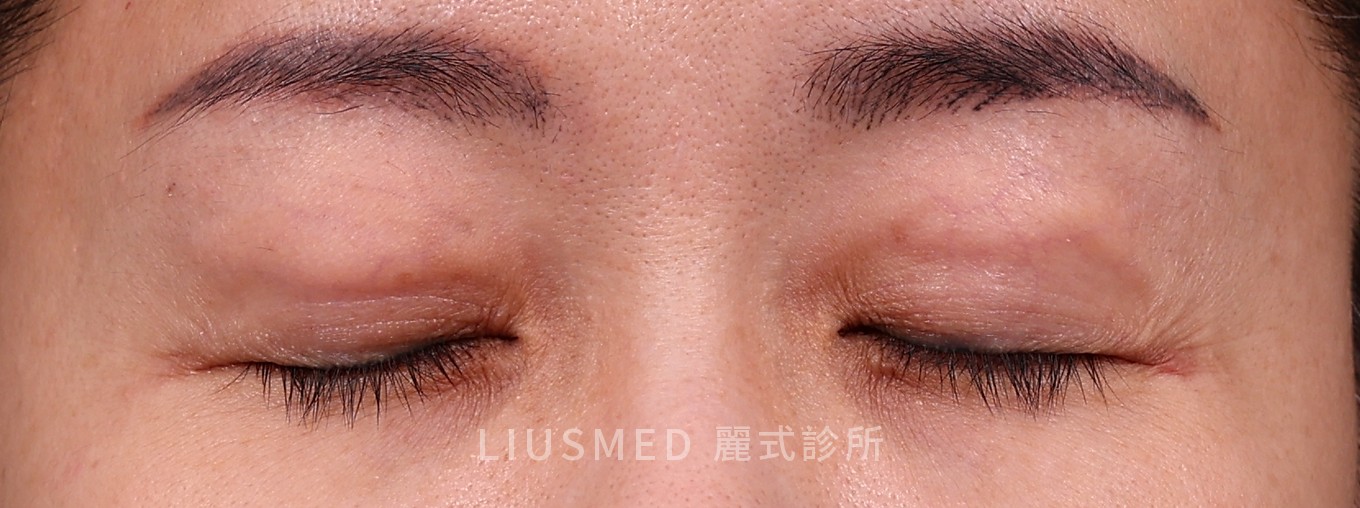
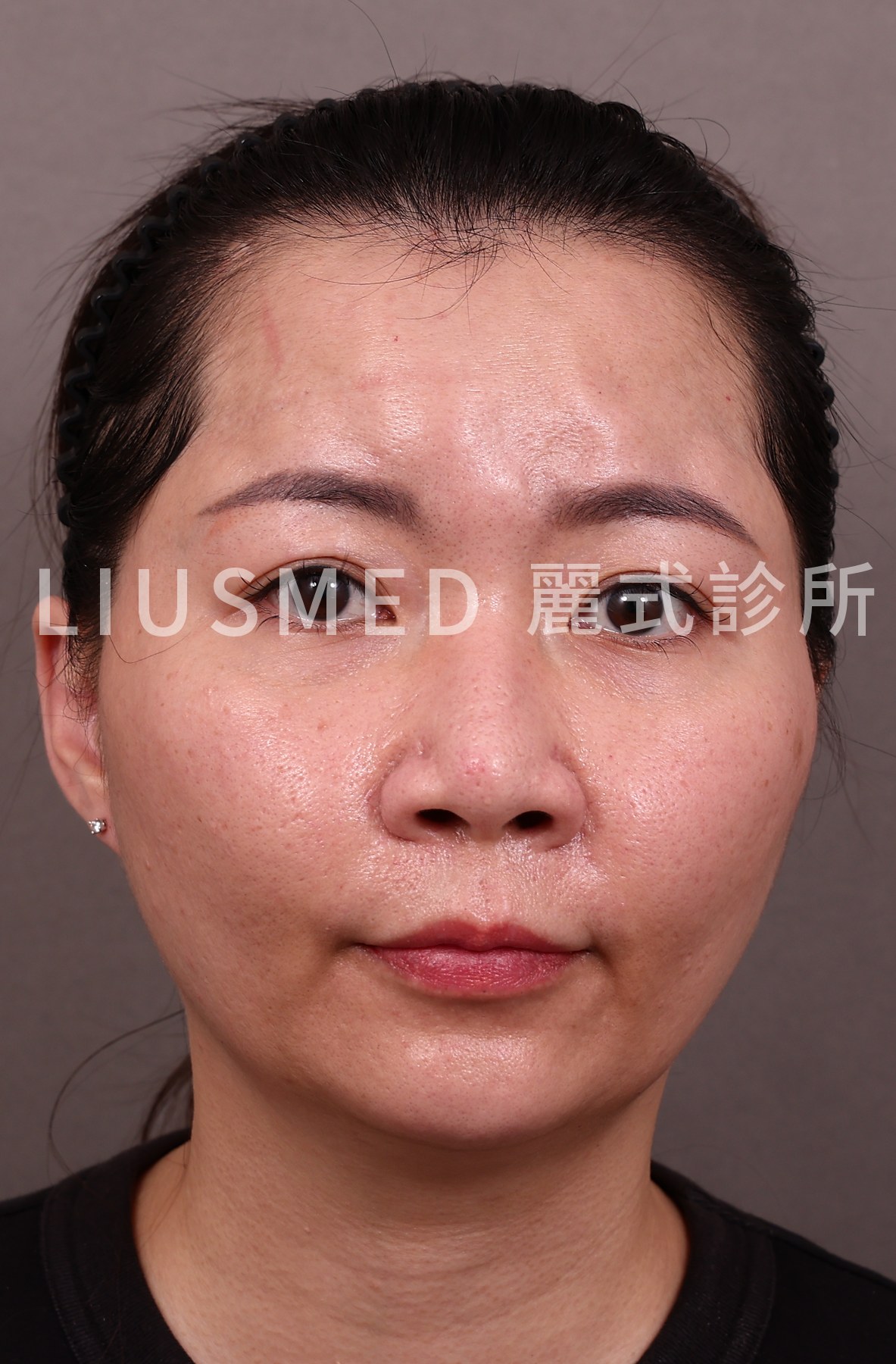
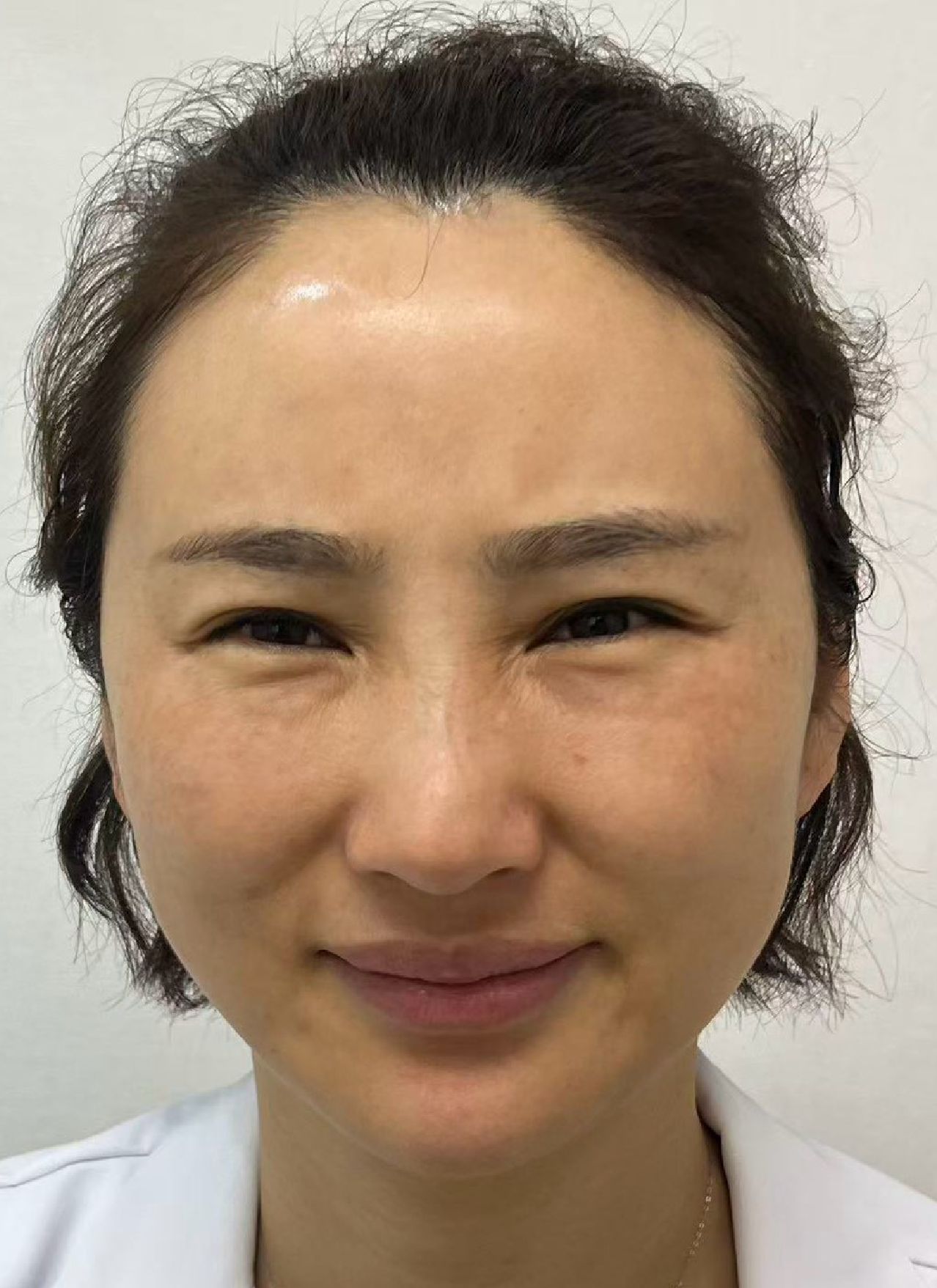
"I got RE2O and developed a lump; I went back and had a dissolving-enzyme injection, and it shrank just a tiny bit and then came back — was the dose not enough?"
No. This is one of the misunderstandings I most often have to clear up in clinic. Your physician did not inject wrong, and the dose was most likely not insufficient either — the problem is that you assumed hyaluronidase could dissolve RE2O, when in fact it can only ever dissolve half of it. To understand this, you first have to know that RE2O is made of two completely different things.
RE2O Has Two Components; Only One of Them Dissolves
RE2O actually ships as a lyophilized powder (150 mg per syringe); it has to be reconstituted at the clinic before injection. So what actually goes into your face is a "mixture" after reconstitution:
- Human-derived dermal matrix particles — phADM (particulated human acellular dermal matrix): microparticles made by removing the cells from human dermis and then grinding it down; the bulk of it is collagen, elastin, and proteoglycans. This is the part that truly stays in the tissue, produces the effect, and is also the part that actually forms into a lump.
- The reconstitution fluid: the manufacturer's standard is to reconstitute the powder with saline; some injectors add a little non-cross-linked hyaluronic acid to help it disperse and inject more smoothly. Note that this hyaluronic acid is not an ingredient of the RE2O product — it is a diluent that may or may not be added at reconstitution, and how much varies from one injector to the next.
RE2O's single human trial was formulated in exactly this way: 150 mg of phADM, made up to 4 mL with non-cross-linked hyaluronic acid, saline, and anesthetic, then injected. The particles are the main act; any hyaluronic acid added is just the fluid that carries them in.
Key point: What truly props things up and forms into a lump is the ADM (acellular dermal matrix) particles. If hyaluronic acid was added at reconstitution, it acts like a vehicle that delivers the particles, and hyaluronidase can at most dissolve that vehicle while never touching the cargo; if only saline was used, there is no vehicle at all and hyaluronidase has nothing to act on. Either way, the ADM particles propping things up will not dissolve.
None of this is unique to RE2O. If what you had was JuveaCell (쥬브아셀), or another of the Korean skin boosters in the same human dermal matrix class, the conclusion is identical — because the problem lies with the class of material, not the brand. JuveaCell is made by the Korean company Vaim; its liquid form carries 3% or 8% ADM particles per 1cc (different concentration, same class of material), and it is decellularized by a different process from RE2O's — but what stays behind in your tissue is, just the same, dermal matrix particles that hyaluronidase does not recognize.
So if the treatment record in your hand says JuveaCell rather than RE2O, the logic of this entire article still applies to you: at most the enzyme dissolves whatever hyaluronic acid was added at reconstitution, the particles stay put, and you get "the swelling went down a little, but the lump is still there."
⚠️ There is one name you must not mix up, though: the same company, Vaim, also makes Juvelook (쥬베룩). The name is similar; the material is completely different — that one is PDLLA (poly-D,L-lactic acid) microspheres, a collagen biostimulator, not dermal matrix. The two are managed along different lines, so look carefully at the record or the product photos in your hand first, and don't assume they are interchangeable just because the names sound alike.
What Does Hyaluronidase Actually Do, and Why It Doesn't Work on ADM
The dissolving enzyme (formally the degrading enzyme, hyaluronidase) is a substrate-specific enzyme — it recognizes only one molecule, hyaluronic acid, and breaks it down by cleaving hyaluronic acid's particular bonds. The literature is clear about its mechanism: what it hydrolyzes is hyaluronic acid's β(1-4) glycosidic bond.
And here is the catch: the bulk of RE2O is not hyaluronic acid. The collagen, elastin, and proteoglycans of the ADM particles are not a substrate hyaluronidase recognizes. So when hyaluronidase is injected into a RE2O lump, the most it can do is break down whatever hyaluronic acid was added at reconstitution (if any), while the particles themselves do not move at all. This is an entirely different matter from hyaluronidase's "inject it and it's gone" effect on a pure hyaluronic acid filler.
What Is Really Going On with "It Shrinks a Little, Then Comes Back"
Once you grasp the above, this phenomenon is no longer mysterious. The changes you see after a hyaluronidase injection go like this:
- If hyaluronic acid was added at reconstitution, hyaluronidase dissolves it → that portion's volume disappears → the lump looks a little smaller and the swelling goes down somewhat.
- But the ADM particles are still in place, still irritating the tissue → after a while the firm feeling comes back.
So "it shrinks a little, then comes back" is not that your dose was insufficient, nor a problem with the physician's technique, and certainly not treatment failure — it is the inevitable result dictated by this material's physical properties. And if it was reconstituted with saline alone, with no hyaluronic acid added, hyaluronidase produces no response at all — which, again, is not failure; there is simply nothing for it to dissolve. What matters is this: do not, because of this, keep adding more and more hyaluronidase. Injecting more hyaluronidase at most dissolves whatever reconstitution hyaluronic acid is present; it does nothing for the particles, and it may instead keep irritating the tissue over and over.
To understand more fully in which situations the dissolving enzyme fails (not just with RE2O — the same holds for many non-hyaluronic-acid materials), see 7 reasons hyaluronidase fails.
What About Collagenase — Would That Work?
Since the bulk of it is collagen, surely collagenase could dissolve it? That is a reasonable question, but the answer has to be very conservative.
Collagenase does have a small number of off-label (outside the approved labeling) use reports in certain fibrotic nodules, but at present there is no research to be found on its dose, safety, or facial-tissue selectivity specific to RE2O — there is no data on exactly how much to inject for RE2O, whether it is safe, or whether it might damage what it should not.
More critically: collagenase does not recognize only the foreign ADM collagen — it may also break down your own collagen scaffold. Your skin and your dermal structure are themselves made of collagen. Injecting into the face an enzyme that does not distinguish "foreign vs. your own" is a risk that has to be weighed very carefully. So for RE2O, collagenase is an option that is not yet standardized and needs to be viewed very conservatively — it is not an "antidote" the way hyaluronidase is for hyaluronic acid. To understand, from the angle of reversibility, which of the various next-generation injectable materials can be dissolved and which cannot, see Next-generation biostimulator reversibility comparison.
It Won't Dissolve — So What Do You Do?
If the chemical-dissolution route is largely ineffective for RE2O, then the remaining direction is clear: see it clearly first, then decide how to handle it physically.
- Classify first: use high-frequency ultrasound (plus Doppler) to see whether the particles are scattered through the dermis or concentrated into a single clump, and whether there is inflammation or fluid collection. Scattered small particles that are asymptomatic can sometimes just be observed; only material concentrated into a clear mass is a target that can be treated.
- If there is inflammation/infection, address the inflammation and infection first — not immediately thinking about dissolving or extracting.
- Material concentrated into a clump → ultrasound-guided single-pinhole minimally invasive extraction: since it will not dissolve and has formed into a clump, physical extraction/debulking is more practical than repeatedly injecting hyaluronidase. This is also why ultrasound localization matters so much — only what you can see can be safely extracted where it should be, without damaging what is next to it.
I want to be honest: how much can be extracted depends on where the material is, how large the area is, whether there is fibrosis, and whether there are important structures nearby — not every case can be cleared out completely. But at least the direction is right: for a RE2O lump, the point is not "let's try dissolving it one more time," but precise treatment after classification.
To understand the RE2O material in full, see What RE2O is and a complete guide to its complications; if you have just been injected and are worried about whether it is normal or a complication, see What to do about RE2O skin-booster bumps, swelling, and redness. To arrange an assessment with Dr. Ta-Ju Liu's team, go to booking a consultation.
Frequently Asked Questions
The hyaluronidase had no effect at all — was it injected in the wrong place?
Most likely not. The bulk of RE2O is ADM particles, not hyaluronic acid, and hyaluronidase simply has no action on the particles. At most it dissolves whatever hyaluronic acid was added at reconstitution — and if only saline was used, there isn't even that — which is why you feel "there seems to be a little effect, but not enough," or nothing at all. This is a property of the material, not a misplaced injection.
Should I get a few more hyaluronidase injections, then?
Repeatedly adding more is not advisable. Injecting more hyaluronidase at most dissolves whatever reconstitution hyaluronic acid is present and does nothing for the particles, and it may instead keep irritating the tissue over and over. Rather than dissolving again and again, it is better to do ultrasound classification to see clearly, then decide how to handle it.
Can collagenase dissolve RE2O?
At present there is no standard-dose or safety data specific to RE2O, and collagenase does not recognize only foreign collagen — it may also break down your own collagen. So it is an option to be evaluated very conservatively, not an antidote for RE2O.
Does a lump that won't dissolve just have to be left alone?
No. "Won't dissolve" does not mean it cannot be treated. Material that is concentrated into a clump, in a location that can be safely entered, can be handled with ultrasound-guided single-pinhole minimally invasive extraction. Small, asymptomatic particles can sometimes just be observed. The key is to classify first, then decide.
References
- Buhren BA, Schrumpf H, Hoff NP, et al. Hyaluronidase: from clinical applications to molecular and cellular mechanisms. Eur J Med Res. 2016;21:5. PMID: 26873038.
- Tutrone WD, Cohen JL. Dissolving collagen fillers: enzymatic degradation of some problematic filler circumstances may now include collagens. J Drugs Dermatol. 2009;8(12):1140-1141. PMID: 20027944.
- Lee YI, Chau NH, Nguyen NH, et al. Injectable Particulated Human Acellular Dermal Matrix Booster for Skin Restoration: An Integrated Randomized, Split-Face, Double-Blinded Clinical Trial and Preclinical Study. Int J Mol Sci. 2026;27(5):2193. PMID: 41828422.
- Chammas MC, Sigrist R, Alfageme F, et al. WFUMB Position Paper: Consensus on Best Practice in Aesthetic Dermatologic Ultrasound. Ultrasound Med Biol. 2025;51(11):2173-2193. PMID: 40866164.
Content review statement: This article was written by Dr. Ta-Ju Liu based on clinical experience and the existing literature, for health-education reference; it cannot replace an in-person consultation. RE2O is a product not approved in Taiwan and sourced from abroad; this article is health education about complications and repair explanation, not product promotion. All treatment approaches, and whether to use any enzyme at all, still require case-by-case judgment following an in-person consultation and imaging assessment with a physician.