You had filler for dark circles — so why are they still dark?
"I don't sleep that badly, but people keep asking if I look tired." That is how many of my patients walk into the FILLER REVISION clinic — and most have already had the tear trough filled: "I had it done once or twice; the dark circles look a little lighter, but they never really improved." "After the injection the under-eye actually feels puffy, and it's still dark." Many assume filler that doesn't work means "not enough product" or "the doctor wasn't skilled enough," so they add more, switch doctors, and inject again — and end up swollen and blue, with the darkness still there.
What I see is that the real problem sits one step earlier: dark circles are not one single thing. There are at least three types — vascular, pigmented, and structural — with completely different causes, and only one of them is genuinely improved by filler. So before you decide whether to inject at all, you have to work out which type you are — inject the wrong one and it isn't just wasteful; it can make the under-eye worse.
The three types of dark circles: cause, appearance, and whether filler suits them
← Swipe to see more →
| Type | Cause | How to spot it | Suited to filler? |
|---|---|---|---|
| Vascular | Thin under-eye skin lets the bluish-purple of underlying blood vessels and venous plexus show through | Bluish or purplish; gentle stretching changes the colour little; lighter in the morning, darker when tired | Limited benefit; injecting too superficially or too much easily produces a blue cast |
| Pigmented | Melanin deposition, post-inflammatory pigment, rubbing and friction | Coffee-brown to tan, fairly even borders; stretching the skin doesn't make the colour fade | Not suited — filler can't change colour |
| Structural | A genuine tear-trough hollow, the orbital bony frame, shadow cast by volume loss | It's a "shadow," not a "colour"; it fades when the lighting angle changes, and eases when lying flat | The one type it suits — but only small, precise amounts |
Key takeaway: Of the three types, only the structural one — where there really is a groove casting a shadow — is an indication for filler. The darkness of the vascular and pigmented types is a colour problem, not a hollow problem, and raising a hollow won't lighten colour. This is the most common and most regrettable wrong turn we see in clinic: pigmented dark circles getting more and more HA filler.
Three simple tests to try at home first
A proper assessment relies on an in-person physician evaluation and ultrasound, but at home you can do three things first to roughly tell which type you lean towards:
- Stretch test: Use your fingers to gently stretch the under-eye skin outwards. If the colour clearly lightens or disappears, you lean structural (the shadow has been pulled open); if the colour barely changes, you lean pigmented.
- Lighting test: Facing a mirror, move the light source from directly overhead to straight in front. If the "darkness" changes clearly with the lighting angle, it's a shadow — leaning structural; if it stays equally dark no matter how you light it, you lean pigmented or vascular.
- Colour test: Look closely at whether it's more "bluish-purple" or more "coffee-brown." Bluish-purple leans vascular, coffee-brown leans pigmented.
Most people are actually a mixed type — a bit of hollowing, a bit of pigment, and a bit of vascular show-through all at once. This is also why so many people find that after tear-trough filler it "seems to help a little but isn't satisfying": the filler handled the structural share, while the pigment and vascular shares are still there.
What happens when you inject the wrong type
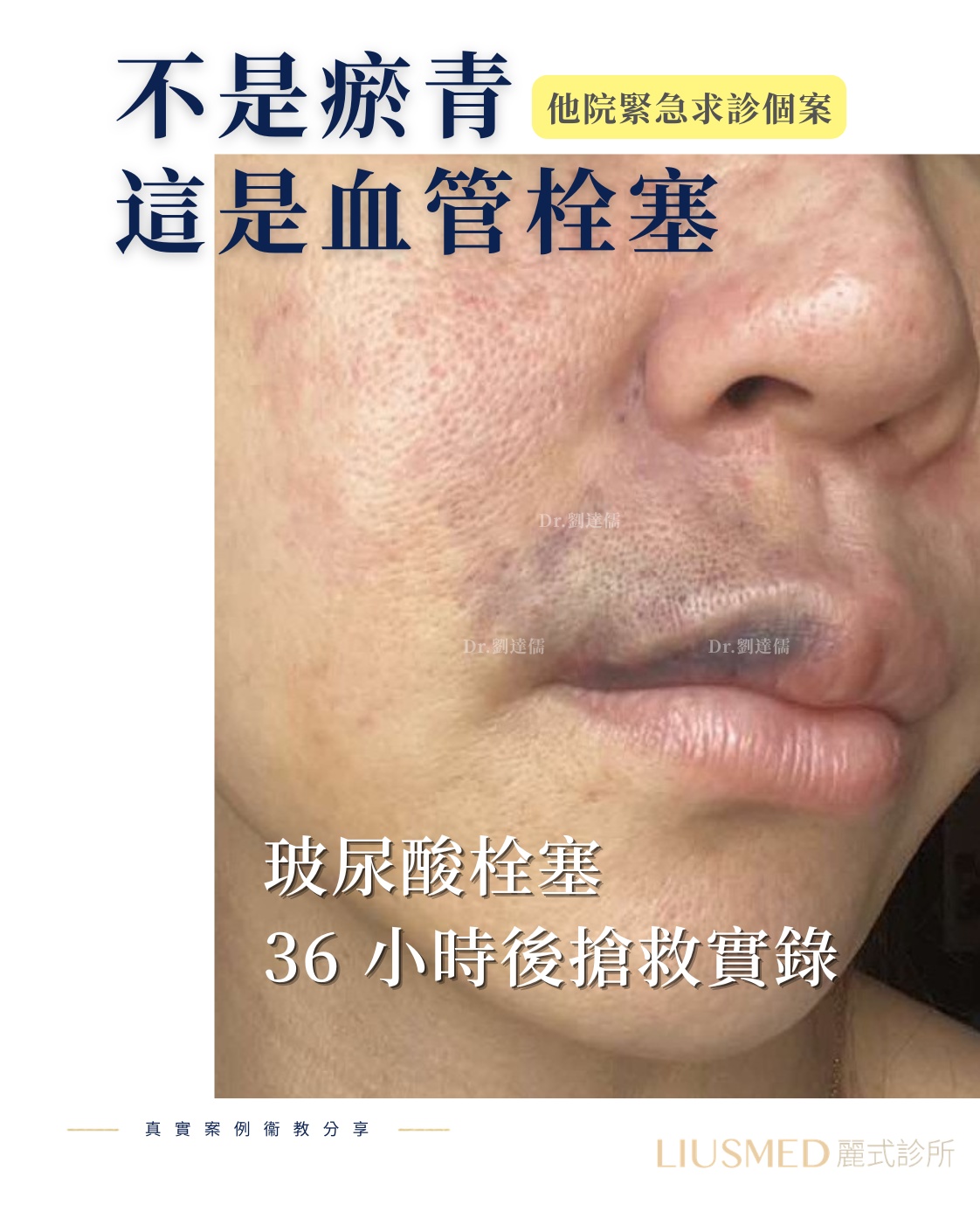
- Pigmented type with filler: The colour won't improve (because the problem isn't a hollow), but with product placed in this extremely thin layer of under-eye tissue, it tends to create a sense of puffiness — even pseudo eye-bags. The darkness stays unsolved, and you've added a swelling problem on top.
- Vascular type with too much, too superficial: Hyaluronic acid is semi-translucent; injected under very thin under-eye skin and placed too superficially, it casts a bluish tone (the Tyndall effect), making the original bluish-purple look even more obvious.
- Structural type, overfilled: This is the one type that genuinely suits filler, but the tear trough is extremely thin — an excess of 0.1 millilitres can turn "levelling the hollow" into "bulging out a lump," manufacturing new puffiness instead.
Key takeaway: With dark circles, the hard part isn't "getting the product in" — it's "first confirming the direction is right." If you're predominantly pigmented, the right answer may lie in sun protection, pigment-lightening, or laser, not filler; if you're predominantly vascular, what filler can do is very limited. Getting the indication clear comes before technique — and matters more.
If you've already had filler and you're not happy
Many people "inject first, then come to ask." If you've already had hyaluronic acid in the tear trough or under-eye but the dark circles haven't improved — or the under-eye has become puffy or blue — the next step isn't more injecting, but stepping back first:
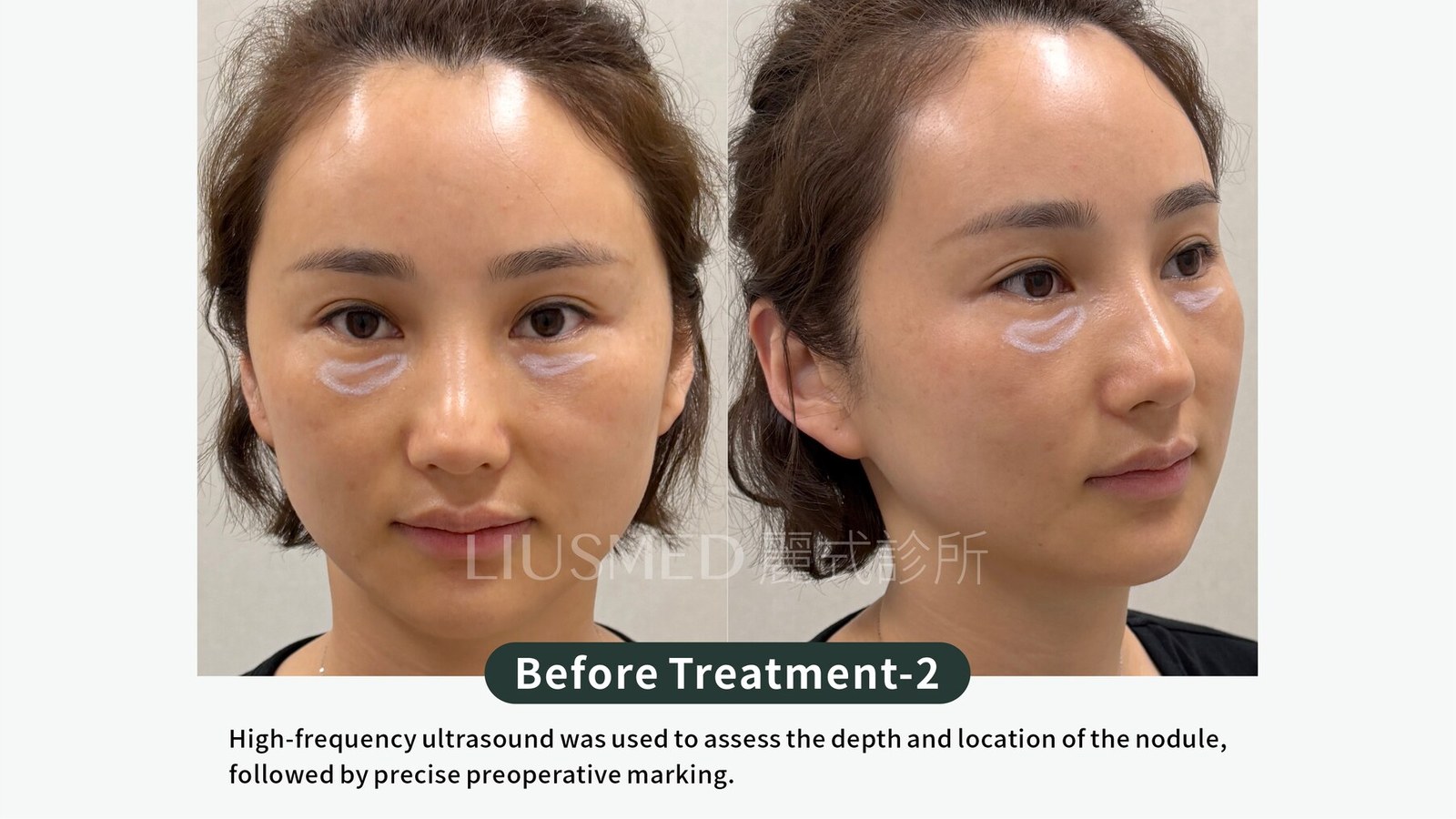
- Get an ultrasound first, to see clearly how much product is under the eye, in which layer, and whether it has migrated or absorbed water.
- Reassess the type: was your dark circle actually unsuited to filler in the first place?
- Decide dissolve or extract: if it's hyaluronic acid that hasn't yet encapsulated, dissolving can be assessed (hyaluronidase, used only after in-person physician assessment); if it has encapsulated or can't be dissolved cleanly, go with ultrasound-guided extraction. The full "dissolve or extract" judgement is laid out in the under-eye filler decision map.
For the overall direction of under-eye repair, you can also look at the sister site "minimal-cut extraction" overview of peri-orbital filler complications and repair.
If you're unsure which type your dark circles are, or you've already injected and it's gone increasingly wrong, you're welcome to use an online case-by-case assessment or book an in-person consultation to confirm the direction first, then decide on the next step.
Frequently asked questions
Does HA filler actually work for dark circles?
It depends on your type. Only the "structural" type — where there really is a tear-trough hollow casting a shadow — is suited to improvement with a small amount of filler. The pigmented type (colour deposition) and the vascular type (thin skin with show-through vessels) get very limited help from filler, because they are colour problems, not hollow problems. Telling the types apart before injecting matters more than just injecting.
I had tear-trough filler and the dark circles didn't improve but got puffier — what now?
This commonly happens when pigmented or vascular dark circles are injected as if they were structural. We suggest first getting an ultrasound to see the product distribution under the eye clearly, and reconfirming whether your dark circles were ever suited to filler. If it's hyaluronic acid that hasn't yet encapsulated, dissolving can be assessed; if it has encapsulated or can't be dissolved cleanly, go with ultrasound-guided physical extraction rather than more injecting.
If dark circles aren't suited to filler, what other directions are there?
For the pigmented type, the direction usually leans towards sun protection, pigment-lightening, and laser and other dermatological treatments; the vascular type relates to skin thickness and circulation, and what filler can improve is limited. The key is to first confirm which type your dark circles are predominantly — this needs in-person evaluation and, where necessary, ultrasound to help judge, rather than solving everything with filler.