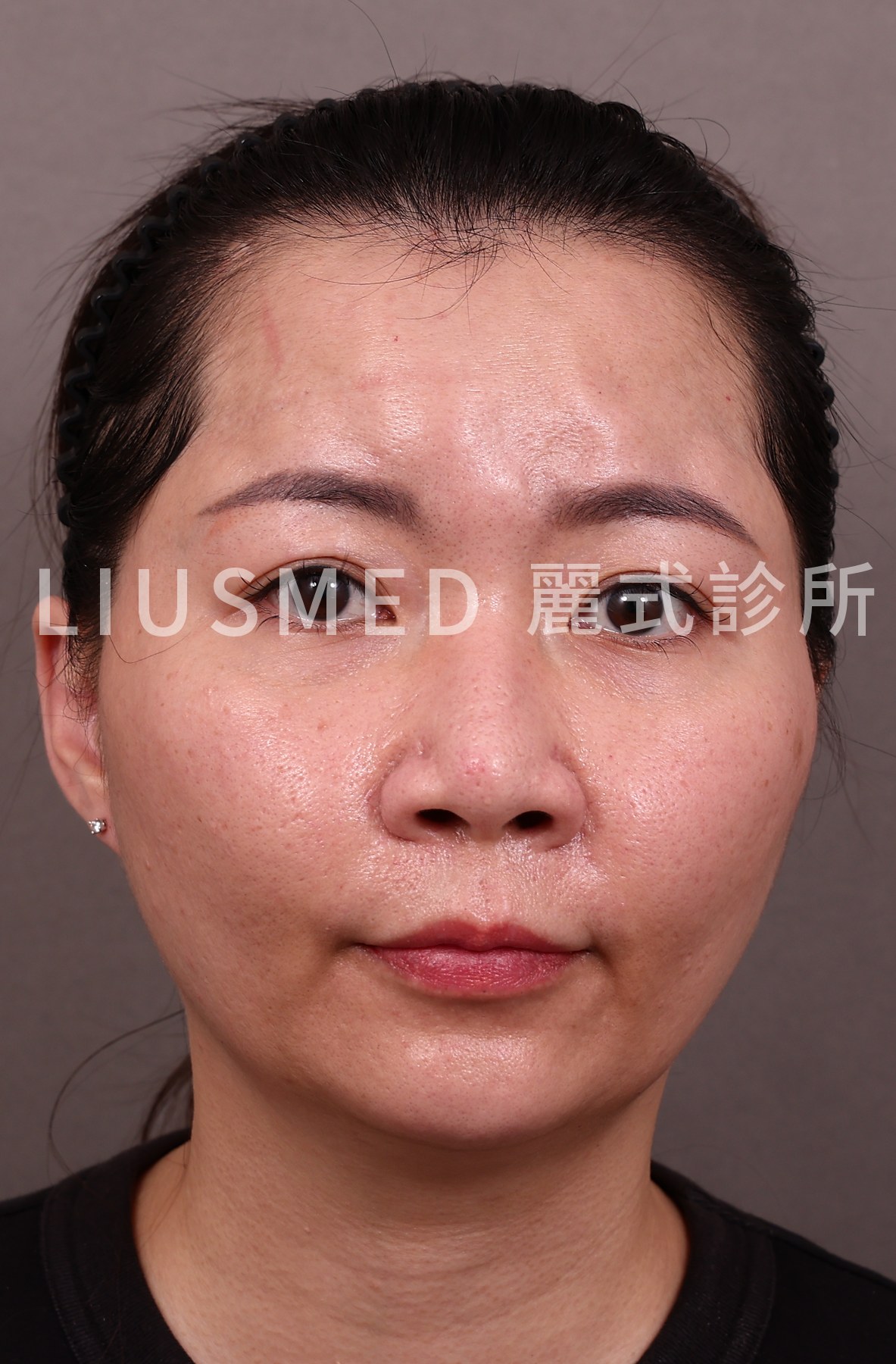
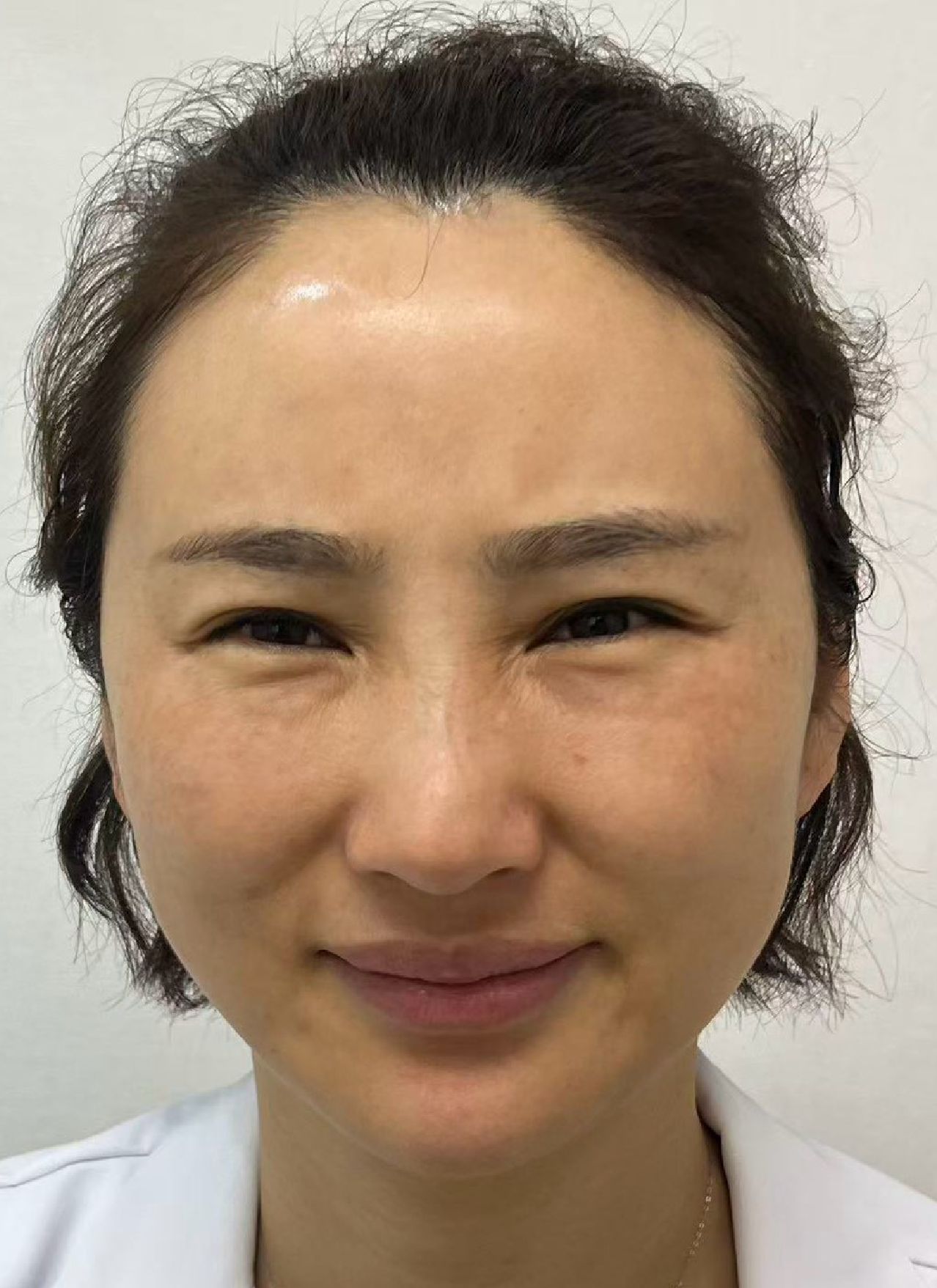
The first thing some people say when they come to me isn't about their cheeks at all — it's about their nasolabial folds.
"Doctor, I came in to soften my nasolabial folds. The clinic said filling the cheeks would lift the face and the folds would flatten out. But my cheeks kept getting bigger and bigger, and the folds... actually look deeper now?"
I hear this a lot. "Use cheek filler to fix the nasolabial folds" has been a popular pitch for years: raise the cheek, lift the face, pull the fold flat. It sounds reasonable — but after years of doing filler revision, I have to be honest: "cheek filler to fix nasolabial folds" is often a false premise. And it's not just that it doesn't work; it can leave you filling more and more, until the folds look deeper and the whole cheek can't go back.
This article does two things. First, it explains clearly why cheek filler so often makes the nasolabial folds look deeper. Second — and this is the part almost no one covers — if you've already gotten to this point, how to walk it back.
Key takeaway: The nasolabial fold isn't something you fix "indirectly" by propping up the cheek above it. It's a separate, deep hollow. Raise the cheek higher and you usually just widen the height difference between cheek and fold — so the fold looks deeper, not shallower.
Why "cheek filler to fix nasolabial folds" often makes them deeper
Using cheek filler to improve the folds is, at heart, an indirect lift: instead of treating the fold itself, you try to prop up the cheek above it, push the whole sheet of tissue upward, and flatten the fold along the way. The trouble is in that word — indirect.
1. To get a noticeable lift, the volume is never small
To get a genuinely noticeable lift from propping up the cheek, the volume is never small. Many people are drawn in by "a tiny bit gives a big lift," but that "a little goes a long way" effect is usually just temporary swelling after the injection. Once it settles, it snaps right back to where it started. So you think you didn't use enough, and top up; it settles again; back and forth, and the volume just stacks higher and higher.
2. Use a lot, and the odds of stiff, pillow-face heaviness climb
So why not just use more? Because once you overfill the cheek, the chance of that stiff, puffy, pillow-face heaviness gets very high. The cheek has a lot of space and takes a great deal of product, so by the time you notice "why does it puff up when I smile, why is it wider from the front," you've usually stacked several syringes already. I lay out that whole picture in how to fix an overfilled cheek: the dissolve-vs-remove decision map.
3. Raise the cheek, and the fold looks deeper
This is the most important — and most crushing — point.
The nasolabial fold is a deep crease, and some people are born especially deep there. When you raise the cheek above it higher and fuller, the height difference between the top of the cheek and the floor of the fold grows. The hollow itself didn't get shallower, but the area beside it got taller — so visually, the crease looks more obvious, deeper.
That's exactly how it goes for a lot of people: the harder they try to rescue the fold through the cheek, the more "off" it feels. The fold isn't rescued, and the cheek just keeps getting heavier. That's often where "the more I fill, the worse it looks" begins.
Key takeaway: A little for a big lift is mostly temporary swelling; a noticeable result needs a lot of volume; a lot of volume invites pillow-face heaviness; and a raised cheek makes a deep fold look deeper. All three roads end at the same place — heavier and heavier.
How you got "heavier and heavier": a problem of structure, not volume
Beyond the "swelling settles, top up again" cycle above, there's a deeper structural reason a cheek keeps getting heavier.
The cheek has two defining features. First, it has a lot of space — you can pack 10, 20 syringes in, so it's easy to stack more and more without noticing. Second, it holds a structure called the zygomatic ligament (a tough band that anchors the skin to the cheekbone) — firm and tight. Many people fill aiming at the mid-cheek groove (often called the "Indian line") or the nasolabial fold, and the material injected often can't level it — it just gets squeezed off to the sides by that tight band. So you keep adding volume; the hollow is still hollow, but the whole cheek beside it has puffed up.
Add that hyaluronic acid (HA) draws water and slowly spreads outward over time, and the whole cheek gets wider and blunter. For more on how material moves and migrates, see why filler migrates and drifts downward.
This matters because it decides your revision direction: if the root cause is structure and position, then "adding a bit more" or "dissolving a bit and refilling" is usually just going in circles.
Key takeaway: A cheek getting heavier usually isn't underfilling — it's a big space, a tight ligament squeezing material aside, plus water-drawing and spread. The structure decided where it went.
Our revision turn: you're already here — how to walk it back
Almost all the public education on "cheek filler for nasolabial folds" stops at prevention: how to layer, how to use small amounts, how not to overdo it. That matters, of course (for the early warning signs, see the early signs of overfilling and when to scale back). But for someone whose cheek is already too heavy and whose folds already look deeper, prevention alone is no help — what you need is how to go back.
That's exactly what we do in clinic every day. The order back usually goes like this:
Step 1: see it clearly on ultrasound first. Before touching anything, high-frequency ultrasound shows exactly how much material is in your cheek, where it has gone, whether the ligament has squeezed it into ridges, whether there are encapsulated lumps, and its relationship to branches of the facial nerve and the vessels. See clearly first, and every step after is safer and more precise. To start taking stock of what's in your cheek and whether going back suits you, the dissolve-vs-remove decision map is a good place to begin.
Step 2: reduce and remove the excess and migrated material. Once it's clear, the direction is obvious: the lump squeezed off to the side, sitting where it shouldn't, comes out through a very small entry point under ultrasound guidance; the over-inflated sheet is reduced back down. For the detail of how to make an overfilled cheek lighter again, our sister site for minimal-cut removal has a dedicated piece: how to reduce an overfilled mid-face back to light.
One honest note: removal is not "guaranteed 100% clearance." If the HA has already encapsulated, or is still there after repeated rounds of hyaluronidase (the enzyme that breaks down HA; it should only be used after an in-person physician assessment), how much can be removed varies by material, time, and degree of adhesion. The first session usually removes about 30–50%; with most fillers, two to three sessions can reach about 80–90%. It is not 100%, and it varies from person to person. The goal is as much improvement as can be achieved safely, and a return to natural contours. And flooding tissue with the enzyme has a cost of its own: in an article from the American Society of Plastic Surgeons (ASPS), plastic surgeon Richard Reish cautions that it "can cause damage to the surrounding tissues." So our approach isn't to keep adding more enzyme — it's to see clearly first, then remove precisely what should come out.
And if what you were injected with wasn't HA at all but a collagen biostimulator (Ellansé / PCL, AestheFill / PDLLA and the like), even the enzyme won't help — those have no antidote and can only be physically removed, and the nodules they form rarely resolve on their own (in a Brazilian series of 55 cases, only 9.1% of such complications resolved completely even with treatment).
Key takeaway: Going back isn't another injection — it's seeing clearly first, then reducing the excess and migrated material precisely. How much can be removed depends on fibrosis and adhesion — usually about 80–90% over two to three sessions, and 100% is not guaranteed; what we aim for is removing it cleanly and evenly within safe limits, leaving no new dips or bumps.
So what about the fold itself?
At this point you might ask: "So do I just ignore the hollow of my fold?"
Of course not — but you treat it directly, instead of detouring through the cheek. The nasolabial fold is a separate hollow, and its cause varies: in some it's mid-face tissue descending and bunching above it; in some it's soft-tissue loss beside the upper lip; in some it's bone structure and dynamic expression. Each calls for a different direction.
The point is: assess the fold as the fold itself, not as a by-product of "the cheek isn't high enough." Propping up the cheek to "incidentally" soften the fold often costs you the cheek without rescuing the fold. The more sensible order is to use ultrasound first to tell apart — is your cheek already overfilled? Which kind of cause is the fold? — and only then decide whether the cheek should be reduced or the fold itself should be treated appropriately.
As for the part of the cheek that genuinely needs support — if it's a mid-cheek-groove hollow or insufficient cheek support, one tool I consider better-suited here is a structural thread lift: it acts like a "filler that won't migrate," placed precisely across the layers under the skin to build a kind of 3D-printed support — far steadier than packing mobile material into a space that will only push it aside. For tightening or modestly reducing the whole area, options like radiofrequency tightening (such as Thermage) can be assessed — but these take considerable experience to control and are not a "one injection" fix.
How to treat the fold itself is really its own subject — why soft filler (HA) often won't hold, why firm filler (collagen stimulators) clumps so readily around the mouth, and why it dips again a week or two later because the filler has migrated. These carry on the "support that won't migrate" thinking here; our sister site for minimal-cut removal has a by-area section devoted to exactly this: nasolabial filler problems and revision — an overview, including the soft-won't-hold vs firm-clumps dilemma and it dipped again: migration and ultrasound-guided removal.
Key takeaway: The fold's hollow is its own problem — assess and treat it directly. Reduce what the cheek needs reduced; support what needs support with something that doesn't migrate. Separate the two, and the direction comes right.
Why ultrasound guidance, and why safety comes first
The cheek and lateral face are a danger zone dense with nerves and vessels, with a relatively high risk of vascular complications. So whether reducing, removing, or dealing with the migrated lump, what we fear most is blind suction or blind scraping.
Our principle is "you can only treat safely what you can see": before anything, high-frequency ultrasound maps the residue's position, depth and extent, and its relationship to branches of the facial nerve, the vessels, and the parotid (the salivary gland below the ear); then the material is removed through a very small entry point under image guidance. The whole procedure uses local anesthesia plus gentle pain-relief anesthesia, so doctor and patient can talk in real time and pause to adjust at any point. That's where filler revision matters most — not who dares to inject or suction hardest, but who sees clearly first.
If your cheek has been refilled into pillow-face heaviness, the approach to pillow-face revision is also worth reading alongside this.
Frequently asked questions
Q: Does cheek filler actually fix nasolabial folds? A: Often the effect is limited, even the opposite. Filling the cheeks to soften the folds is an indirect lift, so a noticeable result needs a fair amount of volume; and once the cheek is raised, the height difference against a deep fold becomes more obvious, so the fold often looks deeper. Better to assess the cause of the fold itself than to keep adding to the cheek.
Q: Why do my nasolabial folds look deeper after cheek filler? A: Because the fold is a deep hollow. Raise the cheek above it and the hollow doesn't get shallower while the area beside it gets taller — the height difference widens, so the crease looks deeper. It isn't an illusion; it's structural.
Q: I've already filled more and more — can it be walked back? A: Yes, you can go back. The order is to see clearly on ultrasound first — how much material is in the cheek, where it went, whether it has migrated or formed lumps — then precisely reduce and remove the excess and migrated parts. How much can be removed varies by material, time, and adhesion. The first session usually removes about 30–50%; with most fillers, two to three sessions can reach about 80–90%. It is not 100%, and it varies from person to person. We aim to remove it cleanly and evenly within safe limits.
Q: If I just dissolve the cheek HA, will the fold get better? A: Not necessarily, and take care. If the cheek HA has already encapsulated, the enzyme often won't dissolve it cleanly, and repeated flooding can damage surrounding tissue. More importantly, the fold's hollow is a separate problem — dissolving the cheek doesn't mean the fold gets shallower. What to choose should be decided after seeing it clearly on ultrasound.
Q: What if I wasn't injected with HA, but with a collagen biostimulator? A: Then the enzyme won't help either — biostimulators have no antidote and can only be physically removed, and the nodules they form rarely resolve on their own. In that case it's all the more important to confirm position and extent on ultrasound first, then assess removal.
In closing: tell the two apart first, then decide how to treat
"Does cheek filler fix nasolabial folds" doesn't have a one-line "yes" or "no." It starts with separating two things: is your cheek already overfilled? And which kind of cause is the fold?
If you, too, went in for your folds and ended up heavier and heavier with folds that look deeper — the first step isn't another injection, nor rushing a dissolving syringe, but to see it clearly first. You're welcome to use an online case-by-case assessment or book an in-person consultation, where Dr. Ta-Ju Liu can help confirm, with ultrasound, what is actually in your cheek, which kind of hollow your fold is, and the most suitable way back.
References
- Frankeny A. Dissolving vs. removing fillers in the nose prior to rhinoplasty. American Society of Plastic Surgeons (ASPS) — featuring Richard Reish, MD, FACS. https://www.plasticsurgery.org/news/articles/dissolving-vs-removing-fillers-in-the-nose-prior-to-rhinoplasty
- Ianhez M, de Goés E Silva Freire G, Sigrist RMS, et al. Complications of collagen biostimulators in Brazil: Description of products, treatments, and evolution of 55 cases. J Cosmet Dermatol. 2024;23(9):2829-2835. PMID: 38693639. DOI: 10.1111/jocd.16343 (Of 55 cases: lumps 89.1%, complete resolution only 9.1%, delayed onset 60%.)
Editorial note: This article is educational information, not individual medical advice. Judging the cheek and the nasolabial fold, and whether to reduce or remove, must be decided case by case after an in-person physician assessment and ultrasound evaluation. Actual treatment and results vary from person to person.