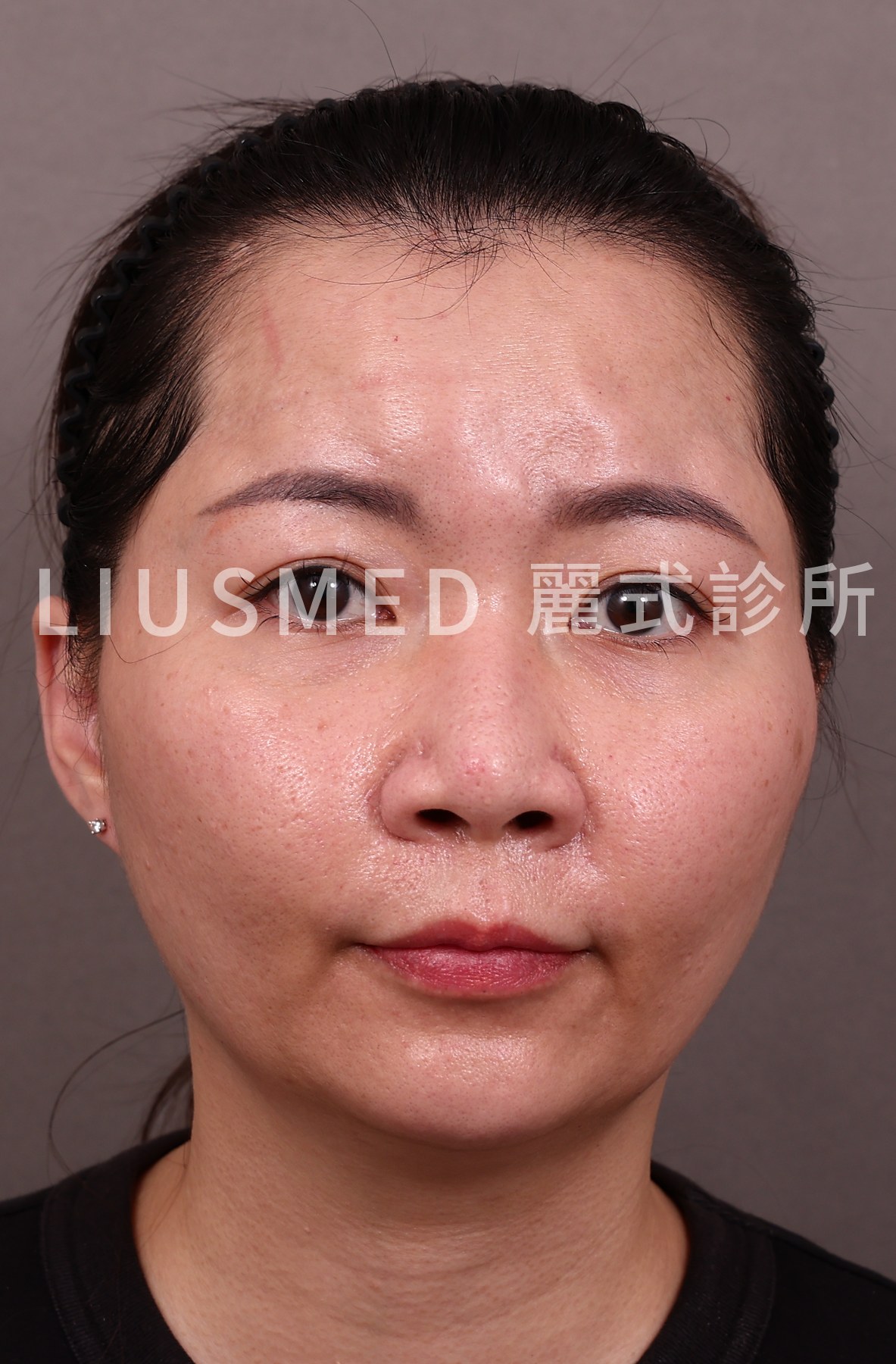
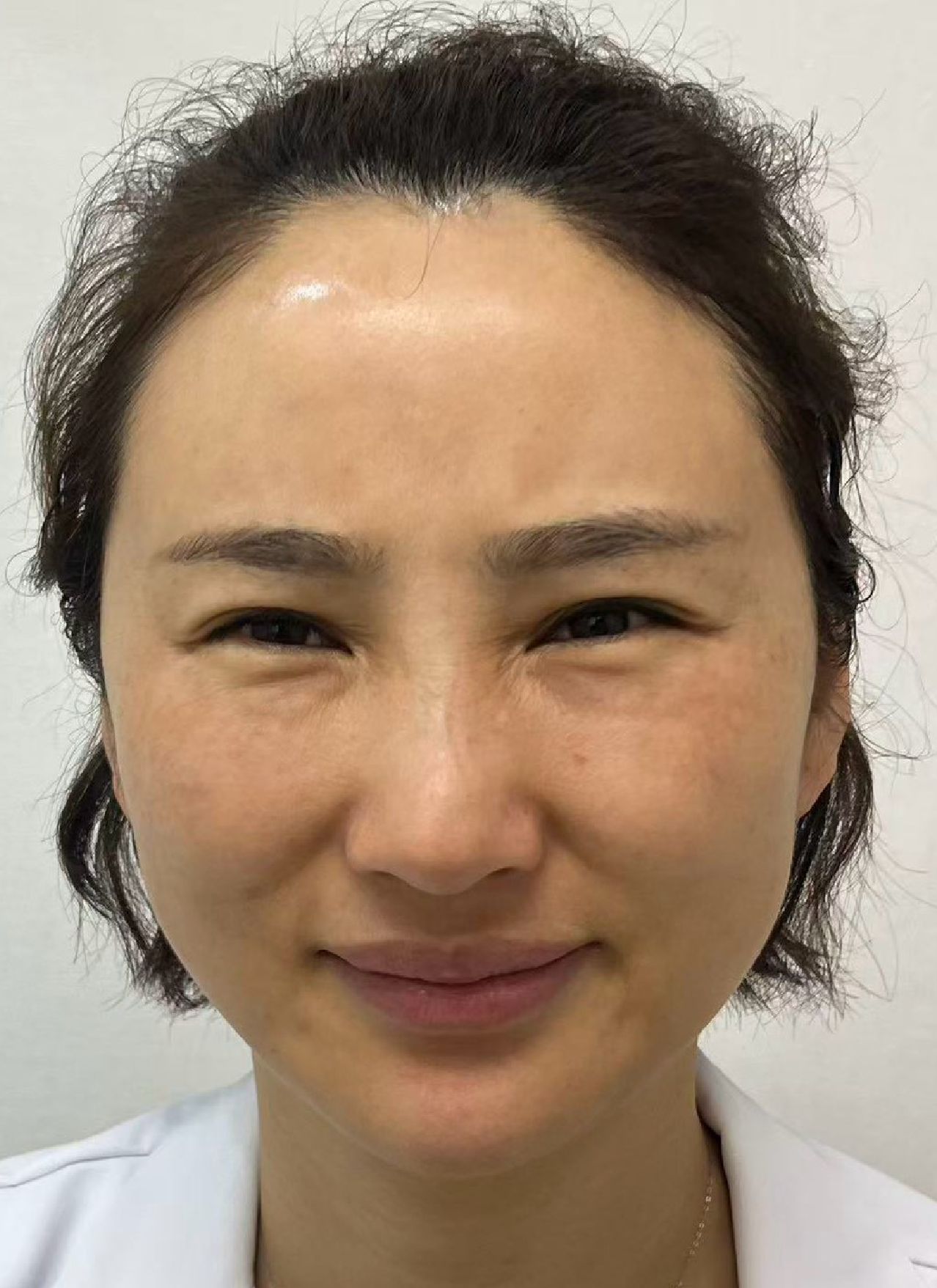
There's a kind of cheek I see in clinic that isn't quite the "too much, firm and bulging" type. It isn't a hard lump — it's puffy, soft, a little watery when you press it. People describe it as looking heavy or "pillowy," or say the cheek feels like it's holding a small water balloon that just won't go down. Some have been swollen for weeks after a hyaluronic acid injection; some dissolved it once, twice, three times, and the swelling keeps coming back.
Let me set the boundary first, because it matters: this article is about persistent swelling over the mid-cheek and the malar region — the area over the cheekbone. In medicine this is called malar edema (swelling of the cheek), and when it sags into a soft bag it's called a festoon (a pouch formed by lax skin and muscle). This is a different area, with a different logic, from the under-eye bag, tear trough, or dark circles just below the eye — none of which this article covers. If your concern sits directly under the eye, that's the eye region, not the mid-cheek this piece is about.
With the area pinned down, the most frustrating question comes into focus: why are your cheeks still swollen after filler, and why does the swelling persist even after repeated dissolving?
This article aims to break "puffy cheeks" down in plain terms: what they actually are, why repeated dissolving so often does nothing, and how to see clearly before anyone touches them. After years of doing cheek revision, my deepest takeaway is still the same — a cheek is rarely a pure question of volume; it's usually a question of structure and position. See clearly first, then decide how to treat.
What are puffy "pillow" cheeks? Not a hard lump — a swelling that won't go down
People often blur two different cheek situations together. One is a hard lump — a solid, fairly well-defined mass you can feel, usually the material itself (HA clumped together, or a collagen-biostimulator nodule). The other is the one this article is about — swelling — a whole area that's soft, puffy, slow to spring back when pressed, with fuzzy edges, worse in the morning, worse when you're tired or have had a lot of fluids.
Puffy cheeks are mostly the second kind. They aren't simply "a blob stuck in there" — they're a state of persistent soft-tissue swelling. Why is the cheek so prone to this? It comes down to two properties of hyaluronic acid, plus the anatomy of the cheek:
- HA draws water. It creates volume precisely by holding onto water. Injected and topped up repeatedly in the cheek — a space that holds a lot — it pulls in more and more water, and the whole area looks puffy and blunted.
- Filler physically blocks lymphatic drainage. The mid-cheek has set pathways that drain lymph and tissue fluid. When material piles up in the wrong layers and spreads out, it's like building a dam across that drainage route — fluid can't get out, so it pools in the cheek as swelling that won't go down. This is why some people are told "there's barely any product left" yet the cheek is still swollen. The mid-cheek also has a relatively impermeable membrane running across it (the malar septum); one study on recurrent post-HA edema notes that when filler compromises lymphatic drainage, tissue fluid clears more slowly and tends to pool above this barrier — part of why malar edema is considered an underreported, poorly understood complication.
In other words, puffy cheeks are usually the result of material plus water plus trapped tissue fluid, layered together. Think only about "how much product" and you'll stay confused: I already dissolved it — why is it still swollen?
Key takeaway: Puffy "pillow" cheeks aren't a single hard lump — they're a state of persistent swelling. HA draws water, and filler blocks lymphatic drainage, so tissue fluid pools in the cheek and can't escape. So the fix is never as simple as "just dissolve the material."
Why do the cheeks stay swollen even after repeated dissolving?
This is the most maddening part of puffy cheeks: you followed the logic — "HA, so dissolve it with the enzyme" — dissolved it again and again, and the swelling is still there. There are three reasons, and they often coexist.
1. A thick capsule keeps the enzyme out
The enzyme hyaluronidase (which breaks down HA; it should only be used after an in-person physician assessment) can only act on the HA gel it actually touches. Cheeks refilled repeatedly, in large volumes, often get walled off by a thicker fibrous capsule (encapsulation). Most of the material inside is shielded; the enzyme goes in but can't reach the core — so it can't dissolve cleanly. That's why some people get dissolved several times and the swollen area is still right there.
2. The swelling isn't only about "how much material"
This is the most important point, and the one most often missed. The enzyme can act on "the HA material," but it can't unblock lymphatic drainage that's already obstructed, and it can't undo the reactive swelling of tissue that's been irritated over and over. When your puffy cheek is mostly fluid and only a little leftover material, chasing the material with more enzyme leaves the swollen part exactly where it is — because what you're dissolving is "material," while what's swollen is "fluid and tissue reaction." Think only about dissolving material, and you'll keep injecting and keep being disappointed.
3. Repeated dissolving has a cost
What many people don't realize is that injecting the enzyme over and over isn't a harmless "if it didn't work, just do it again" move. In an article from the American Society of Plastic Surgeons (ASPS), plastic surgeon Richard Reish cautions that flooding tissue with the enzyme "can cause damage to the surrounding tissues." Tissue that's irritated and injured repeatedly can make swelling harder to settle, not easier. So the common ending is: dissolving fails again and again, the tissue takes damage, and the puffiness is still there — more exhausting each round, with the problem unsolved.
Key takeaway: Repeated dissolving so often does nothing not because "the enzyme isn't strong enough," but because the nature of the problem has been misread. The enzyme dissolves material, but much of a puffy cheek's swelling comes from blocked lymphatic drainage and reactive tissue swelling — neither of which more syringes of enzyme will fix, and which repeated irritation may actually worsen.
Swelling? Leftover filler? Or a festoon from tissue laxity? — only ultrasound tells them apart
By now you can see that "puffy cheeks" may sit on top of several completely different situations layered together, and their treatment directions are completely different:
- Mostly swelling: little material left, mainly water plus tissue fluid trapped by blocked drainage — the point is to relieve the obstruction and reduce irritation.
- Mostly leftover material: encapsulated HA still holding things up inside, or material squeezed off to the side into a lump — the point is to remove the excess precisely.
- Mostly tissue laxity (festoon): a bag formed by lax skin and the muscle beneath it sagging down — not "something stuffed inside." Here, dissolving and removing get you nowhere, because what it needs is support and tightening, not reduction.
You can't reliably tell these three apart by feel, by eye, or by opinion; what can tell them apart is ultrasound. Only ultrasound shows the position of filler and lumps, which layer they sit in, their relationship to tendons and ligaments, and the thickness of the soft tissue itself. Once it's clearly imaged, the direction becomes clear — whether to relieve obstruction, remove material, or address laxity.
This also connects to a deeper structural feature of the cheek: the zygomatic ligament (a band that anchors the skin to the cheekbone) is one of the firmest, tightest ligaments in the face. Migrating filler often gets squeezed off to the side by this tight band, piling up where it shouldn't — and besides affecting appearance, that lump can sit right on the lymphatic drainage route, making the swelling even harder to settle. So "the swelling" and "where the material got squeezed to" are often two sides of the same structural problem — which is why fixing puffy cheeks means seeing the whole mid-cheek clearly, not just staring at the puffiest spot.
Key takeaway: Underneath "puffy cheeks" you may find swelling, leftover material, and tissue laxity, layered together — with completely different treatment directions. Telling them apart relies not on hard pressing and guessing but on ultrasound, to see position, layer, and thickness — so that laxity doesn't get treated as "material" and dissolved and removed over and over.
How to handle it: see clearly first, then decide — tighten, remove, or relieve obstruction
Pulling the above together, there's a clear order to handling puffy cheeks:
The first step is always to "see clearly." Before anyone touches it, high-frequency ultrasound maps this part of the mid-cheek: how much material is left, in which layer, where it's been squeezed to, whether it's pressing on lymphatic drainage; how much of it is swelling; whether there's already a component of tissue laxity. This step sets every direction that follows — because swelling, material, and laxity each call for completely different handling.
When excess material should come out, remove it precisely. If imaging shows the root of the swelling is encapsulated HA still holding up inside, or material squeezed off to the side and pressing on the drainage route — then continuing with the enzyme is usually going in circles, and ultrasound-guided precise removal of the excess material is more direct. Take that lump out, relieve the physical obstruction to lymphatic drainage, and the swelling finally has a chance to truly settle. For the details of physical removal when a filler won't dissolve, our sister site for minimal-cut removal has a dedicated piece: removing non-HA, encapsulated cheek filler.
Safety always comes first. The cheek and lateral face are a danger zone dense with nerves and vessels, and close to the parotid gland (the salivary gland below the ear). So whether removing material or addressing swelling, what we fear most is blind suction or blind scraping. Our approach is "you can only treat safely what you can see": ultrasound first maps the relationship of residue to the important structures, then the work is done through a very small entry point under image guidance, the whole procedure under local anesthesia plus gentle pain-relief anesthesia, so doctor and patient can talk in real time and pause to adjust at any point.
One thing I'll always be honest about: because long-term residue can adhere to tissue, removal is usually done in stages — the first session typically takes out about 30–50%, and two or three sessions usually remove about 80–90%, not a guaranteed 100%. What we aim for isn't just "getting the stuff out," but removing it cleanly and evenly — clearing the excess while keeping the tissue planes smooth, with no new dips or bumps.
To first confirm what's actually in your cheek — swelling or material — and which route suits you, you can start with a full-face ultrasound filler audit, or read about the approach to pillow-face revision. If your situation is more complex and you're unsure whether to dissolve or remove, the full decision map is here: overfilled cheeks — dissolve vs. remove.
Frequently asked questions
Q: My cheeks are still swollen after filler — is that just normal recovery swelling? A: Swelling for a few days after injection is normal and usually settles noticeably within a week or two. But if it's been weeks or even months and the cheek is still puffy — soft, watery when pressed, worse in the morning — that's no longer simple recovery; it looks more like persistent malar edema (cheek swelling), often tied to HA drawing water plus filler blocking lymphatic drainage. For that kind of swelling, it's worth using ultrasound to see the cause clearly rather than waiting for it to go down on its own.
Q: I've dissolved it several times and my cheeks are still swollen — why? A: Usually three reasons coexist: one, a thick capsule has formed around it, keeping the enzyme out so it can't reach the core material; two, the swelling isn't only about material — it includes blocked lymphatic drainage and reactive tissue swelling, which the enzyme can't address; three, repeatedly flooding tissue with enzyme can itself damage surrounding tissue and make swelling harder to settle. So chasing the material with more dissolving often won't fix the swelling.
Q: Are puffy "pillow" cheeks the same thing as under-eye bags? A: No. This article is about swelling and laxity over the mid-cheek and cheekbone (malar edema / festoon), which is a different area with a different logic from the under-eye bag, tear trough, or dark circles just below the eye. If your concern sits directly under the eye, that belongs to the eye region and isn't covered here. Tell apart which area it is first, and the direction follows.
Q: How do I know if my cheek is swelling, leftover material, or tissue laxity? A: Ultrasound. Only ultrasound tells apart the position of filler and lumps, which layer they're in, their relationship to tendons and ligaments, and the thickness of the soft tissue. A cheek that's mostly swelling, mostly leftover material, or mostly laxity calls for completely different directions — see clearly first, so laxity isn't treated as "material" and dissolved and removed again and again.
Q: If material blocking the lymphatics is what's causing the swelling, will removing it make the swelling go down? A: When the root of the swelling really is encapsulated or squeezed-aside material pressing on the drainage route, ultrasound-guided precise removal of the excess and relief of the obstruction usually gives the swelling a real chance to settle. But everyone's different — the balance of swelling, material, and laxity varies — so actual results depend on individual assessment. To be honest about it: we don't say "guaranteed 100%"; removal is usually staged — about 30–50% the first time and about 80–90% over two or three sessions — depending on fibrosis and adhesion.
In closing: see clearly first, then decide how to treat
When cheeks "stay swollen and won't go down," the real answer is never "just a few more syringes of enzyme." Underneath puffy cheeks there may be water-laden HA, blocked lymphatic drainage, material squeezed off to the side pressing on the drainage route, or tissue that has already sagged loose — layered together, each calling for completely different handling. Keep chasing "the material" to dissolve, while what's dissolving isn't the true source of "the swelling," and of course you'll keep being disappointed.
If you, too, are carrying a cheek that's been puffy for weeks, soft and squishy, still not gone after several rounds of dissolving — the first step isn't to rush another syringe, but to see it clearly first: is it swelling, material, or laxity? You're welcome to use an online case-by-case assessment or book an in-person consultation, where Dr. Ta-Ju Liu can help confirm with ultrasound what is actually in your cheek and the most suitable way to treat it. Where physical removal is relevant, see our filler revision service.
References
- Frankeny A. Dissolving vs. removing fillers in the nose prior to rhinoplasty. American Society of Plastic Surgeons (ASPS) — featuring Richard Reish, MD, FACS. https://www.plasticsurgery.org/news/articles/dissolving-vs-removing-fillers-in-the-nose-prior-to-rhinoplasty
- Karlin J, Vranis N, Dayan E, Parsa K. Post-Hyaluronic Acid Recurrent Eyelid Edema: Pathophysiologic Mechanisms and a Proposed Treatment Protocol. Aesthetic Surgery Journal Open Forum. 2023;5:ojad102. (Describes the malar septum as a relatively impermeable barrier that traps tissue fluid, and notes that compromised lymphatic drainage from HA filler slows interstitial fluid clearance; frames malar edema as an underreported, poorly understood complication.) https://pmc.ncbi.nlm.nih.gov/articles/PMC11140515/
Editorial note: This article is educational information, not individual medical advice. Identifying the cause of cheek swelling and choosing between dissolving and removal must be decided case by case after an in-person physician assessment and ultrasound evaluation. Actual treatment and results vary from person to person.