Why "it was flat on the day" is not an answer
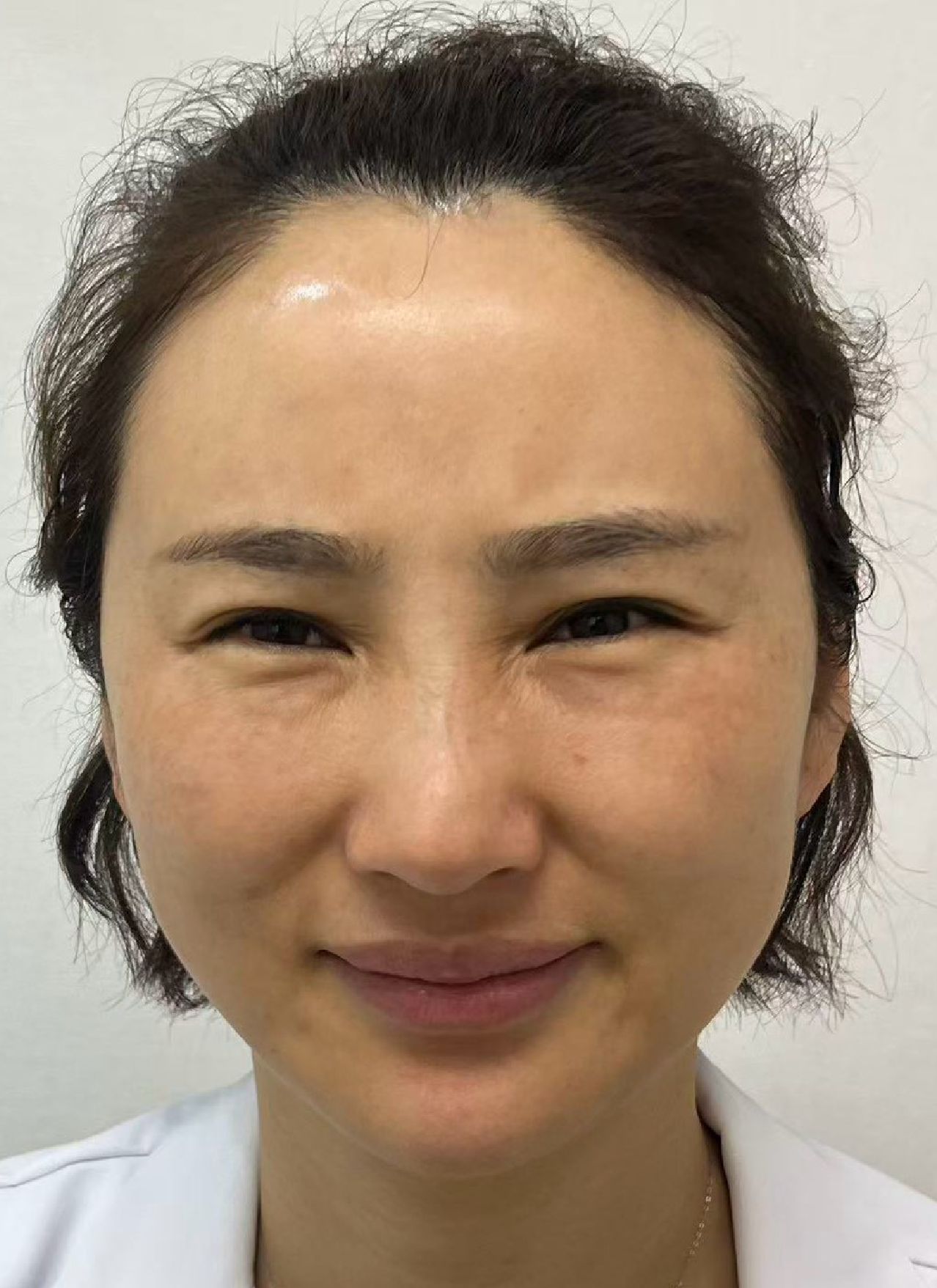
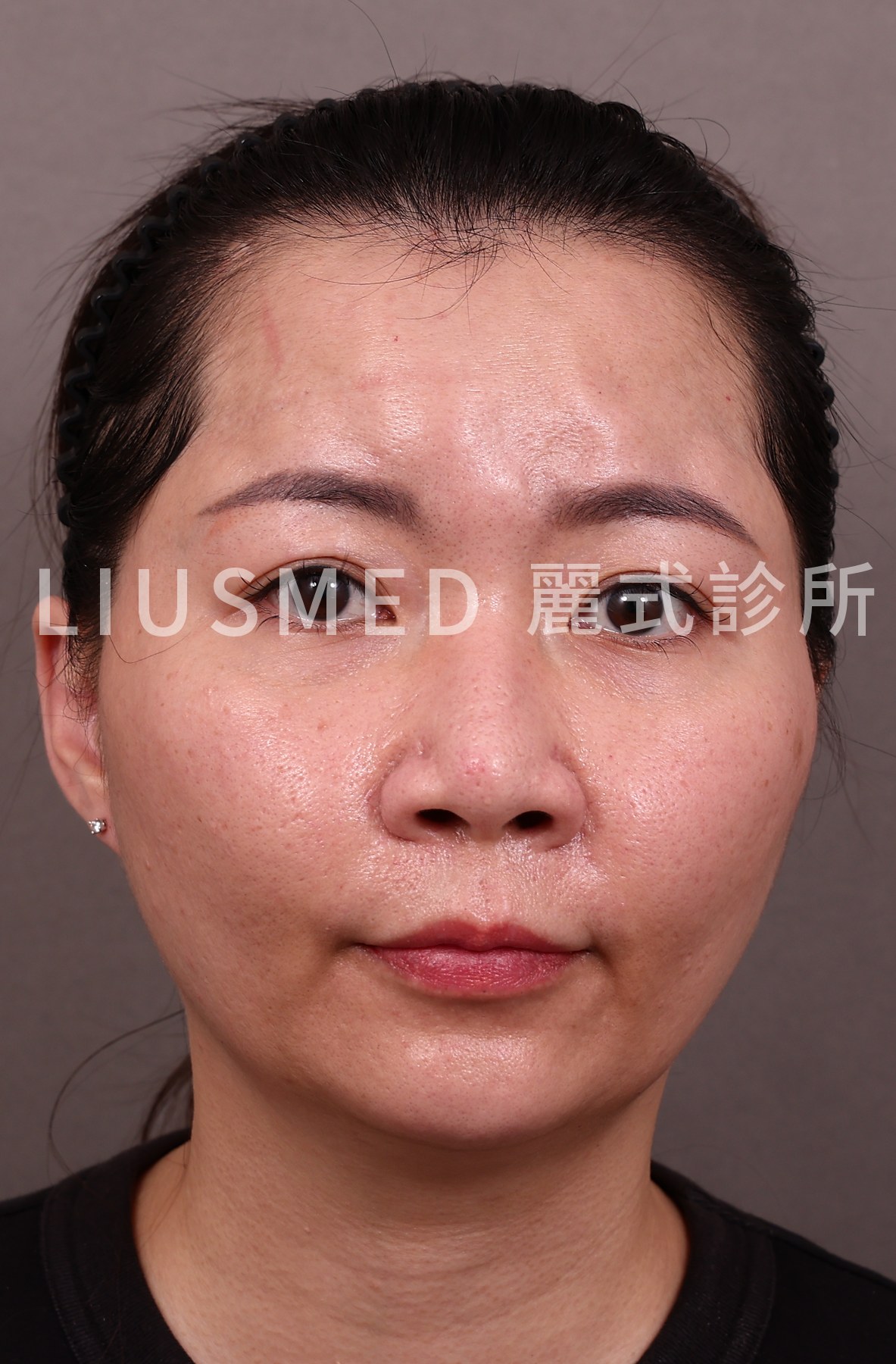
One patient had Ellansé in her forehead that had turned into hard lumps two years earlier. She tried a saline flush. Photographed right after, the forehead was flat; photographed two or three days later, it was still flat. It looked like it had worked.
Within a week, the unevenness was back.
She assumed the lumps had grown back. In fact they had never left. Part of that flatness was water: the fluid that was flushed in, and the swelling that followed, had temporarily filled the irregularities. Once the water was absorbed, the original lumps surfaced again. She later had the lumps mapped with ultrasound before removal, and every comparison photo was taken three months after repair: the forehead Ellansé case.
Almost every way of treating a lump makes things look better for a while right afterwards. It usually comes down to three things:
- Fluid: saline from a flush and injected medication both take up some volume at first.
- Swelling: any tissue that has been treated swells, and swollen tissue fills in the surrounding steps.
- Tissue that has not settled yet: treated tissue needs time to rearrange, and the early appearance is not the final one.
All three pass. If the lump itself is still there, it does not pass with them. So whether something worked can only be judged once those temporary effects have gone.
When each treatment can be judged
Saline flush
Flushing can be worth discussing early on, while the material is still a gel and has not yet been fixed by tissue. With lumps already encased in collagen, the flushed-in water only props the unevenness up for a while; once it is absorbed, the irregularities usually resurface within a few days to about a week.
When to judge: not on the day, and not a few days later, but whether the lump is still there a few months on.
Hyaluronidase (hyaluronic acid only)
Hyaluronidase only acts on hyaluronic acid. Collagen stimulators such as Ellansé, Sculptra and AestheFill, and grafted fat, have no matching enzyme and will not respond. Hyaluronidase should only be used after an in-person assessment by a doctor.
On hyaluronic acid, the enzyme itself works quickly, but the treated area swells first. When to judge: once that swelling has gone down, usually within a few weeks, what remains is the real result. It is best to assess the contour at around one month rather than deciding on a second round in the first few days.
Steroid, 5-FU and similar drug injections
Steroids often make a lump softer and smaller quite quickly, so one or two weeks later it frequently looks as if it worked. But they do not dissolve the material, which is still there, and the dents and skin thinning that steroids can cause often only show up several weeks after the injection.
When to judge: whether the lump is still there a few months later, and whether the surrounding area has started to hollow. If the same drug approach has been tried several times and the lump has not clearly shrunk, it is time to stop and get imaging, not to have the next injection.
Energy devices such as radiofrequency
A small number of case reports describe nodules settling quickly after energy-based treatment, but a common pattern here too is that things look flat for a short time and then gradually return over days to weeks.
When to judge: as with flushing, a few months later.
Removal
Removal physically takes out the material and the lumps it has caused. However small the pinhole, it is still removal, and swelling and bruising will happen. In general, swelling and bruising settle in about 2–3 weeks, pinholes heal in about 2 weeks, and the final appearance takes about 3 months, with individual variation.
When to judge: at three months. Early on, the area may look slightly hollow or uneven for a while as the tissue recovers; do not draw conclusions in the first days or even the first weeks. This is also why the post-treatment photos we use to judge a result are only taken at three months.
A lump that "came back" usually never left
When a lump reappears some time after treatment, in the same place and about the same size, it is more likely that the original lump was temporarily covered up than that something new has grown.
What is worth telling apart:
- Same place, same extent: most likely the original lump, briefly masked by fluid or swelling.
- A different place, or clearly larger: the material may have been pushed, a tissue reaction may still be going on, or there may be other material that was never treated. This needs reassessment.
These are hard to separate by touch and sight alone. High-frequency ultrasound shows directly whether the material is still there, which layer it is in and how far it extends, which is far more reliable than "it feels a bit flatter".
How to compare without being fooled by the moment
If you want to track the effect of a treatment yourself, a few simple rules help:
- Same angle, same light, same expression. On areas like the forehead and under the eyes, where the light comes from changes how steps look; views from above or at an angle often show unevenness better than the front.
- Photograph at roughly the same time points each time: before treatment, one month after, three months after. Do not use the "just treated" photo as the result.
- Note how it feels, not just how it looks: firmness, extent, tenderness.
- When in doubt, confirm with imaging rather than trying yet another method.
When not to keep waiting
"Let's watch it" has a limit. In these situations, do not keep waiting:
- Redness, swelling, heat or pain, or rapid growth over a short time: this may be inflammation or infection and needs prompt review.
- The same method has been tried several times without clear improvement: the cost of continuing often accumulates in the tissue (for example, dents from steroids).
- It only started hardening months after the injection, stays in a fixed area and does not move when pressed: waiting usually does not resolve lumps like this; an ultrasound assessment is advisable first.
- Hollowing, skin thinning or a change in colour starts after treatment: stop the current treatment and get it reviewed.
Frequently asked questions
The lump flattened after a saline flush. Does that mean it is fixed?
Do not conclude that yet. Flatness right after a flush, or even two or three days later, is partly the flushed-in fluid and swelling. With lumps already encased in collagen, the unevenness usually returns soon after the water is absorbed. What matters is whether the lump is still there a few months later.
How long does hyaluronidase take to show a result? Can it be repeated after a few days?
Hyaluronidase only acts on hyaluronic acid. It works quickly, but the treated area swells first, and what is left after the swelling settles is the real result. It is best to assess the contour at around one month rather than deciding on a second round within the first few days; whether further treatment is needed should be decided after an in-person assessment.
How long after removal until I know the result?
In general, swelling and bruising settle in about 2–3 weeks, pinholes heal in about 2 weeks, and the final appearance takes about 3 months, with individual variation. In the first weeks after removal the area may look slightly hollow or uneven while the tissue recovers, so avoid judging too early. To be honest about the limits, not every lump can be removed completely; the aim is to improve things as much as is safely possible.
The lump came back after treatment. Did the treatment fail?
Not necessarily. More often, the original lump was only temporarily covered and never left. If it is in the same place and about the same size, that is the most likely explanation. It is worth confirming with ultrasound whether the material is still there and which layer it is in before deciding what to do next, rather than simply switching to another method.
If you have tried one or two ways of treating a lump, it looked better at first and then came back, and you are unsure what to do next, you are welcome to request an online individual assessment or book a consultation. Dr. Ta-Ju Liu can use ultrasound to confirm what is still inside first, and then decide the next step with you.
Related reading
- Two years of Ellansé forehead lumps that dissolving and flushing could not fix
- Delayed Ellansé nodules: when to wait and when not to
- The risks of steroid injections into lumps: dents and skin atrophy
- The risks of "wait and see": when not to keep waiting
- The recovery timeline after removal
- The full removal record for Ellansé forehead lumps, from ultrasound map to three months after repair (MinimalCutSurgery)