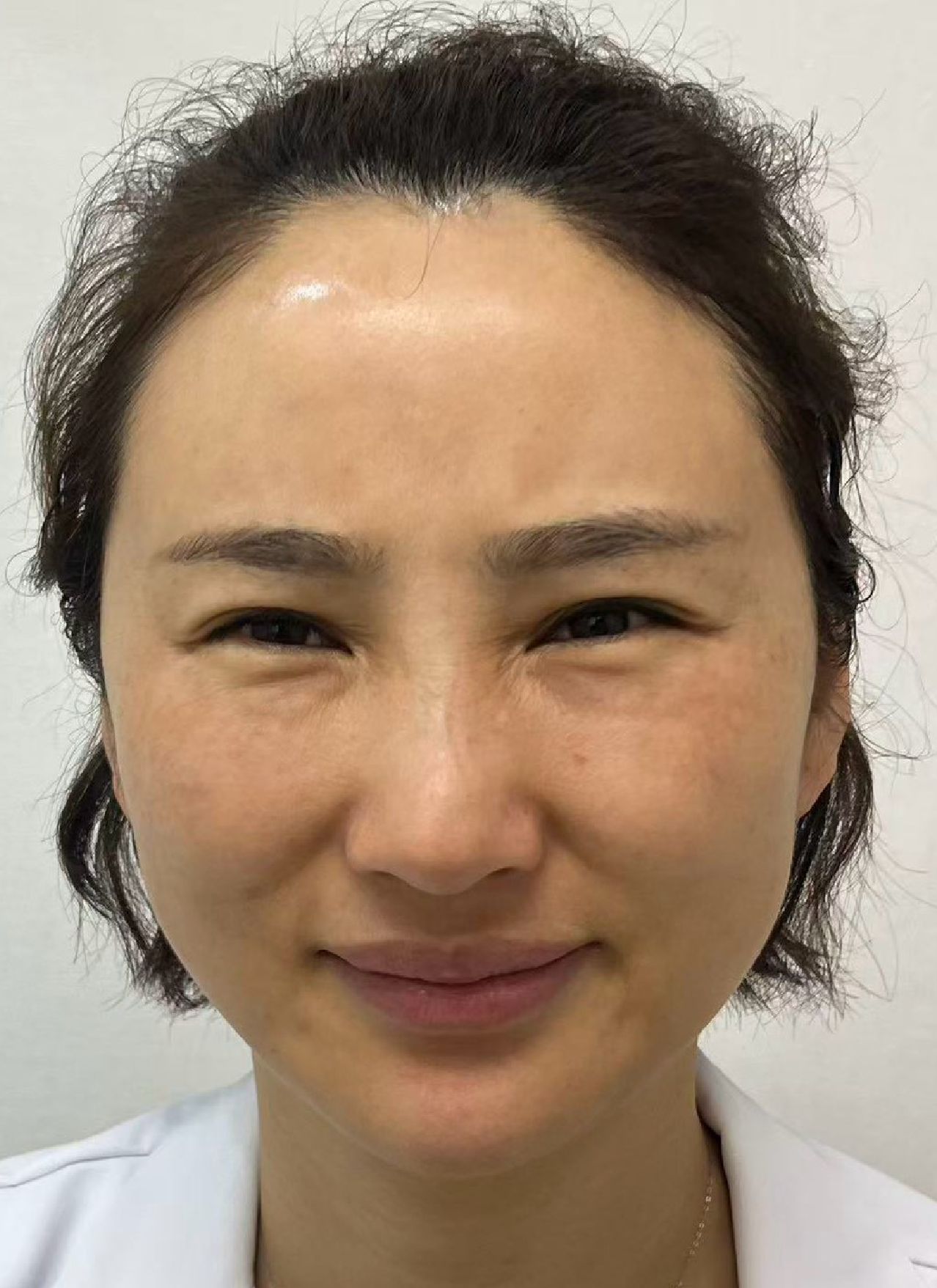
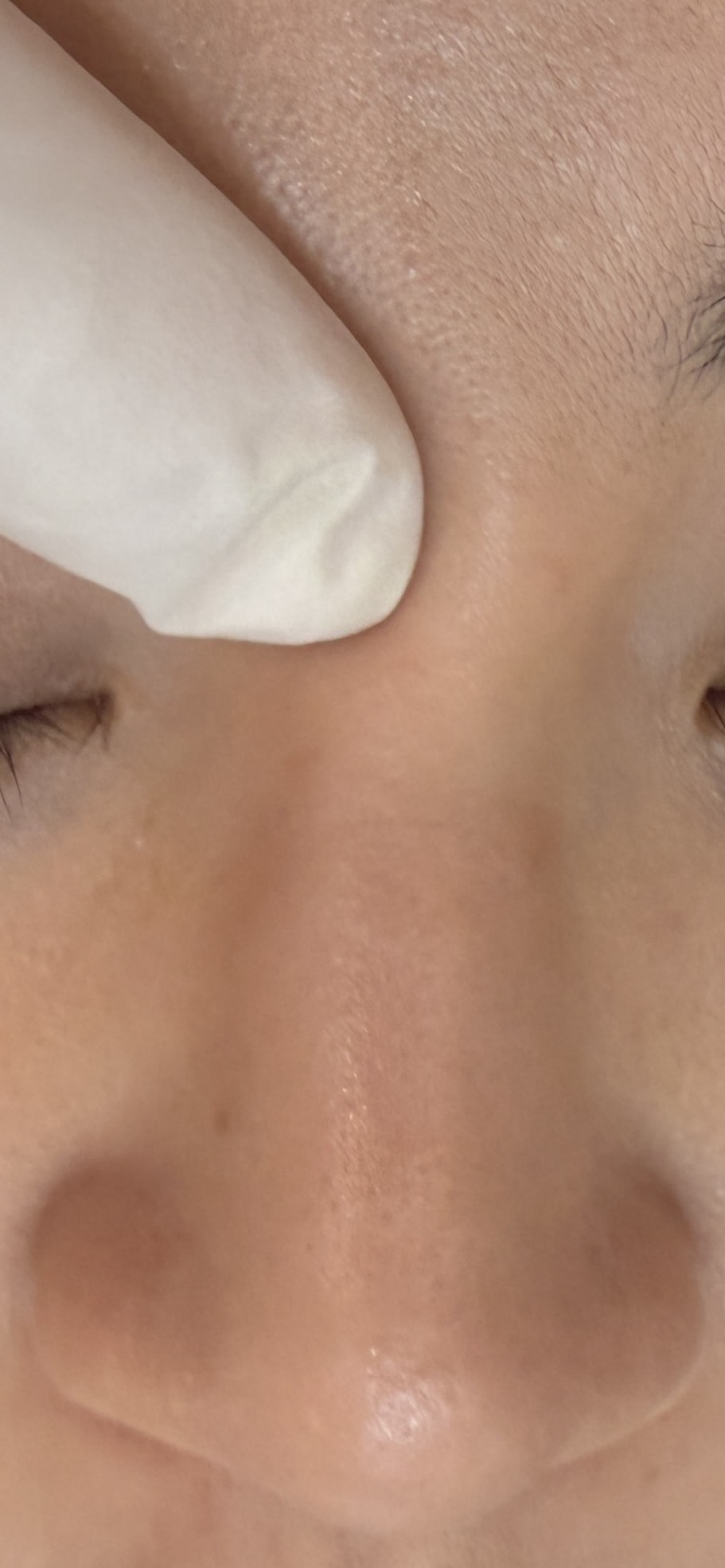
The Lump Is Gone, But Now There Is a Dent
"The lump is softer, but now I have a dent that looks worse than the lump ever did." At FILLER REVISION, steroid-induced atrophy is one of the most frustrating complications we see — because it was caused by the treatment itself. Patients arrive having traded one problem for another, often after multiple steroid injections that their original practitioner hoped would eventually resolve the lump.
At FILLER REVISION, we see these cases regularly: patients who were prescribed repeated steroid injections for filler lumps, only to develop fat atrophy, dermal thinning, and permanent tissue depression. These are not rare side effects — they are near-certain outcomes when steroids are used excessively or inappropriately on the face.
How Steroids Cause Tissue Atrophy
Mechanism of Action
Steroids reduce swelling and firmness by suppressing immune responses and inflammatory processes. The problem is that their action is not precisely targeted at the foreign body reaction around the filler—they affect all tissues in the injection area indiscriminately.
A systematic review of adverse effects of extra-articular corticosteroid injections has documented these tissue-damaging mechanisms in detail (Brinks et al., 2010). Specifically, corticosteroids:
- Suppress fibroblast activity: Reduce collagen synthesis, leading to dermal thinning
- Promote adipocyte apoptosis: Cause subcutaneous fat atrophy, creating irreversible depressions
- Decrease proteoglycan synthesis: Reduce tissue hydration and elasticity
- Inhibit angiogenesis: Decrease local blood supply, further accelerating tissue atrophy
Timeline of Atrophy
← Swipe to see more →
| Time After Injection | Possible Changes | Reversibility |
|---|---|---|
| 1-2 weeks | Local swelling reduction, lump softening | Normal treatment response |
| 2-4 weeks | Mild depression at injection site | Partially reversible |
| 1-3 months | Visible skin depression, pigment changes | Difficult to fully reverse |
| 3-6 months | Severe fat atrophy, paper-thin skin | Mostly irreversible |
| 6+ months | Permanent tissue loss | Irreversible |
Key Insight: At FILLER REVISION, we see the delayed nature of this damage firsthand: steroid-induced tissue atrophy often does not become apparent until weeks after injection, and once severe fat atrophy occurs, the chances of recovery are extremely low. This delayed presentation makes it difficult for both patients and practitioners to recognize the severity of the problem early on.
Which Facial Areas Are Most Vulnerable?
Different facial regions vary dramatically in subcutaneous fat thickness and tissue structure, and their sensitivity to steroids differs accordingly:
High-Risk Areas
- Periorbital region (tear trough, under-eye): Thinnest skin with minimal subcutaneous fat—extremely susceptible to atrophy and depression
- Temples: Thin fat pads mean steroids can easily create visible hollowing
- Nasal bridge: Skin sits directly over cartilage—atrophy creates irregular contour deformities
Moderate-Risk Areas
- Cheeks (malar region): Although there is more fat, repeated injections can still cause asymmetry
- Nasolabial fold area: Injections may deepen existing creases
Relatively Lower-Risk Areas
- Jawline: Thicker tissue, but caution is still warranted
- Forehead: Relatively abundant soft tissue, though high doses still carry risk
Common Clinical Patterns of Steroid Treatment Failure
Pattern 1: Lump Resolves but Depression Appears
The most typical scenario. Steroids successfully suppress the inflammatory reaction around the filler, and the lump genuinely softens or shrinks. But simultaneously, the surrounding normal fat tissue is destroyed, leaving a depression more conspicuous than the original lump.
Pattern 2: Repeated Injections Create a Vicious Cycle
When the first steroid injection produces unsatisfactory results, the practitioner decides to inject again—a second time, a third, a fourth. Each injection deepens the tissue damage, eventually creating severe, multi-focal areas of atrophy. For more case analysis, see: Skin Atrophy After Steroid Injection for Lumps.
Pattern 3: Inflammation Suppressed but Root Cause Remains
Steroids can temporarily suppress inflammation, but if the lump is fundamentally caused by filler accumulation or encapsulation, anti-inflammatory treatment does not eliminate the root cause. Once the medication wears off, inflammation and swelling often return.
Key Insight: Steroid injection for filler lumps is essentially symptomatic treatment rather than curative treatment—it can reduce swelling and inflammation but cannot eliminate the filler material itself. When the primary cause of the lump is material accumulation rather than inflammation, steroids provide limited benefit while potentially causing additional harm.
Six Juvelook Nodules, One Steroid Injection: What the Side-by-Side Showed
This section carries a real case that followed Juvelook injections performed at another clinic, because it happens to form a comparison nobody could arrange on purpose. The patient received six vials over three sessions in four months, into the tear troughs, mid-cheeks, nasolabial folds and both cheeks, and nodules appeared one after another, each about the size of a thumb tip. The original clinic recommended steroid injections into the lumps, and recommended treating the whole face that way. She had read about steroid-induced tissue atrophy and agreed to one site only.
That left six nodules on one patient, from the same product injected the same way, five of which never saw a steroid and one of which did. All six were later handled under ultrasound guidance. The five untouched sites settled flat once the swelling phase passed. The injected site is still sunken today, and the nodule itself never got any smaller. The only variable was that one shot.
The full record for this patient — the high-frequency ultrasound images, the material that actually came out, and the sites before and after removal — is written up in Case: nodules after six vials of Juvelook.
Steroid Does Not Dissolve a Collagen Stimulator: the Filler Nodule Stays, the Tissue Beside It Goes
Juvelook belongs to the collagen stimulator family, and neither the PDLLA microspheres nor the collagen they induce has a dissolving agent. What a steroid suppresses is inflammation and fibroblast activity, so it has nothing to act on once material has deposited in the tissue. The nodule at that site stayed exactly as hard and as large as before. What thinned out was the healthy fat and dermis next to it, thin enough that the dilated vessels underneath became visible, leaving a patch that reads like a bruise which never clears.
The difficulty is that the atrophied tissue is precisely what a later removal needs. Extracting the nodule follows an established technique, but once a layer of the surrounding tissue is gone, so is much of the working room. This particular nodule had also grown around a nerve. Ultrasound guidance shows where the nerve runs and lets the dissection stay off it where that is possible; what it cannot change is a nodule sitting directly on the nerve. After the dissection, nerve function in that area was temporarily affected and the face was asymmetric for a period. It has been improving as the swelling subsides, and follow-up is ongoing.
Most nodules do not go this way. Under ultrasound guidance, most can be reduced layer by layer the way her other five were, though recovery varies from person to person. What raised the difficulty here was the steroid injection. So if a steroid injection into a filler nodule is being suggested to you, this is worth knowing first: it may make the lump temporarily less obvious, and at the same time it is reducing that tissue, which is often the same tissue you will need when the nodule finally has to be dealt with.
Before You Agree to the Shot: What Is the Lump Actually Made Of?
Two lumps can look identical and still call for opposite decisions. The difference is not how big the lump is — it is what sits inside it, and whether that material is still there. Skipping this step and going straight to a steroid injection means committing to something hard to undo, for a problem that has not been diagnosed yet.
- Hyaluronic acid (HA): the category that has a dissolving agent. Hyaluronidase can break it down (to be used only after in-person physician assessment). If it can be dissolved, there is usually no reason to accept the risk of tissue atrophy first. The caveat is encapsulated or years-old material, where hyaluronidase works less well — that situation calls for understanding why hyaluronidase fails, not for switching to steroids.
- Collagen stimulators (Sculptra/PLLA, Ellansé/PCL, AestheFill/PDLLA, Radiesse/CaHA): no dissolving agent exists. A steroid can quiet the inflammation around the material so the lump feels softer and looks smaller, but the material stays exactly where it is — the swelling commonly returns as the drug wears off, and each injection shaves away more of the surrounding healthy tissue. Lumps that keep flaring after repeated steroid and 5-FU injections are the classic trajectory here.
- Hybrid products such as HArmonyCa (HA + CaHA): partially reversible. The HA half dissolves; the CaHA and the collagen it has already stimulated do not. So "I dissolved it and there is still a lump" is not a failed dissolution — it is the half that was never going to respond to dissolving, and hybrid filler lumps follow their own logic.
- Autologous fat: not dissolvable. Fat lumps and calcification are physical problems, and an anti-inflammatory drug has nothing to act on.
- Infection or biofilm: the situation where a steroid is least appropriate. This needs antibiotics and, when necessary, drainage or debridement. Steroids suppress immunity, and injecting one into a site that is still infected can let the problem spread faster. Lumps that swell repeatedly, come and go, or flare with a cold or after a bad night's sleep should be worked up for biofilm first.
So the real sequence is not "let's try one shot and see." It is: use ultrasound to establish the material, the layer, and whether there are signs of infection — then decide whether to dissolve, extract, or treat an infection. A steroid is not a diagnostic tool. It makes the surface look better while flattening the diagnostic clues and the healthy tissue at the same time.
Steroids vs. Ultrasound (Ultrasonography)-Guided Minimally Invasive Extraction
← Swipe to see more →
| Comparison | Steroid Injection | Ultrasound-Guided Extraction |
|---|---|---|
| Treatment principle | Suppress inflammation | Directly remove filler |
| Removes filler? | No | Yes |
| Visual guidance | None (blind injection) | Real-time ultrasound |
| Effect on normal tissue | May cause atrophy | Precise operation preserving normal tissue |
| Recurrence risk | High (filler remains) | Lower (the causative material is removed as far as is safe) |
| Side effects | Fat atrophy, skin depression | ~2mm pinhole; swelling and bruising are expected and usually settle in about 2–3 weeks |
| Indications | Temporary relief of acute inflammation | Root-cause treatment of all filler complications |
Already Have Steroid-Induced Atrophy—Is Recovery Possible?
Steroid-induced tissue atrophy is genuinely difficult to manage, but it is not entirely without options:
Mild Atrophy (Within 2-3 Months Post-Injection)
- Some fat tissue may recover naturally
- Discontinuing steroid injections is the first step
- Patient observation over 6-12 months is necessary
Moderate Atrophy
- Subsequent volume restoration treatments may be needed
- Before any augmentation, the status of the original filler must be confirmed
- Ultrasound evaluation is a critical step
Severe Atrophy
- Tissue reconstruction may require multi-stage treatment
- Autologous fat grafting is a common repair option
- Individualized assessment by an experienced physician is essential
Repairing a depression that has already formed is a separate subject in itself. Whether the loss sits in the epidermis, the dermis, or the subcutaneous fat determines what can realistically be restored, and that is something ultrasound has to establish first — it cannot be judged by feel. Our sister site, Minimal Cut Surgery, covers that side in depth: the steroid atrophy repair hub, and specifically ultrasound-guided layered autologous fat repair, which is built around restoring the layer that actually lost volume. Fat survival varies between individuals and more than one session may be needed — worth knowing before you start.
If your depression did not come from a filler lump but from an acne or scar injection, or if you are still unsure whether the dent on your face came from an injection at all rather than from scarring, migration, or ageing, start with how to tell facial dents apart.
For the specific issue of steroid use with collagen stimulator complications, see: Why Steroid Injections Fail for Sculptra Lumps.
The FILLER REVISION Approach: Addressing Both the Lump and the Atrophy
Patients who arrive at FILLER REVISION with steroid-induced atrophy often face a dual problem: the original filler lump may still be present (since steroids do not remove material), and the surrounding tissue has been damaged by the steroids themselves. Our approach addresses both issues through a single diagnostic workflow. First, ultrasound reveals the complete picture — remaining filler, degree of encapsulation, and extent of tissue atrophy. If filler remains, we extract it through ultrasound-guided minimally invasive technique, eliminating the root cause without further tissue damage. For the atrophied areas, we assess whether the tissue can recover naturally or whether staged volume restoration is needed. This comprehensive approach avoids the common pattern of treating the lump and the atrophy as separate problems at separate clinics.
When Are Steroid Injections Still Appropriate?
Steroids are not universally inappropriate. In the following specific scenarios, short-term, low-dose steroid use may be justified:
- Acute allergic reactions: Rapid immune suppression is needed
- Severe acute inflammation: As temporary symptom control while planning root-cause treatment
- Post-operative swelling: Very low-dose steroids may help reduce post-extraction swelling
The key principle: steroids should serve as temporary adjuncts, not long-term treatment strategies.
What Is the Correct Treatment Approach?
When facing filler lumps, the ideal treatment process should be:
- Ultrasound evaluation: Confirm material type, location, and degree of encapsulation
- Root cause analysis: Determine the cause of the lump (material accumulation, encapsulation, inflammation, infection)
- Treatment planning: Select the most appropriate treatment based on diagnostic findings
- Root-cause treatment: Perform minimally invasive extraction under ultrasound guidance
- Post-treatment follow-up: Ongoing monitoring of recovery
Skipping the evaluation steps and proceeding directly to steroid injection is like prescribing medication without running any diagnostic tests—it may work by chance sometimes, but more often it misses the correct diagnosis and may cause additional harm.
We recommend starting with a comprehensive ultrasound evaluation before deciding on a treatment direction. If you have been considering or have already tried steroid treatment with unsatisfactory results, schedule a consultation so we can provide a more precise assessment and recommendations.
Conclusion
If steroid injections have left you with tissue depression, skin thinning, or atrophy — while the original filler lump remains — FILLER REVISION specializes in repairing both problems. Our ultrasound-guided approach removes the filler without further tissue damage and assesses the atrophy to plan appropriate restoration.
If you have been through multiple steroid injections with unsatisfactory results, stop the cycle and get an accurate assessment first. Book a consultation →
Frequently Asked Questions
I got steroid injections for a filler lump and now there's a dent. Why did this happen?
Steroids act on inflammation but are not precisely targeted at the filler — they affect all tissues in the injection area indiscriminately. They can suppress fibroblasts and promote fat cell breakdown, so while the lump softens, the surrounding normal fat tissue is destroyed, leaving a depression that can look more conspicuous than the original lump. This is a common pattern we see, not a rare side effect.
Is steroid-induced atrophy permanent, or can it recover?
It depends on severity and timing. Mild atrophy within about 2-3 months of injection may partially recover on its own, but the first step is to stop the steroid injections and observe over 6-12 months. Once severe fat atrophy has set in — typically becoming mostly irreversible after 3-6 months — the chance of natural recovery is very low, and tissue reconstruction such as autologous fat grafting may be considered. Because the damage is delayed and often appears only weeks after injection, an early ultrasound assessment is important.
The lump came back after my steroid injection wore off. Does that mean it didn't work?
Steroid injection for filler lumps is essentially symptomatic treatment rather than a cure — it suppresses inflammation but cannot remove the filler material itself. If the lump is fundamentally caused by filler accumulation or encapsulation, the root cause remains once the medication wears off, so swelling and lumps often return. To actually resolve it, the underlying filler needs to be addressed, not just the inflammation.
Which facial areas are most at risk for atrophy from steroid injections?
The periorbital region (tear trough and under-eye), the temples, and the nasal bridge are especially vulnerable because they have very thin skin and minimal subcutaneous fat. In these areas steroids can easily cause hollowing or irregular contour. The cheeks and nasolabial fold are moderate risk, while areas with thicker tissue like the jawline and forehead are relatively lower risk — though high doses still carry risk anywhere.
How is ultrasound-guided extraction different from steroid injection for a filler lump?
Steroid injection only suppresses inflammation and does not remove the filler, so it is done blind and carries a high recurrence risk because the material stays in place. Ultrasound-guided extraction directly removes the filler under real-time imaging, which allows precise work that aims to preserve normal tissue and addresses the root cause. At FILLER REVISION, a single ultrasound-based workflow assesses the remaining filler and the degree of atrophy together, so the lump and the depression are not treated as separate problems at separate clinics.
Are steroid injections ever appropriate, or should they always be avoided?
Steroids are not universally inappropriate. Short-term, low-dose use may be justified for acute allergic reactions, severe acute inflammation as temporary symptom control while planning root-cause treatment, and reducing swelling after an extraction procedure. The key principle is that steroids should serve as temporary adjuncts, not a long-term treatment strategy — repeated injections for a filler lump are what tend to create deepening tissue damage.