You wanted sweet, and got a caterpillar instead
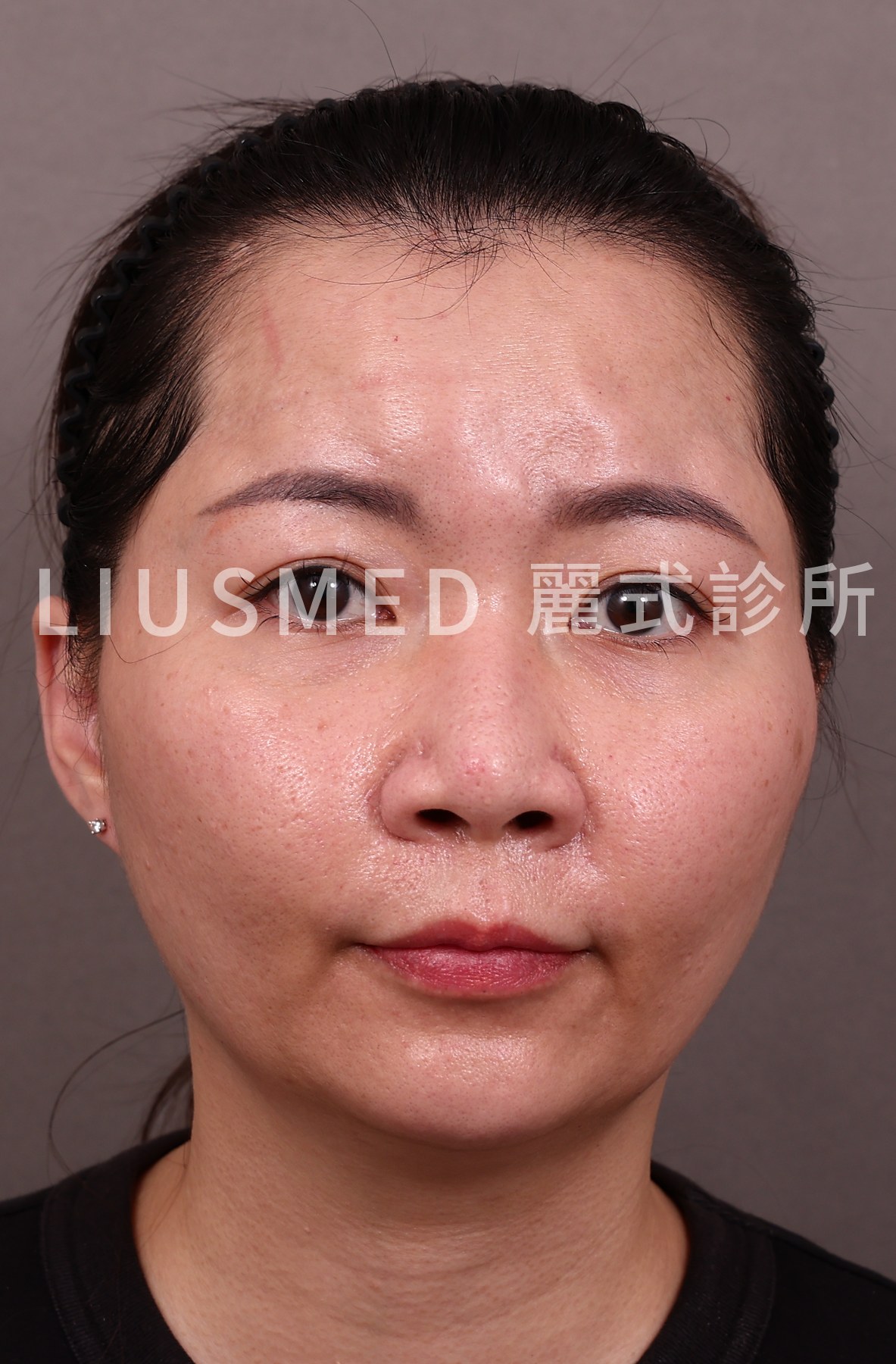
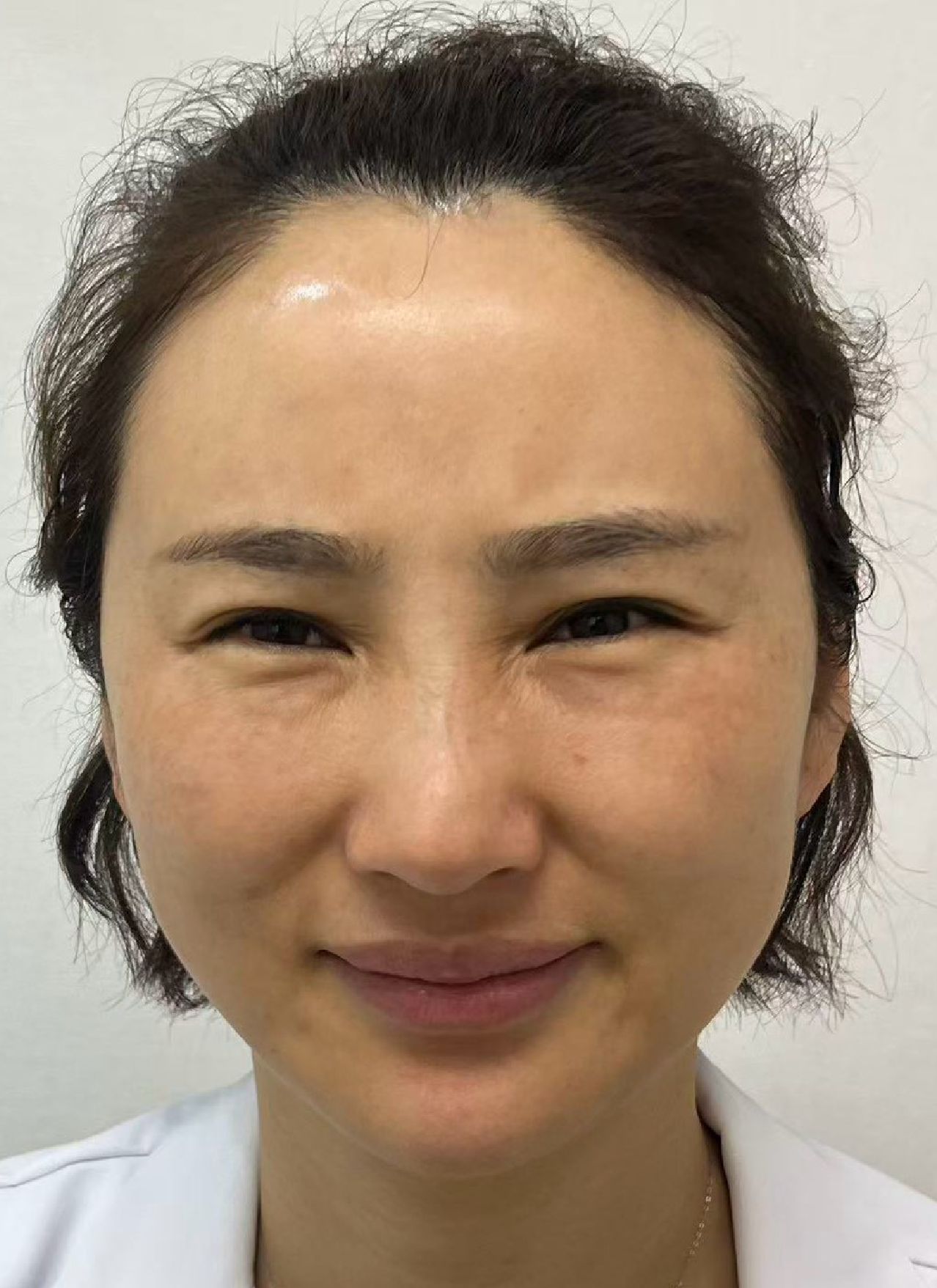
"When I'm not smiling it's fine — the moment I smile, something squeezes out under my eye." That's how a lot of people with an overfilled aegyo-sal describe themselves to me. What they wanted was that full little arc under the eye when they smile; instead, with the dose a touch too much and the layer slightly off, that arc puffs up and sits across the under-eye, and looking in the mirror, even they think it resembles a caterpillar.
The aegyo-sal (Korean 애교살 aegyo-sal, Japanese 涙袋 namida-bukuro) is one of the easiest areas on the whole face to overfill: it sits extremely shallow, in a very small space, and being off by just a little gets noticed. The complaint I hear most in clinic is this: it bulges even when you're not smiling, it bunches into a lump when you smile, the two sides are different sizes, or it actually looks more obvious when you lie down.
But let me say one thing first: an overfilled aegyo-sal does not have only one road called "dissolve it." Whether it can be dissolved, or needs to be removed, depends on first seeing clearly what state the hyaluronic acid you had injected is now in — and this is exactly why I'd recommend scanning with ultrasound first.
First, get to know the aegyo-sal itself
The aegyo-sal is not the tear trough. The tear trough is the hollow along the lower orbital rim; the aegyo-sal is that little ridge hugging just below the lash line, over the orbicularis oculi muscle. Aegyo-sal filler is placed at a very shallow, very superficial layer — and that is exactly why it looks good and is also the most prone to going wrong:
- Thin skin, shallow material: even a little overfilling shows, and it readily produces a bluish Tyndall effect.
- It's a dynamic area: the aegyo-sal only stands out when you "smile," so when there's too much material, it can look fine at rest but bunch up into a lump the moment you smile.
- It draws water: hyaluronic acid absorbs water and slowly "swells up" over the weeks to months after injection — often why it "felt just right when first done, but kept getting puffier afterward."
HA that can be dissolved: what "dissolve first, then revise" means
If what you had is hyaluronic acid, and it hasn't fibrosed yet, the most sensible strategy is usually "dissolve first, then revise" — first dissolve away the excess or mis-placed material to return to a clean baseline, then reassess whether a small touch-up is needed at all, or none.
But dissolving the aegyo-sal comes with a few realities that have to be said up front:
- Hyaluronidase spreads. This layer is extremely thin, and the injected hyaluronidase won't stay only in the aegyo-sal — it spreads to the surroundings, including your own original small amount of tissue. So dissolving the aegyo-sal has to be done in small amounts, precisely, and in stages if needed — not a large dose injected all at once (hyaluronidase, used only after in-person physician assessment).
- You don't necessarily need to refill after dissolving. Many people with an overfilled aegyo-sal only realize, after it's dissolved, that their own original aegyo-sal was enough and there's no need to refill at all. The "revise" in "dissolve first, then revise" includes the option of "after assessment, deciding not to refill."
- Scan with ultrasound first to confirm it really is still HA. An aegyo-sal that's been injected over several rounds, or has been in place for many years, may have changed in state — which leads into the next section.
The line where it can't be dissolved: fibrosis, migration, or it was never HA
The premise of "dissolve first, then revise" is that the material can still be dissolved. In the following situations, hyaluronidase often can't get traction, and the direction has to turn toward removal:
- Already fibrosed: repeated injection and long-term irritation can let fibrotic tissue form around the aegyo-sal material, encasing and fixing it in place. Inject hyaluronidase now and it may dissolve the HA inside but not the fibrotic structure outside — the lump and the unevenness stay.
- Already migrated: the material slides down from the aegyo-sal or spreads outward, ending up where it shouldn't be, causing asymmetry or stretching open the lower lid. Displaced material is irregularly distributed, and blind hyaluronidase injection alone has a hard time aiming at it.
- It was never hyaluronic acid: if what was injected originally was a collagen stimulator or another non-HA material, hyaluronidase has no effect at all, and removal is the only option.
For this "can't dissolve, can only remove" road, our sister site "Minimal-Cut Removal" has an article specifically on the back-end handling of the aegyo-sal: Removing a fibrosed, migrated aegyo-sal. To put the split simply: what can be dissolved (un-fibrosed HA) — read this article and go "dissolve first, then revise"; what can't be dissolved (fibrosed / migrated / non-HA) — read the sister-site article and go for ultrasound-guided removal.
Key point: The thing most to be feared with an overfilled aegyo-sal is not whether "dissolve" or "remove" is the right answer, but repeated dissolving. Dissolve once and it's not clean, dissolve again, add a bit back, dissolve again — every round irritates this extremely thin layer, and the more you do it, the more easily it fibroses. Rather than trying over and over, it's better to use ultrasound from the start to see clearly what state it's in now, and choose the right direction once.
How FILLER REVISION handles an overfilled aegyo-sal
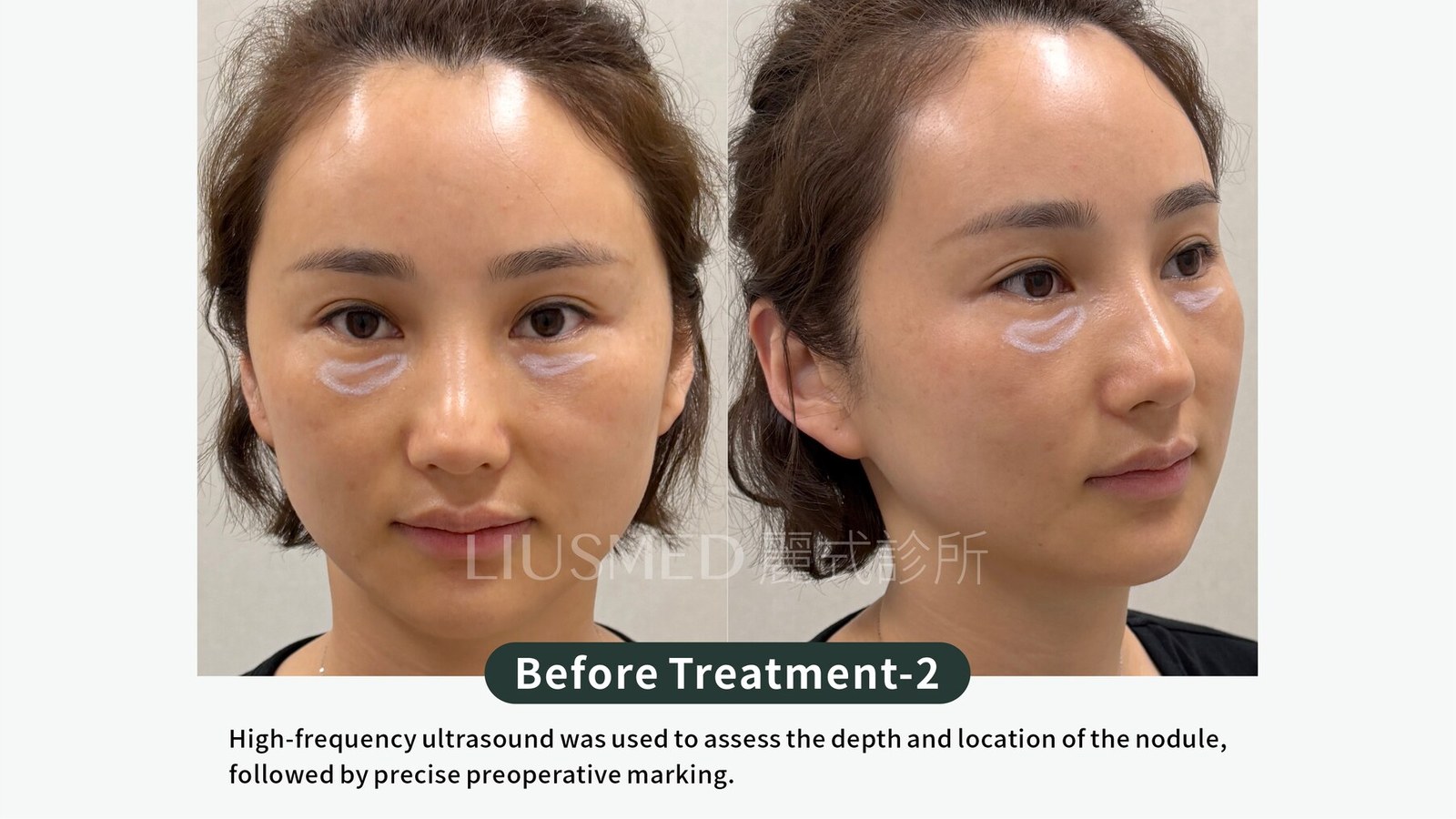
Our first step is always ultrasound, not a rush to put a needle in. In the aegyo-sal — extremely thin, and changing with every expression — ultrasound can show clearly: whether the material is still HA, whether there's fibrosis, whether it has migrated downward, and its relationship with the muscle beneath.
- Confirmed to be un-fibrosed HA, with a simple distribution → go for small, precise dissolution, and reassess once it's dissolved.
- Already fibrosed, migrated, or non-HA → go for ultrasound-guided single-pinhole physical extraction, removing the material precisely without harming the fine surrounding structures. What has to be said honestly is: for material that has lingered long-term and is fibrosed and adherent, how much can be removed varies with its state (the first session usually removes about 30–50%, and with most fillers two to three sessions can reach about 80–90% — not 100%, and it varies from person to person), but compared with repeated blind dissolving, the direction is much clearer.
The trade-off logic for the aegyo-sal and the rest of the under-eye area can also be cross-referenced with the under-eye filler decision map; and if your problem is really not being able to tell a tear trough apart from under-eye puffiness, you should first read is under-eye puffiness aging or filler migration.
If your aegyo-sal is overfilled, bunches into a lump when you smile, or the two sides are uneven, and you're not sure whether it should be dissolved or removed, you're welcome to use an online individualized assessment or to book an in-person consultation, where Dr. Ta-Ju Liu will help you confirm the state of the material with ultrasound before deciding on a direction.
Frequently Asked Questions
Can an overfilled aegyo-sal be dissolved?
If it's hyaluronic acid that hasn't fibrosed yet, yes — and it's usually advisable to "dissolve first, then reassess," dissolving down to a clean baseline before deciding whether to do a small refill. But the aegyo-sal is extremely thin and hyaluronidase spreads, so it has to be done in small, precise amounts, in stages if needed (hyaluronidase, used only after in-person physician assessment). If it's been injected repeatedly for a long time and has fibrosed or migrated, hyaluronidase can no longer dissolve it cleanly, and that kind needs removal.
After dissolving the aegyo-sal, will my original aegyo-sal disappear?
Hyaluronidase dissolves the hyaluronic acid that was injected in; it does not dissolve your natural aegyo-sal tissue. Many people, after dissolving the excess filler, only realize their own original aegyo-sal is in fact enough and they don't necessarily need to refill. Dissolving down to a clean baseline first, then assessing whether a small reconstruction is needed, is the steadier approach.
Why does my aegyo-sal never dissolve cleanly?
There are three common reasons: the material has already fibrosed (encased and fixed by fibrotic tissue), the material has migrated to an irregular position that's hard to aim at, or what was injected originally was never hyaluronic acid at all. In all three, hyaluronidase can't get traction, and forcing repeated dissolving only irritates it more and makes it fibrose more easily. It's advisable to scan with ultrasound first to confirm the current state of the material; if it's confirmed it can't be dissolved, the direction has to turn to ultrasound-guided physical extraction.