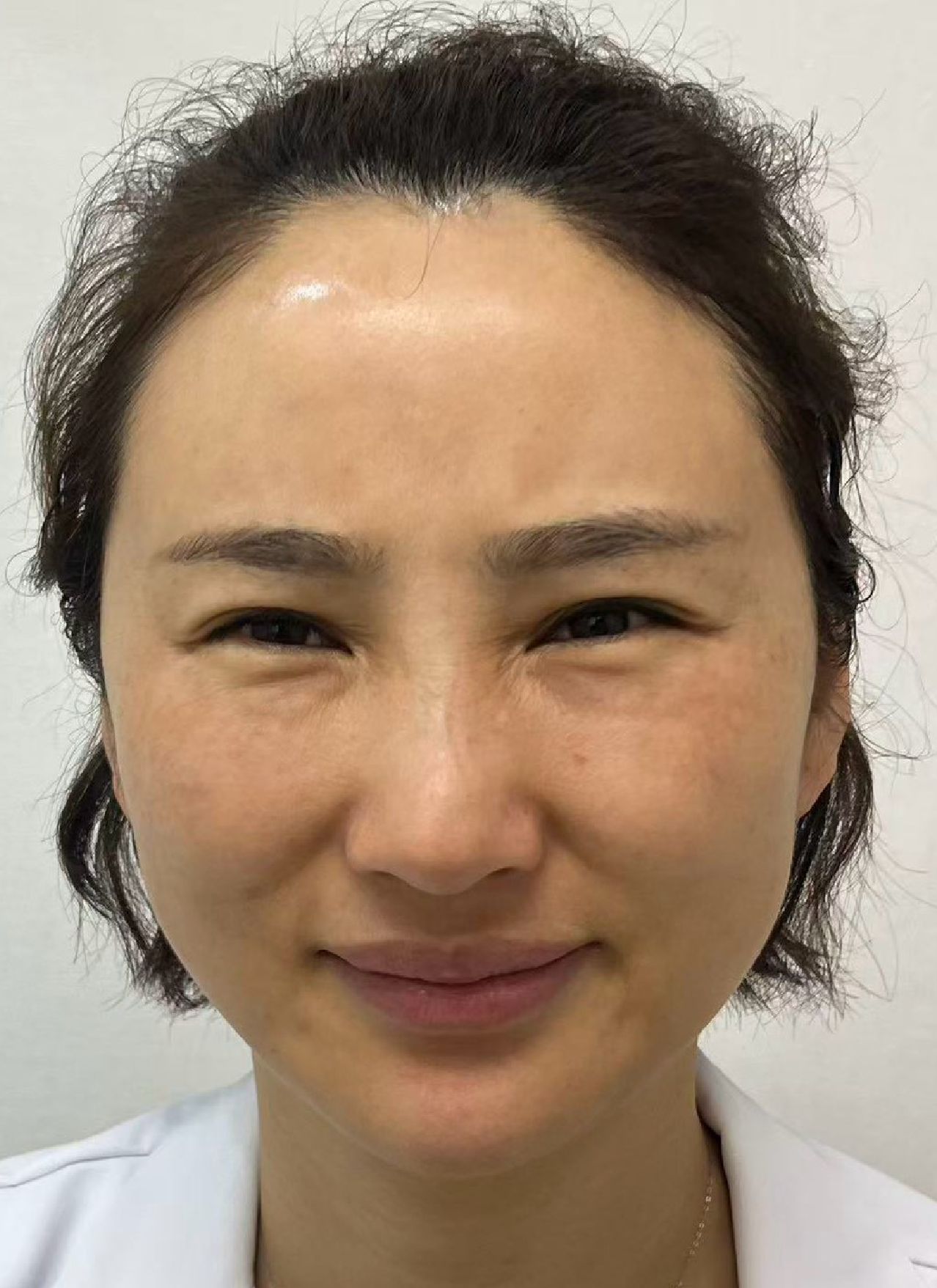
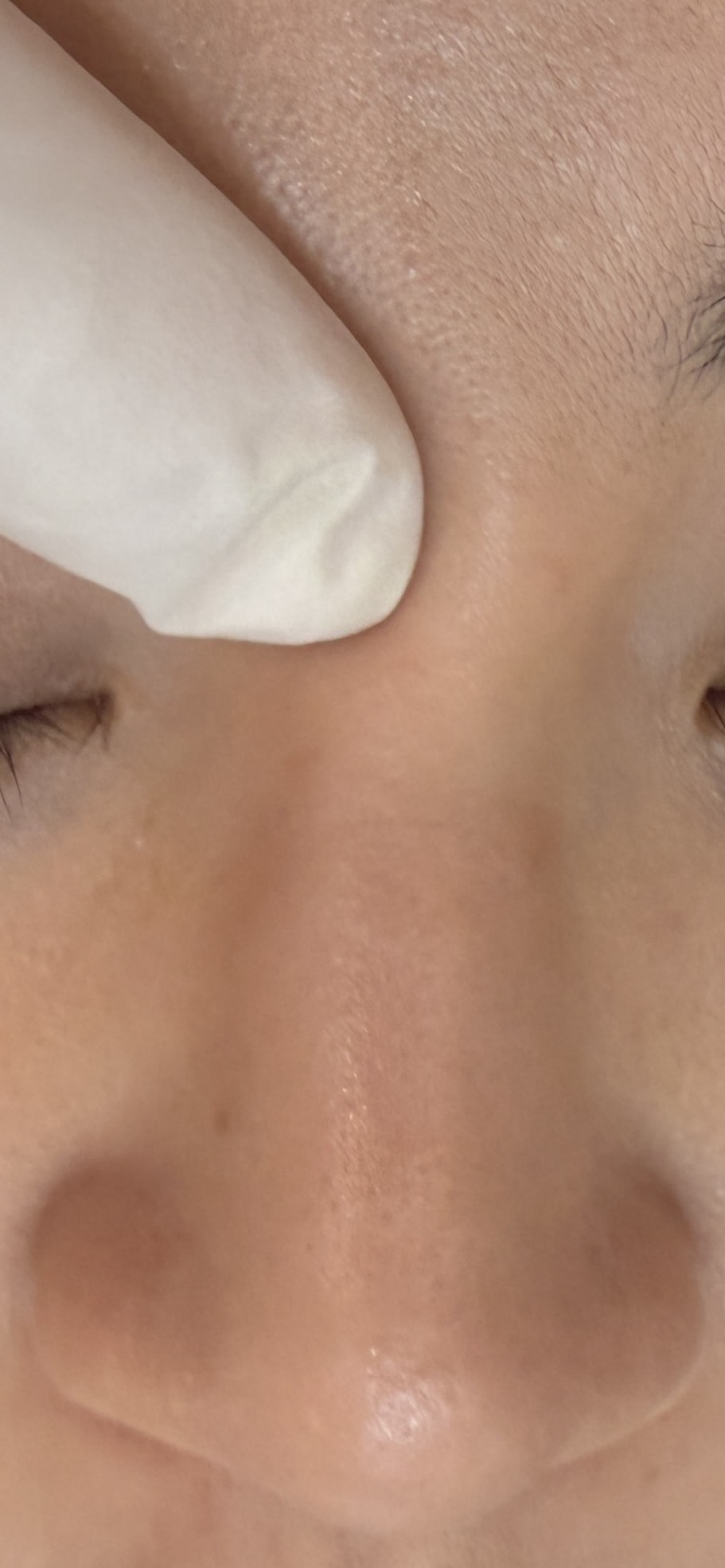
After Extraction, What Comes Next?
"The filler is finally out, but now my face looks different — what do I do next?" This is one of the most common questions I hear from patients recovering from revision surgery. Recovery after a revision procedure has special considerations: your tissue has already been through the original injection and the extraction, so rebuilding requires a thoughtful, staged approach.
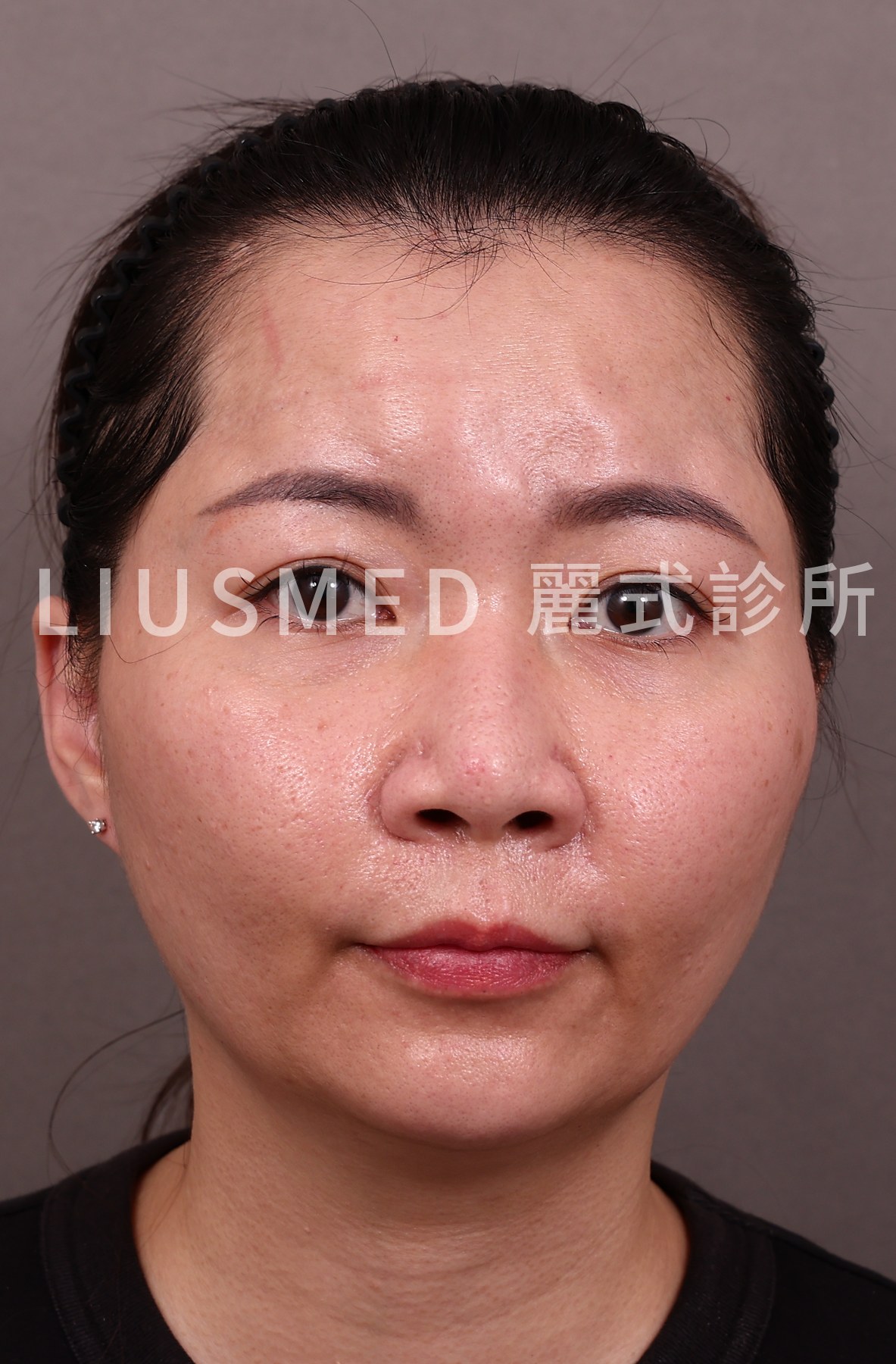
After successfully removing problematic filler, many patients face new questions: "Will my face look sunken?" "When can I have other aesthetic treatments?" "Can I ever get injections again?" These concerns are completely understandable. After filler extraction, the face may indeed show temporary volume loss. However, this does not mean you need to rush to fill the gap. In fact, patience and staged planning are the keys to achieving the best long-term outcome.
Common Appearance Changes After Extraction
Why Might My Face Look "Hollow"?
The longer filler has been in the tissue, the more the surrounding structures adapt to its presence. When the filler is removed, tissues need time to contract and readjust.
← Swipe to see more →
| Appearance Change | Cause | Duration |
|---|---|---|
| Mild hollowing | Loss of filler volume | Easier to judge once swelling and bruising settle (about 2–3 weeks) |
| Skin laxity | Previously stretched skin contracting | Reassessed at about 3 months |
| Asymmetry | Different filler volumes on each side | May need evaluation for treatment |
| Deepened lines | Lines previously masked by filler now visible | Can be addressed after stabilization |
Key Insight: At FILLER REVISION, we consistently observe that the appearance immediately after extraction is not the final result. The pinhole is small, but this is an extraction, so swelling and bruising are expected: they usually settle in about 2–3 weeks, and the final result takes about 3 months, varying from person to person. There is a period in which the swelling settles and firmness gradually softens; we go through the details at your consultation.
The Rebuilding Timeline
Phase 1: Waiting and Observation (0-3 Months Post-Op)
This is the most important phase. During this period:
- Swelling settles: Swelling and bruising usually settle in about 2–3 weeks; the true contour is only clear at about 3 months
- Skin elasticity recovery: Skin gradually retracts
- Pinhole healing: The pinhole heals in about 2 weeks
- Ultrasound (Ultrasonography) follow-up: Checks how the extraction went and whether any filler remains
Treatments NOT recommended during this phase:
- Injectable treatments (hyaluronic acid, collagen stimulators, etc.)
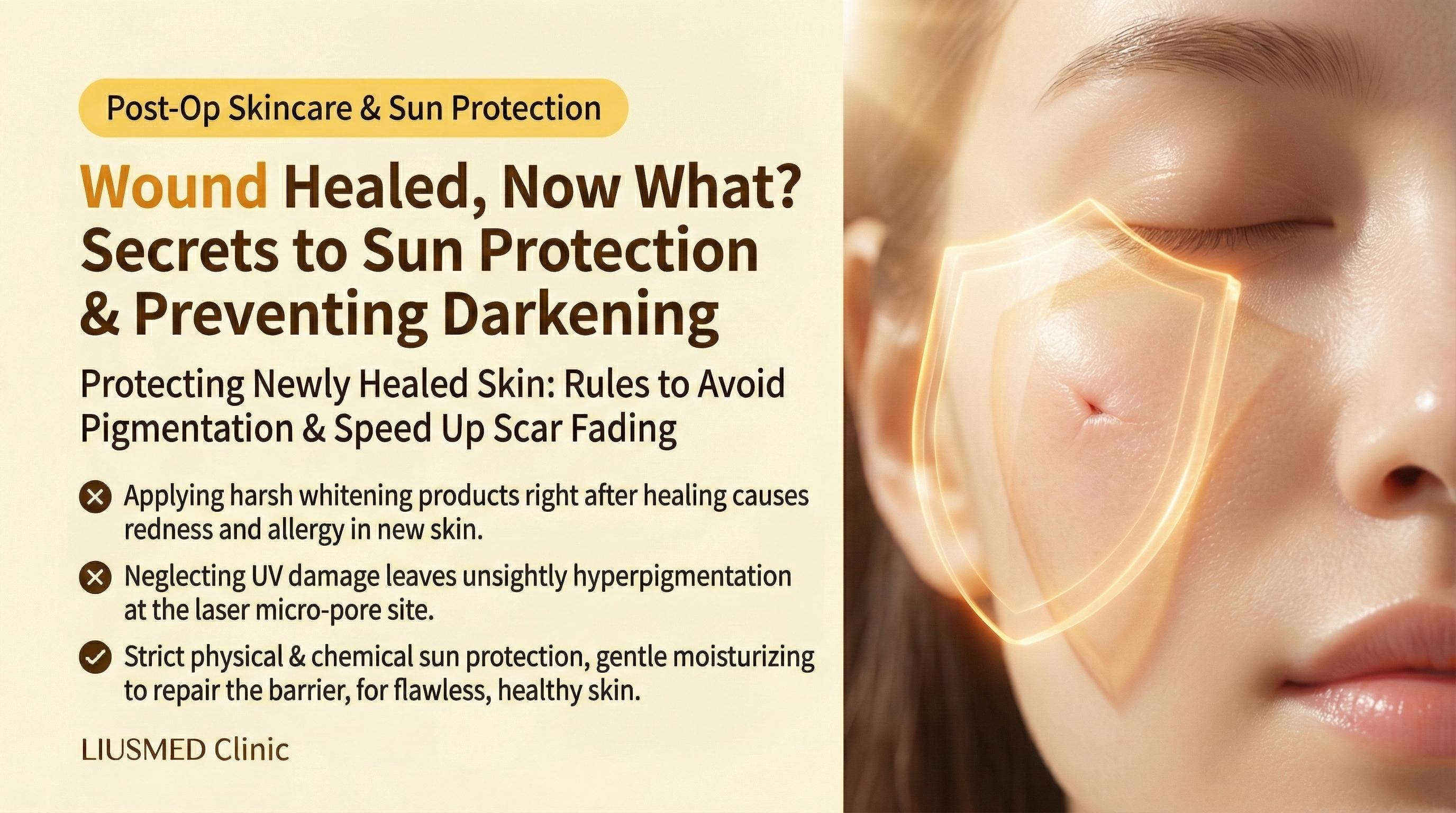
- Laser or radiofrequency treatments (on the surgical area)
- Facial surgery
Phase 2: Assessment and Planning (3-6 Months Post-Op)
Once tissues have stabilized, systematic evaluation begins:
← Swipe to see more →
| Assessment Item | Details |
|---|---|
| Ultrasound scan | Assess any residual filler |
| Appearance analysis | Evaluate hollowing and laxity |
| Skin condition | Elasticity, texture, tone |
| Patient goals | Discuss desired outcomes |
| Treatment plan | Develop a personalized rebuilding strategy |
Phase 3: Gradual Rebuilding (6+ Months Post-Op)
Based on individual circumstances, possible rebuilding options include:
Volume Restoration Options:
← Swipe to see more →
| Option | Advantages | Considerations |
|---|---|---|
| Autologous fat grafting | Natural, long-lasting, no rejection risk | Requires liposuction to harvest fat; survival rate varies |
| Hyaluronic acid injection | Controllable, dissolvable, predictable | Requires maintenance; repeat issues possible |
| Collagen stimulators | Stimulates natural collagen production | Slower results; requires careful assessment |
| No treatment | Zero risk, natural aging | Suitable for patients satisfied with their appearance |
Key Insight: Rebuilding does not mean "putting filler back in." Patients who have experienced filler complications need to be especially careful about choosing materials, physicians, and timing. Our goal is to achieve a natural result through the safest possible approach.
Fat Grafting as a Rebuilding Option
Why Is Fat Grafting a Good Choice?
For patients who need volume restoration after filler removal, autologous fat grafting offers unique advantages:
- Best biocompatibility: Your own tissue will not cause rejection
- Natural texture: Closest feel and appearance to natural tissue
- Long-lasting results: Surviving fat cells are permanent
- Dual benefit: The donor site also benefits from contouring
Important Considerations for Fat Grafting
← Swipe to see more →
| Factor | Details |
|---|---|
| Survival rate | Approximately 50-70% of grafted fat survives |
| Irregularity risk | Requires an experienced surgeon |
| May need multiple sessions | 2-3 sessions may be needed depending on volume |
| Recovery period | Slightly longer than injectable treatments |
| Adequate fat needed | Slim patients may have limited donor sites |
Learn more about managing volume loss after extraction.
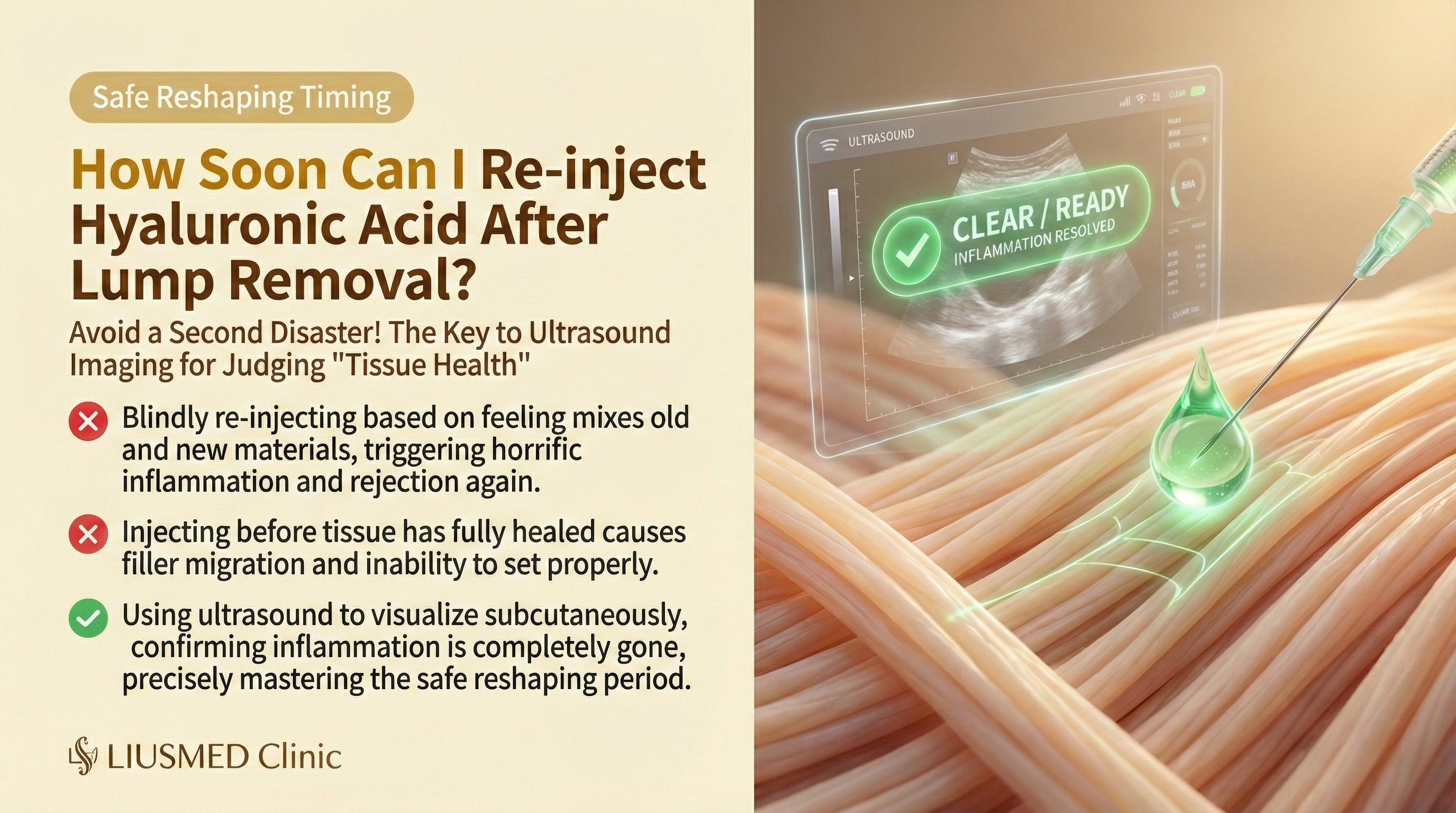
Safety Considerations for Re-Injection
When Can You Get Injections Again?
Many patients ask: "Can I ever get hyaluronic acid again?" The answer is: under the right conditions, yes, but certain principles must be followed:
Prerequisites for re-injection:
- The original problem has been completely resolved
- At least about 3 months have passed and the tissue has stabilized
- Ultrasound has assessed any residual filler
- Choose an experienced physician
- Use certified, quality filler products
Risk Management for Re-Injection
← Swipe to see more →
| Strategy | Details |
|---|---|
| Small amounts, multiple sessions | Avoid large-volume single injections |
| Ultrasound-assisted | Injection under ultrasound guidance is safer |
| Choose dissolvable products | Prioritize biodegradable fillers |
| Avoid high-risk areas | Extra caution where previous problems occurred |
| Regular follow-up | Periodic ultrasound monitoring after injection |
Recovery After Revision: Why Rebuilding Requires Extra Patience
Rebuilding after filler revision is fundamentally different from enhancing a treatment-naive face. Revised tissue has been through inflammation, foreign body response, and surgical extraction — all of which alter the tissue's architecture and healing capacity. Collagen networks may be disrupted, blood supply patterns may have shifted, and the skin's elastic memory may be compromised. At FILLER REVISION, we use serial ultrasound imaging during the waiting period to track how tissue is remodeling before recommending any rebuilding intervention. Patients who respect this recovery timeline consistently achieve more natural, longer-lasting results than those who rush into the next procedure.
Non-Filler Alternatives
Beyond injectable fillers, other options can improve your appearance:
Skin Tightening Treatments
← Swipe to see more →
| Treatment | Mechanism | Best For |
|---|---|---|
| Radiofrequency | Heat stimulates collagen contraction | Mild laxity |
| Ultrasound lifting | Focused ultrasound energy | Moderate laxity |
| Microneedling | Promotes new collagen formation | Skin quality improvement |
| Laser | Photothermal effect promotes tightening | Skin texture and tone |
Lifestyle Adjustments
Sometimes the best "treatment" is a healthy lifestyle:
- Adequate sleep: Promotes skin repair
- Balanced diet: Sufficient protein and vitamin C
- Regular exercise: Improves blood circulation
- Sun protection: Prevents photoaging from worsening hollowing
- Quit smoking: Improves skin circulation
Psychological Preparation
Adjusting Expectations
The rebuilding journey after filler removal requires patience and realistic expectations:
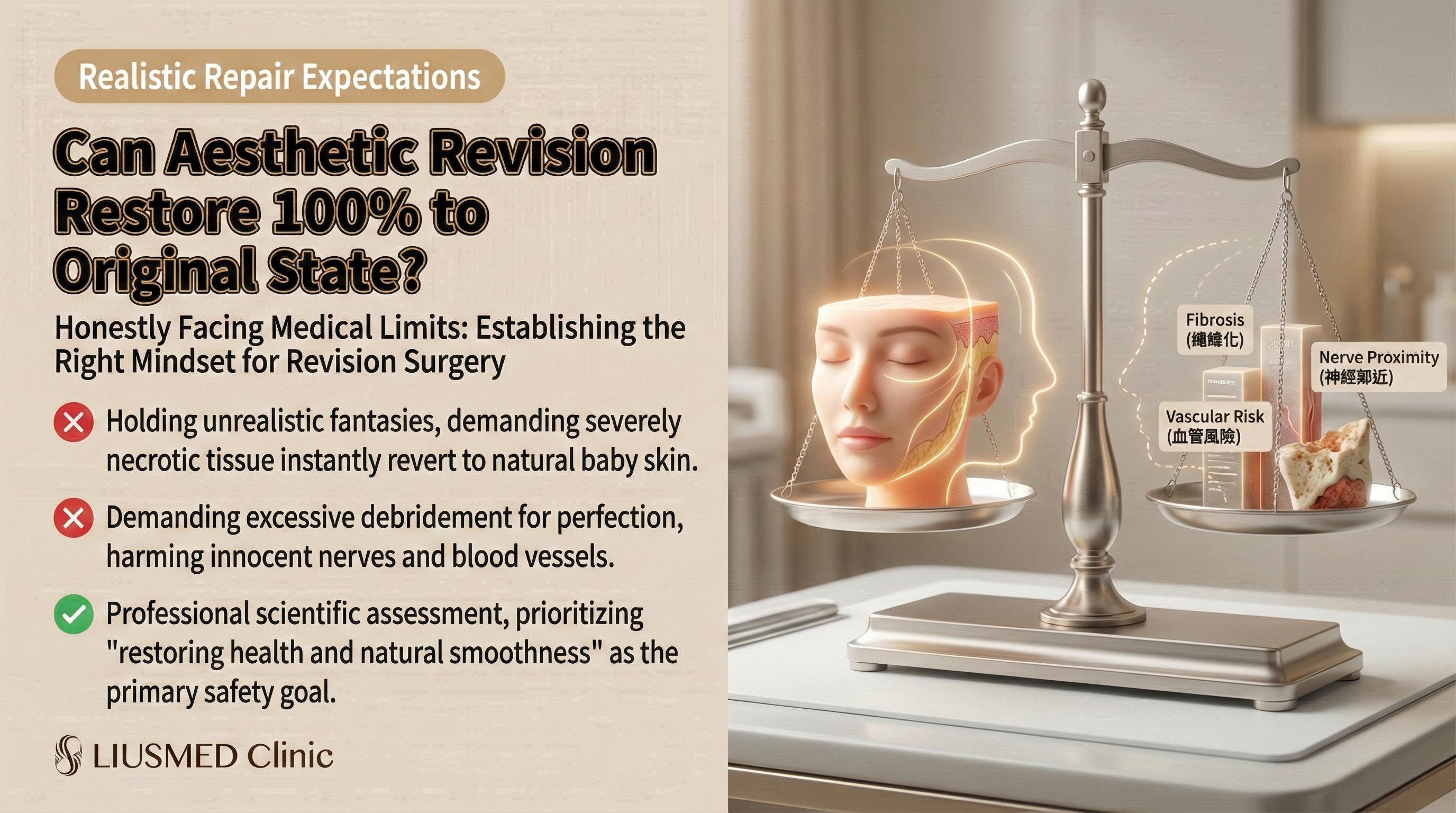
- It is not possible to "go back to how it was before injection": Tissue structure has changed
- Rebuilding is a gradual process: Rushing increases the risk of new problems
- Each treatment should represent progress: Perfection in one session is not the goal
- Communication is essential: Discuss your expectations and concerns thoroughly with your physician
Key Insight: Many patients discover after removing problematic filler that "less is more." Not every hollow needs to be filled. Accepting your natural appearance with modest enhancements often brings greater satisfaction than chasing "perfection."
Creating a Personalized Rebuilding Plan
Every patient's rebuilding plan should be tailored to their individual situation:
← Swipe to see more →
| Factor | Impact |
|---|---|
| Age | Affects skin retraction ability and collagen regeneration speed |
| Extraction site | Different areas require different rebuilding strategies |
| Original problem | Influences which treatments are appropriate |
| Volume removed | Determines how much restoration may be needed |
| Personal goals | Natural versus more noticeable improvement preference |
| Budget and schedule | Practical treatment arrangement considerations |
Conclusion: FILLER REVISION's Staged Rebuilding Philosophy
The rebuilding journey after filler revision is not a sprint — it is a process that requires wisdom and patience. At FILLER REVISION, our approach is built on these principles:
- Wait for tissues to fully stabilize
- Complete a thorough evaluation with ultrasound confirmation
- Choose the safest approach for revision-specific tissue
- Set realistic expectations
- Build a long-term relationship with a trusted revision specialist
If you are considering next steps after filler removal, start by learning about our filler repair evaluation process. We also recommend reading about filler extraction techniques to understand how our minimally invasive approach lays the foundation for successful rebuilding.
Frequently Asked Questions
My face looks hollow right after the filler was extracted. Is this how it will stay?
It won't necessarily stay this way. The appearance immediately after extraction is not the final result: early on, swelling tends to mask any hollowing, and the real contour only shows once it goes down. Swelling and bruising usually settle in about 2–3 weeks, and the final result takes about 3 months, varying from person to person. We reassess at around 3 months; if a hollow remains then, we can discuss whether filling is needed.
How soon after filler extraction can I get other aesthetic treatments like lasers or injections?
During the first 0-3 months post-op, no injectable treatments, lasers, radiofrequency, or facial surgery should be performed on the extraction area. This waiting period lets the tissue recover, the skin retract, and ultrasound follow-up check how the extraction went and whether any filler remains. From around 3 months, once tissues have stabilized, your physician can begin systematic evaluation and planning.
Can I ever get hyaluronic acid filler again after having problem filler removed?
Under the right conditions, yes. Re-injection is considered safe when the original problem has been resolved, at least about 3 months have passed and the tissue has stabilized, and ultrasound has assessed any residual filler. It is also important to choose an experienced physician and certified, quality products. To reduce risk, the article recommends small amounts over multiple sessions, ultrasound-guided injection, and avoiding areas where previous problems occurred.
Why is autologous fat grafting often recommended for volume restoration after extraction?
Because it uses your own tissue, fat grafting offers the best biocompatibility with no rejection risk, a natural texture, and long-lasting results since surviving fat cells are permanent. Around 50-70% of grafted fat typically survives, so 2-3 sessions may be needed depending on the volume required, and an experienced surgeon is important to avoid irregularity. Very slim patients may have limited donor fat available.
Can my face go back to exactly how it looked before I ever had filler?
Returning exactly to the pre-injection state is generally not possible, because the tissue structure has already changed. Rebuilding is a gradual process, and rushing it increases the risk of new problems, so each treatment is meant to be a step of progress rather than perfection in one session. Many patients find that 'less is more' - not every hollow needs to be filled, and accepting a natural appearance with modest enhancements often brings greater satisfaction than chasing perfection.