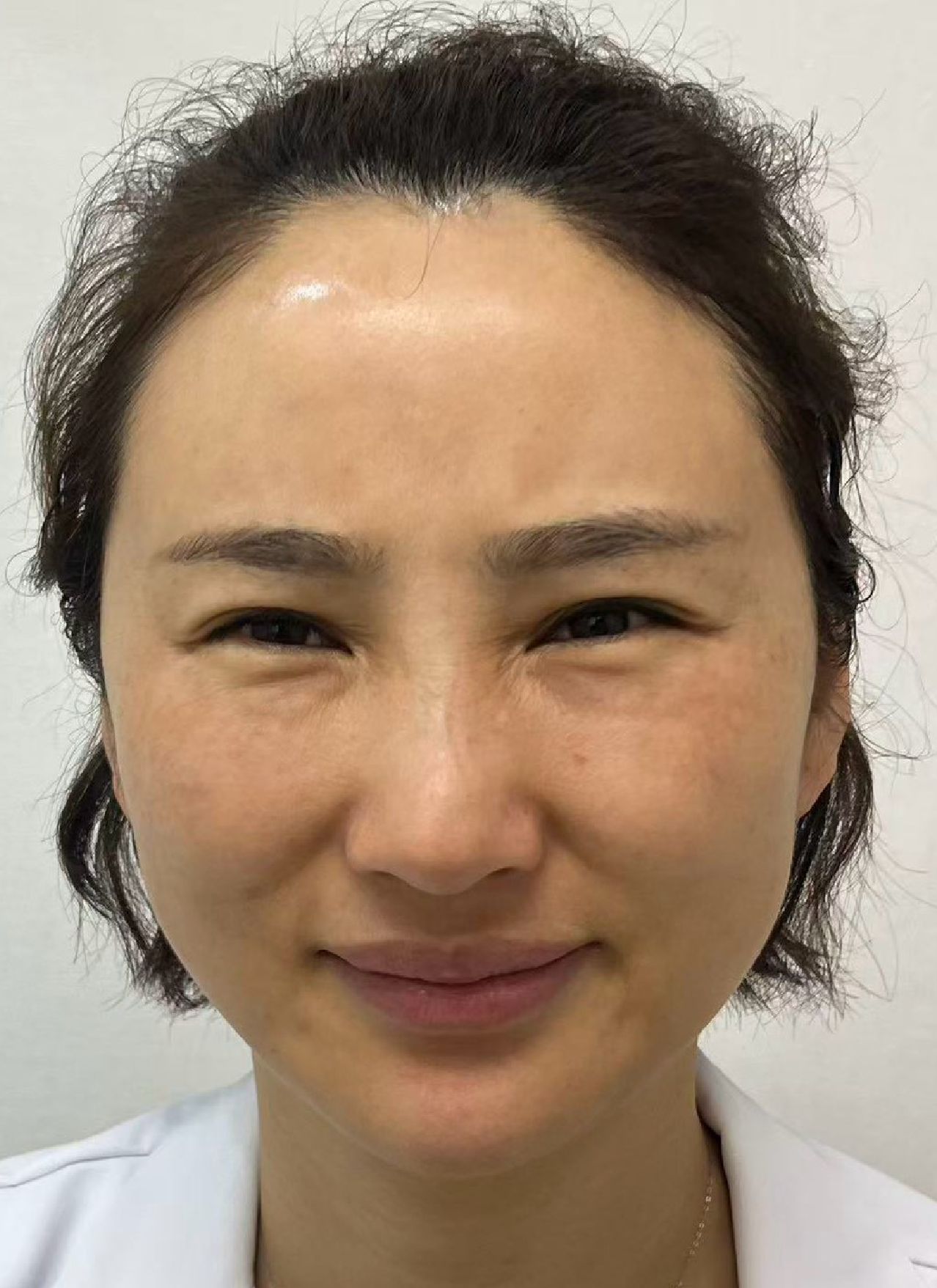
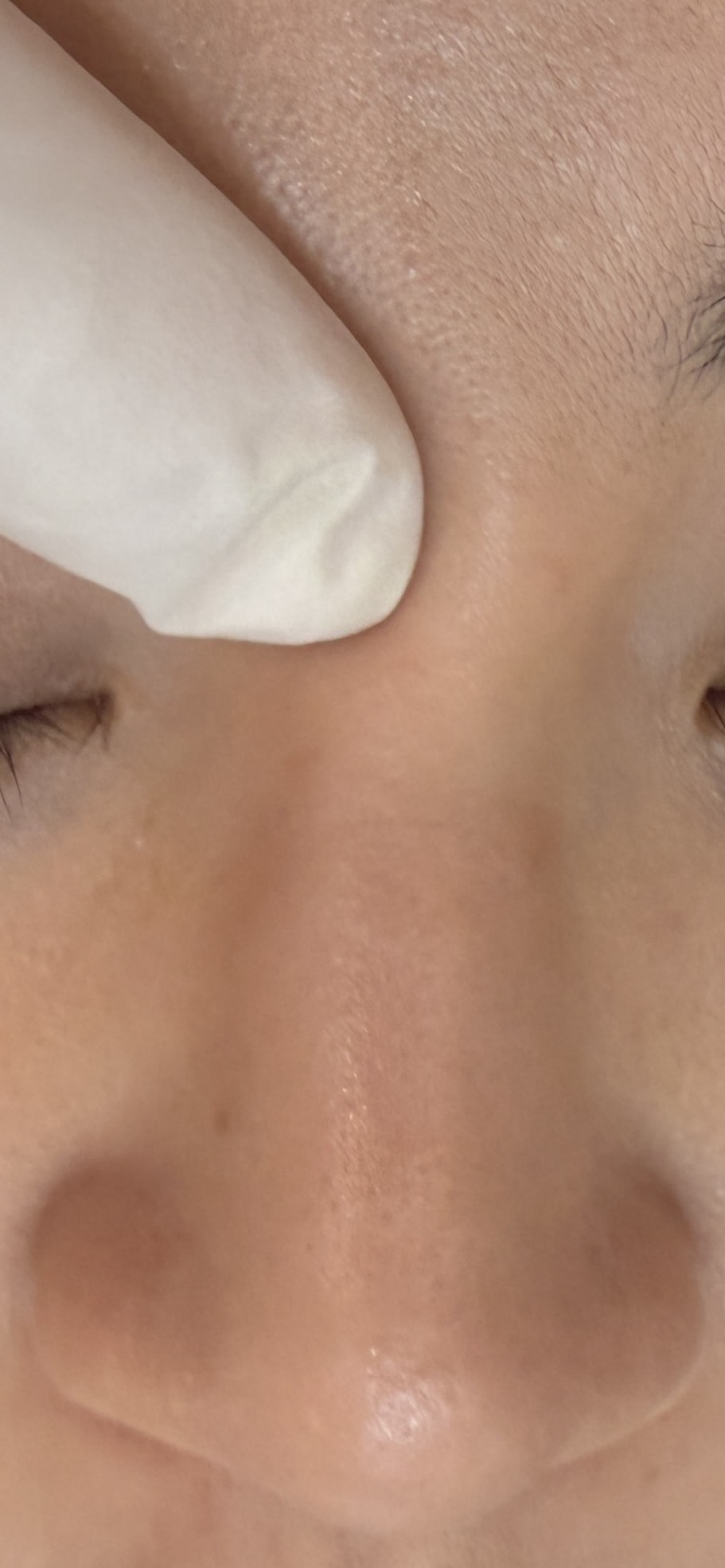
Why Won't My Sculptra Lumps Go Away After Steroid Injections?
"I've had four rounds of steroid injections for my Sculptra lumps. They get a little softer each time, but they always come back." At FILLER REVISION, this is one of the most common stories we hear. Patients arrive frustrated after months or years of repeated pharmacological treatments that never fully resolve the problem. In our clinical experience, the vast majority of Sculptra nodule patients who reach us have already attempted steroids, 5-FU (5-Fluorouracil), or both — and the lumps persist. Steroid and 5-FU treatments have a ceiling of effectiveness against encapsulated Sculptra nodules, and understanding why helps clarify what treatment can actually work.
What If "Botched Sculptra" Means Something Other Than a Lump?
This page covers one specific problem: firm lumps or nodules that steroid injections have not resolved. If the result you are unhappy with is one side looking fuller than the other, see facial asymmetry after filler. If the face looks heavy or overfilled, see already overfilled: a staged approach. Sculptra builds volume gradually over several months, so an uneven result soon after a session is not yet the final one. A lump you can feel under the skin is the subject of the rest of this page.
Understanding Sculptra and Why Nodules Form
What Is Sculptra?
Sculptra is an injectable containing poly-L-lactic acid (PLLA) microparticles suspended in a water-based solution. Unlike hyaluronic acid fillers that provide immediate volume, Sculptra works by stimulating the body to produce its own collagen over several months.
← Swipe to see more →
| Characteristic | Detail |
|---|---|
| Active ingredient | Poly-L-lactic acid (PLLA) |
| Mechanism | Collagen stimulation, not direct filling |
| Duration | 2–3 years or longer |
| Dissolvable | No enzyme or medication available |
| U.S. FDA (Food and Drug Administration) approvals | 2004: facial fat loss in people with HIV; 2009: cosmetic use in immune-competent adults |
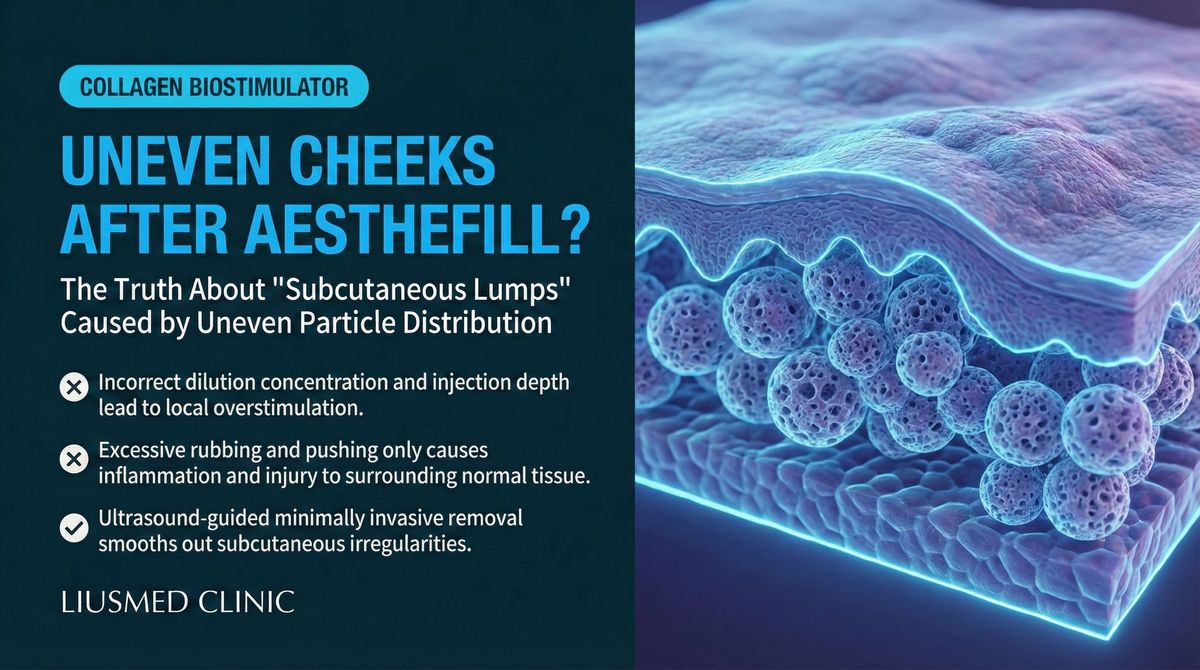
Why Do Sculptra Nodules Form?
Nodule formation with Sculptra occurs through several mechanisms:
← Swipe to see more →
| Cause | Mechanism |
|---|---|
| Insufficient dilution | Concentrated PLLA (Poly-L-Lactic Acid) particles cluster and provoke stronger tissue reaction |
| Inadequate massage | Uneven distribution creates focal areas of high PLLA concentration |
| Wrong injection plane | Superficial placement in areas with thin tissue coverage |
| Patient susceptibility | Individual variation in foreign body response |
| High-risk areas | Periorbital region, lips, nose—areas with thin skin and limited tissue |
The Encapsulation Process
When PLLA particles concentrate in one area, the body responds with a foreign body granulomatous reaction — covered in depth in Sculptra granulomas and delayed-onset nodules:
- Macrophages surround the PLLA particles
- Giant cells form to engulf the foreign material
- Fibroblasts deposit collagen around the inflammatory focus
- A fibrous capsule forms, walling off the material
- The encapsulated nodule becomes a self-contained structure
Once this capsule is fully formed, the PLLA particles inside are effectively shielded from external treatments.
Key Insight: At FILLER REVISION, we see this pattern regularly — encapsulation is the body's defense mechanism against foreign material. Once complete, the capsule wall acts as a barrier that prevents medications—including steroids—from reaching the PLLA particles inside. This is why patients who have tried multiple steroid rounds without resolution need a fundamentally different approach.
What Are the Real Risks of Sculptra, and What Lowers Them?
Nodules are the most commonly reported problem with PLLA, and most are felt rather than seen. In a retrospective series of 130 cosmetic patients, nodules were the most common reaction (8.5%); almost all were palpable and only one was visible, and the hands (12.5%) and cheeks (7.2%) had the highest rates (Palm et al. 2010). Relatively high rates of nodules and papules were reported in the early years of PLLA use, and a later review credits updated preparation and injection methods with improving its safety (Bartus et al. 2013). Most of the causes in the table above are ones an injector can control: a review of PLLA technique links papules and nodules to incorrect reconstitution, uneven distribution of the suspension, superficial injection, and lack of post-treatment massage (Narins 2008).
If you are considering Sculptra, the risk is lower when the injector:
- Prepares the product correctly, with adequate dilution and an even suspension
- Injects deep enough and avoids thin-skinned areas such as around the eyes and lips
- Spreads treatment over several sessions instead of correcting everything at once
- Gives you a clear massage routine for the days after each session
Technique is not the whole story. In a Brazilian series of 55 collagen-biostimulator complications collected by ultrasound specialists (about half involved another PLLA brand and about one in five involved Sculptra), only one case had been injected at the wrong depth, and the authors suggested the problems seemed related more to the properties of the products than to technique (Ianhez et al. 2024). A careful injector lowers the risk but cannot remove it.
How Does Sculptra Compare With Other Fillers for Nodule Risk?
The biggest difference between fillers is not how often lumps happen but what can be done once they have formed. Hyaluronic acid (HA) filler can be broken down with the enzyme hyaluronidase. PLLA (Sculptra and other PLLA brands), calcium hydroxylapatite (Radiesse) and polycaprolactone (Ellansé) do not respond to that enzyme. In the same Brazilian series, hyaluronidase helped only in cases where calcium hydroxylapatite had been mixed with HA (Ianhez et al. 2024). For a side-by-side comparison of which collagen stimulators can be removed if they go wrong, see next-gen collagen biostimulators compared, and for Sculptra, Aesthefill and Ellansé specifically, see collagen stimulator safety comparison.
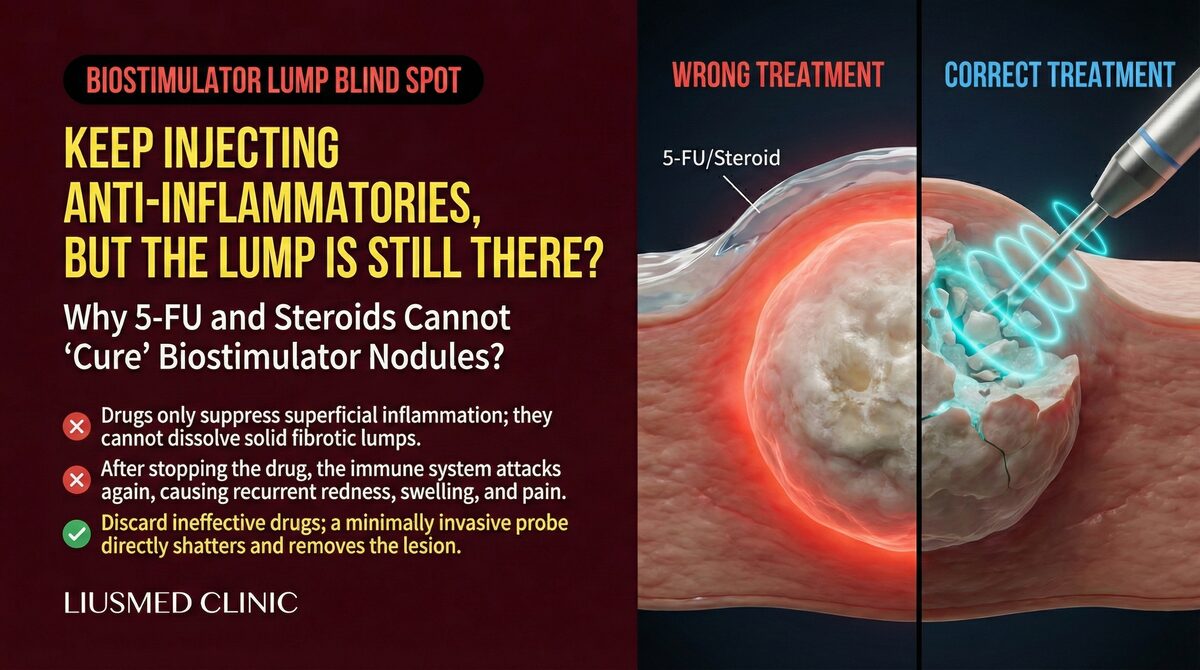
Why Steroids and 5-FU Reach Their Limits
How Steroids Work on Nodules
Intralesional corticosteroids (typically triamcinolone acetonide) work by:
- Suppressing the inflammatory response around the nodule
- Reducing collagen synthesis by fibroblasts
- Softening the fibrous tissue through anti-inflammatory action
Why Steroids Fail on Encapsulated Nodules
← Swipe to see more →
| Stage | Steroid Effectiveness |
|---|---|
| Early inflammatory nodule (< 6 months) | Moderate to good—can reduce active inflammation |
| Partially encapsulated (6–12 months) | Limited—capsule restricts drug penetration |
| Fully encapsulated (> 12 months) | Poor—steroid cannot reach the PLLA core |
| Calcified or fibrotic (> 24 months) | Minimal—dense tissue blocks all penetration |
The fundamental problem: steroids work on the inflammatory component, but once encapsulation is complete, the primary issue is structural, not inflammatory. No amount of anti-inflammatory medication can dissolve a mature fibrous capsule.
The 5-FU Addition
5-Fluorouracil is sometimes combined with steroids in an attempt to inhibit fibroblast proliferation and reduce the fibrous capsule. While this can provide modest additional benefit in early nodules:
- Its penetration through mature capsules is limited
- It does not dissolve existing fibrous tissue
- Repeated injections carry risks of tissue damage
- Results are inconsistent for established nodules
Dr. Liu explains: "Steroids and 5-FU are reasonable first-line treatments for early Sculptra nodules. But if two or three rounds of injections have not significantly improved the lump, continuing the same approach is unlikely to yield different results. The capsule is simply too well-formed for medication to penetrate effectively."
The Risks of Repeated Steroid Injections
Tissue Atrophy: A Growing Concern
Each steroid injection carries cumulative risks that worsen with repetition:
← Swipe to see more →
| Complication | Description | Reversibility |
|---|---|---|
| Skin atrophy | Thinning of the skin overlying the nodule | Partially reversible over 6–12 months |
| Fat atrophy | Loss of subcutaneous fat around the injection site | Slowly reversible, may need filling |
| Telangiectasia | Visible dilated blood vessels on the skin surface | Often permanent |
| Hypopigmentation | Loss of skin color at the injection site | May improve but often persists |
| Dermal depression | Visible dip or crater around the nodule | May require secondary correction |
The Paradox of Over-Treatment
Repeated steroid injections can create a situation worse than the original nodule:
- The lump persists because the capsule is intact
- The surrounding tissue deteriorates from steroid effects
- The skin becomes thinner and more fragile
- Future extraction becomes more technically challenging due to compromised tissue quality
When Pharmacological Treatment Has Run Its Course: The FILLER REVISION Approach
The pattern we observe at FILLER REVISION is consistent: steroids and 5-FU work best on early, inflammatory Sculptra nodules — typically within the first six months. Beyond that window, the fibrous capsule matures and becomes a structural barrier, not an inflammatory one. Continuing steroid injections at this stage does not address the encapsulated PLLA core; instead, it risks progressive tissue atrophy and skin thinning that makes future correction more difficult. At FILLER REVISION, we recommend transitioning to extraction after two failed steroid rounds rather than persisting with diminishing returns. Our ultrasound-guided micro-extraction goes directly at the capsule and its contents, removing as much as can be done safely; depending on the extent and depth, it may need to be done zone by zone, in stages, or over more than one session.
Addressing the Capsule Directly: Ultrasound (Ultrasonography)-Guided Micro-Extraction
Why Physical Removal Works
When medications cannot penetrate the capsule, the logical solution is to bypass the capsule entirely through physical extraction. Ultrasound-guided micro-extraction:
- Directly accesses the encapsulated nodule through a pinhole of about 2 mm
- Physically separates the capsule and PLLA material from surrounding tissue
- Removes as much as is safe of the capsule, PLLA particles, and granulomatous tissue
- Checks what has been removed and what remains with real-time ultrasound
The Extraction Process
Pre-Operative Assessment:
- Detailed history: injection dates, volumes, areas, previous treatments
- Physical examination: palpation of all nodules, skin quality assessment
- Ultrasound mapping: location, depth, size, capsule characteristics, proximity to vital structures
The Procedure:
← Swipe to see more →
| Step | Detail |
|---|---|
| Anesthesia | Local anesthesia at and around the nodule, plus gentle pain-relief anesthesia |
| Entry point | Pinhole (1-2mm), no incision, in a concealed location |
| Approach | Ultrasound guides the instrument to the capsule |
| Separation | Careful blunt dissection separates the capsule from normal tissue |
| Extraction | The encapsulated material is removed through the pinhole |
| Verification | Ultrasound checks what has been removed and what remains |
| Closure | No sutures needed for the pinhole |
Post-Operative Care:
- Light pressure for 24 hours
- Ice application for the first 48 hours
- Avoid strenuous activity for 1 week
- Follow-up at about 14 days, 1 month, and 3 months
What Makes This Different From Surgical Excision?
Traditional surgical excision involves a larger incision and wider tissue removal. Micro-extraction differs in several important ways:
← Swipe to see more →
| Factor | Traditional Excision | Micro-Extraction |
|---|---|---|
| Wound size | 5–15mm incision | 1-2mm pinhole |
| Tissue removal | Wider margins | Targeted capsule only |
| Scarring | Visible scar likely | Virtually invisible |
| Anesthesia | May require general or regional anesthesia | Local anesthesia plus gentle pain-relief anesthesia |
| After the procedure | An incision wound also has to heal | Small pinhole, but swelling and bruising still occur, settling in about 2–3 weeks |
| Guidance | Visual or blind | Real-time ultrasound |
Recovery and Expected Outcomes
After Extraction
The pinhole is small, but this is an extraction, so swelling and bruising are expected. Swelling and bruising usually settle in about 2–3 weeks, the pinhole heals in about 2 weeks, and the final result takes about 3 months, varying from person to person. After extraction there is a period in which the swelling settles and firmness gradually softens; we go through the details at your consultation.
Managing Expectations
- Volume change: The area will appear flatter after nodule removal. This is normal and expected.
- Tissue quality: If multiple steroid injections were administered previously, the overlying skin may be thinner. Recovery of skin quality takes additional time.
- Secondary treatment: Volume restoration with safe HA (Hyaluronic Acid) filler can be considered after at least about 3 months, once the result is close to final.
- Recurrence: Recurrence after extraction is low. Follow-up ultrasound at 3 months confirms the outcome.
Dr. Liu's approach: "With someone who has had several rounds of steroid, I look at two things first: whether the nodule is still there, and how much the tissue around it has been thinned. Removal can substantially reduce the nodule, but the layer that was thinned won't come back with it. So the earlier the steroid stops, the more tissue you keep."
When Should You Stop Steroid Treatment and Consider Extraction?
Decision Framework
← Swipe to see more →
| Situation | Recommendation |
|---|---|
| First steroid injection, some improvement | Reasonable to try one more round |
| Two rounds with minimal change | Strongly consider extraction |
| Two or three rounds, lump persists | Stop steroids, proceed to extraction |
| Skin thinning or atrophy developing | Stop steroids immediately, assess for extraction |
| Multiple nodules in different areas | Comprehensive assessment with extraction planning |
Dr. Ta-Ju Liu: "If someone suggests another steroid injection, ask one question first: if this one doesn't work, what's the next step? If the answer is another injection again, it's worth stopping to think."
The earlier you transition to extraction, the better the tissue quality and the easier the procedure.
Can I Keep Having Steroid Injections While Planning Extraction?
It is better not to. Once extraction is the plan, further steroid still cannot reach the encapsulated core, and each extra round risks further thinning of the skin and fat that the extraction and the recovery depend on (see the atrophy table above). Stop the injections and let the ultrasound assessment decide the timing of extraction.
Frequently Asked Questions
Can Sculptra nodules resolve on their own?
PLLA is biodegradable and eventually breaks down over 2–3 years. However, once a mature capsule has formed, the fibrous tissue itself does not resolve. Patients may notice some softening over years, but the nodule typically remains palpable.
How long do Sculptra lumps last?
It depends on the kind of lump. Small lumps in the first weeks after a session are often uneven product and may settle. Nodules that appear later, or are still there after a few months, can last years. True foreign body granulomas are described as appearing months to years after injection and, without treatment, possibly remaining virtually unchanged for some years before resolving spontaneously (Lemperle et al. 2009). An encapsulated nodule, as in the answer above, may soften over that time but often stays palpable. Once a capsule has formed, treatment does not reliably shorten the course. In a series of 55 collagen-biostimulator complications, only five resolved completely despite saline, hyaluronidase, diluted corticosteroids and energy-based devices (Ianhez et al. 2024).
Is the extraction procedure painful?
Under local anesthesia plus gentle pain-relief anesthesia, most patients report only mild pressure during the procedure. Swelling and bruising are expected afterwards, and the discomfort is usually manageable with standard pain relief.
What if I have nodules in multiple locations?
Depending on the number, extent and location of the nodules, they may be treated in one visit or may need to be done zone by zone, in stages, or over more than one session. A comprehensive ultrasound assessment determines the optimal approach.
Will the Sculptra I had still produce collagen after the nodule is removed?
The collagen that has already been produced by Sculptra in healthy areas remains intact. Extraction targets only the problematic nodules, not the normally distributed PLLA.
Can steroid injections and extraction be combined?
Alternating between them is not recommended. If two rounds of steroids have made little difference, extraction is worth strongly considering (see the decision table above), and once extraction is the plan the steroid injections stop, because more steroid can thin the surrounding tissue without reaching the encapsulated PLLA. An ultrasound assessment sets the timing.
Move Beyond Repeated Failed Treatments
If you've already tried treatment for Sculptra nodules without success, FILLER REVISION specializes in exactly these cases. When steroids and 5-FU have reached their limits, our ultrasound-guided micro-extraction goes directly at the encapsulated nodule that medication cannot reach.
About the Author
Dr. Ta-Ju Liu
- Current Position: Director, Liusmed Clinic
- Specialties: Minimally invasive surgery (lipoma, cyst), hyperhidrosis surgery, thread lifting, filler complication repair
- Experience:
- 20 years of clinical minimally invasive surgery experience
- 10,000+ minimally invasive procedures, including 5,000+ filler revision cases
- Board-certified dermatologist
- Philosophy: "When medications have reached their limit, patients need a clear path forward—not more of the same treatment. Micro-extraction provides that definitive answer for encapsulated Sculptra nodules."
References
- Palm MD, Woodhall KE, Butterwick KJ, Goldman MP. Cosmetic use of poly-l-lactic acid: a retrospective study of 130 patients. Dermatol Surg. 2010;36(2):161-170. PMID: 20039924. DOI: 10.1111/j.1524-4725.2009.01419.x
- Bartus C, Hanke CW, Daro-Kaftan E. A decade of experience with injectable poly-L-lactic acid: a focus on safety. Dermatol Surg. 2013;39(5):698-705. PMID: 23379657. DOI: 10.1111/dsu.12128
- Narins RS. Minimizing adverse events associated with poly-L-lactic acid injection. Dermatol Surg. 2008;34 Suppl 1:S100-S104. PMID: 18547172. DOI: 10.1111/j.1524-4725.2008.34250.x
- Ianhez M, de Goés E Silva Freire G, Sigrist RMS, et al. Complications of collagen biostimulators in Brazil: Description of products, treatments, and evolution of 55 cases. J Cosmet Dermatol. 2024;23(9):2829-2835. PMID: 38693639. DOI: 10.1111/jocd.16343
- Lemperle G, Gauthier-Hazan N, Wolters M, et al. Foreign body granulomas after all injectable dermal fillers: part 1. Possible causes. Plast Reconstr Surg. 2009;123(6):1842-1863. PMID: 19483587. DOI: 10.1097/PRS.0b013e31818236d7
- Vleggaar D, Fitzgerald R, Lorenc ZP, et al. Consensus recommendations on the use of injectable poly-L-lactic acid for facial and nonfacial volumization. J Drugs Dermatol. 2014;13(4 Suppl):s44-s51. PMID: 24719078