
'After cheek filler, why did my whole face start to sag, with the nasolabial folds and jowls looking even more obvious?' 'My two cheeks are asymmetric, and on one side I can feel a lump.' That's how many people arrive. The cheek holds a lot of space and can take a great deal of filler — but its problem is usually not too little, it's volume and position. Filled with too much, in the wrong place, that weight presses the cheek tissue downward, and over time it looks saggy and heavy instead; uneven amounts and uneven absorption side to side turn into asymmetry; HA drawing water and spreading, or biostimulators clumping, leave palpable beads of hard lumps. (For mid-cheek pillowing, the Indian line, or skin-on-bone thinning, we have a dedicated Apple-Cheek page.) I don't rush to add more to prop it back up — first I use high-frequency ultrasound to see clearly: which layer the filler is in, how much there is, where the lumps are, and how the nerves and vessels run — then decide whether to reduce and remove, to support, or to precisely thin overly thick soft tissue.

Common Symptoms

Why cheeks sag more with filler — and turn asymmetric and lumpy
The cheek has a large subcutaneous space that can hold a lot of filler, which is exactly why it tends to get topped up again and again. But filler has weight — too much of it, placed too superficially or in the wrong place, presses the cheek's soft tissue downward, stretching the ligaments and skin, so over time it looks saggy and heavy instead, and the nasolabial folds and jowls become more obvious with it. When the amount, the layer, and the absorption rate aren't quite the same on both sides, asymmetry results. HA draws water and slowly spreads outward, and in the outer cheek near the malar septum the lymphatics clog easily, forming swelling that won't go away; biostimulators (PCL, PDLLA, CaHA) and permanent fillers clump into hard lumps and remain for many years. The problem is usually not 'not enough' — it's that the amount and the position themselves have gone wrong.

Why Traditional Treatments Fail
Why 'add more to prop it up' and 'keep injecting hyaluronidase' often make it worse
When the cheek sags, many people think, add a bit more to prop it back up — but filler has weight, and more of it usually makes the cheek heavier and the sag more obvious, setting up a saggier-with-every-round cycle. The real root of the sagging is that the supporting structure has loosened, not that there's too little volume. Hyaluronidase: it only works on HA, and lumps sealed in a thick capsule often won't dissolve cleanly; worse, the enzyme tends to dissolve the surrounding normal filler first, making the cheek's unevenness and asymmetry more obvious. Biostimulators and permanent fillers have no enzyme at all. Massage can't open a mature capsule; and if the asymmetry comes from migration or uneven absorption, forcibly filling the other side only leaves both sides messier. The problem is usually not 'not enough' — it's not having looked first at how much, which layer, and which kind of lump.
“The most common misunderstanding about the cheek is thinking that if it sags, you add more to prop it back up. But filler has weight, and when the cheek is overfilled that weight presses the tissue downward instead — the more you add, the more it sags. What usually turns the lightbulb on is what the ultrasound shows: the problem was never 'not enough,' it was too much volume in the wrong place, crushing the support. Seeing how much there is and where it went first, then deciding to remove, support, or thin, is far more honest than endlessly adding more.”
Dr. LiuStructure > volume: sagging isn't 'not enough' — see it first, then decide to remove, support, or thin
Ultrasound-Guided Pinhole Micro-Extraction
The cheek isn't the fuller the better. Filler has weight, and too much of it crushes the support and looks saggy — so we build trust on imaging: ultrasound first shows how much there is, which layer it's in, and which kind of lump it is, then we decide whether to remove, to support with a structural thread lift, or to thin precisely. We're not trying to fill the cheek up — we're tuning the weight and the layers back to smooth, symmetric, and natural.
Sagging is fixed with support, not more filling
Cheek sagging usually comes from filler weight crushing the support; more filler only makes it heavier. What's really needed is to remove the excess weight and rebuild three-dimensional support with a non-migrating structural thread lift.
For asymmetry, assess both sides together and reduce the excess first
Asymmetry often comes from uneven amounts, layers, or absorption between the sides. After ultrasound shows it clearly, the move is usually to reduce the excess and migrated material and leave it smooth, rather than forcibly filling the smaller side.
Remove it cleanly — and finish it evenly
After the excess and lumps are out, we support with a structural thread lift and sculpt with stacked-heating radiofrequency (Phoenix RF). Our standard isn't only removal but smooth, symmetric, and close-fitting — which also serves people with naturally thick cheeks who want a precise reduction.
Ultrasound-guided: see the amount and position first, then decide to remove, support, or thin
We treat the volume and the structure themselves. Before anything, high-frequency ultrasound maps what's inside the cheek: which layer the filler sits in, how much there is, where the lumps are, how thick the subcutaneous fat is, and how the nerves and vessels run. Once it's clear, we triage: the excess, migrated, and clumped material is removed precisely through a single pinhole under image guidance (the first session usually removes about 30–50%; with most fillers, two to three sessions can reach about 80–90% — not 100%, and it varies with fibrosis and from person to person), taking away the weight that was pressing down; true sagging and support are rebuilt with a non-migrating structural thread lift for three-dimensional support, rather than injecting more filler that drifts and worsens the sag; and if it's naturally or overly thick soft tissue, it's precisely thinned under ultrasound mapping and tightened with stacked-heating radiofrequency (Phoenix RF). For asymmetry we assess both sides together, reducing the excess and leaving the layers smooth, rather than simply filling the smaller side.
High-frequency ultrasound to read the amount, layers, and vessels
Local + gentle pain-relief anesthesia
Single-pinhole precise removal of excess and lumps
Structural thread support, radiofrequency sculpting to finish smooth

Before & After Results
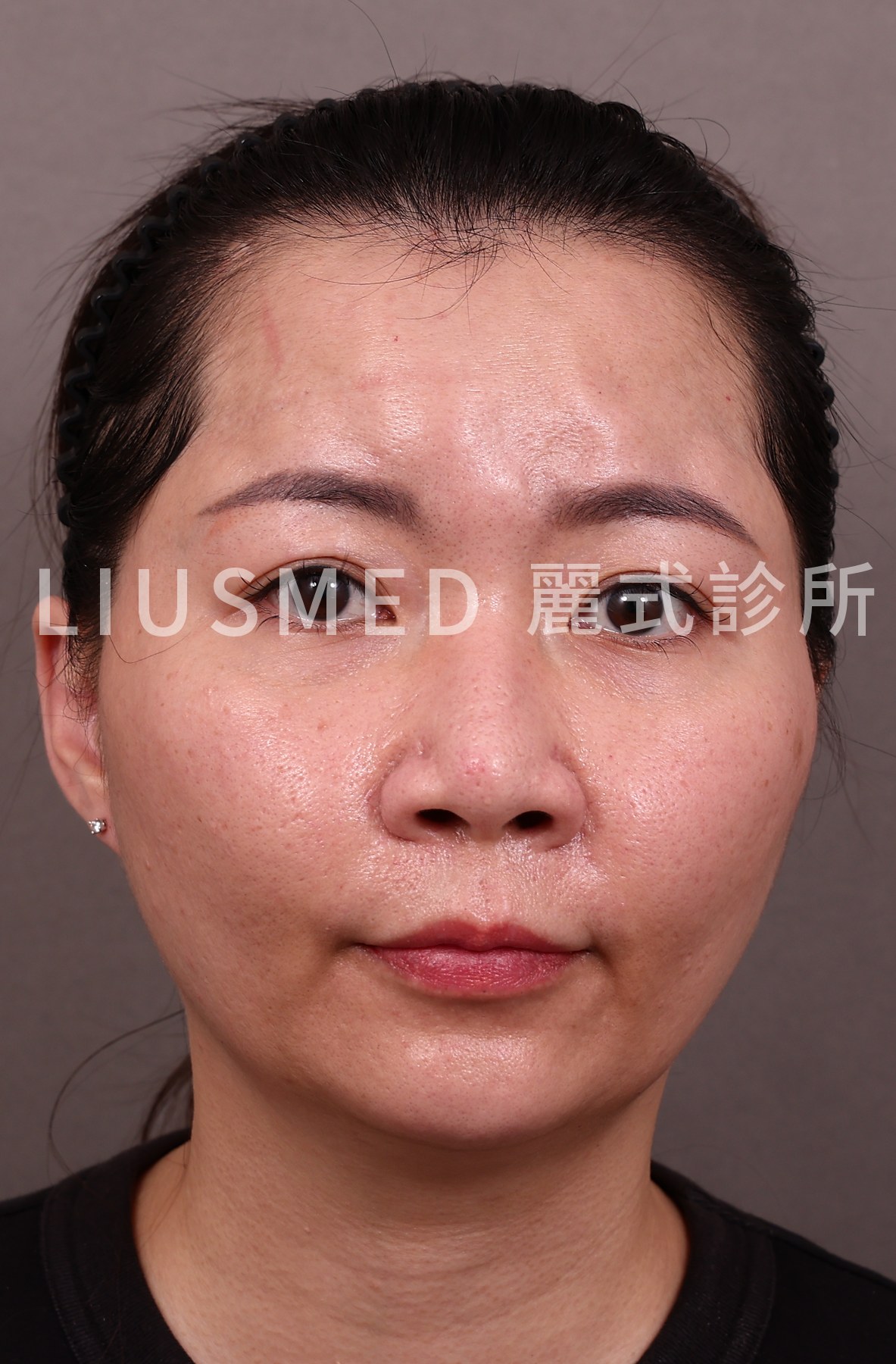
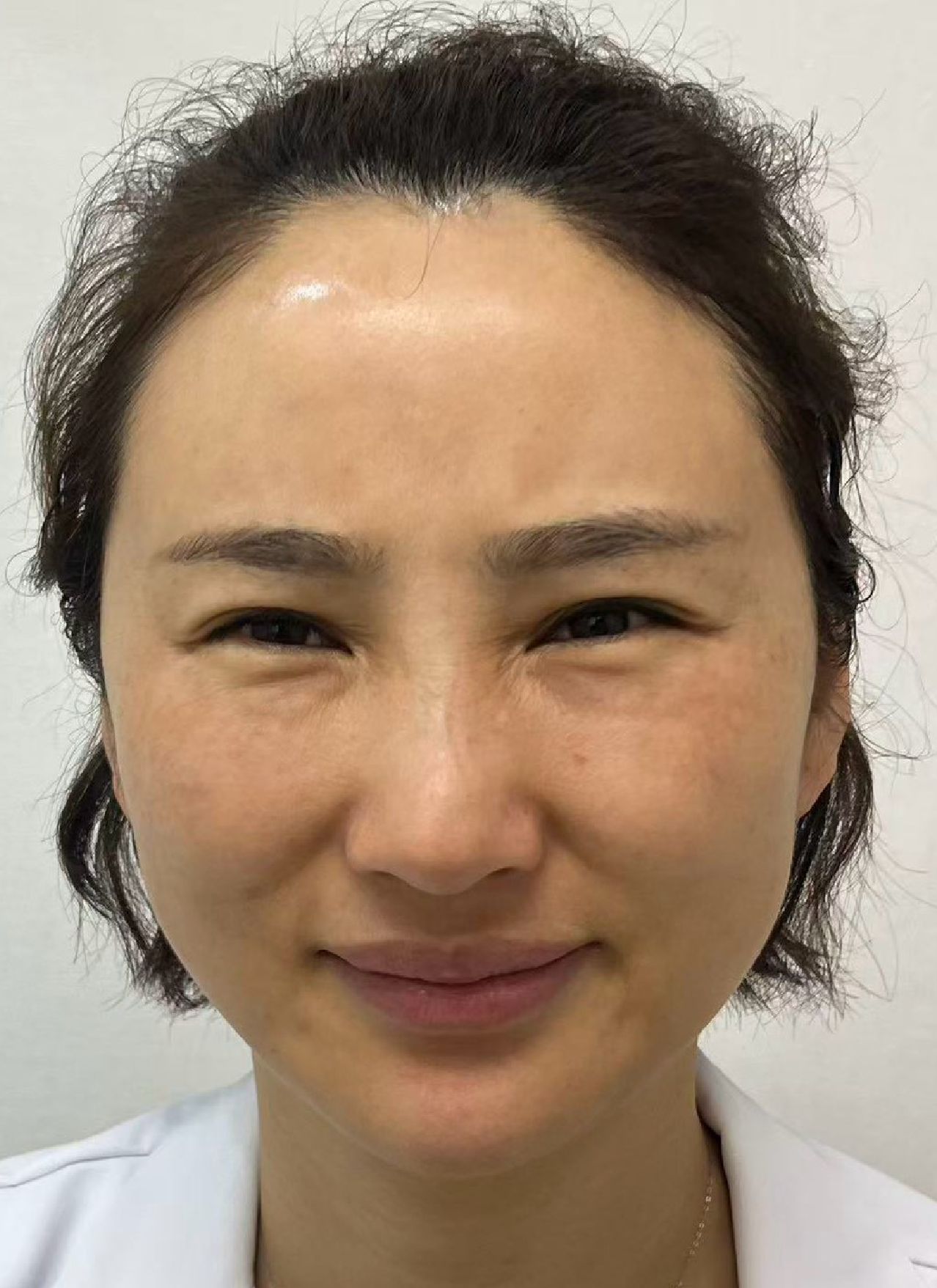
View real patient results for this condition, including ultrasound imaging before and after extraction.
View All Case ResultsCommon Questions
Very common — and usually not a matter of too little. Filler has weight, and too much of it in the wrong place presses the tissue downward, loosening the ligaments and skin, so it looks saggy and heavy instead. More filler only makes it heavier and saggier. Ultrasound first shows how much there is and which layer it's in; removing the excess weight and rebuilding truly loosened support with a structural thread lift is far more honest than endlessly adding more.
We don't recommend filling the smaller side straight away. Asymmetry often comes from uneven amounts, layers, or absorption between the two sides, or even migration. Ultrasound first shows what's actually going on with each side; more often the move is to reduce the excess and migrated material and leave it smooth, rather than forcibly filling the smaller side — otherwise both sides tend to grow larger and more asymmetric.
It depends on the material and whether it's encapsulated. Only HA has a matching enzyme, and when it's sealed in a thick capsule it often won't dissolve cleanly; the enzyme also tends to dissolve the surrounding normal filler first, leaving the cheek more uneven and asymmetric. Biostimulators (PCL, PDLLA, CaHA) and permanent fillers have no dissolving enzyme, so for those stubborn lumps ultrasound-guided physical removal is the more direct route.
For mid-cheek overfilling, pillowing, the Indian line, and skin-on-bone thinning, we have a dedicated Apple-Cheek page. This page focuses on the overall cheek's sagging, asymmetry, and lump removal. The two are often assessed together, and at consultation we look at both according to your actual situation.
That's exactly why we see it clearly and remove precisely, rebuilding support at the same time when needed. Simply taking away the excess weight usually reduces the sag; if the support was already loosened, we rebuild three-dimensional support with a structural thread lift and, when needed, tighten with radiofrequency, so the cheek finishes smooth after removal and doesn't collapse.
Our aim is to remove cleanly and evenly, but it is done in stages: the first session usually removes about 30–50%; with most fillers, two to three sessions can reach about 80–90%. It is not 100%, and it varies from person to person and with how much fibrosis there is. The point is to see the amount and position first and remove precisely, leaving the layers and both-side symmetry smooth, rather than repeated attempts that make things messier.
Not sure what is going on? Write it down and ask.
Describe what was injected, when, and what you are seeing now. Dr. Liu replies in the thread with an educational explanation of what it might be, what needs to be told apart, and which signs mean you should be seen soon. Posting can be anonymous, and other patients with the same problem can read the answer too.
Replies are general health education, not a diagnosis, and do not replace an in-person examination.

Read next: how we actually handle it
Case-by-case decisions, written by Dr. Ta-Ju Liu
Cheeks Sagging After Filler? Gravity-Induced Descent Repair
More cheek filler made the sagging worse? Gravity-induced filler descent is corrected with selective removal and tissue support restoration.
Facial Asymmetry After Filler? Correction With Ultrasound
Touch-ups didn't fix your post-filler asymmetry? FILLER REVISION uses bilateral ultrasound comparison to diagnose the cause and deliver targeted correction.
Filler Lump Extraction: Precision Removal That Spares Tissue
Ultrasound-guided pinhole (about 2 mm) extraction of filler lumps, including ones earlier treatment did not resolve, preserving normal tissue.
Does Cheek Filler Fix Nasolabial Folds? Why They Often Look Deeper — and How to Walk It Back
Does cheek filler fix nasolabial folds? Often it makes them look deeper and leaves cheeks heavier. Why the myth fails — and how to walk it back.
Overfilled Cheeks: Can the Filler Be Dissolved, or Must It Be Removed? A Decision Map
Overfilled cheeks: can the filler be dissolved or removed? HA often won't dissolve cleanly; biostimulators and permanent fillers have no antidote. A decision map.
References
- Frankeny A. Dissolving vs. removing fillers in the nose prior to rhinoplasty. American Society of Plastic Surgeons (ASPS) — interview with Richard Reish, MD, FACS (notes that large volumes of the enzyme can cause damage to the surrounding tissues).
- Karlin J, Vranis N, Dayan E, Parsa K. Post-Hyaluronic Acid Recurrent Eyelid Edema: Pathophysiologic Mechanisms and a Proposed Treatment Protocol. Aesthetic Surgery Journal Open Forum. 2023;5:ojad102. (Describes the malar septum as a relatively impermeable barrier and notes that compromised lymphatic drainage from HA filler slows interstitial fluid clearance.)
- Ianhez M, de Goés E Silva Freire G, Sigrist RMS, et al. Complications of collagen biostimulators in Brazil: Description of products, treatments, and evolution of 55 cases. J Cosmet Dermatol. 2024. (Lumps in 89.1% of 55 cases, complete resolution in only 9.1%, delayed onset in 60%.)
Related Real Cases
Documented ultrasound-guided extraction and rescue cases by Dr. Ta-Ju Liu.
The information on this website is for educational purposes only and does not constitute medical advice. Individual results may vary depending on personal conditions; actual outcomes cannot be guaranteed. All medical procedures carry potential risks and complications. Please consult a qualified physician before making any treatment decisions.
Featured Poster

Three rounds of dissolver. Still there?
Hyaluronidase only works on hyaluronic acid. If the filler is encapsulated, mixed, or not HA at all, it may not help. An ultrasound shows what is really there before you decide on removal.

Dissolved — and it still hurts?
Only a little filler left, hyaluronidase several times, and still the headaches, facial pain, neck and shoulder aches. We look for what remains on ultrasound, and a board-certified neurologist on our team assesses the pain with us.