
'I keep filling the nasolabial folds — so why does it get heavier and the fold look even deeper?' 'I can feel a hard cord along the fold, and hyaluronidase didn't help.' That's how many people arrive. A nasolabial fold isn't a simple crease you just 'top up' — it's a deep, structural depression from ligament and midface descent, not merely a lack of volume. The area also has limited tissue space, so filler pushed in doesn't spread evenly; it tends to gather into an encapsulated cord. HA also draws water and slowly spreads toward the mouth, pushing the perioral area forward into a heavy, protruding look. And the popular idea that stacking cheek filler will 'lift the fold flat' usually backfires — a higher cheek makes the step-off to the deep fold more obvious, so more gets added and it grows heavier still. So I don't rush to add more, and I don't rush to keep dissolving — first I use high-frequency ultrasound to see what it is: normal filler, an encapsulated lump, migration, or a granuloma; which layer it's in and how close it is to the vessels — then decide to dissolve what can be reached, remove what can't, and support what should be supported.

Common Symptoms

Why the nasolabial fold grows heavier with filler — and forms lumps
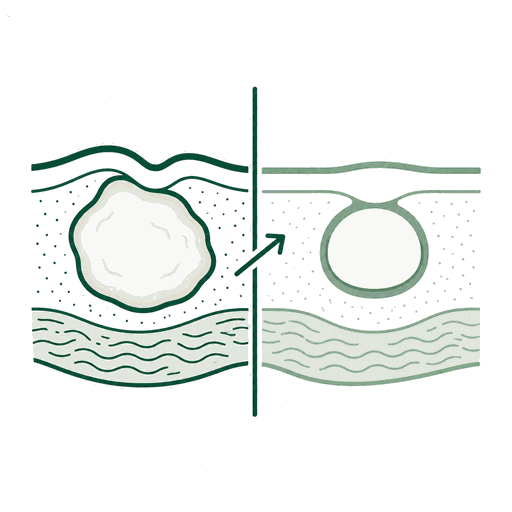
The nasolabial fold isn't a single line — it's a deep, structural depression, the groove left as ligaments and midface tissue descend with age and pull the skin down. The problem is often not too little volume but structure that keeps it from leveling. On top of that, the fold has limited tissue space, so filler pushed in doesn't distribute evenly and tends to gather into encapsulated cords. HA also draws water and spreads, over time drifting toward the mouth and pushing the perioral region forward into a heavy look. Biostimulators (PCL, PDLLA, CaHA) and permanent fillers are designed to persist and have no dissolving enzyme like HA does, so they can remain for many years. Add the 'lift the fold indirectly by raising the cheek' approach — a higher cheek makes the step-off to the deep fold more obvious, the fold looks deeper, more is added, and the heavier-with-every-syringe cycle sets in.

Why Traditional Treatments Fail
Why 'add more' and 'keep dissolving' often aren't enough
Faced with a deepening fold and a palpable lump, the common moves are to add a bit more or dissolve it again — and both often fall short. Adding more: the fold is a deep depression, and raising the cheek to lift it only makes the step-off more obvious and the perioral area more protruding — heavier with each round. Hyaluronidase: it only works on HA, and material sealed in a thick capsule often won't dissolve cleanly; worse, the enzyme tends to dissolve the surrounding normal filler first, making the fold look deeper and the lump more obvious. Biostimulators and permanent fillers have no enzyme at all. Massage can't open a mature capsule; and a granuloma needs its inflammation controlled first rather than being aspirated. The problem is usually not 'not enough' — it's not having looked first at which kind of lump it is and which layer it's in.
“The most common misunderstanding about the nasolabial fold is treating it as: if it's sunken, keep filling; if it won't level, raise the cheek. But the fold is a deep, structural depression in a narrow area — filler pushed in doesn't spread evenly and often gathers into a cord; raise the cheek and the step-off only becomes more obvious, so it grows heavier with each round. What usually turns the lightbulb on is the ultrasound image — the problem was never 'not enough,' it's material caught in place, or a depression that should have been supported rather than filled. Tell which kind it is and which layer first, then decide to dissolve, remove, or support — that's far more honest than endlessly adding more.”
Dr. LiuStructure > volume: the fold is its own problem — see it first, then dissolve, remove, or support
Ultrasound-Guided Pinhole Micro-Extraction
The nasolabial fold isn't fill-it-when-sunken, raise-the-cheek-when-it-won't-level. It's a deep structural depression in a narrow area, where material tends to clump and spread toward the mouth. So we build trust on imaging: ultrasound first tells which kind of lump it is, which layer it's in, and how close to the vessels, then we decide to dissolve, remove, or support. We're not trying to fill the face up — we bring the perioral area back to light and treat the fold as its own problem, directly.
The fold is its own problem — don't raise the cheek to reach it
Flattening the fold via the cheek is indirect lift: a noticeable result needs real volume, and once the cheek is higher the step-off is more obvious and the fold looks deeper. We assess the fold as its own problem, directly, rather than adding more and more into the cheek.
Tell the lump type first, then dissolve or remove
HA that isn't yet encapsulated can be dissolved precisely under ultrasound guidance; material sealed in a thick capsule, and biostimulators and permanent fillers with no enzyme, are removed precisely through a single pinhole under image guidance; a granuloma has its inflammation controlled first.
Rebuild the depression with support, not more drifting filler
The fold and midface support are rebuilt with a non-migrating structural thread lift; after clean removal the layers are left smooth and the perioral area brought back to light — rather than injecting more filler that drifts.
Ultrasound-guided: tell which kind it is first, then dissolve, remove, or support
We treat the thing itself: the filler and lumps still sitting in the fold, and the depression that actually needs support. Before anything, high-frequency ultrasound shows what you can feel — normal filler texture, an encapsulated lump, migration, or a granuloma — which layer it's in, and how close it is to the facial artery and the vessels beside the nostril. The nasolabial fold and alar base are higher-risk vascular zones, so imaging makes the work more precise and safer. Then we triage: HA that isn't yet encapsulated is dissolved precisely under ultrasound guidance; material sealed in a thick capsule, along with biostimulators and permanent fillers that can't be dissolved, is removed precisely through a single pinhole under image guidance (the first session usually removes about 30–50%; with most fillers, two to three sessions can reach about 80–90% — not 100%, and it varies with fibrosis and from person to person); a granuloma has its inflammation controlled first; and the fold's own depression and midface support are rebuilt with a non-migrating structural thread lift rather than more filler that drifts. The goal is to remove cleanly, leave the layers smooth, and bring the perioral area back to light and natural.
High-frequency ultrasound to tell lump type and vessels
Local + gentle pain-relief anesthesia
Dissolve what can be reached, single-pinhole removal for the rest
Structural thread support, finished smooth
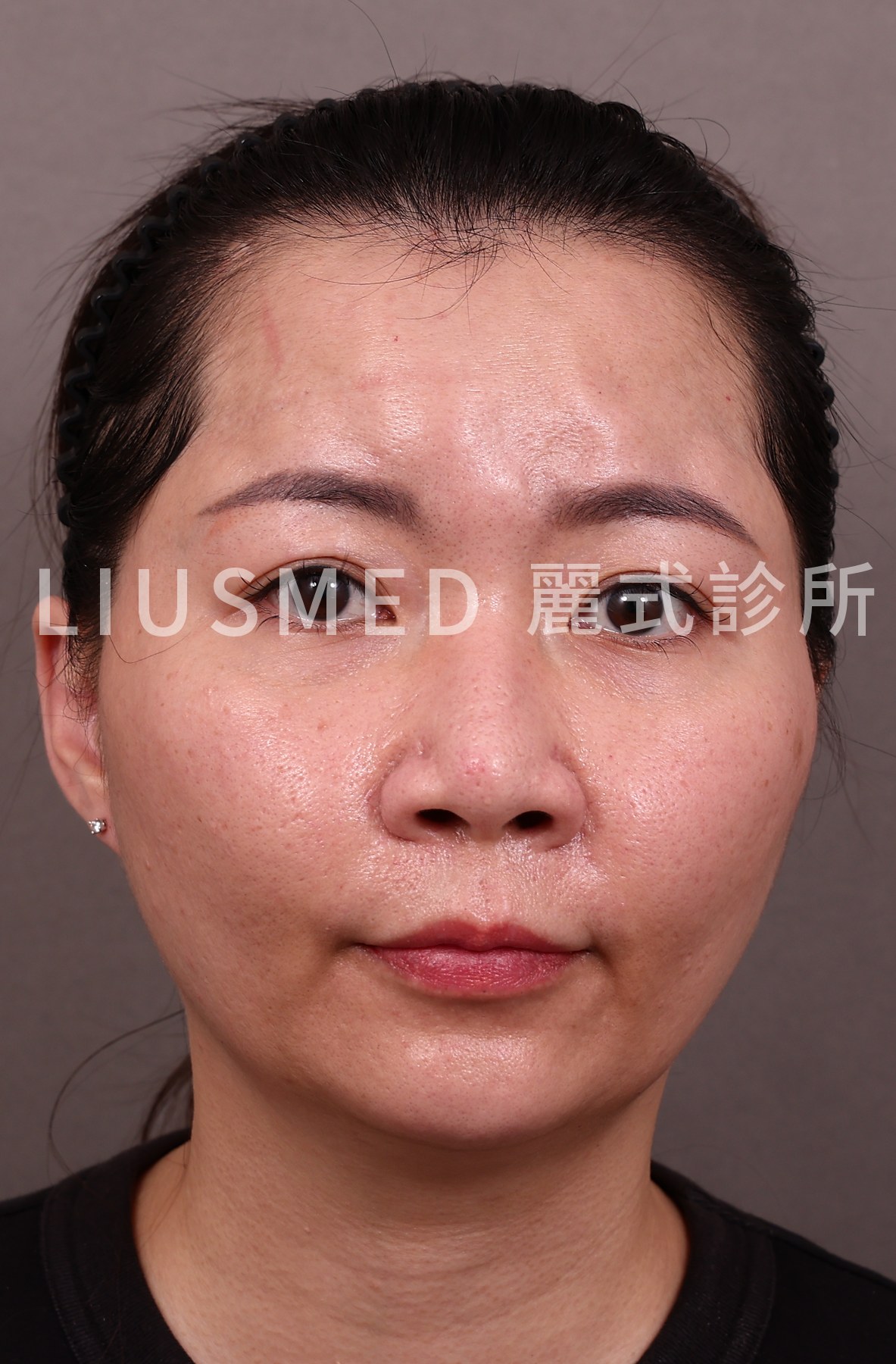
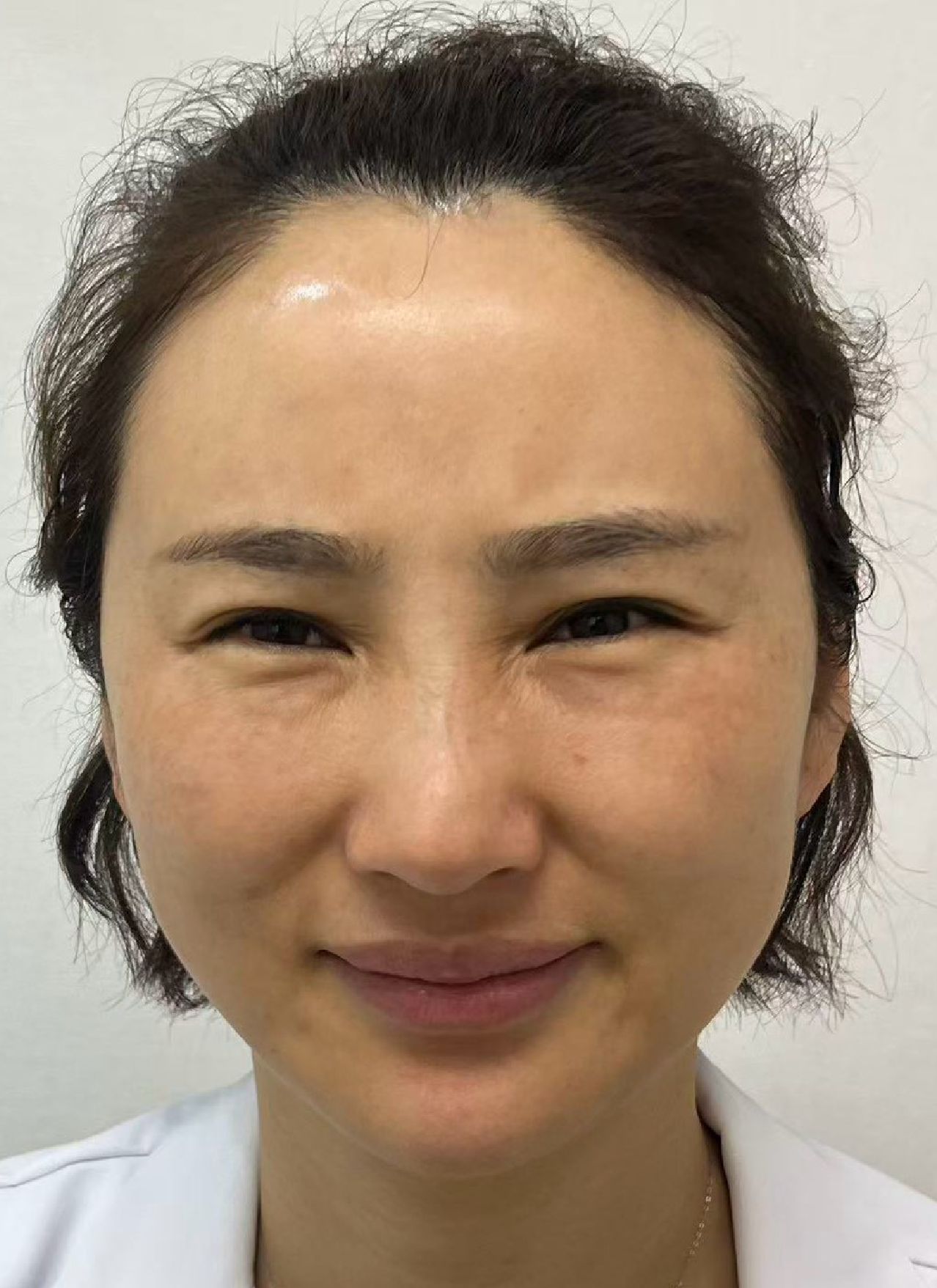
Before & After Results
View real patient results for this condition, including ultrasound imaging before and after extraction.
View All Case ResultsCommon Questions
Not necessarily a matter of wrong amount — more often it's structure. The fold is a deep structural depression in a narrow area, so filler doesn't spread evenly and tends to clump; and if the cheek is raised to flatten it indirectly, the step-off becomes more obvious and the fold looks deeper, so it grows heavier. Ultrasound first shows which layer the material is in and whether it has clumped or migrated, so we can decide to reduce, remove, or switch to support.
Not every palpable finding is a problem. In the first 2–4 weeks after injection a soft, compressible texture is usually normal filler; but a cord that keeps hardening, won't move, and never softens usually means it needs active treatment. Ultrasound can objectively tell whether it's normal filler, an encapsulated lump, migration, or a granuloma.
It depends on the material and whether it's encapsulated. Only HA has a matching enzyme, and when it's sealed in a thick capsule it often won't dissolve cleanly; the enzyme also tends to dissolve the surrounding normal filler first, making the fold look deeper and the lump more obvious. Biostimulators (PCL, PDLLA, CaHA) and permanent fillers have no dissolving enzyme, so for those stubborn lumps ultrasound-guided physical removal is the more direct route.
That's a common misconception. Lifting the fold via the cheek is indirect — a noticeable result needs real volume; a small amount is mostly temporary swelling that deflates back. And because the fold is a deep depression, raising the cheek higher makes the step-off more obvious, and many people feel the fold looks deeper afterward. We assess the fold as its own problem rather than stacking the cheek higher and higher.
It can be assessed. That perioral heaviness often comes from HA drawing water and spreading toward the mouth, plus too much overall volume. Ultrasound locates which layer it's in and where it has spread, then the excess and migrated portions are reduced and removed precisely to bring the perioral area back to light; if there's also a fold depression, that is addressed with support rather than more filler.
Our aim is to remove cleanly and evenly, but it is done in stages: the first session usually removes about 30–50%; with most fillers, two to three sessions can reach about 80–90%. It is not 100%, and it varies from person to person and with how much fibrosis there is. The point is to tell what it is first and remove precisely, leaving the layers smooth, rather than repeated attempts that make things messier.
Not sure what is going on? Write it down and ask.
Describe what was injected, when, and what you are seeing now. Dr. Liu replies in the thread with an educational explanation of what it might be, what needs to be told apart, and which signs mean you should be seen soon. Posting can be anonymous, and other patients with the same problem can read the answer too.
Replies are general health education, not a diagnosis, and do not replace an in-person examination.

Read next: how we actually handle it
Case-by-case decisions, written by Dr. Ta-Ju Liu
Nasolabial Fold Filler Lump: Hard Ridge Diagnosis & Removal
A hard ridge or lump in the nasolabial fold that won't dissolve? Ultrasound tells normal filler from nodules, displacement or granuloma to target care.
Does Cheek Filler Fix Nasolabial Folds? Why They Often Look Deeper — and How to Walk It Back
Does cheek filler fix nasolabial folds? Often it makes them look deeper and leaves cheeks heavier. Why the myth fails — and how to walk it back.
Cheeks Sagging After Filler? Gravity-Induced Descent Repair
More cheek filler made the sagging worse? Gravity-induced filler descent is corrected with selective removal and tissue support restoration.
References
- Frankeny A. Dissolving vs. removing fillers in the nose prior to rhinoplasty. American Society of Plastic Surgeons (ASPS) — interview with Richard Reish, MD, FACS (notes that large volumes of the enzyme can cause damage to the surrounding tissues).
- Ianhez M, de Goés E Silva Freire G, Sigrist RMS, et al. Complications of collagen biostimulators in Brazil: Description of products, treatments, and evolution of 55 cases. J Cosmet Dermatol. 2024. (Lumps in 89.1% of 55 cases, complete resolution in only 9.1%, delayed onset in 60%.)
Related Real Cases
Documented ultrasound-guided extraction and rescue cases by Dr. Ta-Ju Liu.
The information on this website is for educational purposes only and does not constitute medical advice. Individual results may vary depending on personal conditions; actual outcomes cannot be guaranteed. All medical procedures carry potential risks and complications. Please consult a qualified physician before making any treatment decisions.
Featured Poster
Three rounds of dissolver. Still there?
Hyaluronidase only works on hyaluronic acid. If the filler is encapsulated, mixed, or not HA at all, it may not help. An ultrasound shows what is really there before you decide on removal.

Dissolved — and it still hurts?
Only a little filler left, hyaluronidase several times, and still the headaches, facial pain, neck and shoulder aches. We look for what remains on ultrasound, and a board-certified neurologist on our team assesses the pain with us.