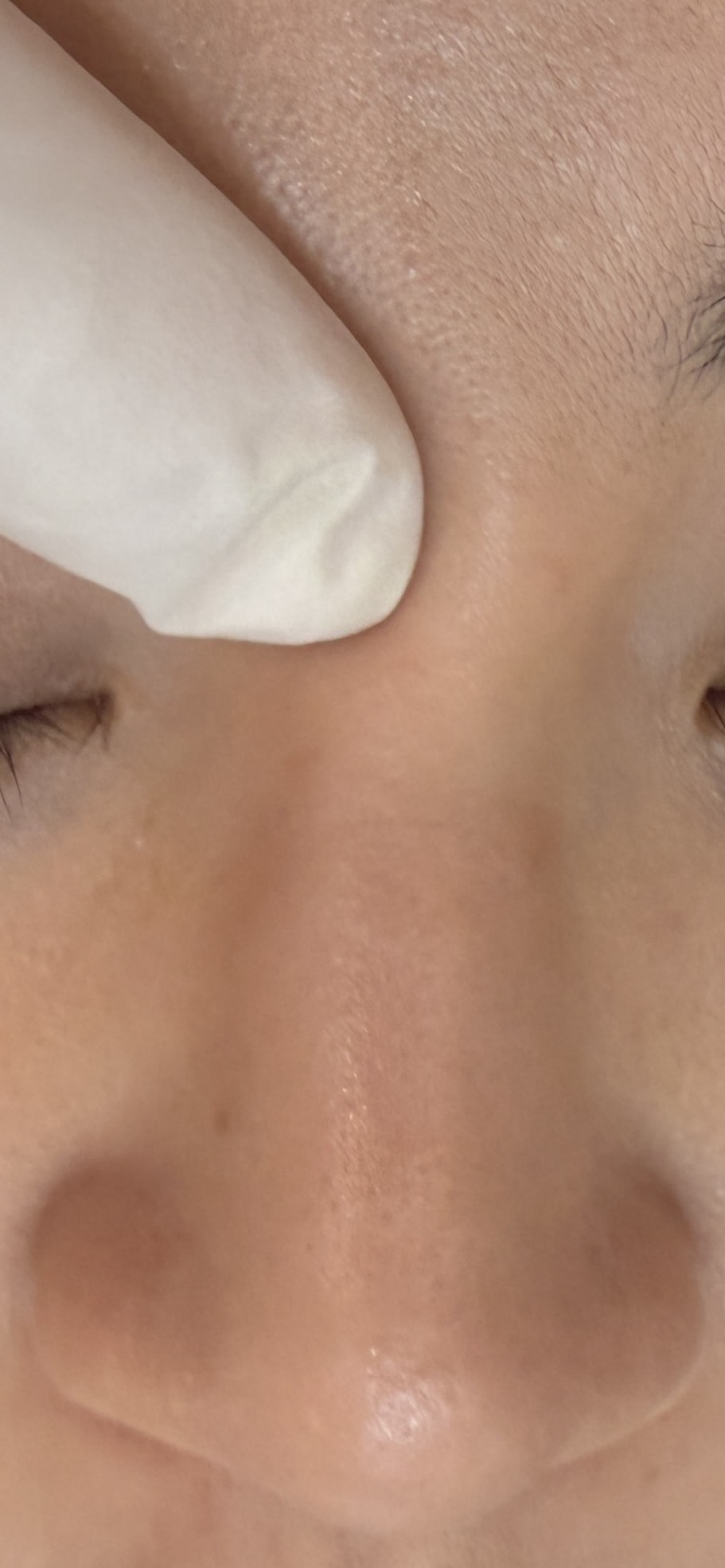
Does Minimally Invasive Surgery Still Require Scar Prevention?
"The extraction went smoothly, but I am worried about scarring — will people be able to tell I had something done?" This concern comes up in nearly every post-revision conversation. Recovery after revision surgery has special considerations for wound healing, because the tissue around the extraction site has already been altered by the original filler.
The wound from ultrasound-guided pinhole extraction is typically only 1-2mm — far smaller than traditional surgical incisions. However, even with extremely small wounds, proper care can make recovery more seamless and scars less visible. This is especially important for patients with wounds on exposed areas like the face.
How Pinhole Wounds Heal
The Four Stages of Wound Healing
← Swipe to see more →
| Stage | Timeframe | What Happens | Appearance |
|---|---|---|---|
| Hemostasis | Minutes to hours post-op | Platelets aggregate, forming a clot | Possible minor oozing |
| Inflammation | Days 1-5 post-op | White blood cells clear bacteria and debris | Mild redness and swelling |
| Proliferation | Days 5-21 post-op | New collagen and blood vessels form | Pink new tissue |
| Remodeling | 3 weeks to 12 months | Collagen reorganizes and matures | Scar gradually flattens and fades |
Key Insight: At FILLER REVISION, we reassure patients that a scar's final appearance takes 6-12 months to fully stabilize. The pink or slightly raised marks visible in the early post-operative period do not represent the final result. In revision cases, where tissue has already been through inflammatory changes, patience and consistent scar care are even more important — and most pinhole scars become virtually invisible.
Post-Operative Wound Care Timeline
Phase 1: Acute Period (Days 0-7)
← Swipe to see more →
| Care Item | Instructions |
|---|---|
| Keep clean | Clean wound as directed; gentle wipe with saline solution |
| Keep dry | Avoid prolonged wound moisture |
| Wound dressing | Use wound tape or hydrocolloid dressing provided by physician |
| Avoid touching | Do not touch or pick at the wound |
| Sun protection | Avoid direct sunlight on the wound area |
Phase 2: Early Healing (Weeks 1-4)
← Swipe to see more →
| Care Item | Instructions |
|---|---|
| Wound tape | Continue using cosmetic wound tape (e.g., 3M Steri-Strip) |
| Moisturizing | Begin gentle moisturizing after wound is fully closed |
| Sun protection | Strict sun protection with SPF (Sun Protection Factor) 50+ products |
| Avoid tension | Avoid pulling or stretching skin around the wound |
Phase 3: Scar Management (Months 1-6)
← Swipe to see more →
| Care Item | Instructions |
|---|---|
| Silicone gel/sheets | Begin using silicone-based scar prevention products |
| Continue sun protection | UV exposure causes scar hyperpigmentation |
| Massage | Begin gentle scar massage with physician approval |
| Monitor changes | Track scar color and texture evolution |
Scar Prevention Product Guide
Silicone Products: The Most Evidence-Backed Approach
← Swipe to see more →
| Product Type | Best For | How to Use | Recommended Duration |
|---|---|---|---|
| Silicone gel | Face and areas where sheets are impractical | Apply thin layer 2-3 times daily | 3-6 months |
| Silicone sheets | Larger or flatter areas | Wear 12-24 hours daily | 3-6 months |
| Silicone spray | Irregular or hard-to-reach areas | Spray 2-3 times daily | 3-6 months |
When to Start?
- Begin only after the wound has fully closed (the pinhole usually heals in about 2 weeks)
- Do not use while the wound still has drainage, redness, or incomplete closure
- If unsure, ask your physician at your follow-up appointment
Other Supportive Products
← Swipe to see more →
| Product | Function | When to Use |
|---|---|---|
| Onion extract gel | Anti-inflammatory, softens scar tissue | After wound closure |
| Vitamin E oil | Moisturizing (limited scar prevention evidence) | After wound closure |
| Centella asiatica extract | Promotes collagen synthesis | After wound closure |
Key Insight: Silicone-based products have the strongest evidence among non-invasive scar prevention methods. Consistent use for 3 months or more significantly reduces the likelihood of scar hypertrophy and hyperpigmentation.
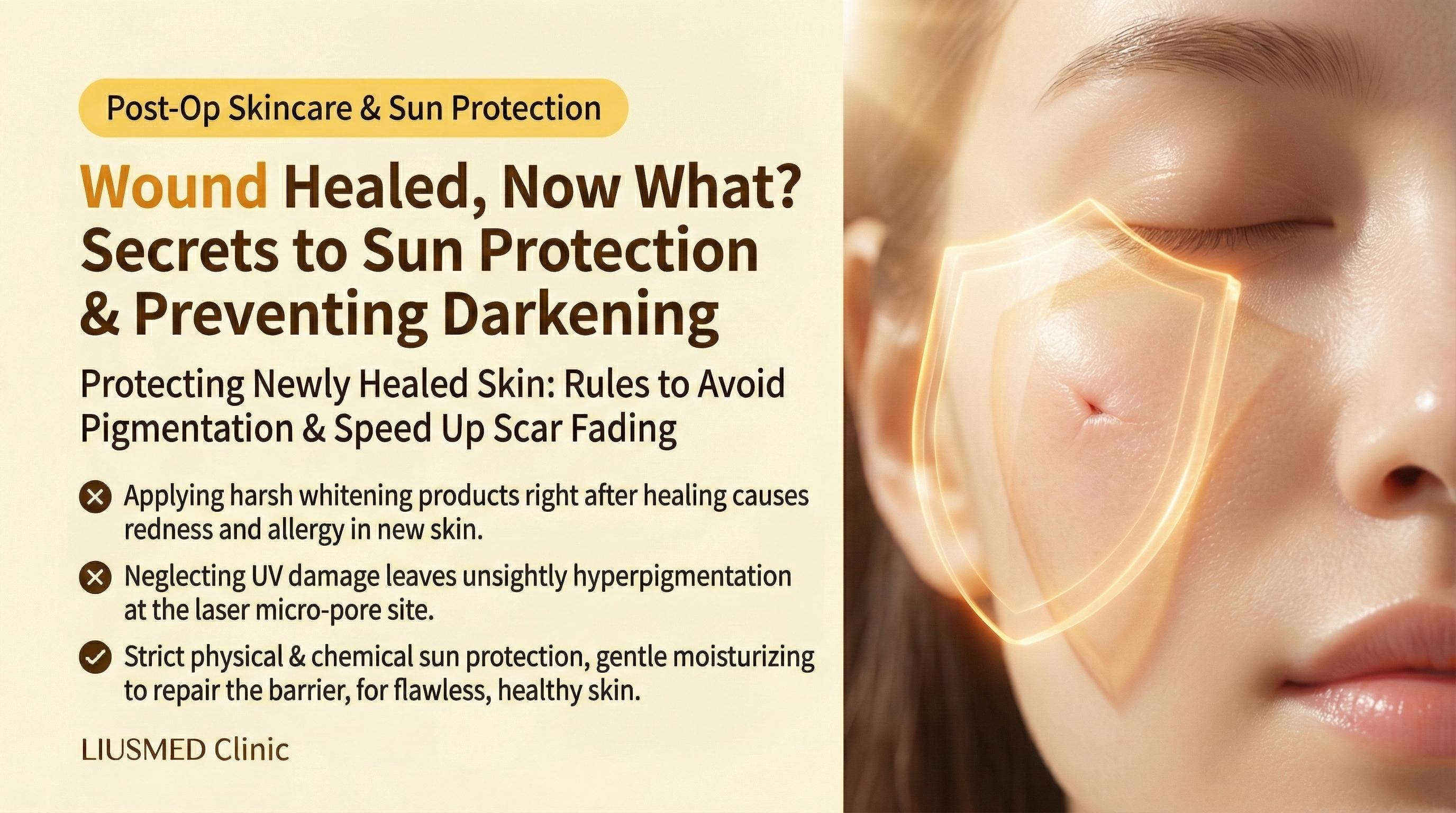
Sun Protection: The Most Overlooked Scar Prevention Measure
Why Is Sun Protection So Important for Scars?
Melanocytes in newly formed scar tissue are particularly active. UV exposure can cause:
← Swipe to see more →
| Problem | Details |
|---|---|
| Hyperpigmentation | Scar darkens, becoming more visible against surrounding skin |
| Delayed maturation | Disrupts normal scar remodeling |
| Persistence | Once pigmentation forms, it takes a very long time to fade |
Sun Protection Recommendations
← Swipe to see more →
| Recommendation | Details |
|---|---|
| SPF 50+ sunscreen | Apply daily after wound closure |
| Physical barriers | Hats, masks, sunglasses |
| Avoid midday sun | UV is strongest from 10 AM to 2 PM |
| Duration | Continue sun protection for at least 6-12 months |
| Reapply | Reapply sunscreen every 2-3 hours |
Recovery After Revision: Why Scar Prevention Deserves Extra Attention
Scar prevention after filler revision requires more careful attention than after a standard cosmetic procedure. The tissue around the extraction site has often been inflamed or fibrosed by the original filler, which can affect how the wound heals. Patients who had granulomatous reactions or long-standing permanent fillers may have altered collagen metabolism in the area, increasing the risk of hyperpigmentation or prolonged redness. At FILLER REVISION, we tailor scar prevention protocols based on each patient's tissue history — for example, starting silicone products earlier for patients with prior inflammatory complications or extending sun protection recommendations for those with darker skin tones. This revision-specific approach helps achieve the most invisible scars possible.
Special Considerations for Scar-Prone Individuals
Keloid-Prone Skin
If any of the following apply to you, please inform your physician before surgery:
← Swipe to see more →
| Warning Sign | Details |
|---|---|
| Previous raised scars | Prior wounds or surgical scars that became noticeably raised |
| Family history | Family members with keloid history |
| Ethnic factors | Certain ethnic backgrounds have higher keloid predisposition |
| Sensitive skin | Skin that is prone to allergic reactions or inflammation |
Additional Care for Scar-Prone Individuals
← Swipe to see more →
| Measure | Details |
|---|---|
| Extended silicone use | Recommend 6-12 months |
| Compression therapy | Apply compression where appropriate |
| Early intervention | Address signs of hypertrophy promptly |
| Laser treatment | Consider pulsed dye laser if needed |
| Injection therapy | Intralesional steroid injections for severe cases |
Frequently Asked Questions
Q: Will pinhole wounds really leave no visible scar?
The pinhole usually heals in about 2 weeks, and with proper care most then fade until they are hard to see. However, individual healing varies, and scar-prone patients may need more proactive management.
Q: Can I use makeup to cover the wound area?
After complete wound closure (the pinhole usually heals in about 2 weeks), makeup can be applied. Choose gentle, alcohol-free products. Apply scar prevention products first, then makeup over them.
Q: What if my scar turns red?
Early redness is a normal part of the proliferation phase. Continue using silicone products and sun protection; most redness fades within 3-6 months. If redness persists or the scar becomes raised, schedule a follow-up evaluation.
Q: Can laser treatment improve the scar?
If a scar remains visible after 6 months, laser treatment may be considered. However, it should be performed after the scar has fully matured and by an experienced physician.
Conclusion: At FILLER REVISION, Even Small Wounds Deserve Great Care
One of the major advantages of minimally invasive revision surgery is the extremely small wound and nearly invisible scarring. But the difference between "nearly invisible" and "truly invisible" often depends on the quality of post-operative care — and at FILLER REVISION, we guide you through every step of that process.
For more recovery information, see our minimally invasive standards and week-by-week recovery timeline. For details on the surgical technique, read the ultrasound-guided pinhole extraction explainer.