Why Do Cheeks Become Bumpy Months After AestheFill?
"My cheeks were smooth for the first few months after AestheFill. Then lumps started appearing, and three rounds of 5-FU (5-Fluorouracil) didn't fix them." At FILLER REVISION, AestheFill complications have become one of our fastest-growing consultation categories. Patients arrive after multiple failed rounds of pharmacological treatment, often surprised to learn that their PDLLA (Poly-D,L-Lactic Acid) nodules require a fundamentally different approach than medication alone.
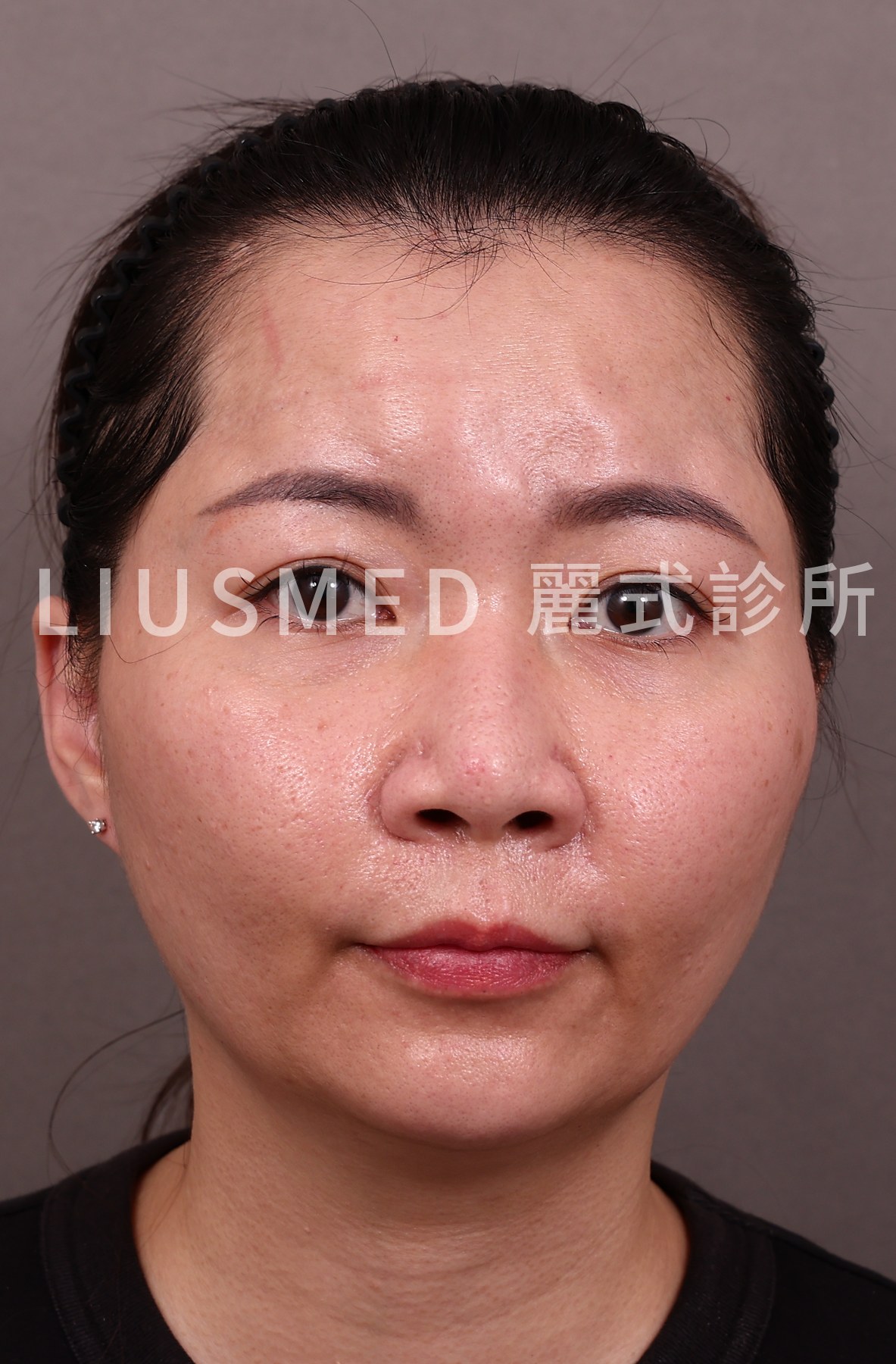
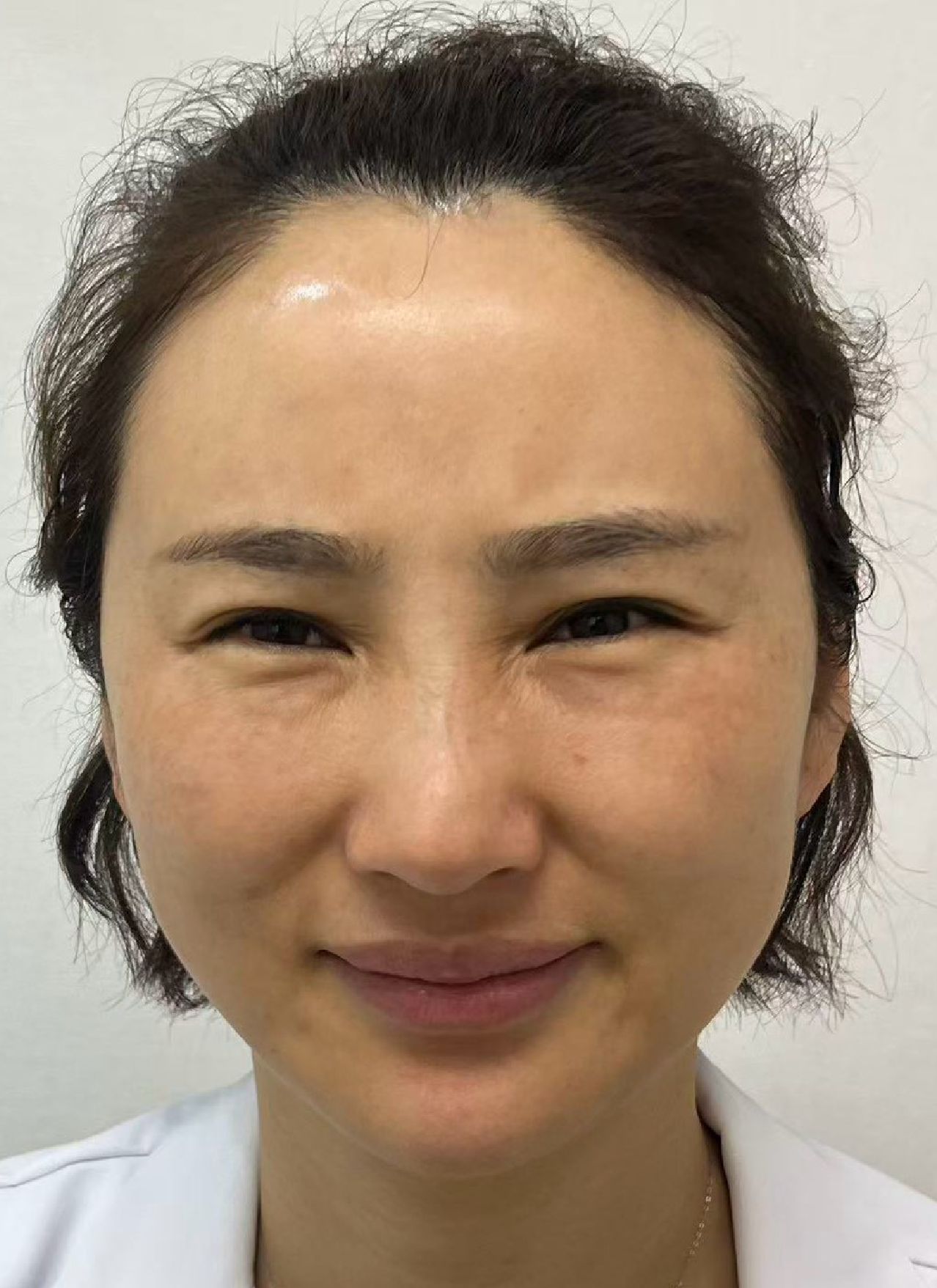
However, a significant number of patients find that three to six months after injection, the anticipated "natural plumpness" transforms into uneven cheek contours, palpable hard lumps, or even visible subcutaneous nodules. The shift from anticipation to distress leaves many patients feeling helpless.
Key Insight: At FILLER REVISION, we see this pattern regularly — although AestheFill (PDLLA) and Sculptra (PLLA) share similar chemistry, their microsphere morphology and degradation kinetics differ, and these differences influence the pattern and severity of complications. This distinction matters for treatment planning.
Understanding AestheFill: Composition, Mechanism, and Risks
PDLLA Microsphere Characteristics
The core component of AestheFill is PDLLA microspheres. Unlike the pure L-form PLLA (Poly-L-Lactic Acid) in Sculptra, PDLLA is a copolymer of both D- and L-lactic acid:
← Swipe to see more →
| Property | AestheFill (PDLLA) | Sculptra (PLLA) |
|---|---|---|
| Chemistry | Poly-D,L-lactic acid | Poly-L-lactic acid |
| Crystallinity | Amorphous | Semi-crystalline |
| Degradation rate | Theoretically faster | Theoretically slower |
| Microsphere shape | Porous spheres | Irregular fragments |
| Collagen stimulation | Porous structure promotes cell ingrowth | Surface stimulates collagen formation |
Why Uneven Texture Develops
The causes of post-AestheFill texture irregularity are multifactorial:
-
Technical Factors
- Insufficient dilution: High microsphere concentration promotes aggregation
- Uneven injection depth: Variable placement creates non-uniform collagen stimulation
- Inconsistent injection speed: Some areas receive disproportionately dense deposits
-
Biological Factors
- Individual collagen response varies significantly between patients
- Local blood circulation affects degradation rate
- Tissue tension differences lead to variable collagen growth patterns
-
Microsphere-Related Factors
- Porous structure may provoke localized intense fibrosis
- Microsphere aggregation forms "cores" that become excessively wrapped in collagen
- Non-uniform degradation creates areas of persistent stimulation
Key Insight: Texture irregularity typically becomes apparent 2–6 months post-injection, coinciding with peak collagen production. The window between "looking great" and "growing concerned" can be alarmingly short.
Conventional Treatments and Their Limitations
5-FU (5-Fluorouracil) Injection
5-FU is an antimetabolite medication sometimes used to treat collagen stimulator nodules. It works by inhibiting fibroblast proliferation and reducing excessive collagen formation.
← Swipe to see more →
| Aspect | Details |
|---|---|
| Mechanism | Inhibits fibroblast DNA synthesis |
| Best suited for | Early inflammatory nodules |
| Frequency | Every 2–4 weeks |
| Typical course | 3–5 sessions |
| Limitation | Limited effect on mature fibrous capsules |
Steroid Injection
Intralesional steroid injection (triamcinolone) is also commonly attempted to soften nodules:
← Swipe to see more →
| Potential Benefit | Risk |
|---|---|
| Anti-inflammatory effect | Skin atrophy |
| Temporary softening | Hypopigmentation |
| Pain reduction | Telangiectasia |
| — | Fat atrophy (especially noticeable on the face) |
When 5-FU and Steroids Fail
Clinical experience shows that 5-FU and steroids have limited effectiveness in the following scenarios:
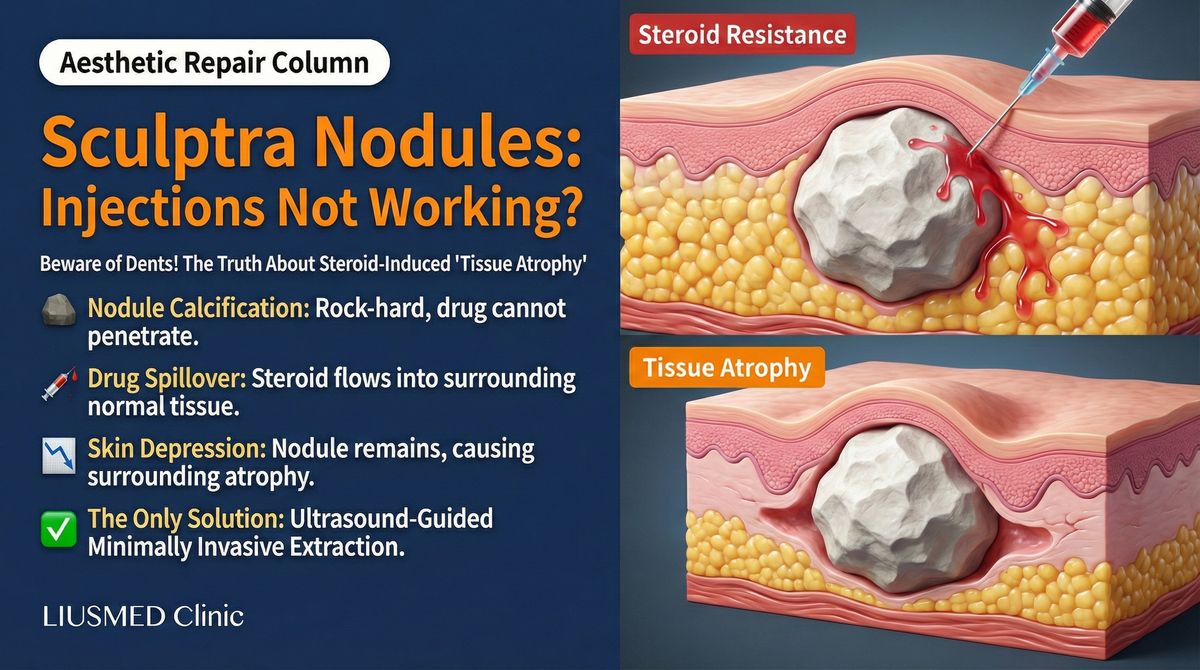
- Mature encapsulated lumps: Drugs cannot penetrate the fibrous barrier
- Heavily aggregated microsphere nodules: Medication reduces surrounding inflammation but the core material remains
- Multiple deep nodules: Superficial drug injections cannot reach deep lesions
- Nodules older than 6 months: Fibrosis has stabilized; drug efficacy diminishes
When 5-FU and Steroids Reach Their Ceiling: The FILLER REVISION Approach
At FILLER REVISION, the majority of AestheFill patients we treat have already completed three or more rounds of 5-FU or steroid injections without adequate resolution. The reason these treatments plateau is that AestheFill's porous PDLLA microspheres become surrounded by dense fibrous capsules that medication cannot penetrate. Additionally, the aggregated microsphere clusters form structural nodules that no anti-inflammatory or antimetabolite drug can dissolve. Our approach shifts from pharmacological suppression to physical removal: ultrasound-guided pinhole extraction that directly accesses and removes the aggregated microspheres and their fibrous capsules. This addresses what continued medication rounds cannot — depending on the extent and depth, it may need to be done zone by zone, in stages, or over more than one session — while avoiding the cumulative tissue damage from repeated steroid exposure.
Ultrasound (Ultrasonography)-Guided Extraction: When Medical Treatment Reaches Its Limit
AestheFill Nodules on Ultrasound
AestheFill nodules display characteristic features on ultrasound imaging:
← Swipe to see more →
| Ultrasound Feature | Clinical Significance |
|---|---|
| Well-defined hypoechoic nodule | Indicates capsule formation |
| Hyperechoic dots within the nodule | Residual PDLLA microspheres |
| Altered echogenicity of surrounding tissue | Reflects local fibrosis degree |
| Distance between nodule and skin surface | Determines whether surface irregularity is visible |
Indications for Extraction
Ultrasound-guided minimally invasive extraction should be considered when:
- Three or more 5-FU sessions have produced no significant improvement
- Steroid injections have caused skin atrophy while the lump persists
- Nodules have been present for over 6 months and affect appearance
- The patient cannot accept waiting 2–3 years for natural degradation
- Superficial nodules are severely disrupting facial contour
The Extraction Process
Assessment Phase
- Detailed history: AestheFill batch, injection date, treatment areas, and dosage
- Ultrasound scan: Document all nodule locations, dimensions, depth, and capsule characteristics
- Discuss realistic expectations with the patient
Surgical Phase
- Local anesthesia plus gentle pain-relief anesthesia
- 1–2mm pinhole, no incision
- Real-time ultrasound-guided approach to the nodule
- Fragment the capsule and extract aggregated PDLLA microspheres
- Ultrasound check of how much has been removed
Post-Procedure Phase
- Light compression for 24–48 hours
- Follow-up at about 14 days
- Ultrasound monitoring at 1 month and 3 months
Expected Results
← Swipe to see more →
| Nodule Type | Expectation (discussed individually after ultrasound assessment) |
|---|---|
| Single superficial nodule | Usually clear improvement; 100% removal not guaranteed |
| Multiple superficial nodules | Can treat several simultaneously |
| Deep nodules | Good improvement; may require pathway confirmation |
| Diffuse texture irregularity | Noticeable improvement; may need staged treatment |
Preventing AestheFill Complications
Pre-Injection Evaluation
- Understand your skin thickness and tissue conditions
- Confirm the practitioner's experience with AestheFill specifically
- Discuss injection volume (less is more)
- Establish a plan for managing complications if they arise
The Importance of Injection Technique
← Swipe to see more →
| Best Practice | Risk Practice |
|---|---|
| Adequate dilution | Insufficient dilution |
| Deep, uniform injection | Variable depth placement |
| Small volumes over multiple sessions | Large single-session volumes |
| Post-injection massage for even distribution | Neglecting post-injection massage |
| Avoiding thin-skinned periorbital area | Injecting in high-risk zones |
Do Not Let Texture Irregularity Become a Long-Term Burden
If you've already tried treatment for AestheFill lumps or uneven texture without success, FILLER REVISION specializes in exactly these cases. Our ultrasound-guided extraction provides the root-cause solution when 5-FU and steroids have reached their limits.
Further reading:
- Collagen Stimulator Nodules: What to Do When 5-FU Treatment Fails
- Sculptra Lumps: Options After Steroid Failure
- Minimally Invasive Filler Lump Extraction Technique
Frequently Asked Questions
Why did my cheeks become bumpy only months after my AestheFill injection?
Texture irregularity from AestheFill typically becomes apparent 2–6 months after injection, because this coincides with the peak period of collagen production around the porous PDLLA microspheres. During this window, the cheeks can shift from looking smooth and plump to developing uneven contours or palpable lumps within a fairly short time. This delayed onset is a recognized pattern with PDLLA, not a sign you did anything wrong.
I've had several rounds of 5-FU and steroid injections, but my lumps are still there. Why didn't they work?
5-FU and steroids have limited effect once nodules become mature and encapsulated, because the drugs cannot penetrate the dense fibrous capsule that surrounds the aggregated microspheres. They may reduce the surrounding inflammation, but the core material remains in place. Effectiveness also diminishes for nodules older than 6 months, when the fibrosis has stabilized.
What does the ultrasound-guided extraction actually involve, and is it a big operation?
It is a minimally invasive procedure done under local anesthesia plus gentle pain-relief anesthesia through a 1–2mm pinhole. Using real-time ultrasound guidance, the doctor approaches the nodule, fragments the capsule, and extracts the aggregated PDLLA microspheres, then checks with ultrasound how much has been removed. Afterward, light compression is applied for 24–48 hours, with a follow-up at about 14 days and ultrasound monitoring at 1 and 3 months. As an honest note, minimally invasive does not mean painless, but with local anesthesia the doctor can communicate with you in real time and pause whenever needed.
How much improvement can I realistically expect, and can it be done in one session?
A single superficial nodule usually improves clearly, but we can't guarantee 100% removal; the goal is as much improvement as can be achieved safely, and a return to natural contours. Multiple superficial nodules can often be treated at the same time. Deeper nodules generally improve well but may require pathway confirmation, and diffuse texture irregularity shows noticeable improvement though it may need staged treatment. Your specific expectations are discussed individually based on the ultrasound assessment of your nodules.
When should I stop trying injections and consider extraction instead?
Extraction is worth considering when two or three rounds of 5-FU have produced no significant improvement, or when steroid injections have caused skin atrophy while the lump still persists. It is also reasonable when nodules have been present for more than 6 months and affect your appearance, when you cannot accept waiting 2–3 years for natural degradation, or when superficial nodules are severely disrupting your facial contour. An ultrasound assessment helps determine which situation applies to you.
About the Author
Dr. Ta-Ju Liu
- Current Position: Director, Liusmed Clinic
- Specialties: Minimally invasive surgery, filler complication repair, ultrasound-guided extraction
- Experience: 20 years of clinical minimally invasive surgery; 10,000+ minimally invasive procedures, including 5,000+ filler revision cases
- Philosophy: "Managing collagen stimulator complications requires patience and precision. Medical treatment has its role, but when medication reaches its limit, minimally invasive extraction provides the definitive answer."