
"I showed my injector the photos where I look puffy and she said it's just the lighting. But I see it in every photo now." At FILLER REVISION, overfilled patients arrive carrying years of self-doubt — wondering if they're imagining the problem because the person who created it keeps telling them everything looks fine. Overfilled syndrome — 'pillow face,' 'filler fatigue,' 'filler face' — develops so gradually that both patient and injector lose sight of the baseline. After years of repeated filler treatments, the face loses its natural contours, light-shadow dynamics, and movement patterns. Studies show patients who receive regular treatments over 5+ years may accumulate 2-4x more residual volume than they realize, as products persist far longer than their marketed duration. The hardest step isn't the procedure — it's recognizing that less will look better, not worse.

Common Symptoms

The Cumulative Volume Trap
At FILLER REVISION, overfilled patients describe the same awakening: they saw themselves in a candid photo, a video call, or a friend's unfiltered snapshot — and suddenly couldn't unsee it. The realization typically comes after 5-10 years of regular injections, and the cycle that brought them here is remarkably predictable. Fillers are marketed with durations of 6-18 months, but imaging studies demonstrate that product can persist for 5-10+ years. When new filler is injected before the previous volume has been absorbed, layers accumulate—compressing native tissue, stretching the skin envelope, and weighing down the facial framework. The skin adapts to the expanded volume, creating a visual 'new normal' that both patient and injector unconsciously calibrate to. Each subsequent treatment adds to the total burden. The face gradually loses its skeletal definition, dynamic movement becomes restricted, and gravity pulls the excessive volume downward—paradoxically accelerating the aged, heavy appearance that filler was meant to prevent.

Why Traditional Treatments Fail
The Dissolve-and-Deflate Fear
The primary barrier to treatment is psychological: patients fear that removing their filler will make them look aged or deflated. This fear is often reinforced by injectors who benefit from continued treatments. Blanket hyaluronidase dissolution—dissolving everything at once—can indeed produce an initial 'deflated' appearance because it removes all product indiscriminately, including volume in areas that still benefit from support. The key is strategic reduction, not total removal. Without ultrasound guidance, clinicians cannot differentiate between excess volume causing distortion and volume that is contributing to proper facial support—leading to over-correction in some areas and under-correction in others.
“At FILLER REVISION, the most emotional moment is always the same: an overfilled patient looks in the mirror after staged reduction and says, 'That's me — I haven't seen myself in years.' They came in terrified of looking older. Instead, they look like themselves again. Their own injector told them they looked great — but the mirror, the photos, and their own instincts were right all along. Every single time, less gives them more.”
Dr. LiuYour Face Is Buried Under Volume, Not Aged
Ultrasound-Guided Pinhole Micro-Extraction
The paradox of overfilled syndrome is that patients fear looking older without their filler — when in reality, the excess volume IS what makes them look older. Heavy, stiff, gravity-affected faces with lost skeletal definition are the hallmark of overfilling, not aging. Strategic reduction reveals the youthful architecture that was always there.
Your Bone Structure Is Still There — Buried Under Volume
FILLER REVISION patients are always surprised by what ultrasound reveals: their natural cheekbones, jawline, and chin are intact beneath years of accumulated product. Reduction doesn't age you — it uncovers the facial architecture that the filler was hiding.
Filler Blindness Kept You in the Cycle — Until Now
Both you and your injector gradually adapted to the overfilled appearance, recalibrating 'normal' with each session. The fear of looking 'deflated' is the final mechanism that keeps patients trapped. FILLER REVISION's staged approach breaks the cycle by letting you see improvement at each step.
The First Thing Patients Notice Is Their Smile
The most underappreciated benefit of revision isn't appearance at rest — it's movement. FILLER REVISION patients consistently say the same thing: 'I can smile again.' Natural facial expressions that excess volume had silently restricted for years come back immediately.
Strategic Volumetric Sculpting
We treat overfilled syndrome as a reductive sculpting procedure—carefully planned volumetric reduction through pinholes, not wholesale dissolution. Using ultrasound, we create a comprehensive filler volume map showing the location and quantity of product in every facial compartment. We then selectively reduce excess volume in the areas causing the most distortion (typically lower cheeks, perioral region, and periorbital areas) while preserving beneficial volume in structural areas (temples, chin, mid-cheek highlights). The result is restoration of natural facial architecture and dynamic movement.
Comprehensive Volume Assessment
Targeted Reduction by Zone
Skin Retraction Protocols
Staged Refinement

Before & After Results
View real patient results for this condition, including ultrasound imaging before and after extraction.
View All Case ResultsCommon Questions
This is the most common fear, but the opposite is typically true. Overfilled faces look heavy, stiff, and paradoxically aged. Strategic reduction restores the natural cheekbone definition, jawline contour, and light-shadow dynamics that define youthful appearance. Most patients report looking 'like themselves again' and receiving compliments about looking refreshed—not older.
Absolutely—this is the core advantage of our approach. Using ultrasound, we selectively target specific compartments for reduction. For example, we can reduce overfilled cheeks while preserving temple volume, or address perioral puffiness while maintaining lip definition. This precision is impossible with blind dissolution techniques.
There is no universal volume threshold—it depends on individual anatomy, bone structure, and facial proportions. The key indicators are loss of natural facial movement, obscured skeletal definition (invisible cheekbones, jawline), and the inability to see natural light-shadow contours. If your face looks different at rest versus in motion, or if you've lost the ability to see your natural bone structure, reduction should be considered.
Absolutely not—we strongly recommend a staged approach. We reduce the most problematic areas first, then reassess once the swelling has settled. This gives you control over the process, allows the skin to gradually retract, and helps avoid over-correction. Most patients need more than one staged session.
The pinhole is small, but this is an extraction, so swelling and bruising are expected: they usually settle in about 2–3 weeks, the pinhole heals in about 2 weeks, and the final result takes about 3 months, varying from person to person. After extraction there is a period in which the swelling settles and firmness gradually softens; we go through the details at your consultation.
Skin has more elasticity than most patients expect. Younger skin retracts very well. Older patients or those with very long-standing volume expansion may experience some residual laxity, which can be addressed with skin tightening treatments as a secondary step. The improvement in facial contour from removing excess weight typically far outweighs any minor laxity.
Yes. After the reduction has fully settled (the final result takes about 3 months, and we decide the timing together at follow-up), you can have strategic, conservative filler placement in areas that benefit from support—such as temples, chin point, or precise cheekbone highlights. The difference is using filler as a precision tool rather than a volume-filling approach.
This disconnect is extremely common and has a name: 'filler blindness.' Injectors who see you regularly have adapted to your gradually changing appearance — the same way you did. An independent assessment from a revision specialist who has never seen your 'filled' baseline provides an objective perspective. Our ultrasound volume mapping shows exactly how much product is present, removing opinion from the equation entirely.
This fear keeps many patients in the overfilling cycle. The reality is the opposite: the excess volume is what makes faces look heavy, stiff, and aged. Strategic reduction doesn't make you look older — it restores the skeletal definition, dynamic movement, and light-shadow contours that define youthful appearance. Our staged approach lets you see incremental improvement at each step, building confidence that less truly looks better.
This conflict is the most common reason patients find FILLER REVISION. 'Filler blindness' affects both patients and injectors — gradual adaptation to progressively overfilled appearance. An independent revision specialist who has never seen your 'filled' baseline provides objective assessment. Our ultrasound volume mapping quantifies exactly how much product is present in each facial compartment, replacing subjective opinion with objective measurement.
Not sure what is going on? Write it down and ask.
Describe what was injected, when, and what you are seeing now. Dr. Liu replies in the thread with an educational explanation of what it might be, what needs to be told apart, and which signs mean you should be seen soon. Posting can be anonymous, and other patients with the same problem can read the answer too.
Replies are general health education, not a diagnosis, and do not replace an in-person examination.

Read next: how we actually handle it
Case-by-case decisions, written by Dr. Ta-Ju Liu
Facial Overfilled Syndrome: FILLER REVISION Gold Standard Diagnosis & Treatment
Struggling with overfilled face syndrome? A gold-standard approach to FOS diagnosis and tiered treatment, from dissolution to minimally invasive removal.
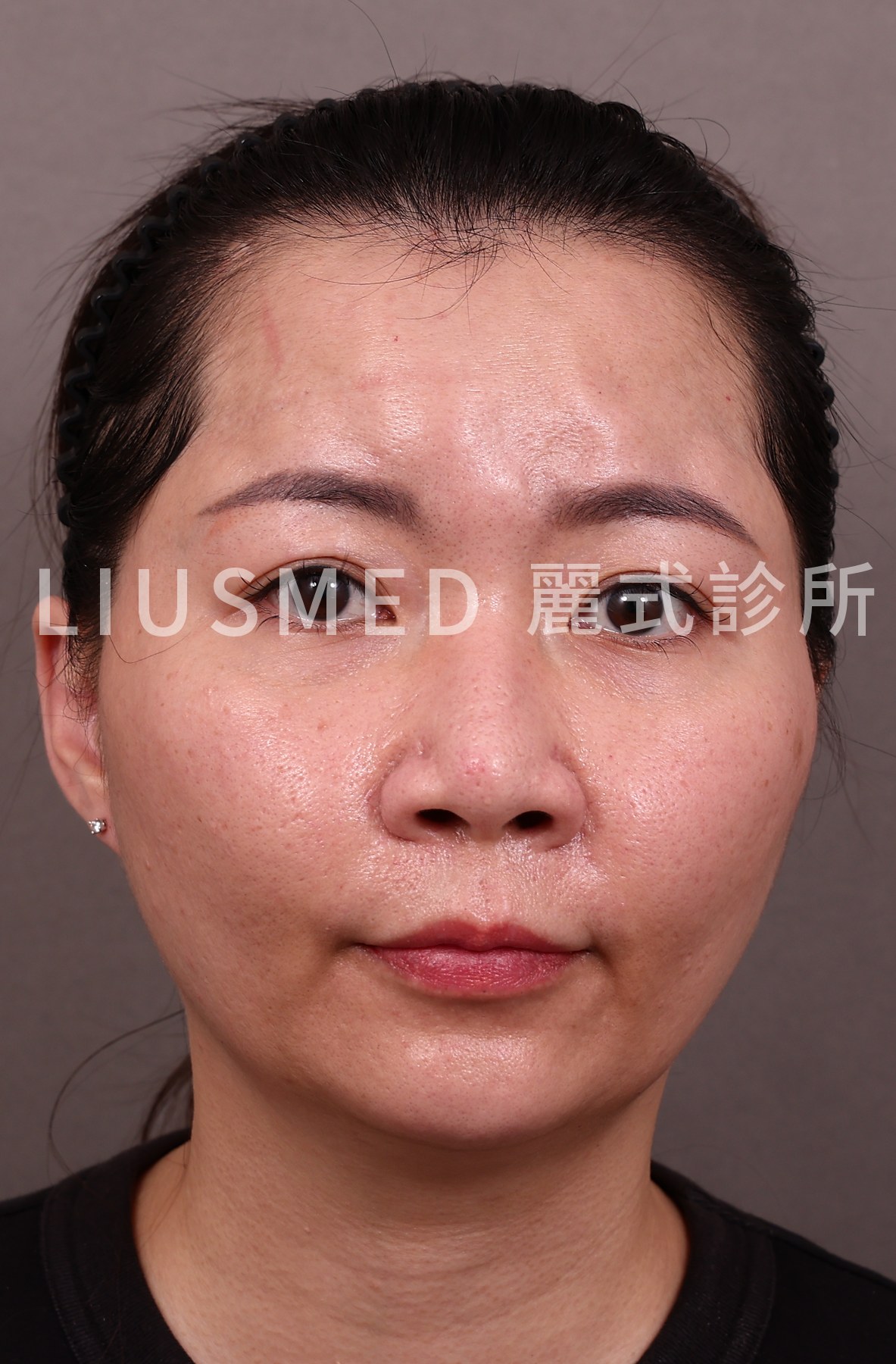
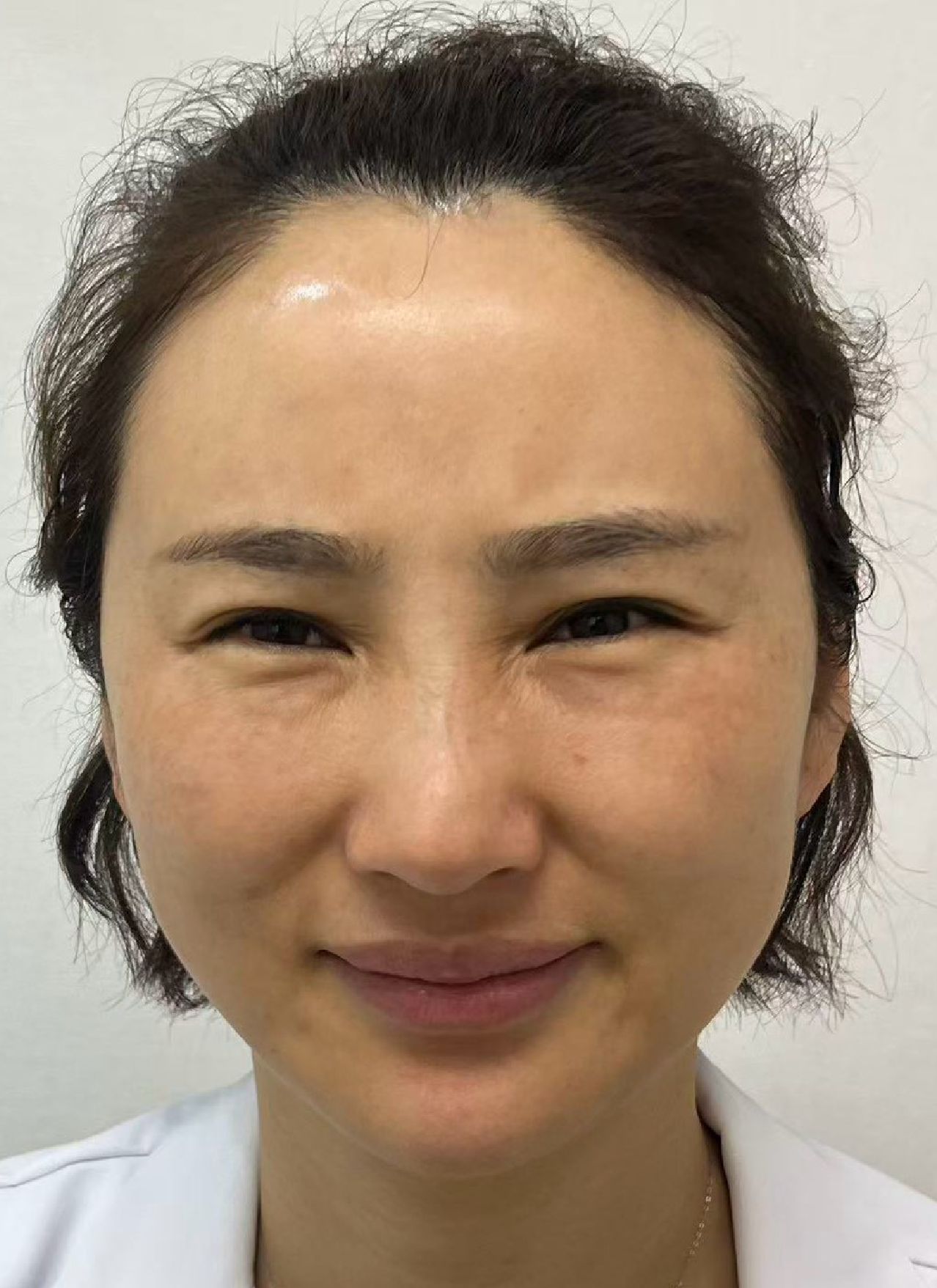
Severe Pillow Face (FOS): Full-Face Micro-Extraction Case
A case of severe pillow face from 5 years of cumulative injections, treated with staged ultrasound-guided full-face micro-extraction to restore contours.
Overfilled Cheeks: Can the Filler Be Dissolved, or Must It Be Removed? A Decision Map
Overfilled cheeks: can the filler be dissolved or removed? HA often won't dissolve cleanly; biostimulators and permanent fillers have no antidote. A decision map.
Temple Hollowing After Dissolution? Repair Strategy
Temples more hollow after dissolution than before filler? Why over-dissolution happens and how ultrasound-guided repair avoids repeating the cycle.
References
- Lim TS, et al. Exploring facial overfilled syndrome from the perspective of anatomy and the mismatched delivery of fillers. J Cosmet Dermatol. 2024;23(6):1964-1968.
- Schelke LW, et al. Treating facial overfilled syndrome with impaired facial expression — Presenting clinical experience with ultrasound imaging. J Cosmet Dermatol. 2023;22(12):3252-3260.
- Fakih N, et al. The Overfilled Face. Facial Plast Surg. 2022;38(2):173-176.
Related Real Cases
Documented ultrasound-guided extraction and rescue cases by Dr. Ta-Ju Liu.
The information on this website is for educational purposes only and does not constitute medical advice. Individual results may vary depending on personal conditions; actual outcomes cannot be guaranteed. All medical procedures carry potential risks and complications. Please consult a qualified physician before making any treatment decisions.
Featured Poster

Three rounds of dissolver. Still there?
Hyaluronidase only works on hyaluronic acid. If the filler is encapsulated, mixed, or not HA at all, it may not help. An ultrasound shows what is really there before you decide on removal.

Dissolved — and it still hurts?
Only a little filler left, hyaluronidase several times, and still the headaches, facial pain, neck and shoulder aches. We look for what remains on ultrasound, and a board-certified neurologist on our team assesses the pain with us.