Case Scenario
"My nose looked fine at first, but now it's crooked and bumpy — and the dissolving injection they tried just made it worse." She pulled out her phone to show photos from the past year, tracing the progression from subtle asymmetry to a nose she no longer recognized. It was exactly the kind of cascade that brings patients to FILLER REVISION.
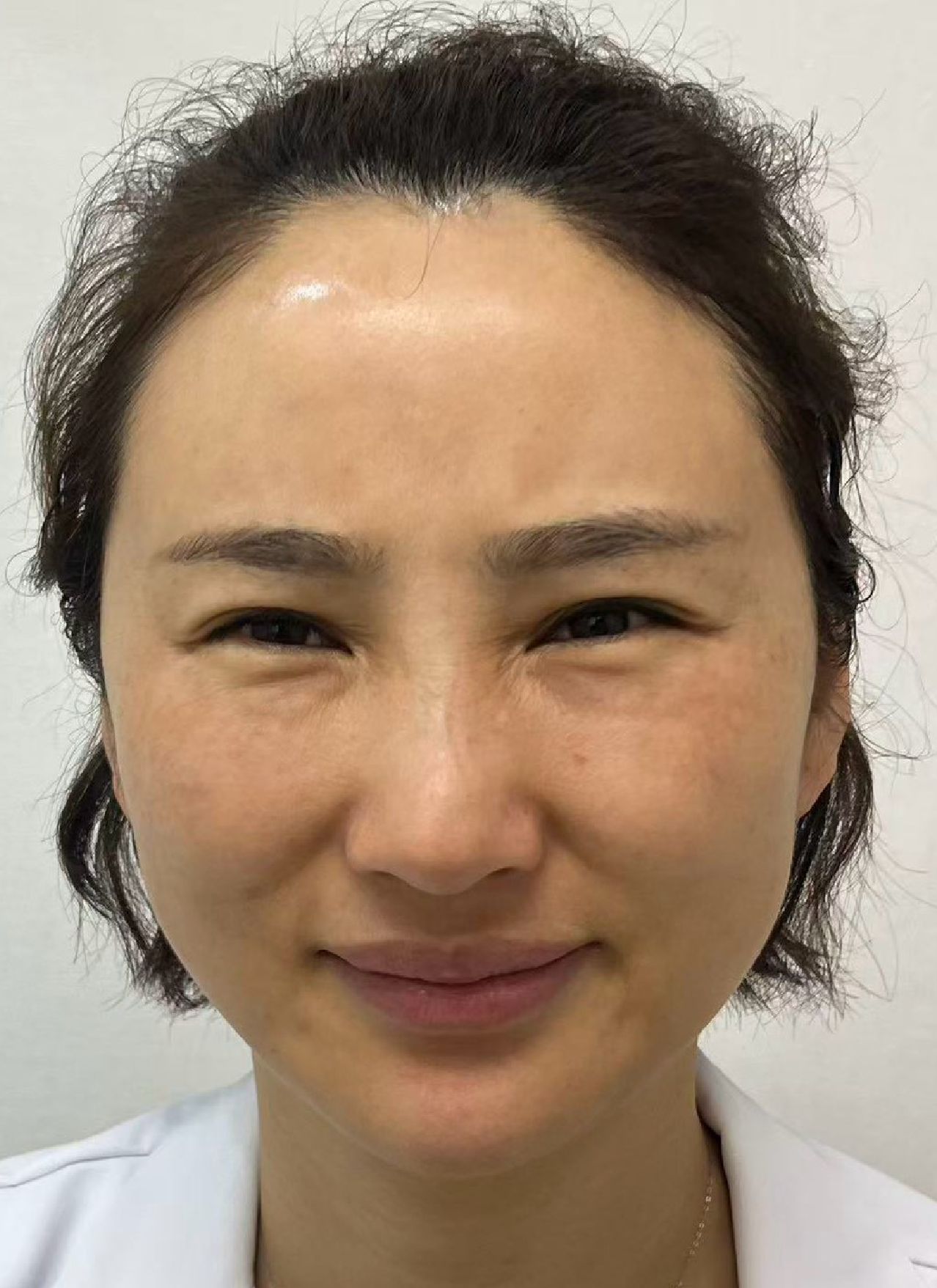
Patient Background: A woman in her 30s who received hyaluronic acid injection rhinoplasty at a cosmetic clinic approximately 18 months prior. The initial result was satisfactory, with a straighter nasal bridge. However, approximately 4 months post-injection, the patient noticed asymmetry along the nasal dorsum — one side appeared wider than the other, and the filler could be felt in positions different from the original injection sites.
Treatment History:
- First noticed left-sided nasal dorsum prominence approximately 4 months post-injection
- Returned to the original clinic and was advised that "mild asymmetry will resolve naturally"
- Waited an additional 3 months, but asymmetry worsened rather than improved
- Underwent hyaluronidase injection at the original clinic, but results were uneven — some areas over-dissolved while others remained inadequately treated
- Post-dissolution nasal contour became more irregular with surface bumps and depressions
- Found information about ultrasound-guided precision extraction through online research
Presentation at Consultation:
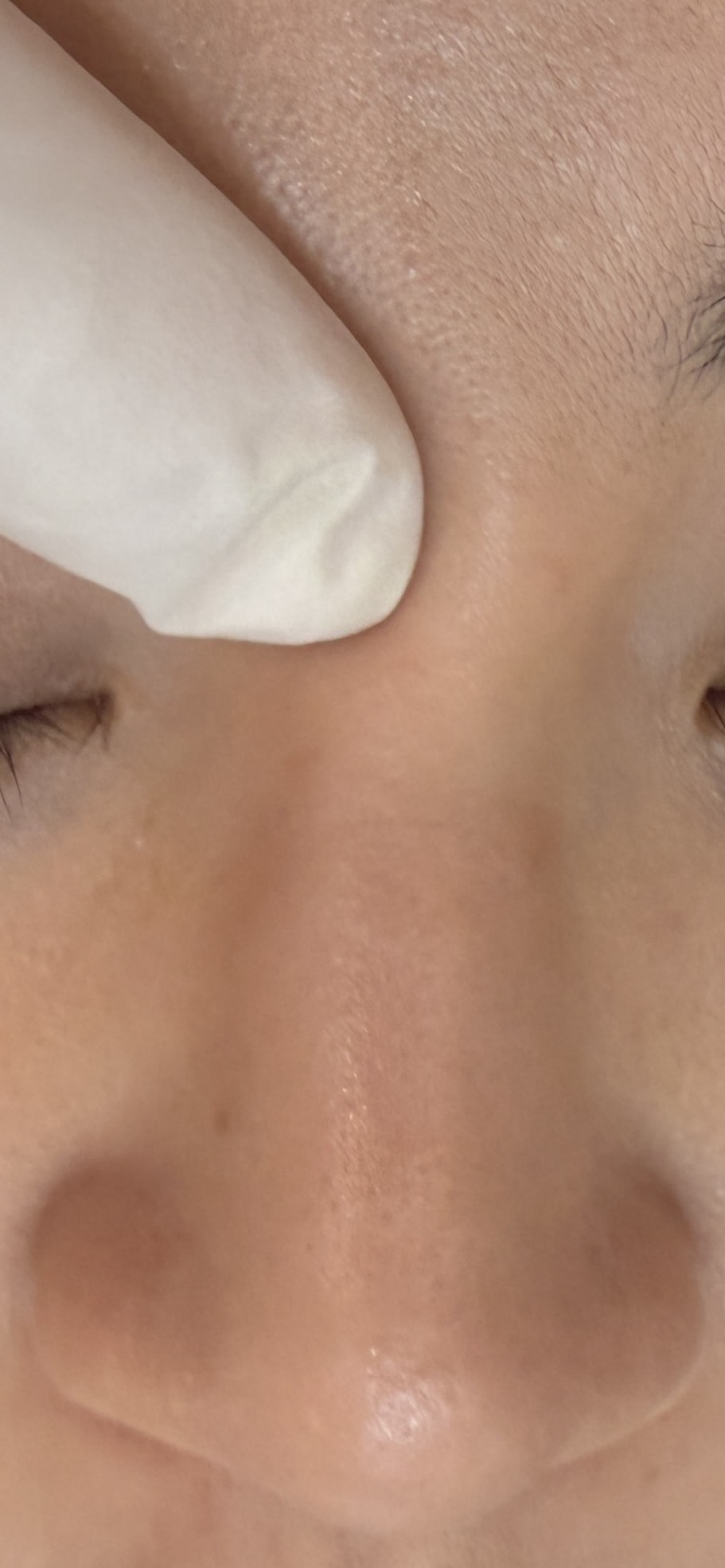
- Visible nasal dorsum asymmetry with left-sided prominence
- Palpation revealed irregular distribution of residual filler in multiple locations
- Several areas of surface irregularity on the nasal dorsum (evidence of uneven hyaluronidase treatment)
- Slight tip rounding with loss of original refinement
- Patient's dissatisfaction with nasal appearance had significantly impacted social confidence
Deep Analysis
Root Cause Analysis
← Swipe to see more →
| Aspect | Finding |
|---|---|
| Displacement cause | Thin nasal skin with limited tissue space; filler affected by facial expression muscle movement and gravity, resulting in lateral spread |
| Initial injection assessment | Injection plane likely too superficial, making filler more susceptible to tissue movement |
| Hyaluronidase issues | Non-ultrasound-guided blind hyaluronidase injection caused uncontrolled dissolution — simultaneous over-dissolution in some areas and persistent residue in others |
| Ultrasound (Ultrasonography) findings | Multiple irregular deposits of residual HA (Hyaluronic Acid) across the nasal dorsum, some displaced over the alar cartilage |
| Tissue condition | Mild fibrotic reaction from repeated injection and dissolution cycles |
Key Insight: The nose is a high-risk zone for filler displacement. Nasal skin is thin, tissue space is limited, and the area is subject to continuous movement from facial expressions. Once displacement occurs, non-guided hyaluronidase injection often fails to address the problem precisely — it may over-dissolve in areas that don't need treatment while inadequately reaching the actual displaced material. This is why the FILLER REVISION protocol requires ultrasound guidance for all nasal filler complications — precision localization is the foundation of precision treatment.
Related reading: How to Handle Nose Filler Displacement
Doctor's Perspective
"Nasal filler displacement is a remarkably common complication we encounter in our clinic. This patient's situation represents a classic treatment dilemma: after filler displacement occurs, non-guided hyaluronidase injection actually makes the problem more complex. Ultrasound examination clearly showed the distribution of residual HA — it was no longer concentrated along the nasal midline but had spread laterally to the left, with some material having migrated to unexpected positions.
The key principles for managing these cases are: first, use ultrasound for a complete assessment of the precise location and extent of residual filler; second, develop a zone-by-zone treatment strategy — perform targeted extraction of clearly identified deposits rather than blind dissolution; third, protect the nose's normal tissue architecture during extraction, particularly the delicate anatomical layers above the dorsal cartilage perichondrium."
Treatment Plan and Process
Preoperative Planning
← Swipe to see more →
| Planning Element | Details |
|---|---|
| Ultrasound assessment | Complete scanning of nasal dorsum, alae, and tip; marking all residual filler locations and depths |
| Vascular mapping | Confirming dorsal nasal artery course to ensure safe extraction pathways |
| Zone planning | Dividing the nose into four treatment zones: radix, upper dorsum, lower dorsum, and tip |
| Entry point selection | Selecting concealed positions inside the nostril and along the lateral nasal dorsum for pinholes of about 2 mm |
Surgical Process
- Precise anesthesia: Ultrasound-guided nasal nerve block and local infiltration, plus gentle pain-relief anesthesia
- Zone-by-zone scan confirmation: Pre-operative re-confirmation of filler locations in each zone
- Priority treatment of most displaced area: Beginning with the left dorsal displacement accumulation zone
- Real-time ultrasound guidance: Operating entirely under ultrasound visualization to ensure instrument accuracy
- Stepwise precision extraction: Using micro-instruments to extract residual filler incrementally, avoiding excessive tissue disruption
- Immediate assessment: Scanning after each extraction to confirm results
- Symmetry verification: Post-extraction comparison of bilateral nasal dorsum symmetry
Extraction Results
Multiple irregularly distributed residual HA deposits were successfully extracted, including partially degraded old filler masses. Extracted material ranged from translucent gel-like consistency to opaque, denatured masses — reflecting the different states resulting from varying injection periods and prior hyaluronidase treatment. Post-operative ultrasound confirmed significant reduction in residual material across the nasal dorsum.
FILLER REVISION Clinical Perspective
Nasal filler displacement cases are among the most frequently seen at FILLER REVISION, and this case exemplifies a common pattern: initial displacement, followed by a blind hyaluronidase attempt that creates new irregularities. By the time patients reach us, the problem has compounded. The FILLER REVISION approach to nasal cases is zone-based — dividing the nose into distinct treatment regions allows for targeted extraction without disrupting the delicate tissue architecture that gives the nose its shape. Crucially, we avoid the temptation to dissolve everything at once. Controlled, ultrasound-guided extraction preserves the tissue layers above the dorsal cartilage, giving the nose the best chance of recovering a natural contour without the need for additional filling procedures.
Key Patient Notes
Special Considerations for Nasal Extraction
← Swipe to see more →
| Characteristic | Explanation |
|---|---|
| Delicate nasal anatomy | The nose's anatomical layers are thin and precise, requiring exceptional care during manipulation |
| Prominent swelling | The nose has rich blood supply; post-operative swelling may be more noticeable than other areas |
| Appearance requires recovery time | The nose may look suboptimal initially due to swelling; patience is essential |
| Possible follow-up adjustment | If minor depressions remain after extraction, assessment for small-volume precision filling may be needed |
| Long-term follow-up matters | Regular post-operative follow-up appointments are recommended to monitor recovery and stability |
Recovery Expectations
The pinhole is small, but this is an extraction, so swelling and bruising are expected; because the nose has a rich blood supply, swelling may be more noticeable than elsewhere.
← Swipe to see more →
| Milestone | Approximate Timeframe |
|---|---|
| Swelling and bruising settle | About 2–3 weeks |
| Pinhole heals | About 2 weeks |
| Final result | About 3 months (varies from person to person); any fine-tuning is assessed after that |
Key Insight: Recovery after nasal filler extraction requires particular patience. The nose is the visual focal point of the face — even slight swelling is easily noticeable. It is important to understand that the immediate post-operative appearance is not the final result: there is a period in which the swelling settles and firmness gradually softens, and we go through the details at your consultation.
Clinical Takeaways
- Nasal filler displacement warrants early evaluation — waiting for "natural absorption" typically only delays treatment; displaced filler does not return to its original position on its own
- Non-guided hyaluronidase injection carries high risk in the nose — the nose's delicate structure makes blind dissolution likely to produce uneven results
- Ultrasound is foundational for nasal filler problem management — precise localization enables precise treatment
- Post-extraction nasal assessment needs time — additional procedures should not be rushed during the swelling phase
- Choose a physician with nasal anatomy expertise — the nose's fine structure demands deep anatomical knowledge
If your nose filler has shifted, created bumps, or left you with uneven contours after a dissolution attempt, the FILLER REVISION team can help. Our ultrasound-guided approach is designed specifically for the precision that nasal anatomy demands.
Related reading:
- How to Handle Nose Filler Displacement
- Filler Lump Extraction Technique
- Filler Repair Evaluation Process
Frequently Asked Questions
My nose filler has shifted and become crooked or bumpy. Will it return to its original position on its own if I just wait?
Displaced nasal filler does not return to its original position on its own, and waiting for 'natural absorption' typically only delays treatment. In this case the patient was told mild asymmetry would resolve naturally, but after waiting another three months it worsened rather than improved. Nasal filler displacement warrants early evaluation rather than watchful waiting.
I had a dissolving (hyaluronidase) injection for my nose filler but it made things worse and left bumps. Why did that happen?
Blind hyaluronidase injection in the nose often makes the problem more complex because the dissolution is uncontrolled — it can over-dissolve in some areas while leaving the displaced material untouched in others. The nose's delicate structure makes non-guided dissolution likely to produce uneven results and surface irregularities. This is why nasal filler complications are managed with ultrasound guidance so that precise localization can guide precise treatment, rather than dissolving blindly.
Why does filler in the nose tend to shift in the first place?
The nose is a high-risk zone for filler displacement because the nasal skin is thin, the tissue space is limited, and the area is subject to continuous movement from facial expressions. Affected by expression muscle movement and gravity, the filler tends to spread laterally over time. In this case the injection plane was likely too superficial, making the filler even more susceptible to tissue movement.
Why is an ultrasound needed before nose filler extraction? Can't the doctor just feel where the filler is?
Ultrasound mapping before nasal revision reveals filler that has migrated to unexpected positions — including over the alar cartilage — which is invisible to palpation alone. In this case the ultrasound showed residual material had spread laterally to the left rather than staying along the nasal midline. Precise localization is the foundation of precise treatment, so all nasal filler complications are assessed under ultrasound guidance.
How long does recovery take after nose filler extraction, and when will I see the final shape?
Swelling and bruising are expected and usually settle in about 2–3 weeks; the final result takes about 3 months, varying from person to person, so the immediate post-operative appearance is not the final result. Because the nose is the visual focal point of the face, even slight swelling is easily noticeable, so patience during this period is essential.
After the displaced filler is extracted, will I need to add new filler to fix any remaining dents?
If minor depressions remain after extraction, an assessment for small-volume precision filling may be considered — but only after full healing, not during the swelling phase. The article notes that controlled, ultrasound-guided extraction is intended to give the nose the best chance of recovering a natural contour without necessarily needing additional filling. Any such follow-up adjustment would be evaluated case-by-case during your recovery.