Case Scenario
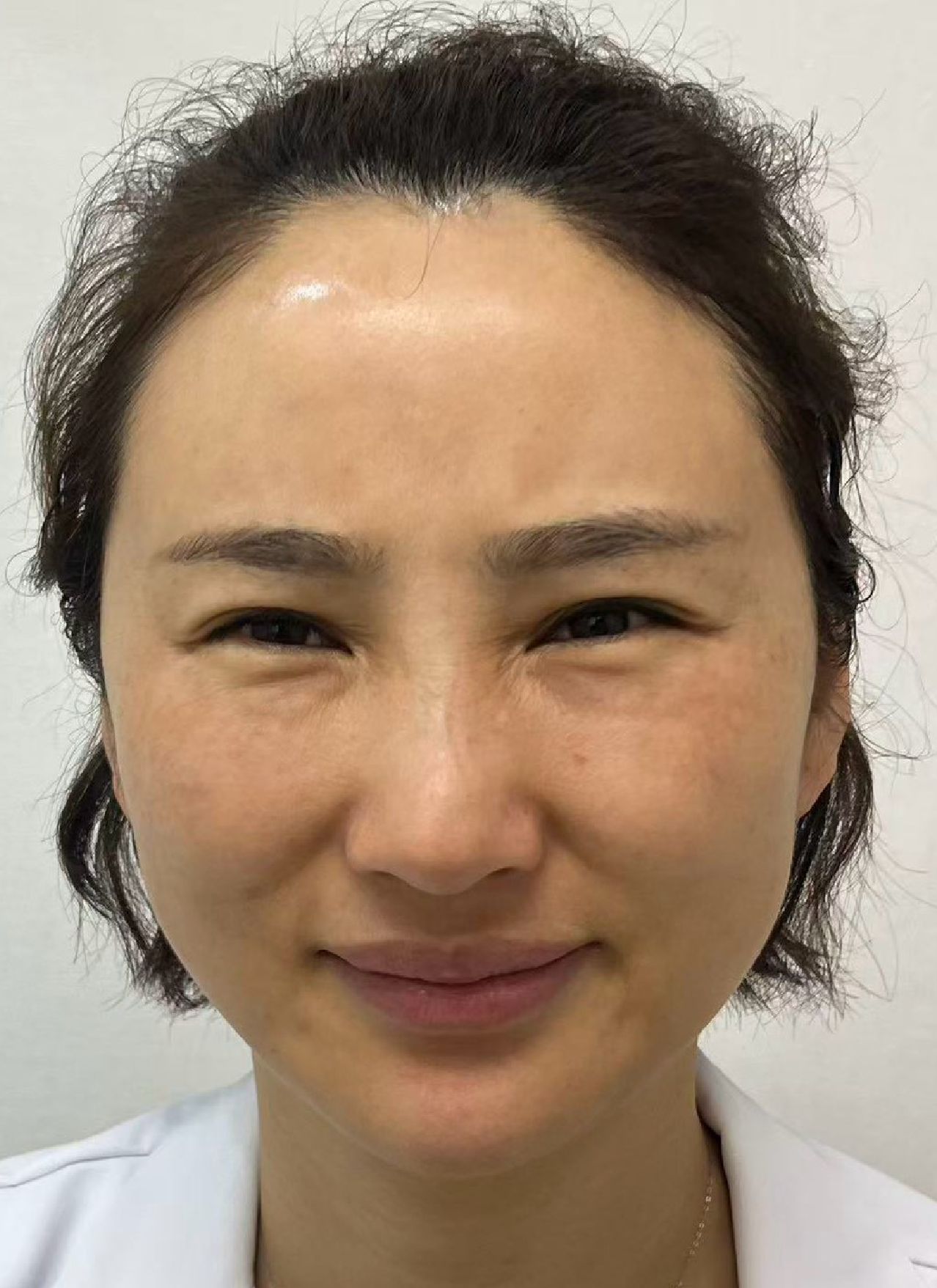
"I've had these lumps for over a year now. Three rounds of steroid injections, two rounds of 5-FU (5-Fluorouracil) — nothing worked. I just want my normal face back." When she sat down in the FILLER REVISION consultation room, the exhaustion in her voice told the whole story before the ultrasound did.
Patient Background: A middle-aged woman who received Ellansé (polycaprolactone) injections in the cheek area approximately two years prior to address cheek hollowing. Approximately 6 months post-injection, palpable lumps developed at the injection sites, gradually enlarging and becoming more visible over time.
Treatment History:
- Returned to the original clinic; told "this is normal collagen stimulation that will resolve on its own"
- After 6 months of waiting with no resolution, sought additional medical attention
- Received 3 sessions of local steroid injections — lumps slightly softened but did not noticeably reduce in size
- Attempted 2 sessions of 5-FU injection with limited effect
- Found information about ultrasound-guided micro-extraction through online research
Presentation at Consultation:
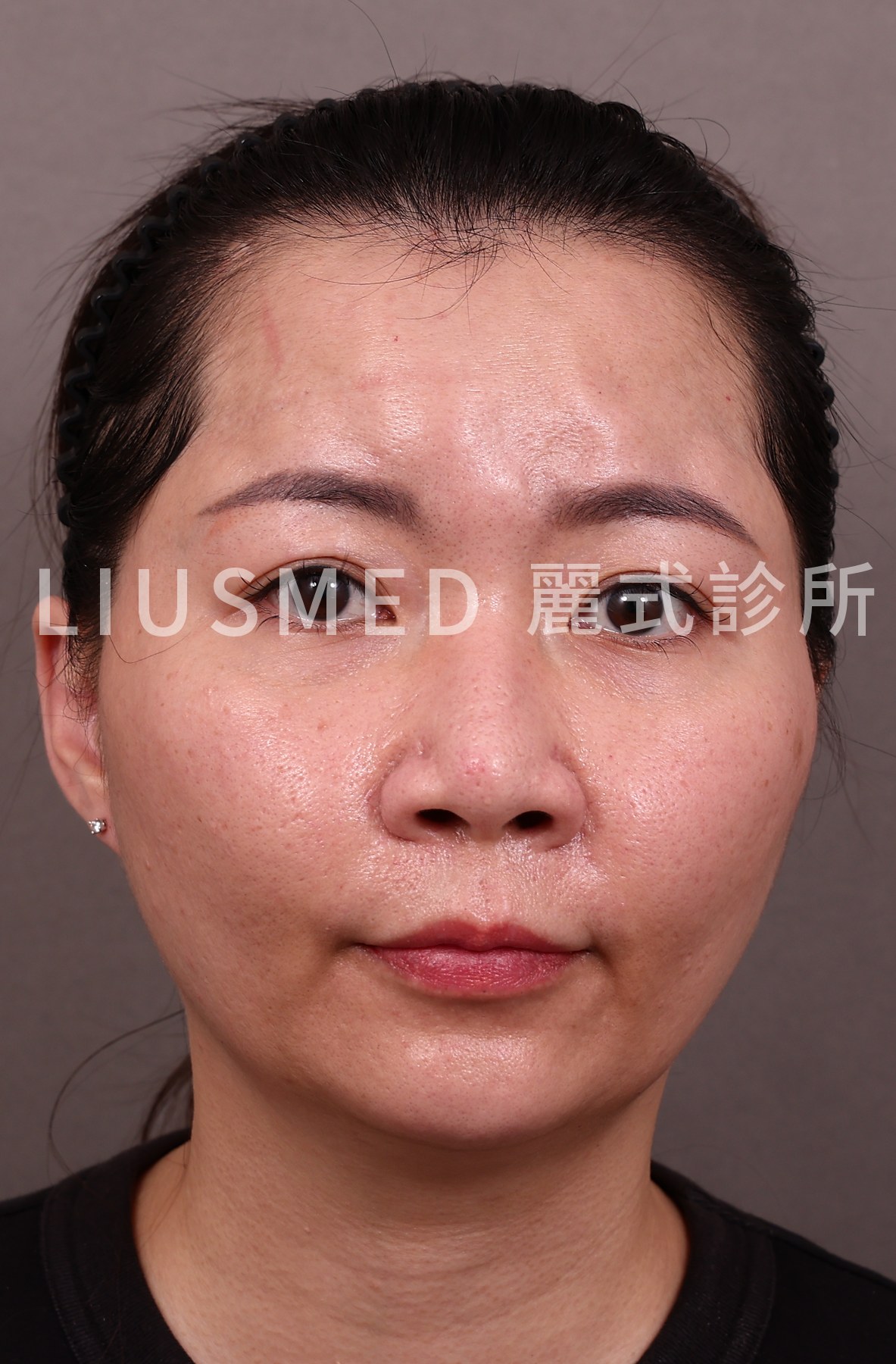
- 1-2 palpable lumps on each cheek
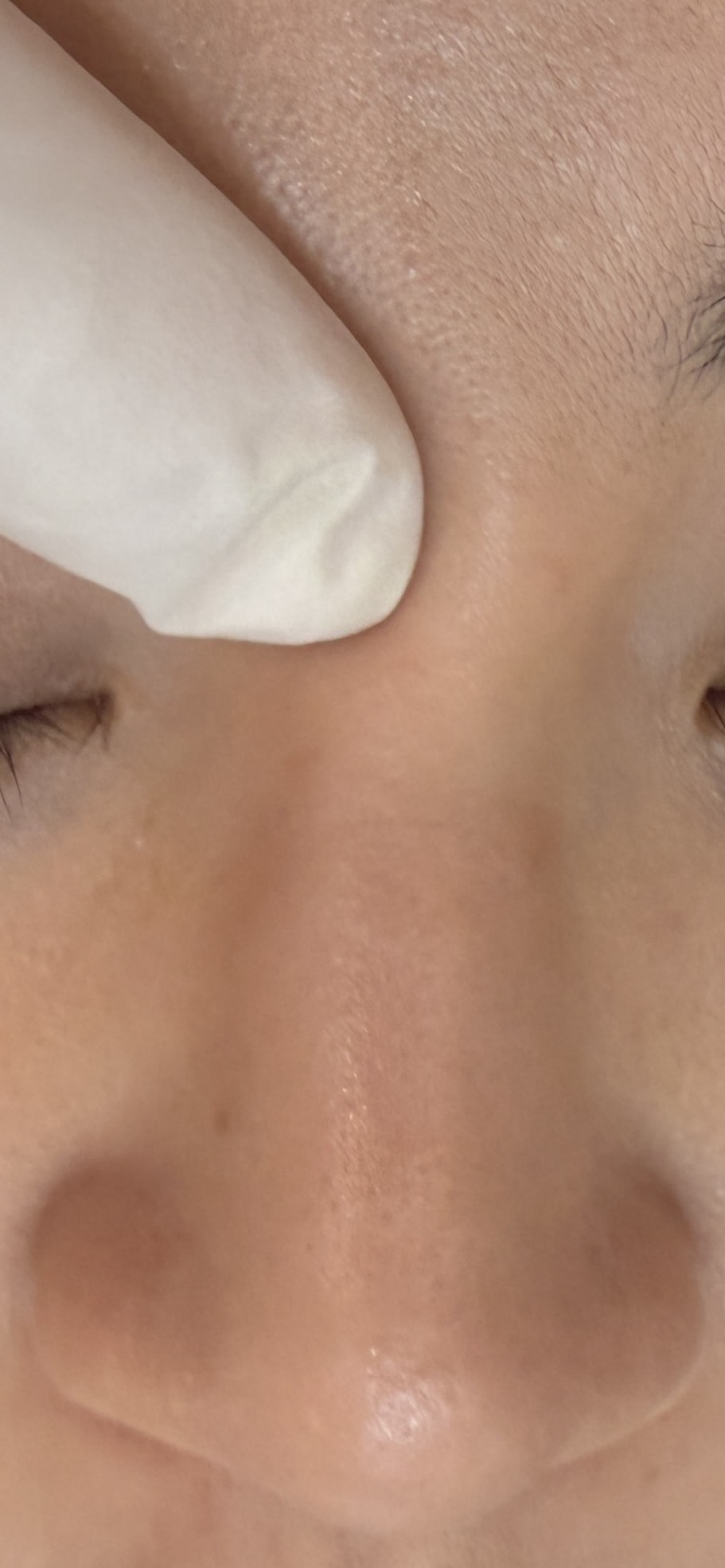
- Slight skin elevation over the lumps, visible at certain angles
- Firm to touch, non-tender
- Approximately one year of conservative treatment with limited results
Deep Analysis
Root Cause Analysis
← Swipe to see more →
| Aspect | Finding |
|---|---|
| Material characteristics | Ellansé consists of PCL (Polycaprolactone) microspheres suspended in CMC (Carboxymethyl Cellulose) gel; PCL cannot be enzymatically dissolved |
| Nodule etiology | Likely fibrous capsule reaction and excessive collagen stimulation around PCL microspheres |
| Why conservative treatment failed | Steroids can soften fibrous tissue but cannot eliminate PCL microspheres; 5-FU has limited effect on PCL-induced collagen |
| Ultrasound (Ultrasonography) findings | Multiple medium-high echogenicity nodules in subcutaneous fat layer, irregular borders, surrounded by fibrotic bands |
| Vascular assessment | Nodules located at safe distance from major vessels |
Key Insight: Ellansé nodules are fundamentally different from hyaluronic acid nodules — they cannot be "dissolved." Conservative steroid or 5-FU treatment can only soften surrounding tissue but cannot eliminate the core PCL microspheres. When conservative treatment exceeds one year without significant improvement, physical extraction is a reasonable next step. At FILLER REVISION, ultrasound-guided micro-extraction is the standard protocol for persistent PCL nodules that have failed conservative management.
Related reading: Can Ellansé Be Removed?
Doctor's Perspective
Dr. Liu's analysis after evaluation:
"This patient's situation represents a typical case among Ellansé complications. Ultrasound clearly revealed multiple nodules, each approximately 8-15mm, wrapped in prominent fibrotic tissue. The positive finding was that the nodules were located in the subcutaneous fat layer at moderate depth, with no major vessels in close proximity — technically feasible for minimally invasive extraction.
Notably, because the nodules had been present for over a year and had undergone multiple steroid injections, the surrounding fibrosis was fairly dense. Greater care would be needed during extraction to separate the filler-tissue boundary. Our goal was to extract as much of the PCL microspheres and their reactive tissue as could be safely removed while preserving normal subcutaneous fat."
Treatment Plan and Process
Pre-Operative Planning
← Swipe to see more →
| Planning Item | Content |
|---|---|
| Ultrasound marking | Mark all nodule locations, sizes, and depths |
| Vascular mapping | Confirm facial artery and vein pathways |
| Entry point selection | Choose the nearest concealed micro-entry to each nodule |
| Surgical sequence | Address shallower, easier nodules first, then deeper ones |
Surgical Process
- Anesthesia: Precise local infiltration under ultrasound guidance, plus gentle pain-relief anesthesia
- Micro-entry: 1-2mm pinhole as the operative entry
- Ultrasound-guided targeting: Real-time imaging confirms instruments reach the target nodule
- Dissection and extraction: Careful separation of nodule from surrounding fibrotic tissue, progressive removal
- Real-time verification: Immediate ultrasound scan after each nodule extraction
- Residual assessment: Comprehensive scan confirming no significant residual material
Extracted Material Observations
The extracted tissue consisted of firm white to grayish-white masses. Cross-section revealed PCL microsphere particles encased in fibrous tissue, consistent with pre-operative ultrasound findings.
FILLER REVISION Case Notes
Cases like this one illustrate why the FILLER REVISION protocol prioritizes ultrasound at every stage — before, during, and after extraction. The dense fibrosis from prolonged steroid treatment made this case more technically demanding than a typical Ellansé extraction. By maintaining real-time ultrasound visualization throughout the procedure, Dr. Liu was able to distinguish between fibrotic tissue and the PCL microsphere core, removing as much as could be safely removed while preserving healthy subcutaneous fat. This case reinforces a pattern we see frequently at FILLER REVISION: the longer patients wait after failed conservative treatment, the more complex the extraction becomes. Early referral for ultrasound-guided evaluation can significantly reduce procedural difficulty and improve outcomes.
Key Patient Notes
Post-Operative Recovery
← Swipe to see more →
| Item | Approximate time |
|---|---|
| Swelling and bruising | Usually settle in about 2–3 weeks |
| Pinhole | Heals in about 2 weeks |
| Final result | About 3 months, varying from person to person |
After extraction there is a period in which the swelling settles and firmness gradually softens; we go through the details at your consultation.
Important Notes
- Post-operative swelling is normal and does not indicate surgical failure
- Swelling and bruising usually settle in about 2–3 weeks, and the pinhole heals in about 2 weeks
- The feel of the treated area goes through a period of gradual softening
- Post-extraction depressions are usually assessed after swelling subsides to determine if further treatment is needed
- The final result takes about 3 months, varying from person to person
Key Insight: Ellansé nodule extraction differs from simple HA (Hyaluronic Acid) dissolution — it requires physical manipulation, so the recovery period is longer. However, compared to continuing to live with nodules or pursuing conservative treatments with limited effect, micro-extraction is a way to deal with the material itself.
Related reading: When 5-FU Fails for Collagen Stimulator Lumps
Clinical Takeaways from This Case
- Ellansé nodules require timely and accurate assessment — prolonged conservative treatment may worsen fibrosis
- Ultrasound is essential for evaluation and extraction — palpation cannot accurately determine nodule count, size, or depth
- Micro-extraction is a viable option — large open excisions are not necessary
- Patient expectation management is critical — recovery takes time, and final results are not immediate
If you are dealing with Ellansé nodules or other non-dissolvable filler complications, the FILLER REVISION team specializes in ultrasound-guided micro-extraction for cases that have not responded to conservative treatment. Every case begins with a thorough ultrasound evaluation to map the full extent of the problem before any intervention is planned.
Related reading: Filler Lump Extraction Technique
Frequently Asked Questions
I've already had steroid and 5-FU injections for my Ellansé lumps and they didn't go away. Why didn't they work?
Ellansé is made of PCL (polycaprolactone) microspheres, which cannot be enzymatically dissolved. Steroids and 5-FU can soften the surrounding fibrous tissue, but they cannot eliminate the core PCL microspheres, so the lumps remain. This is fundamentally different from hyaluronic acid nodules, which can be dissolved. When conservative treatment exceeds about one year without significant improvement, physical extraction becomes a reasonable next step.
Does removing Ellansé nodules require major open surgery?
No. In this case the nodules were removed through 1-2mm pinhole entry points under ultrasound guidance, not through large open excisions. Ultrasound provides real-time imaging so the instrument can be guided to each nodule and the filler separated from surrounding tissue while preserving normal subcutaneous fat. Micro-extraction is a viable option that avoids large open surgery.
How long does recovery take after Ellansé micro-extraction, and when will I see improvement?
The pinhole is small, but this is an extraction, so swelling and bruising are expected and do not mean the procedure failed. Swelling and bruising usually settle in about 2–3 weeks, the pinhole heals in about 2 weeks, and the final result takes about 3 months, varying from person to person. Because the procedure involves physical manipulation rather than simple dissolution, recovery is longer than after hyaluronic acid dissolution; we do not claim a short recovery.
I've been living with these lumps for over a year. Does waiting longer make extraction harder?
Yes, waiting can make the procedure more demanding. Because the nodules had been present for over a year and had undergone multiple steroid injections, the surrounding fibrosis was fairly dense, which required greater care to separate the filler-tissue boundary. Prolonged conservative treatment tends to increase fibrosis density, so earlier referral for ultrasound-guided evaluation can reduce procedural difficulty and improve outcomes.
Why is ultrasound used for this, instead of just feeling the lumps by hand?
Palpation alone cannot accurately determine the count, size, or depth of the nodules, so ultrasound is essential. It is used at every stage: pre-operative mapping of nodule locations, sizes, and depths, vascular mapping to keep a safe distance from major vessels, real-time guidance during extraction, and a post-procedure scan to confirm no significant residual material. This lets the doctor distinguish fibrotic tissue from the PCL core and remove as much as can be safely removed while preserving healthy fat.
What if there's a depression left where the lump was removed?
Post-extraction depressions are usually assessed only after the swelling has subsided, so that whether any further treatment is needed can be judged accurately. During extraction the goal is to remove as much of the PCL microspheres and reactive tissue as can be safely removed while preserving normal subcutaneous fat, which helps reduce this risk. If you have specific concerns about your own case, these are best evaluated in a personalized consultation.