
Injectable Collagen Filler (Sunmax / 雙美 Porcine Collagen) — the "Panda Needle" Explained & Removal
Sunmax 雙美 · FACIALGAIN 膚力原 · Deusaderm ULTRA 膚漾美
An injectable collagen filler is collagen itself — it physically fills tissue the moment it is placed. That makes it fundamentally different from a "collagen stimulator" (such as Sculptra/PLLA), which contains no collagen and instead provokes your own body to build collagen gradually over months. In Taiwan the current domestically made product is Sunmax's porcine collagen (flagship FACIALGAIN / 膚力原, newest generation FULLSGEN), popularly nicknamed the "panda needle" (熊貓針) for dark circles and the "稚齡針". One caution matters enormously for anyone seeking removal: "panda needle" is a generic dark-circle nickname, not a single product, and it maps to different materials by region. In Taiwan it usually means Sunmax collagen (because Teosyal Redensity II is not TFDA-licensed here); in Hong Kong the same nickname usually means Teosyal Redensity II, which is a hyaluronic acid (HA). This changes everything about reversal, because hyaluronidase dissolves only HA and has no effect on collagen.

Composition
Type I atelocollagen derived from SPF (specific-pathogen-free) pigs — i.e. porcine, not bovine and not recombinant — cross-linked with glutaraldehyde at roughly 35 mg/mL and pre-mixed with lidocaine (a local anaesthetic component). "Atelocollagen" means the immunogenic telopeptide ends have been removed, which lowers allergy risk. The Taiwan-made products come from Sunmax Biotechnology (雙美生物科技): the flagship FACIALGAIN (膚力原, TFDA registration 衛部醫器製字第004509號, where the character 製 denotes a domestically manufactured device) and the more recent Deusaderm ULTRA (膚漾美, 衛部醫器製字第008134號, issued 2024). Those two plus the older Sunmax Collagen Implant I and I-Plus are the company's entire TFDA-registered collagen implant line; trade names such as FULLSGEN that circulate in clinics return nothing in the registry. Crucially, this is collagen the material — an immediate physical filler — and not a collagen stimulator that induces your own tissue.
Common Complications
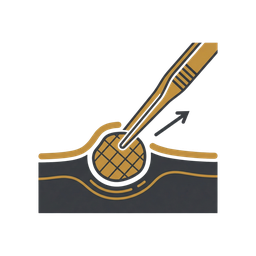
With a relatively short ~6-12 month lifespan, patients often re-inject to maintain the effect, and repeated top-ups can lead to cumulative deposits and palpable nodules. Uneven or overly superficial placement — common in the thin-skinned under-eye where it is popular — can leave lumps. A very common scenario is the "I tried to dissolve it and nothing happened" trap: because the material is collagen, not HA, hyaluronidase cannot break it down. Allergy is possible, but the risk with modern porcine atelocollagen is low — a real distinction from the historic bovine collagens (e.g. Zyderm) that caused reactions in a few percent of patients and required skin testing. And, as with any injectable filler, inadvertent intravascular injection can cause vascular occlusion — rare, but a serious emergency.
Extraction / Removal Method
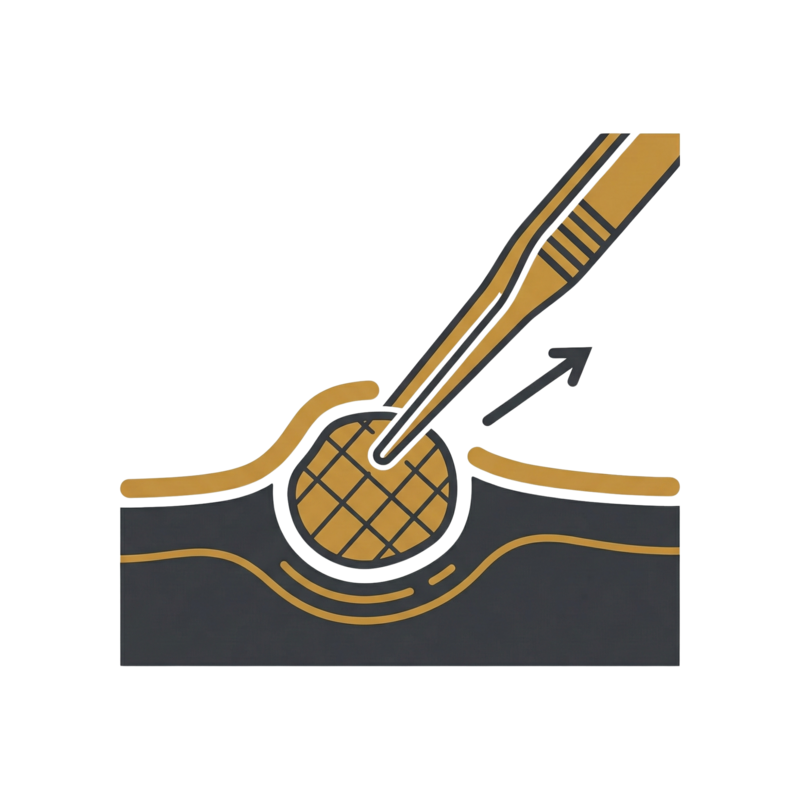
The first and most important step is confirming what the material actually is — collagen behaves nothing like HA on removal. History plus high-resolution ultrasound is used to establish whether a Taiwan "panda needle" lump is Sunmax collagen (not enzyme-reversible) rather than an HA product. Injectable collagen is naturally resorbable and mild cases often settle on their own over months, so watchful waiting is a reasonable option. There is no antidote injection: hyaluronidase dissolves only HA. For persistent nodules or accumulation, ultrasound-guided physical (mechanical) micro-extraction through a 1-2mm pinhole breaks the fibrous capsule and draws out the deposit together with surrounding tissue. In most cases this settles the area; the extent depends on the depth, the location, and how long-standing the deposit is. The recurrent immune-type swelling follows the same principle — locate the deposit on ultrasound and debulk it, drawing out most of the material. To set honest expectations, some swelling can still occur afterwards, but its frequency and severity drop markedly compared with before, so most patients get substantial relief and are no longer ruled by the flare-ups.
Top 7 Patient Complaints

1Cumulative Deposits from Frequent Top-Ups
Because injectable collagen lasts only about 6-12 months, patients re-inject to keep the result. Repeated maintenance builds up material and fibrous tissue, so fullness and palpable lumps accumulate over time.
2Recurrent Immune Swelling (Possible Biofilm)
A pattern only recognised in recent years: the deposit swells again and again — in some patients every two or three days, sometimes badly enough to swell the eye shut, needing anti-inflammatories or antibiotics to settle, and occasionally hospitalisation. It is thought to involve biofilm and a downstream immune response. The impact on daily life is often harder than the appearance — the repeated swelling draws a "what happened to your face?" every time you go out, and over time many people stop wanting to leave home at all, with mood suffering as a result.
3The "Hyaluronidase Did Nothing" Trap
Assuming any filler lump can be melted, patients or clinics inject hyaluronidase and nothing happens — the enzyme dissolves only HA, and this material is collagen. The wasted attempt delays proper assessment.
4"Panda Needle" Material Confusion (Taiwan vs Hong Kong)
The dark-circle nickname "panda needle" maps to different materials by region — Sunmax collagen in Taiwan, but usually Teosyal Redensity II (an HA) in Hong Kong. Misidentifying the product sends the reversal plan in the wrong direction.
5Nodules from Superficial or Uneven Placement
Placed too shallow or unevenly — especially in the thin-skinned under-eye where it is popular — the collagen can form a ridge or firm bump you can feel and sometimes see.
6Allergy Reaction — Lower Risk, Not Zero
Modern porcine atelocollagen has its immunogenic ends removed and carries low allergy risk, unlike the old bovine collagens that needed skin tests. Reactions are uncommon, but redness, swelling, or firmness can still occur and should be assessed.
7Vascular Occlusion Risk
As with any injectable filler, accidental injection into a vessel — a real concern in the under-eye and glabella — can block blood flow. It is rare, but a medical emergency that needs immediate care.

Why Traditional Methods Fail
The classic failure is treating a collagen lump like HA — injecting hyaluronidase and expecting it to melt away. The enzyme does not touch collagen, so the attempt simply fails and the patient loses time. "Just wait for it to absorb" is reasonable for the material itself, which does resorb over months, but it does nothing for a fibrotic nodule that has already organised, or for a case that was actually a different product. And when a Taiwan collagen "panda needle" is misread as an HA "panda needle," the entire reversal plan is built on the wrong assumption from the start.

The Liusmed Repair Strategy
The same "identify first, then capsule-breaking + precision micro-extraction" philosophy, adapted to a resorbable material. Step one is always confirming the material: history plus high-resolution ultrasound distinguishes a Taiwan collagen deposit from an HA product, since the removal plans are completely different. Because collagen naturally resorbs, mild cases are often best simply monitored rather than treated. For a persistent nodule or cumulative deposit, we map it on ultrasound and, through a 1-2mm pinhole, physically break the fibrous capsule and draw out the deposit with surrounding tissue — no enzyme is involved because none works on collagen. The aim is to settle the area with minimal disruption to healthy tissue.
Dr. Liu's Clinical Perspective
"The single most useful thing I can tell a 'panda needle' patient is: find out what was actually injected. In Taiwan it is usually Sunmax collagen; across the border in Hong Kong the same nickname is usually an HA. I have seen patients who went round after round of hyaluronidase for a lump that was never going to dissolve, because it was collagen. Collagen is comparatively forgiving — it fades on its own — but you have to identify it correctly before you can decide whether to wait or to remove it."

Recovery Timeline
For mild cases chosen for monitoring, there is no procedure and the material fades over months. When micro-extraction is done: The pinhole is small, but this is an extraction, so swelling and bruising are expected. Swelling and bruising usually settle in about 2–3 weeks, the pinhole heals in about 2 weeks, and the final result takes about 3 months, varying from person to person. Extent and number of sessions depend on how much has accumulated and how deep it sits.
FAQ
Is the "panda needle" (熊貓針) a specific product? Why does removal advice differ between Taiwan and Hong Kong?
No — "panda needle" is a generic nickname for a dark-circle injection, not a single product, and the material behind it differs by region. In Taiwan it usually refers to Sunmax porcine collagen, largely because Teosyal Redensity II is not TFDA-licensed here. In Hong Kong the same nickname usually refers to Teosyal Redensity II, which is a hyaluronic acid (HA). This matters enormously for removal: an HA "panda needle" can potentially be dissolved with hyaluronidase, but a Taiwan collagen "panda needle" cannot — hyaluronidase has no effect on collagen. Getting the source product wrong means getting the whole reversal plan wrong, which is why we always confirm the actual material with history and ultrasound before doing anything.
Can collagen filler be dissolved with hyaluronidase like HA?
No. Hyaluronidase is an enzyme specific to hyaluronic acid — it breaks the bonds in HA and has no effect on collagen. So there is no "antidote" injection for a collagen filler the way there is (in fresh cases) for HA. The good news is that injectable collagen is naturally resorbable and mild results fade over months on their own. For a firm nodule that will not settle, the practical route is ultrasound-guided physical micro-extraction rather than any enzyme.
Is injectable collagen filler the same as a "collagen stimulator" like Sculptra?
No — and confusing the two leads to a lot of mistakes. A collagen filler is collagen; it fills tissue physically and immediately, and it resorbs over months. A collagen stimulator (Sculptra/PLLA, AestheFill/PDLLA, and in a broader sense Ellansé/PCL and Radiesse/CaHA) contains no collagen at all — it deposits particles that provoke your own body to build collagen slowly, so the result and any complications are delayed. Both share one thing: once a problem forms, no enzyme dissolves it, and physical extraction becomes the practical removal route. But the timelines, the material on ultrasound, and the way a nodule behaves are different, so identifying which one you actually received is the starting point.
Do I need an allergy skin test before a porcine collagen filler?
Modern porcine atelocollagen is processed to remove the telopeptide ends that drove most allergic reactions, so its allergy risk is low; a 2024 clinical evaluation concluded that routine pre-treatment skin testing "appears unnecessary." This is a genuine change from the older Western bovine collagens (such as Zyderm), which caused reactions in around 3% of patients and did require skin testing — most of those Western products (Zyderm, Zyplast, CosmoDerm, Evolence) were discontinued around 2009-2010, and there is currently no standalone approved collagen filler in the US (the collagen in Bellafill serves only as a carrier for permanent PMMA microspheres). None of this removes the need for an experienced injector to assess your history and skin individually before treatment.
Real patient questions
Questions from the patient Q&A forum, answered by Dr. Liu.
Ask your own question in the forum
Related Symptoms
This information is for educational purposes only. Treatment options depend on individual circumstances. Consult a qualified physician.

Read next: when this material goes wrong
Case-by-case decisions, written by Dr. Ta-Ju Liu
Filler Lump, Granuloma, or Scar? 3 Self-Checks to Tell
Residual filler, a granuloma and scar tissue all feel alike but need opposite care. Three self-checks on tenderness, mobility and timing tell them apart.
No Idea What's in Your Face? Ultrasound Identification of Unknown Filler
Cannot remember what was injected years ago? Specialized ultrasound identifies unknown filler materials — the essential first step before any treatment.
Three Types of Dark Circles: Which One Filler Actually Helps
Dark circles come in three types: vascular, pigmented, structural. Only the structural type suits HA filler; the wrong type looks puffier and darker. Self-check first.
Your Body vs. Injectables: Why Your Immune System Never Stops Reacting to Filler
The full immune cascade from filler injection to chronic fibrosis — why your body never truly accepts filler and what this means for revision.