HArmonyCa (HA + CaHA Hybrid) — Nodules, Partial Reversibility & Removal
HArmonyCa
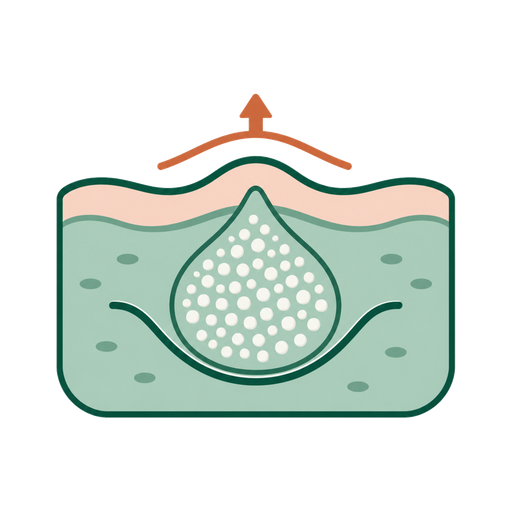
A hybrid injectable that combines cross-linked hyaluronic acid (HA) with calcium hydroxylapatite (CaHA) microspheres. The HA provides immediate volume, while the CaHA gradually stimulates the body's own collagen over the following months. It is neither a pure biostimulator nor a simple dissolvable HA — a distinction that matters greatly when removal is needed.

Composition
A hybrid of cross-linked hyaluronic acid (~20 mg/mL) and calcium hydroxylapatite (CaHA) microspheres (~55.7%), with lidocaine (the manufacturer's dual-action "DART" technology). Developed by Luminera (Israel) and marketed by Allergan Aesthetics (an AbbVie company). In Taiwan, TFDA registered it under the hyaluronic acid implant category as "恆緹佳臉部植入物" (nickname 媄神針; 美神針 in Hong Kong).
Common Complications
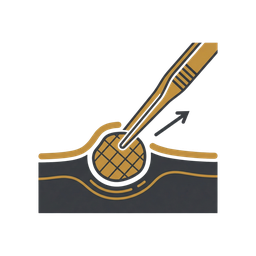
Nodules — both early and delayed — especially in thin-skinned or highly mobile areas. The HA phase can be reduced with hyaluronidase, but CaHA-driven nodules and firm plaques persist. Because it contains HA, patients often assume it is fully reversible; in practice only part of the material responds to enzyme. It behaves as a hybrid, not a pure biostimulator and not a simple dissolvable HA.
Extraction / Removal Method
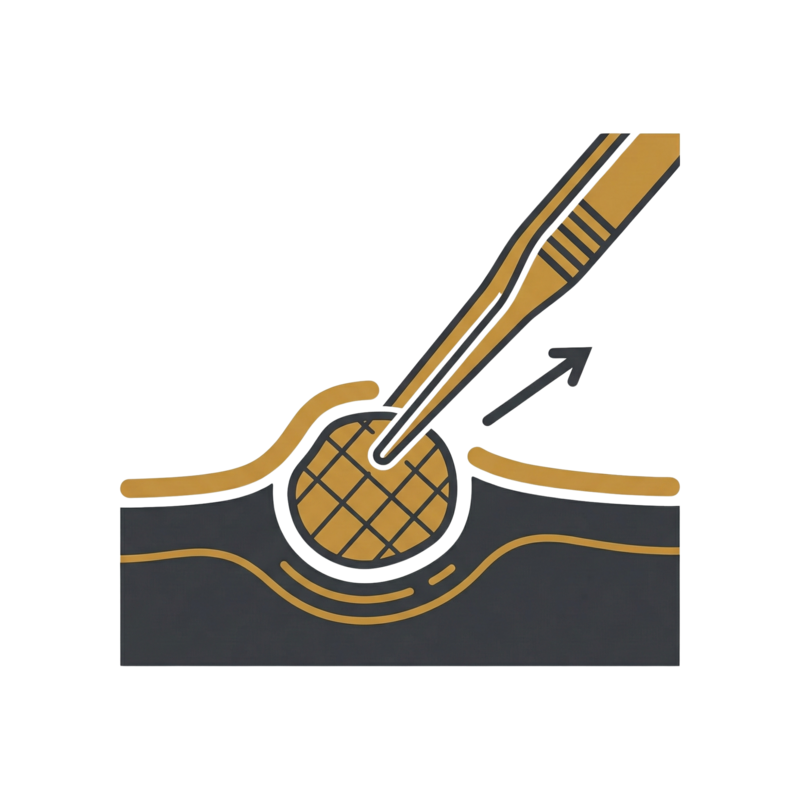
Hyaluronidase can address only the HA component. The residual CaHA microspheres and the newly stimulated collagen cannot be dissolved, so in most cases they require ultrasound-guided physical micro-extraction. CaHA appears as bright hyperechoic spots on ultrasound, allowing targeted removal of the firm core the enzyme leaves behind.

Why Traditional Methods Fail
Reaching for hyaluronidase alone reflects the assumption that HArmonyCa behaves like a plain HA. The enzyme shrinks the HA phase but leaves the CaHA microspheres and stimulated collagen untouched, so a firm nodule persists. Steroid injections risk fat atrophy and dents, and simply waiting does not dissolve CaHA or your own collagen.

The Liusmed Repair Strategy
A two-stage, hybrid-aware plan. High-resolution ultrasound maps the material: the HA phase appears dark (anechoic) while CaHA shows as bright hyperechoic spots, so the two components can be told apart. Where an HA cushion is present, controlled hyaluronidase can reduce it first. The residual CaHA-and-collagen core is then addressed through 1-2mm pinhole entries, breaking any fibrous capsule and physically micro-extracting the microspheres and firm tissue. In most cases this targeted removal resolves the nodule that enzyme alone could not.
Dr. Liu's Clinical Perspective
"The trap with hybrids is the word 'reversible.' Patients hear it contains HA and relax — then the enzyme is given, the swelling drops, and a hard lump is still sitting there. On ultrasound it is obvious why: the bright CaHA and the collagen around it were never going to dissolve. We treat HArmonyCa as what it is — part HA, part biostimulator — and plan the removal accordingly."

Recovery Timeline
The pinhole is small, but this is an extraction, so swelling and bruising are expected. Swelling and bruising usually settle in about 2–3 weeks, the pinhole heals in about 2 weeks, and the final result takes about 3 months, varying from person to person.
FAQ
Can HArmonyCa be dissolved with hyaluronidase like a regular HA filler?
Only partly. HArmonyCa is a hybrid: the hyaluronic acid portion does respond to hyaluronidase, so the enzyme can reduce the HA-related volume. However, the calcium hydroxylapatite (CaHA) microspheres and the collagen your body generates around them are not affected by any enzyme. This is the single most important point to understand — dissolving the HA can shrink part of the result but leaves the firmer CaHA-driven component behind.
Why can lumps appear months after a HArmonyCa treatment?
The CaHA component works by stimulating your own collagen gradually, so like other collagen stimulators its complications can also be delayed. A firm nodule or plaque may develop months after injection, often after patients assumed the treatment had settled. Thin-skinned or highly mobile areas are more prone to this. Because the reaction is around CaHA and self-generated collagen, waiting does not dissolve it; once a nodule has hardened, ultrasound-guided extraction is the practical route.
Real patient questions
Questions from the patient Q&A forum, answered by Dr. Liu.
Ask your own question in the forum

Related Symptoms
This information is for educational purposes only. Treatment options depend on individual circumstances. Consult a qualified physician.

Read next: when this material goes wrong
Case-by-case decisions, written by Dr. Ta-Ju Liu
How Collagen Stimulators Work: Why 'Growing Your Own Collagen' Can Go Wrong
The molecular science behind collagen stimulators — and why the 'natural' collagen they produce can become the hardest complication to reverse.
5-FU & Steroids Failed Your Sculptra Lump? The Alternative
Steroid or 5-FU rounds done and the lump persists? Why drugs fail collagen stimulator lumps, and how ultrasound-guided extraction resolves them.
HA, Ellansé, Radiesse on Ultrasound: How to Tell 6 Fillers Apart (Imaging Comparison Chart)
A filler ultrasound comparison chart of six materials, side by side: echogenicity, margin, shadowing and the artifact that acts as each one's fingerprint.