
"Three different injectors tried to balance my face by adding more. Now I have twice the filler and it's still uneven." At FILLER REVISION, asymmetry patients arrive after the most frustrating cycle in aesthetics: repeated 'balancing' sessions that added volume to both sides without fixing anything. Chasing asymmetry with additional volume is the most common mistake we correct in revision patients. Filler-induced facial asymmetry — from uneven injection volumes, differential absorption rates, unilateral migration, or amplified structural differences — is deeply distressing precisely because it draws attention to the feature the patient sought to improve. The solution almost always lies in reducing the larger side, not augmenting the smaller one — but this requires objective volumetric measurement that visual estimation simply cannot provide.

Common Symptoms

The Multi-Factorial Origins of Filler Asymmetry
The asymmetry patients who reach FILLER REVISION have a consistent history: 2-3 'correction' sessions where each injector added more volume, and each session made the problem worse. Understanding the mechanics reveals why this add-more approach was always doomed to fail. Unequal injection volumes—sometimes deliberate to 'compensate' for natural asymmetry but miscalculated—create obvious imbalance. Differential product absorption, where one side metabolizes filler faster than the other due to differences in vascularity or muscle activity, gradually creates asymmetry over weeks to months. Unilateral migration shifts product on one side only, compounding the problem. Most commonly, pre-existing skeletal or soft tissue asymmetry is amplified by filler: symmetric injection volumes over asymmetric anatomy simply magnifies the underlying difference. The natural instinct to 'add more to the smaller side' often initiates a destructive cycle of escalating volume that makes the problem worse.

Why Traditional Treatments Fail
The Volume Addition Trap
The intuitive approach to asymmetry—adding filler to the smaller or flatter side—is counterproductive in most filler-related cases. When the asymmetry is caused by excess volume on one side (migration, over-injection, differential absorption), adding to the other side doubles the total filler burden and moves both sides further from natural. Without objective measurement, clinicians rely on visual estimation from a single angle, missing volumetric differences that are obvious to the patient in different lighting or expressions. The result is a chase for balance that progressively overfills both sides, creating the characteristic heavy, unnatural appearance of bilateral overcorrection.
“At FILLER REVISION, asymmetry patients have the same story: 'They kept adding more to the other side.' By the time they reach us, both sides are overfilled and still uneven — because guesswork can't fix what measurement can. The first thing I do is scan both sides with ultrasound and show them the actual volumes. The answer is almost always the opposite of what they've been getting: reduce the excess side, and let the natural anatomy do the balancing.”
Dr. LiuMeasure, Don't Guess
Ultrasound-Guided Pinhole Micro-Extraction
The fundamental error in treating filler asymmetry is relying on visual estimation from a single angle. Faces look different in different lighting, at different angles, and in motion versus at rest. Objective bilateral measurement replaces guesswork with data — and almost always reveals that reduction, not addition, is the answer.
Every 'Balancing' Session Made It Worse — Here's Why
FILLER REVISION patients have typically been through 2-3 rounds of 'add more to the other side.' Each session doubled the total volume without addressing the underlying excess. The first step in revision is bilateral ultrasound measurement that replaces guesswork with objective data.
Three Injectors, Three Opinions — Zero Measurements
Visual estimation from a single angle in clinic lighting is notoriously unreliable. What looks balanced in the office appears lopsided in a selfie, outdoor light, or video call. FILLER REVISION's volumetric scanning captures the actual discrepancy that the human eye — even a trained one — cannot reliably assess.
Symmetry That Survives a Smile
True revision achieves balance that persists during smiling, speaking, and laughing — not just at rest. Static corrections that break down during facial movement are the hallmark of volume-chasing. FILLER REVISION tests symmetry dynamically before you leave the clinic.
Ultrasound-Guided Volumetric Harmonization
We measure filler volume on both sides objectively using ultrasound—eliminating the guesswork of visual estimation. In most cases, the solution is selective reduction of the overfilled side rather than addition to the underfilled side. We precisely reduce the excess volume to match the natural contralateral side, restoring symmetry through subtraction. This 'less is more' approach avoids the volume escalation trap and produces the most natural-looking result.
Bilateral Volumetric Analysis
Precision Reduction of Overfilled Side
Fine-Tuning & Symmetry Check
Dynamic Assessment Review

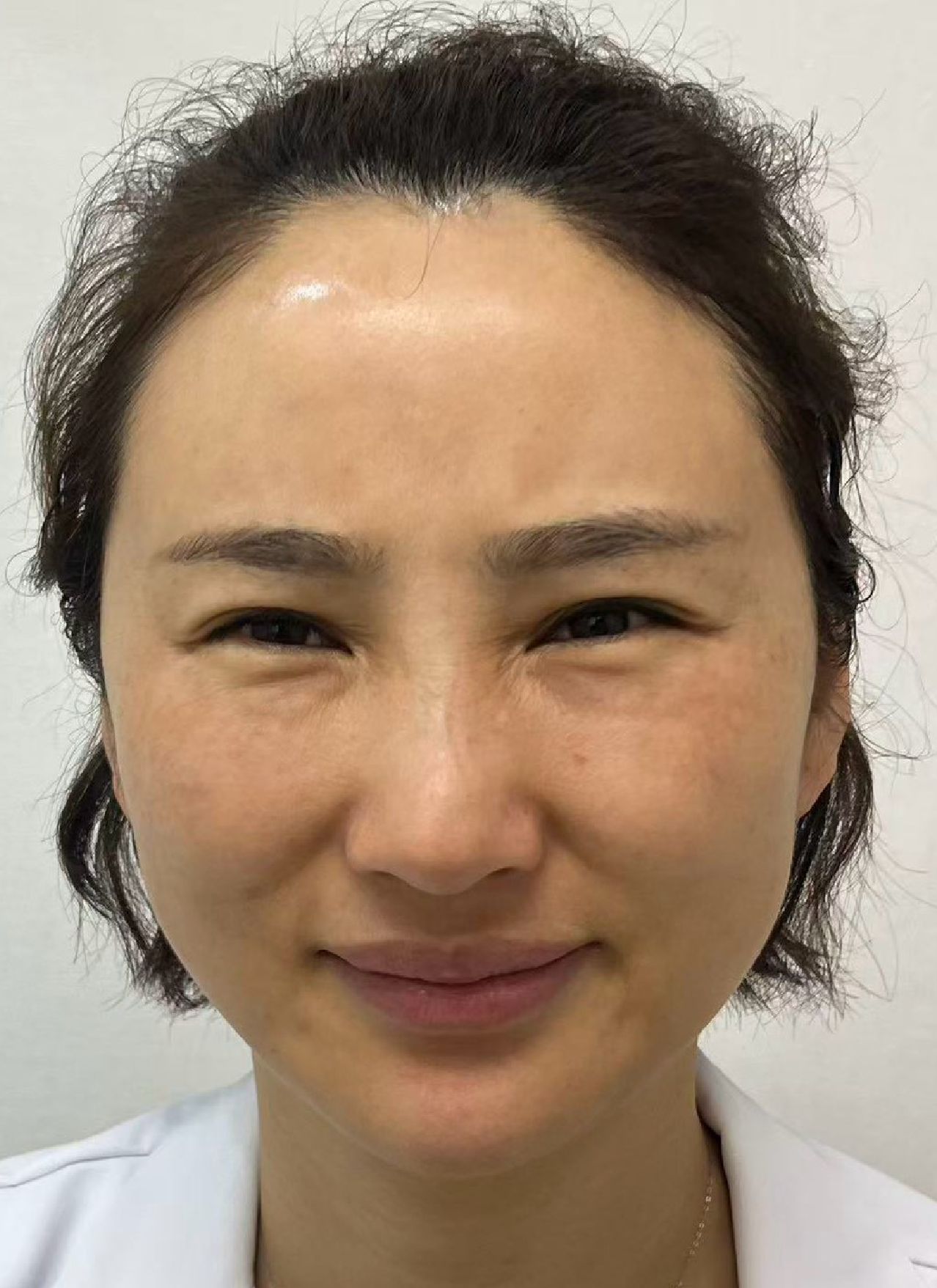
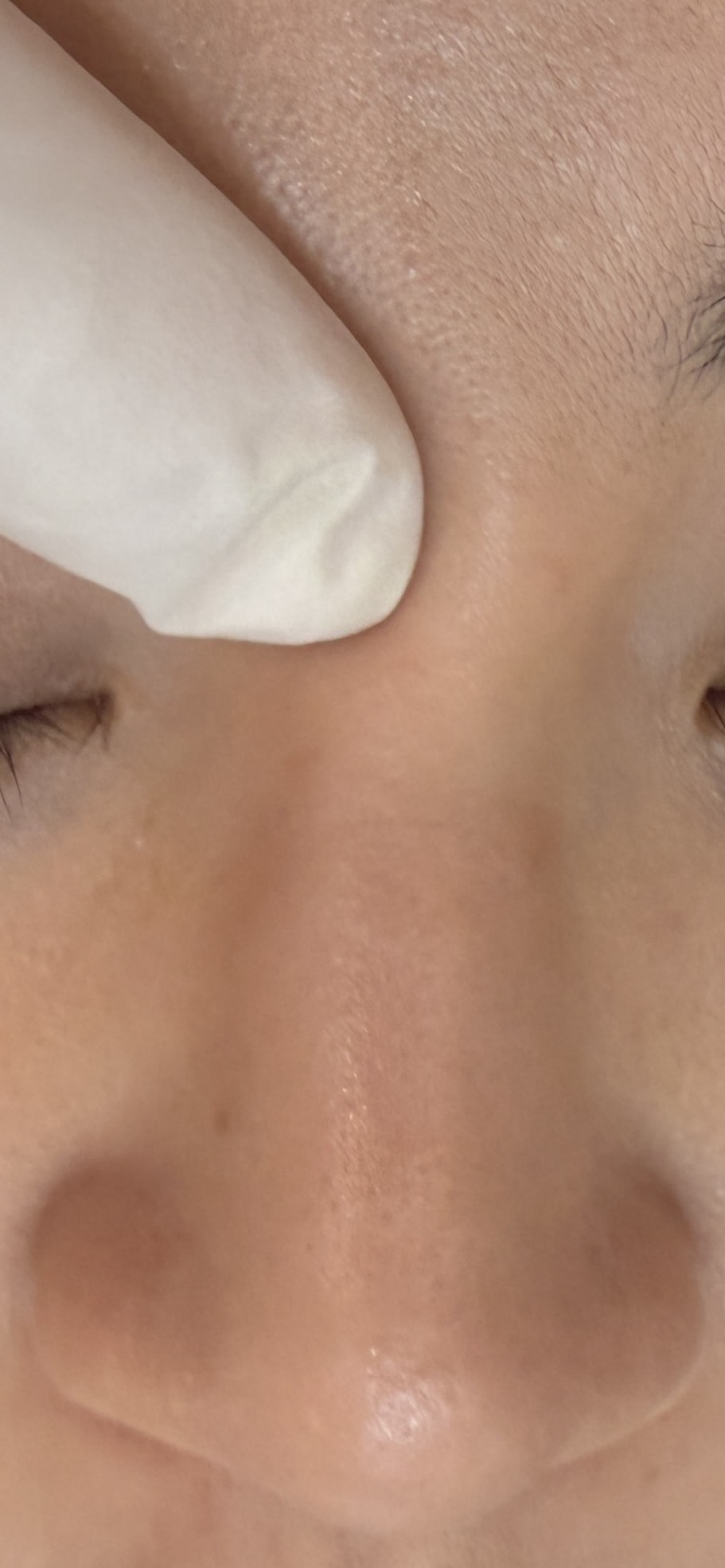
Before & After Results
View real patient results for this condition, including ultrasound imaging before and after extraction.
View All Case ResultsCommon Questions
In most filler-related asymmetry cases, this approach is counterproductive. If one side has excess volume from migration, over-injection, or differential absorption, adding volume to the other side doubles the total filler burden without addressing the root cause. Objective ultrasound measurement almost always reveals that reducing the larger side produces a more natural and lasting result than augmenting the smaller side.
Ultrasound clearly distinguishes between filler-related and structural asymmetry. If bone structure is the primary cause, filler adjustment alone may not fully resolve the imbalance—and we will advise honestly about realistic expectations. Many patients have a combination of both structural and filler-related components, which we can quantify and discuss before treatment.
It depends on the extent and depth; it may take more than one session. Real-time ultrasound lets us check the balance during the procedure, but swelling and bruising are expected afterwards: they usually settle in about 2–3 weeks, and the final result takes about 3 months, varying from person to person.
Yes, lip asymmetry is one of the most common and most rewarding cases to treat. Using ultrasound, we can identify exactly which side has excess product, where it has migrated, and how much needs to be removed. Targeted enzyme delivery or aspiration of the excess portion restores natural lip balance—usually in under 30 minutes.
Some of the change can be seen during the procedure, because we use ultrasound to compare both sides in real time and make fine adjustments before finishing. But what you see on the table is not the final result — swelling follows, and the result can be judged once it settles.
Common causes include: unequal injection volumes (intentional 'compensation' that was miscalculated), different absorption rates on each side (due to muscle activity or blood supply differences), filler migration on one side only, and pre-existing structural differences that were amplified rather than corrected by symmetric injection. Ultrasound reveals the specific cause in your case.
We use ultrasound to scan matching anatomic compartments on both sides, measuring the cross-sectional area and depth of filler deposits bilaterally. This gives us an objective volumetric comparison that is far more accurate than visual estimation, which is influenced by lighting, angle, and swelling.
Because the problem isn't too little on one side — it's too much on the other. Adding volume to chase symmetry doubles the total filler burden on your face without addressing the underlying excess. Each 'balancing' session moves you further from natural proportions. Ultrasound measurement reveals the true volumetric discrepancy and almost always shows that reduction — not addition — is the answer.
This is exactly why FILLER REVISION uses ultrasound measurement instead of visual estimation. Three injectors assessing symmetry by eye, in their own clinic lighting, from their preferred angle, will reach three different conclusions. Bilateral volumetric scanning eliminates subjectivity entirely — the numbers show exactly which side has more product and by how much. Data replaces opinion.
Not sure what is going on? Write it down and ask.
Describe what was injected, when, and what you are seeing now. Dr. Liu replies in the thread with an educational explanation of what it might be, what needs to be told apart, and which signs mean you should be seen soon. Posting can be anonymous, and other patients with the same problem can read the answer too.
Replies are general health education, not a diagnosis, and do not replace an in-person examination.

Read next: how we actually handle it
Case-by-case decisions, written by Dr. Ta-Ju Liu
Facial Asymmetry After Filler? Correction With Ultrasound
Touch-ups didn't fix your post-filler asymmetry? FILLER REVISION uses bilateral ultrasound comparison to diagnose the cause and deliver targeted correction.
Blind Extraction Made It Worse? Repairing Botched Removals
Had a blind extraction that left dents, numbness, or worse lumps? Why ultrasound-guided revision is the safer path forward for these cases seen regularly.
Filler Lump Extraction: Precision Removal That Spares Tissue
Ultrasound-guided pinhole (about 2 mm) extraction of filler lumps, including ones earlier treatment did not resolve, preserving normal tissue.
References
- Schelke LW, et al. Treating facial overfilled syndrome with impaired facial expression — Presenting clinical experience with ultrasound imaging. J Cosmet Dermatol. 2023;22(12):3252-3260.
- Schelke L, et al. Post-Treatment Displacement of Facial Soft Tissue Fillers — A Retrospective Ultrasound-based Investigation of 382 Zygomatic Regions. Dermatol Surg. 2024;50(10):946-952.
- Requena L, et al. Adverse reactions to injectable soft tissue fillers. J Am Acad Dermatol. 2011;64(1):1-34.
Related Real Cases
Documented ultrasound-guided extraction and rescue cases by Dr. Ta-Ju Liu.

The information on this website is for educational purposes only and does not constitute medical advice. Individual results may vary depending on personal conditions; actual outcomes cannot be guaranteed. All medical procedures carry potential risks and complications. Please consult a qualified physician before making any treatment decisions.
Featured Poster

Three rounds of dissolver. Still there?
Hyaluronidase only works on hyaluronic acid. If the filler is encapsulated, mixed, or not HA at all, it may not help. An ultrasound shows what is really there before you decide on removal.

Dissolved — and it still hurts?
Only a little filler left, hyaluronidase several times, and still the headaches, facial pain, neck and shoulder aches. We look for what remains on ultrasound, and a board-certified neurologist on our team assesses the pain with us.