Will there be a depression after removing under-eye lumps?
劉達儒醫師 · 8/6/2026
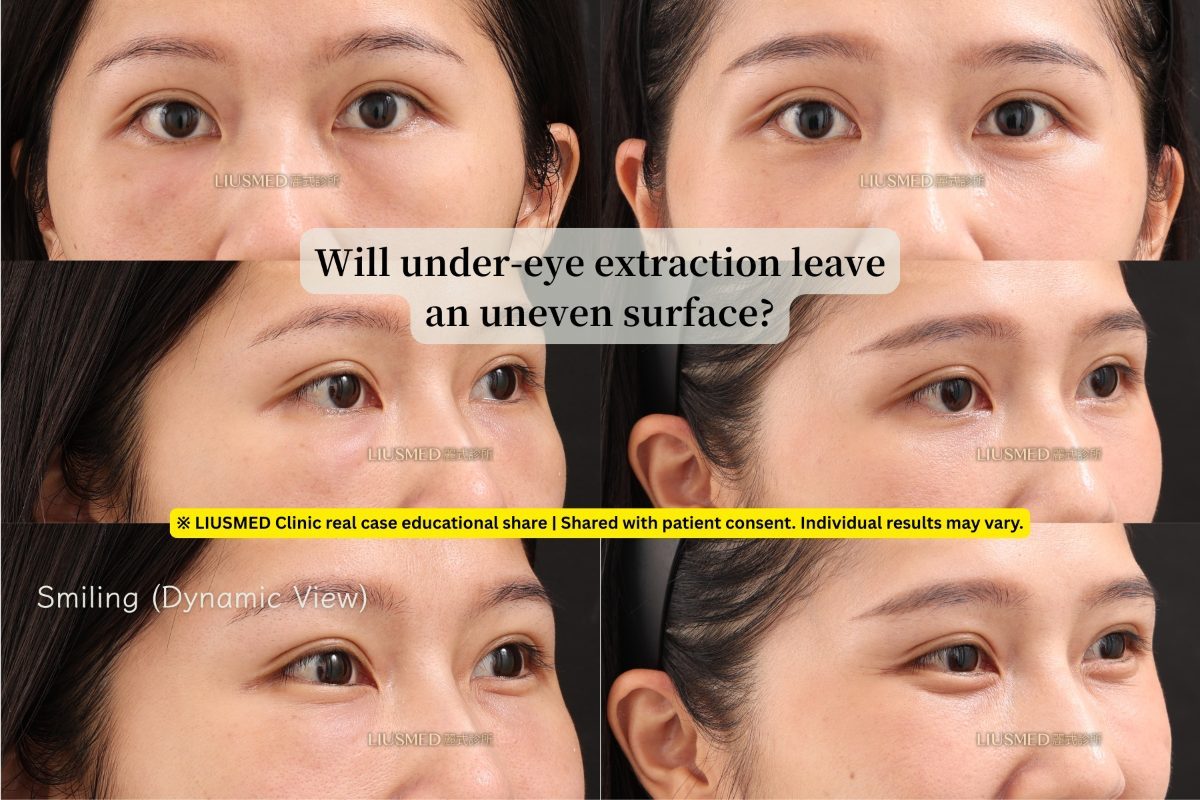
We frequently share cases of filler revision for under-eye lumps, overfilled (饅化) appearances, and recurrent swelling. However, I know that what many people really want to ask is:
Will the area become uneven after the under-eye filler is removed?
Will it leave a depression once the original bulge is removed?
Will my smile look unnatural afterward?
Today, we will use a real follow-up case to allow you to observe the revision results from different angles.
This patient experienced recurrent swelling and localized lumps (averaging once every 2-3 days, persisting for over a year) following under-eye injections. Even after receiving other treatments, the area continued to swell intermittently, which not only affected their appearance but also caused significant psychological distress.
After a thorough assessment, we utilized ultrasound-guided minimally invasive techniques to remove the majority of the filler that was causing persistent irritation.
At the two-month follow-up, we can observe:
The previously prominent swelling and lumps under both eyes have significantly decreased. From frontal, 45-degree, and profile views, the under-eye contour is much smoother than before the treatment.
We particularly want to draw your attention to the "resting" and "smiling" images. Filler revision in the under-eye area cannot be judged by static appearance alone. Some people may look smooth when expressionless, but upon smiling, depressions, step-offs, or unnatural pulling sensations appear. Therefore, during treatment, we must consider both the static contour and the tissue changes during dynamic facial expressions.
Based on this patient's follow-up results:
✓ No significant depression
✓ No obvious unevenness
✓ Smoother static under-eye lines
✓ Natural dynamic expression when smiling
✓ Minimally invasive entry points are nearly invisible at follow-up
Filler revision is not about "removing as much as possible."
The under-eye tissue is extremely thin and delicate. What truly matters is accurately determining the amount to be removed based on the filler distribution, depth, tissue reaction, and original under-eye contour. This is the only way to reduce swelling and irritation while maintaining natural support and lines.
The goal of filler revision is not just to remove the filler, but to help the patient regain a natural appearance both at rest and when smiling.
This case will continue to be monitored to ensure long-term results.
—
This case is shared for educational purposes with the patient's consent. Each patient's filler type, injection depth, tissue condition, and inflammatory response vary, so suitable treatment methods and results will differ. The photos represent the actual follow-up record of a single case and do not guarantee identical results for all patients.